
The Tesla Powerwall 3 has quietly become the most popular home battery in North America — and for good reason. It stores solar power for cloudy days, keeps your lights on during outages, and can slash your electric bill by shifting energy use to cheaper hours. But 2026 brought one enormous change that every buyer needs to understand before signing a contract: the 30% federal tax credit that used to knock thousands off the price in the United States has expired. This guide walks through exactly what the Powerwall 3 costs today in both the US and Canada, what the tax-credit changes mean for your budget, and whether the battery is actually worth it for your home.
Disclosure: some links are affiliate/referral links, and we may earn a commission at no extra cost to you. See our disclosure page.
📋 Contents
- What Is the Tesla Powerwall 3?
- Tesla Powerwall 3 Price in the US (2026)
- The Big 2026 Change: The Federal Tax Credit Is Gone
- Powerwall 3 Price and Rebates in Canada (2026)
- Is the Powerwall 3 Worth It? Payback and Who Should Buy
- How to Order and Install a Powerwall 3
- Powerwall 3 vs Powerwall 2 and Alternatives
- Frequently Asked Questions
- The Bottom Line
What Is the Tesla Powerwall 3?
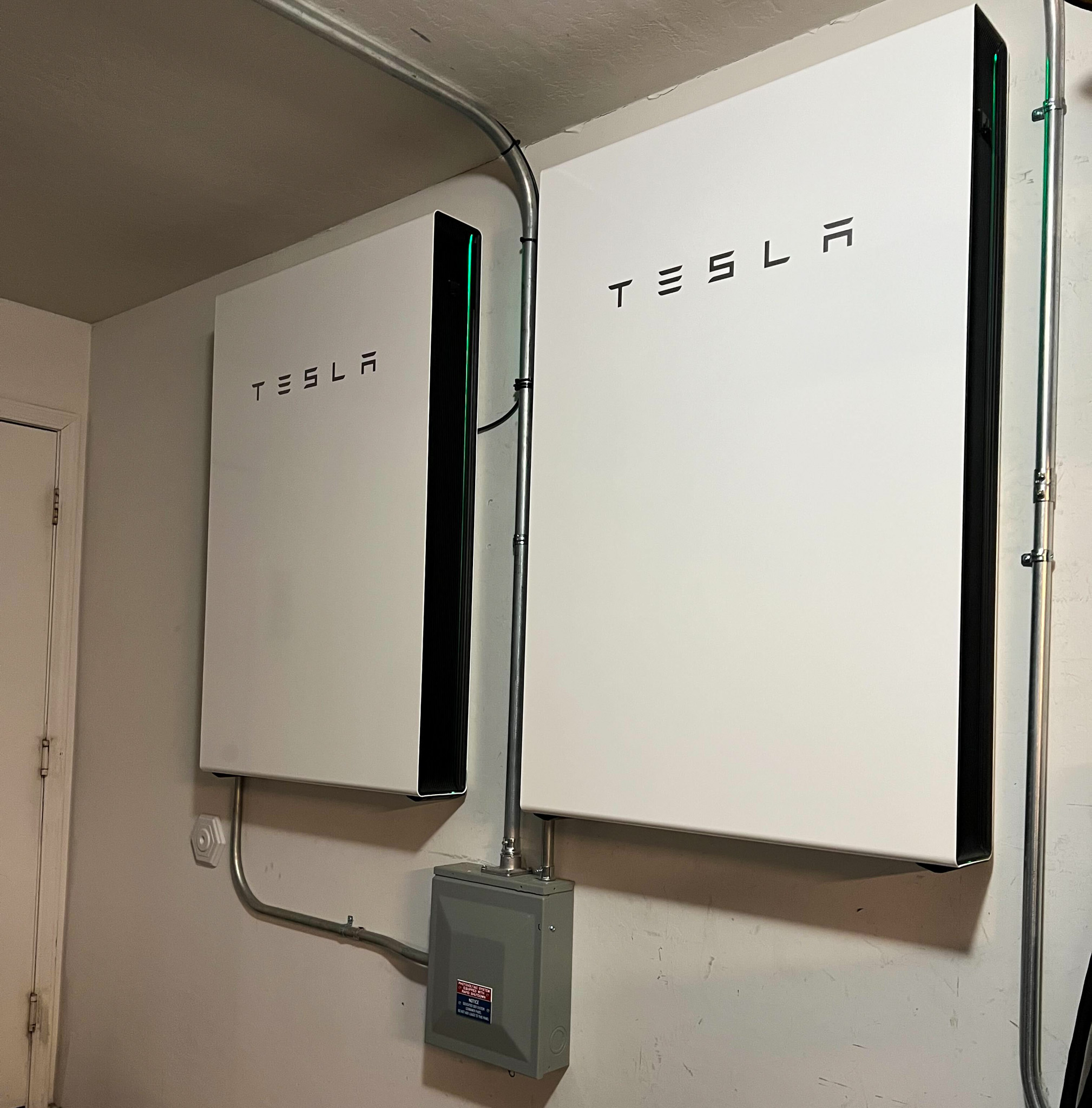
The Powerwall 3 is Tesla’s third-generation home battery, and it is a genuine leap over the older Powerwall 2. The headline difference is that Tesla moved the solar inverter inside the battery. On earlier systems you needed a separate string or micro-inverter to convert your solar panels’ DC power into usable AC. The Powerwall 3 has a built-in hybrid inverter that handles both solar conversion and battery storage in one wall-mounted box, which simplifies installs and cuts hardware costs.
Here are the specs that matter for a homeowner:
- Usable capacity: 13.5 kWh per unit
- Continuous power output: 11.5 kW — nearly double the Powerwall 2’s 5 kW, so it can run more appliances at once (think AC, oven, and dryer together)
- Battery chemistry: Lithium iron phosphate (LFP) — safer, longer-lasting, and happy to sit at 100% charge
- Round-trip efficiency: about 97.5%, among the best on the market
- Integrated solar inverter: supports up to six solar strings (MPPTs) directly
- Warranty: 10 years, guaranteed to retain at least 70% of capacity
- Expandable: add up to three Expansion units (13.5 kWh each) for 54 kWh total; Expansion units share the main unit’s inverter
For most single-family homes, one Powerwall 3 (13.5 kWh) covers overnight backup for essentials and lights. Two units is the sweet spot if you want whole-home backup including heavy loads or if you have a large solar array to store.
Tesla Powerwall 3 Price in the US (2026)
Pricing varies by installer, region, and how much electrical work your panel needs, but the ranges below reflect what US homeowners are actually paying in 2026 after cross-checking multiple installer quotes. The battery hardware itself runs roughly $9,300–$11,500; the rest is labor, permits, the Gateway, and any panel upgrades.
| Configuration | Capacity | Typical Installed Cost (USD) |
|---|---|---|
| 1 × Powerwall 3 | 13.5 kWh | $13,000 – $16,500 |
| 2 × Powerwall 3 | 27 kWh | $20,000 – $25,000 |
| 1 Powerwall + 1 Expansion | 27 kWh | $18,000 – $22,000 |
| Per-kWh cost (installed) | — | ~$850 – $1,220 / kWh |
Adding a second unit is much cheaper per kWh than the first because the Gateway, permits, and labor are already covered — the incremental cost of a second Powerwall or an Expansion typically lands around $6,000–$9,000. If you know you’ll want whole-home backup, buying two up front usually beats adding one later.
The Big 2026 Change: The Federal Tax Credit Is Gone
This is the single most important thing US buyers need to know. For years, a home battery qualified for the 30% federal Residential Clean Energy Credit (IRS Section 25D) — on a $15,000 Powerwall install, that was roughly $4,500 back at tax time. That credit was eliminated by the One Big Beautiful Bill Act (Public Law 119-21, signed July 4, 2025). Any residential battery placed in service on or after January 1, 2026 no longer qualifies for the 30% credit.
In plain terms: if you install a Powerwall 3 in 2026, budget for the full sticker price. There is no federal 30% rebate coming back at tax time. You can confirm the current rules directly with the IRS Residential Clean Energy Credit page.
A few nuances worth knowing:
- Commercial credit (Section 48E) survives longer. Some installers offer a prepaid-lease or third-party-owned structure that still captures the commercial 30% and passes part of it back as a price cut. Ask your installer whether this is available — it can be the cleanest path to real savings in 2026.
- State and utility incentives still exist. California’s SGIP, and various utility “bring your own battery” and virtual-power-plant programs, can still pay you for a Powerwall. Check your state and utility separately.
- Timing matters. “Placed in service” — not order date — is what counts. A battery ordered in 2025 but energized in 2026 falls under the new rules.
Powerwall 3 Price and Rebates in Canada (2026)
Canadian pricing is higher in raw dollars, but several provinces still offer meaningful rebates that the US no longer has federally. The Tesla base hardware price is around CA$9,700 plus roughly CA$1,200 for the required Gateway; installation, permits, and electrical work add CA$3,000–$6,000.
| Region | Typical Installed Cost (CAD) | Battery Rebate Available |
|---|---|---|
| Ontario | $16,500 – $20,700 | Home Renovation Savings Program: up to $5,000 (battery) |
| British Columbia | $15,000 – $18,000 | BC Hydro: up to $5,000 |
| Alberta | $14,000 – $18,000 | No provincial battery grant in 2026 |
| Tesla direct rebate | — | $700 per unit, up to $1,400 (limited-time orders) |
Ontario is the clear winner right now: the provincial Home Renovation Savings Program can return up to $5,000 for a home battery (and up to another $5,000 if you pair it with solar), stacked on top of Tesla’s limited-time direct rebate. Always confirm current amounts and deadlines with the province and with Tesla’s Canadian rebate page before ordering, because these programs open and close on short notice. Note the federal Greener Homes Grant ended in 2025, so there is no nationwide battery grant anymore.
Is the Powerwall 3 Worth It? Payback and Who Should Buy
Without the 30% US credit, the honest answer is: it depends heavily on why you’re buying. A Powerwall rarely pays for itself on energy arbitrage alone unless you live somewhere with steep time-of-use rates or frequent outages. Here’s how to think about it:
- Backup power is the strongest case. If you live in a hurricane, wildfire, or ice-storm region — Florida, California, Texas, much of Canada — the value of keeping your fridge, furnace, and internet running during multi-day outages is hard to put a dollar figure on. A Powerwall switches over in milliseconds, silently, with no gas or fumes.
- Time-of-use arbitrage works in high-rate areas. In California, Ontario, and other places with big peak/off-peak spreads, charging from solar or cheap overnight power and discharging during expensive peak hours can save $500–$1,500+ a year.
- Solar self-consumption. If you already have or are adding solar, a battery lets you use your own daytime generation at night instead of selling it back cheaply. This is where the Powerwall 3’s integrated inverter shines on cost.
- Virtual power plant (VPP) income. Some utilities pay you to let them draw from your Powerwall during grid stress. That can meaningfully shorten payback.
Realistic payback in the US today, without the federal credit, is often 10–15 years on pure bill savings — but the backup security and VPP income are why people still buy. In Ontario and BC, provincial rebates pull that number back down closer to what US buyers used to see. If your main goal is saving money on charging your car and running your home, first make sure you’ve optimized the basics — see our guide to how much it costs to charge a Tesla and our broader Tesla savings guide.
How to Order and Install a Powerwall 3
Ordering is straightforward, but a few decisions up front save headaches later:
- Size it honestly. Map which circuits you actually need backed up. Essentials-only (lights, fridge, internet, furnace fan) fits comfortably on one unit. Whole-home backup with AC and EV charging usually needs two.
- Get quotes from Tesla and a certified third-party installer. Tesla’s own installs are often competitive, but certified installers sometimes bundle better solar pricing or handle tricky panel upgrades more cheaply.
- Check your electrical panel. Older 100-amp panels may need an upgrade, which can add $2,000–$4,000. Get this assessed before you commit.
- Plan for placement. The Powerwall 3 is outdoor-rated but performs best out of direct sun and extreme heat. Garage walls are ideal in cold climates.
- Ask about the Tesla app. You’ll monitor and control everything — backup reserve, storm watch, time-based control — from the same app that runs your car. Storm Watch automatically charges the battery to full when severe weather is forecast.
If you’re a Tesla vehicle owner adding a Powerwall, it pairs neatly with home charging — our home charger installation guide covers the electrical planning that overlaps with a battery install. And if you’re weighing a new Tesla at the same time, ordering the car through a Tesla referral link currently gets you 3 months of free Full Self-Driving (Supervised) — a nice bonus while you’re already in the Tesla ecosystem.
Powerwall 3 vs Powerwall 2 and Alternatives
If you’re shopping used or comparing brands, here’s the quick lay of the land. The Powerwall 3’s integrated inverter and 11.5 kW output make it the better buy for new installs; the older Powerwall 2 (5 kW, separate inverter) is mostly relevant on the secondhand market or for AC-coupling with existing solar.
| Feature | Powerwall 3 | Powerwall 2 |
|---|---|---|
| Usable capacity | 13.5 kWh | 13.5 kWh |
| Continuous power | 11.5 kW | 5 kW |
| Solar inverter | Integrated (hybrid) | Separate required |
| Chemistry | LFP | NMC |
| Warranty | 10 yr / 70% | 10 yr / 70% |
Worth a mount and a smart placement decision either way: a small accessory kit — a surge protector for the Gateway circuit and a labeled sub-panel — makes the install cleaner. You can find well-reviewed options on Amazon US (or Amazon Canada), though your installer will usually supply the essentials. For cold-climate owners, our Tesla winter guide also covers how batteries and EVs behave in deep cold.
Frequently Asked Questions
Does the Tesla Powerwall 3 still get the 30% federal tax credit in 2026?
No. The 30% federal Residential Clean Energy Credit (Section 25D) expired December 31, 2025. Any residential battery placed in service on or after January 1, 2026 does not qualify. State, utility, and some third-party-lease structures may still offer savings, but the federal 30% is gone for homeowners.
How much does a Tesla Powerwall 3 cost installed?
In the US, expect roughly $13,000–$16,500 installed for a single unit in 2026. In Canada, a single unit typically runs CA$15,000–$20,700 installed depending on province, before any provincial rebate.
How long does a Powerwall 3 last during an outage?
One 13.5 kWh unit powers a typical home’s essentials (fridge, lights, internet, furnace fan) for about 24 hours. If you’re also running AC or an EV charger, plan on two units. With solar recharging it during the day, backup can extend indefinitely.
Can I add a Powerwall 3 to my existing solar panels?
Yes. The Powerwall 3 can integrate directly with new solar via its built-in inverter, or be AC-coupled to an existing solar system. AC-coupling is slightly less efficient but works fine — your installer will confirm the best approach for your setup.
Is the Powerwall 3 worth it without the tax credit?
For backup power in outage-prone areas and for high time-of-use-rate homes, yes — the value is in reliability and peak-rate savings. For pure bill arbitrage in low-rate areas without solar, payback can stretch past a decade. Canadians in Ontario and BC still get provincial rebates that improve the math.
How many Powerwall 3 units can I install?
A single Powerwall 3 supports up to three Expansion units, for 54 kWh total on one inverter. Larger homes can stack multiple full Powerwall 3 systems for even more capacity and power.
The Bottom Line
- Powerwall 3 is Tesla’s best home battery yet: 13.5 kWh, 11.5 kW output, integrated inverter, LFP chemistry, 10-year warranty.
- US price: ~$13,000–$16,500 installed for one unit; the 30% federal tax credit expired at the end of 2025.
- Canada price: ~CA$15,000–$20,700 installed; Ontario (up to $5,000) and BC (up to $5,000) still offer real battery rebates.
- Best fit: homes in outage-prone regions, high time-of-use-rate areas, and anyone pairing it with solar.
- Before you buy: get quotes from Tesla and a certified installer, check your panel, and ask about third-party-lease structures that may still capture the commercial credit.
Information current as of July 2026. Prices, rebates, and tax rules change frequently and vary by state, province, installer, and utility — always confirm current figures with Tesla and official government sources before purchasing. This article is for general information only and is not financial or tax advice. Some links are affiliate/referral links; see our disclosure page. Image credit: Rsparks3, own work, CC0 (public domain), via Wikimedia Commons.

About the author: Lifei
Lifei is a Tesla owner based in Canada, writing practical, fact-checked Tesla guides for US and Canadian drivers — buying, ownership, insurance, charging, and TSLA investing, all from first-hand experience.

Leave A Comment