
How to Buy Tesla (TSLA) Stock from Canada (2026): Brokerage, FX & Tax
How to Buy Tesla (TSLA) Stock from Canada (2026): Brokerage, FX & Tax

In one sentence
A complete 2026 guide to buying Tesla (TSLA) stock as a Canadian investor: why IBKR wins on fees, opening an account, cutting your CAD-to-USD conversion cost, and TFSA/RRSP tax rules.
Buying Tesla (TSLA) stock from Canada is one of those topics that keeps coming up — some investors believe in the Musk AI and Robotaxi story, some pick up a few shares after taking delivery of a Model Y, and others are watching the whole ecosystem move now that SpaceX has actually gone public (it trades on Nasdaq as SPCX since June 2026). But the moment you actually sit down to do it, the practical questions land all at once: which brokerage do you use? How do you convert Canadian dollars to US dollars without bleeding money on the exchange rate? What tax do you owe on US stocks as a Canadian resident? Can you hold Tesla inside a TFSA? Do you have to report foreign assets?
This is a complete, no-fluff guide to buying US stocks — Tesla in particular — as a Canadian investor. It covers why so many serious US-stock investors land on Interactive Brokers (IBKR), how IBKR compares item-by-item with Questrade, Wealthsimple, and the bank brokerages, a step-by-step account-opening walkthrough, the money-saving way to convert CAD to USD, and the tax and compliance rules Canadian residents most often trip over. Every figure here was checked against its 2026 version, but tax outcomes vary by person — talk to a licensed CPA before any major decision.
Disclosure: this article contains a brokerage referral link. If you open an account through it, we may receive a referral reward at no extra cost to you, and it does not change any of your fees or rights. All analysis is based on the author’s real, hands-on experience. This is general information, not investment advice. See our disclosure page.
📋 Contents
- Why buy Tesla (TSLA) — and what you’re actually buying
- How Canadians buy US stocks: the basics
- Why so many US-stock investors choose IBKR
- Head-to-head: IBKR vs Questrade vs Wealthsimple vs the banks
- Step by step: opening an IBKR Canada account
- Converting CAD to USD: squeezing the cost to nothing
- Tax rules: holding Tesla as a Canadian resident (RRSP, TFSA & withholding)
- Risks and common mistakes
- Open an IBKR account and start
- Frequently Asked Questions
- Summary: turn this into your action plan
Why buy Tesla (TSLA) — and what you’re actually buying
Before the mechanics, a word on the thesis, because it shapes how you should hold the position. Tesla long ago stopped being “just a car company” in the eyes of the market. The investment case now spans several pillars: the core auto business; energy storage and solar; the FSD (Supervised) and Robotaxi software story; the Optimus humanoid robot program; and the deep links to Elon Musk’s broader ecosystem, including SpaceX — which is no longer a private-market abstraction: SpaceX priced its IPO at $135 and began trading on Nasdaq on June 12, 2026 under the ticker SPCX (by late July it traded around $112–116, below the issue price). We’ve written detailed analysis of where the stock has been and where it might go — see our Tesla stock coverage for the bigger picture.
A quick market snapshot as of late July 2026, so you know what you’re walking into: TSLA trades around $300 — within a few percent of its 52-week low near $298, and far below the 52-week high of $498.83 (always check live pricing before you trade). The latest quarter cut both ways: Q2 2026 deliveries hit a record 480,126 vehicles (up about 25% year over year), yet EPS came in around $0.33 against roughly $0.51 expected, and free cash flow turned negative for the first time in over two years as capital spending surged on AI and robotics. Analysts are split — JPMorgan cut its price target from $475 to $445 on July 24, while others stayed constructive. None of that is a buy or sell signal; it’s the backdrop.
The flip side of that ambition is volatility. Tesla is a high-beta name that has lived through several 40–50% drawdowns. None of what follows is a recommendation to buy — it’s a guide to how to buy efficiently and compliantly if you’ve decided the thesis fits your risk tolerance. Treat TSLA as a single-company bet inside a diversified plan, not as the plan itself.
How Canadians buy US stocks: the basics
Tesla trades on the Nasdaq under the ticker TSLA, priced in US dollars. As a Canadian resident, you don’t need a US address, a US bank account, or a US brokerage to own it. You open an account with a Canadian-regulated brokerage, fund it in Canadian dollars, convert the portion you need to USD, and place the order — all online, all from Canada.
The single biggest mistake people make is assuming that because most brokerages now advertise “zero commission,” they’re all the same. They’re not. For Canadians buying US stocks, the real cost is rarely the commission — it’s the currency conversion. Say you want to move $50,000 CAD into USD to buy Tesla:
- At a big bank: the posted rate usually adds a 1.5%–2.5% spread over the mid-market rate — a one-time hit of $750–$1,250 CAD.
- On Wealthsimple’s base plan: a flat 1.5% conversion fee — about $750 CAD.
- Converting manually inside IBKR: roughly a 0.002% commission (USD $2 minimum) at the interbank rate, costing about $2.70 CAD.
That’s not a typo: roughly $750 versus under $3 — close to a 300x difference, enough to buy another share of Tesla outright. Conversion is the headline, but account fees, registered-account support, interest on idle cash, and fractional shares all quietly compound over time. That’s why the brokerage choice is worth twenty minutes of your attention.
Why so many US-stock investors choose IBKR
Before handing money to any brokerage, know who you’re dealing with. Interactive Brokers Group (Nasdaq: IBKR), founded in 1978, is one of the largest electronic brokerages in the world, serving millions of clients with hundreds of billions in client assets, and a perennial pick on best-online-broker lists from outlets like Barron’s. Canadian residents open accounts with Interactive Brokers Canada Inc., headquartered in Montreal, regulated by the Canadian Investment Regulatory Organization (CIRO) and a member of the Canadian Investor Protection Fund (CIPF) — the same protection framework that covers the bank-owned brokerages. CIPF coverage is up to $1,000,000 CAD per account category, and client assets are held segregated from the firm’s own. In other words, this is not an offshore platform; it’s a Canadian-licensed entity under the same rules as the banks. With that settled, here’s why it wins for US stocks specifically.
1. The lowest currency conversion in Canada, full stop
This is the killer feature for Canadian US-stock investors. Inside IBKR, CAD-to-USD conversion runs through the IDEALPRO interbank FX market — you get an institutional mid-market rate, the commission is just 0.002% (USD $2 minimum), and there is no markup on the rate itself. Against any bank or any “zero-commission” platform, that’s an order-of-magnitude difference. For anyone dollar-cost-averaging into US stocks, this one line item saves more per year than the “free commission” elsewhere ever could.
2. Low, transparent commissions
US-stock commissions come in two flavours: a fixed USD $0.005 per share, USD $1 minimum per order, or a tiered model with a USD $0.35 minimum. Buy 10 shares of Tesla and the commission is USD $1 — effectively a rounding error. Yes, Questrade and Wealthsimple advertise zero commission, but look at the whole picture: their main revenue on US trades comes from that 1.5% conversion spread (and order flow). IBKR charges a small, visible fee; the “free” platforms make it back on the exchange rate. For US stocks, the latter is usually far more expensive.
3. Fractional shares — dollar-cost-average Tesla with pocket change
A single Tesla share runs into the hundreds of dollars, which isn’t trivial early in a career. IBKR supports fractional shares on US stocks — you can place a dollar order like “buy USD $100 of TSLA,” with holdings precise to four decimals. Putting $100 or $200 in on each payday is the most realistic way for an ordinary household to build a US-stock position over time.
4. The full registered-account lineup: TFSA, RRSP, FHSA
IBKR Canada supports the complete set of registered accounts — TFSA, RRSP, spousal RRSP, FHSA, and RRIF — with no annual fee, no inactivity fee, and no minimum balance. Hold Tesla inside a TFSA and the capital gains are entirely tax-free (tax detail below). For Canadian investors, this is the policy perk to use to the hilt.
5. Interest on idle cash, one account for global markets, pro tools
Cash you haven’t deployed yet earns interest at benchmark-linked rates (balances above USD $10,000 earn close to the benchmark), where most traditional brokerages pay near zero. Beyond US stocks, a single IBKR account trades Canadian stocks (TSX), Hong Kong, European, and Japanese equities, plus bonds, ETFs, and options across 150+ markets. And the platform scales: the streamlined IBKR mobile app and web portal for everyday investors, the powerful TWS (Trader Workstation) desktop terminal when you want to go further — no need to switch brokerages as your needs grow.
Head-to-head: IBKR vs Questrade vs Wealthsimple vs the banks
There’s no perfect brokerage — only the right one for your situation. Here are the main 2026 Canadian options side by side.
| Dimension | IBKR | Questrade | Wealthsimple | Bank brokerages (TD/RBC, etc.) |
|---|---|---|---|---|
| US-stock commission | $0.005/share, $1 min | $0 (since Feb 2025) | $0 | ~$9.95/trade |
| CAD↔USD conversion | 0.002%, $2 min, interbank rate | ~1.5% (or do Norbert’s Gambit) | 1.5% (USD account on premium plans) | ~1.5%–2.5% (Norbert’s Gambit possible) |
| Fractional US shares | ✅ Yes | Partial | ✅ Yes | ❌ Generally no |
| TFSA/RRSP/FHSA | ✅ Full set, no annual fee | ✅ Full set | ✅ Full set | ✅ Full set (some charge fees) |
| Interest on idle cash | ✅ Near benchmark | Low | Interest on Cash account | Near zero |
| Markets available | 150+ global markets | Mostly North America | Mostly North America | Mostly North America |
| Regulation & protection | CIRO + CIPF ($1M) | CIRO + CIPF | CIRO + CIPF | CIRO + CIPF |
| Learning curve | Medium (app easy, TWS pro) | Low–medium | Lowest | Low–medium |
| Best for | Serious US-stock / large-FX / global investors | Passive CAD-ETF investors | Beginners, small CAD positions | Branch access, bank integration |
Company by company:
- Questrade: zero commission on stocks/ETFs since February 2025, making it a fine choice for Canadian stocks and CAD ETFs; for US stocks you either eat ~1.5% conversion or run Norbert’s Gambit (below) — an extra step.
- Wealthsimple: the best app experience in Canada and ideal for true beginners; but the base plan forces a 1.5% conversion fee on US trades, and avoiding it means a paid plan or an asset threshold — not actually “free” over time. Its long-promised Norbert’s Gambit feature still wasn’t live as of early 2026.
- Bank brokerages (TD Direct Investing, RBC Direct, etc.): seamless integration with your bank and in-branch help, but ~$9.95 per trade plus a fat conversion spread is a double hit for US-stock investors.
- IBKR: conversion costs that crush the field, plus global markets, fractional shares, and the full registered lineup — at the price of a slightly steeper interface learning curve. For day-to-day Tesla buying, the mobile app takes about ten minutes to learn.
Bottom line: if your main arena is US stocks like Tesla and you’ll convert currency regularly, IBKR is close to a no-brainer. If you only occasionally buy small amounts of CAD ETFs, Wealthsimple or Questrade is simpler. Plenty of seasoned investors open both and use each for its strength.
Step by step: opening an IBKR Canada account
What to have ready
- You must be a Canadian resident aged 18+ (citizens, PRs, and valid visa holders — including students and workers — can all open).
- SIN (Social Insurance Number; required for tax).
- Valid ID (passport, driver’s licence, or PR card).
- Proof of address (bank statement, utility bill, or government letter, within 90 days).
- A Canadian bank account for funding and withdrawals.
Six steps to open
- Step 1: Go to the IBKR Canada site (interactivebrokers.ca), or start from our referral link (which can trigger the IBKR new-client stock reward — details in the CTA below; opening direct from the website does not include this reward), click “Open Account,” and register your email.
- Step 2: Choose the account type — beginners should start with a Cash account rather than Margin, to avoid leverage risk; to invest tax-free, also apply for a TFSA (mind your contribution room — the 2026 new room is $7,000 CAD).
- Step 3: Fill in personal info, SIN, employment and financial details, and the investment-experience questionnaire (a regulatory requirement — answer honestly; stock-trading permissions are normally approved).
- Step 4: Sign the W-8BEN form online — the system generates it automatically to confirm your Canadian tax residency and secure the treaty withholding rate; it’s valid three years and the system reminds you to renew.
- Step 5: Upload ID photos and submit for review; approval typically takes 1–3 business days.
- Step 6: Fund the account. The most common method is a free EFT (initiated inside IBKR to pull from your bank, 1–2 business days) or a Bill Payment (add IBKR as a payee in online banking); large amounts can use a wire. A short hold period applies to first deposits, after which you can trade.
The entire process is online — no branch visit needed — and most people finish the forms in about 30 minutes.
After opening: place your first Tesla trade
IBKR offers a free paper-trading account with USD $1,000,000 in virtual funds and live quotes. Before going live, spend a day running the full loop — convert currency, place a limit order on TSLA, check positions and P&L — so you’re not fumbling with real money. Then the live checklist:
- Confirm your EFT deposit has cleared the hold (tradable funds show in the account).
- Convert currency manually — search USD.CAD and convert the CAD you need into USD (detail in the next section).
- Search TSLA and confirm the exchange is NASDAQ.
- Choose a limit order (LMT) and set your price near the current ask or your target.
- Enter a share count — or use the dollar-amount fractional mode (e.g. USD $500).
- Check the estimated commission (usually USD $1) and submit; confirm on the positions page once filled.
Pre-market and after-hours trading exist but have thin liquidity and wide spreads — beginners should stick to regular hours (9:30–16:00 ET). Set price alerts instead of watching the screen all day, and always use limit orders — market orders at the open can fill at wild prices.
Converting CAD to USD: squeezing the cost to nothing
Deposited cash defaults to Canadian dollars; buying Tesla needs US dollars. Here’s the cost of three paths, using a $50,000 CAD conversion as the example.
| Method | Rate | Cost on $50,000 CAD |
|---|---|---|
| Convert at the bank, then wire to the brokerage | ~1.5%–2.5% spread | ~$750–$1,250 CAD |
| Built-in conversion at a zero-commission platform (e.g. Wealthsimple base) | ~1.5% | ~$750 CAD |
| Manual conversion in IBKR (IDEALPRO) | 0.002%, $2 min, interbank rate, no markup | ~$2.70 CAD |
How to convert manually inside IBKR
- In the app or TWS, search the currency pair USD.CAD.
- Choose “Convert Currency,” enter the amount — for example, use $50,000 CAD to buy USD.
- Confirm the order; during market hours it fills almost instantly, the commission is around USD $2, and you receive the mid-market rate you see quoted in the news.
Two details: first, for small amounts (a few thousand CAD), if manual conversion feels fiddly, IBKR’s auto-conversion (converting automatically when you place a US-stock order) costs about 0.03% — still far below any rival; above roughly USD $6,700, manual is worth it. Second, set your account base currency to CAD to simplify tax reconciliation.
Norbert’s Gambit — for users on other brokerages
If you’re on Questrade or a bank brokerage, the classic way around the conversion spread is Norbert’s Gambit: buy a dual-listed ETF (like DLR.TO), “journal” it to the USD side (DLR.U), and sell it — effectively converting at a tiny cost. It works, but it requires two trades, several days of settlement, and a bit of experience. IBKR users don’t need any of this — direct conversion at 0.002% is the endgame. That, more than anything, is why IBKR sits at the top of this list for US-stock investors.
Tax rules: holding Tesla as a Canadian resident (RRSP, TFSA & withholding)
Read this section carefully — it bears directly on your real return and your compliance. The big-picture framework: Canadian residents report worldwide income to Canada; capital gains on US stocks are taxed only in Canada (the US doesn’t tax a Canadian resident’s stock capital gains); US dividends are withheld once at source, then reconciled in Canada.
Capital gains: 50% inclusion, unchanged in 2026
Profit on selling Tesla is a capital gain, of which 50% is included in your taxable income for the year, then taxed at your marginal rate. The proposed increase to a 66.7% inclusion rate that made headlines was formally cancelled by the federal government on March 21, 2025 — for 2026 the inclusion rate stays at 50%. Plenty of older articles online still scare people with 66.7%; ignore them.
Example: buy TSLA for $20,000 CAD, sell for $30,000 CAD, a $10,000 gain; 50% ($5,000) is included in taxable income; at a 40% marginal rate you pay $2,000 — an effective 20% of the gain. Every calculation is in Canadian dollars: convert the USD cost to CAD at the trade-date rate when buying, and again when selling — exchange-rate movement itself produces a capital gain or loss, and this is where US-stock filers most often go wrong.
A worked ACB example
A realistic example to nail down “FX conversion + multiple buys.” Assume:
- March 10: buy 10 TSLA at USD $250, rate 1.36 → CAD cost = 10 × 250 × 1.36 = $3,400 (commission ignored for simplicity).
- July 15: buy 10 more at USD $300, rate 1.32 → CAD cost = 10 × 300 × 1.32 = $3,960.
- Total cost of 20 shares is $7,360, so average ACB = $368/share (Canada uses the average-cost method — you can’t specify which lot you’re selling like in the US).
- The next February: sell 10 at USD $350, rate 1.40 → proceeds = 10 × 350 × 1.40 = $4,900 CAD.
- Capital gain = 4,900 − 10 × 368 = $1,220 CAD; included in income = 1,220 × 50% = $610; at a 40% marginal rate, tax = $244.
Note the last trade: the USD price rose only 40% (250 → 350), but a weaker Canadian dollar pushed your CAD gain higher — FX is part of your return and part of your tax base. The remaining 10 shares keep an ACB of $368. Export your year’s trades each tax season (IBKR’s Flex reports support custom fields) or log each trade on a free tool like adjustedcostbase.ca.
Dividend withholding and W-8BEN: a non-issue for TSLA today
The US withholds tax on dividends paid to non-residents — 30% by default, dropped to 15% under the Canada–US tax treaty once you sign W-8BEN at account opening. That withheld amount can be claimed as a Foreign Tax Credit on your Canadian return, avoiding double taxation. The good news: Tesla pays no dividend, so holding TSLA alone never touches this layer. But you’ll likely own other US stocks or US-stock ETFs eventually, and this rule will apply.
Account type decides your tax: TFSA is Tesla’s golden container
| Account type | Capital gains | US dividends | Fit for holding TSLA |
|---|---|---|---|
| TFSA | Fully tax-free | 15% withheld, non-recoverable | ★★★★★ (TSLA pays no dividend, so the withholding drawback never bites) |
| RRSP | Tax-deferred; taxed as income on withdrawal | Treaty-exempt, 0% withholding | ★★★★ (contributions also deduct from current income) |
| FHSA | Tax-free if withdrawn for a qualifying home | 15% withheld | ★★★★ (double benefit for first-home savers) |
| Non-registered | 50% inclusion rate | 15% withheld, creditable | ★★★ (the overflow account once room runs out) |
The practical advice is blunt: put Tesla in a TFSA first. Because TSLA pays no dividend, it perfectly sidesteps the TFSA’s one weakness — non-recoverable 15% withholding on US dividends — and every dollar of price growth is tax-free. After the TFSA is full (2026 new room is $7,000; someone who’s never contributed since 2009 has roughly $109,000 of accumulated room), consider RRSP/FHSA next, with a non-registered account last.
T1135 foreign-asset reporting: required when cost exceeds $100,000
An easily missed compliance point: US stocks held in a non-registered account are “Specified Foreign Property” — even when your brokerage is a Canadian-licensed entity. When the total cost (cost, not market value) of all your specified foreign property exceeds $100,000 CAD at any point in the year, you must file Form T1135 with your return. The penalty for missing it is $25/day, up to $2,500/year. The good news: US stocks inside registered accounts (TFSA, RRSP, FHSA) are exempt — another reason to keep Tesla in a registered account.
The TFSA frequent-trading red line
The TFSA’s tax-free status assumes it’s used for saving and investing. If you run high-frequency or day trades inside a TFSA, the CRA can deem the profits business income, taxed at 100% — there are several recent court cases. Long-term holding and dollar-cost averaging are entirely fine; if you want to trade actively, do it in a non-registered account.
Loss deduction and the superficial-loss rule
Capital losses in a non-registered account offset capital gains for the year, with unused losses carried back three years or forward indefinitely. But beware the superficial-loss rule: if you (or your spouse, including their registered accounts) repurchase the same security within 30 days before or after selling at a loss, the loss is disallowed. Selling TSLA for a tax loss and immediately buying it back is the classic trap — wait at least 31 days.
A rarely discussed long-tail issue: US estate tax exposure
US stocks are “US situs assets.” When a Canadian resident dies with US-situs assets over USD $60,000, the estate’s executor must file with the IRS (Form 706-NA). In practice, thanks to the treaty’s pro-rated credit and the US federal estate-tax exemption (USD $15 million from 2026), the vast majority of ordinary investors end up owing nothing — but the filing requirement is worth knowing, and high-net-worth families with multi-million-dollar US positions should arrange cross-border estate planning in advance.
Once more: the above is general tax information, not tax advice. Everyone’s situation differs — consult a licensed accountant before any major decision.
Risks and common mistakes
Tesla is a high-conviction, high-volatility name, and the way you buy matters as much as whether you buy. The most common traps:
- Converting at the bank first. Handing 1.5%+ to a bank is pure waste — deposit CAD straight into IBKR and convert internally at 0.002%.
- TFSA over-contribution. Room is per the CRA’s records; opening TFSAs at multiple institutions makes it easy to exceed, and the excess is penalized 1%/month. Check your room in CRA My Account first (and keep your own log — CRA data lags).
- Day-trading inside a TFSA. If deemed “carrying on a business,” your profits are taxed at 100% as business income.
- Tax-loss selling, then rebuying within 30 days. This triggers the superficial-loss rule and voids the loss — wait 31+ days.
- Forgetting T1135. Non-registered US-stock cost over $100,000 means you file that year, regardless of whether you made money — the threshold is cost, not market value.
- Market orders at the open. US stocks gap and whip at the open; always use limit orders.
- Going all-in on one stock. However good Tesla looks, it’s single-company risk — position sizing matters more than being right on direction.
- Using USD figures on your return. The CRA only accepts CAD; convert each trade at the trade-date rate.
- Letting W-8BEN expire. It’s valid three years; after expiry, dividend withholding jumps back to 30%. IBKR emails reminders — don’t ignore them.
- Treating TSLA as money you can’t afford to lose. Tesla has had multiple 40–50% drawdowns. Invest only money you can hold through volatility, and prepare mentally and financially for the long haul.
One more bridge worth mentioning: many TSLA shareholders are also (or are about to become) Tesla owners — arguably the deepest “fundamental research” is parking one in your driveway. If you’re shopping for the car as well, ordering through an owner referral link currently gets you 3 months of free FSD (Supervised). And from owner to shareholder, your insurance bill is part of the cost of ownership — see our guide to Tesla insurance in Canada. For regional car-buying detail, see the Calgary/Alberta buying guide and the Montreal/Quebec buying guide.
Open an IBKR account and start
IBKR account perk: up to USD $1,000 in stock
Register and fund through our referral link to earn an IBKR stock reward based on your deposit (about USD $1 per USD $100 deposited, up to USD $1,000; subject to official holding-period and eligibility terms on the IBKR promotion page). Registering directly from the website does not include this new-client reward:
Official IBKR Canada entry point: interactivebrokers.ca (choose “Open Account”; the steps are above). For deeper analysis of the stock itself and the broader thesis, browse our Tesla stock coverage.
Frequently Asked Questions
Can students or work-permit holders open an IBKR account to buy US stocks?
Yes. As long as you’re a Canadian tax resident, aged 18+, and hold a SIN, you can open an IBKR Canada account. Note that TFSA contribution eligibility depends on your immigration status and the year you became a tax resident — check your accumulated room in CRA My Account before contributing to avoid an over-contribution penalty.
Is my money safe at IBKR — could the firm disappear?
Interactive Brokers Group is a Nasdaq-listed company; Canadian clients’ accounts are held by Interactive Brokers Canada Inc., regulated by CIRO and protected by CIPF (up to $1,000,000 CAD per account category), with client assets held segregated. The framework is identical to the bank-owned brokerages.
Will the US tax my capital gains on US stocks?
No. Under US law and the Canada–US tax treaty, a non-US person’s capital gains on US-listed stocks aren’t taxable in the US — you report them in Canada at the 50% inclusion rate. The US only withholds 15% on dividends (after W-8BEN), and Tesla currently pays none.
Are TFSA gains on Tesla really completely tax-free?
Yes — provided it’s normal investing (buy-and-hold, dollar-cost averaging, even swing trading is fine) and you don’t over-contribute. Capital gains and withdrawals inside a TFSA are fully tax-free, with no T1135 to file. The only exception is being deemed a high-frequency day trader “carrying on a business.”
I already have Questrade/Wealthsimple — is IBKR still worth opening?
It depends on your US-stock volume. For a few thousand dollars occasionally, your current platform is fine; if you plan to invest in US stocks long-term and consistently (converting five figures a year), IBKR’s conversion advantage saves hundreds to thousands annually — worth migrating your main US-stock position. Running multiple platforms is perfectly legal; just watch your shared registered-account room (TFSA/RRSP).
Do I have to file a US tax return every year?
For a Canadian tax resident only holding US-listed stocks, no — W-8BEN handles your status and withholding at the brokerage level. US filing is generally needed only if you have US income, are a US person (citizen/green-card holder), or die with US-situs assets over USD $60,000 (estate filing). Your reporting obligations are in Canada: capital gains, the Foreign Tax Credit, and T1135 where applicable.
Can I transfer existing Tesla shares from another brokerage without selling?
Yes. Canadian brokerages support in-kind transfers: initiate a transfer-in at IBKR and your position moves over as-is, with no sale and no capital-gains tax triggered. The old brokerage may charge a $50–$150 transfer-out fee; IBKR charges no transfer-in fee. Match account types (non-registered to non-registered, TFSA to TFSA, RRSP to RRSP) and always use a direct institution-to-institution transfer for registered accounts — never withdraw and redeposit yourself, or your TFSA room won’t restore until next year and an RRSP becomes taxable income.
Summary: turn this into your action plan
- Pick the right brokerage: for serious US-stock investing, IBKR’s interbank conversion (0.002%) crushes the 1.5%+ everyone else charges — often the largest single saving you can make.
- Hold smart: put Tesla in a TFSA first (tax-free gains, and no dividend means no withholding drawback), then RRSP/FHSA, then non-registered.
- Stay compliant: convert every trade to CAD at the trade-date rate, track your ACB, watch the $100,000 T1135 threshold in non-registered accounts, keep W-8BEN current, and don’t day-trade a TFSA.
- Manage risk: use limit orders, dollar-cost average with fractional shares, start with a cash account, and only invest money you can hold through Tesla’s well-documented volatility.
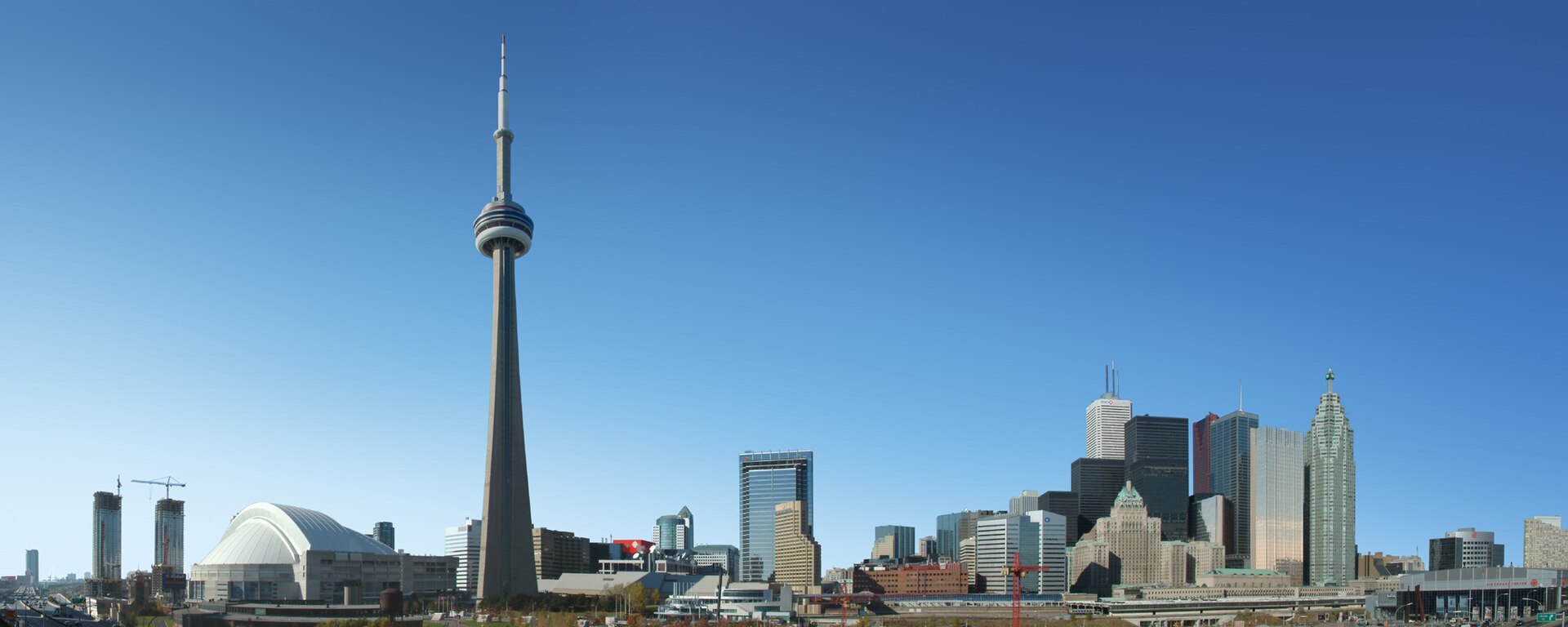
Image credit: Toronto skyline, Photo: Wikimedia Commons. Rates, contribution limits, and tax rules in this article were verified as of July 2026 and may change — the official information from Interactive Brokers, the CRA, and the IRS governs. This is general information sharing only and does not constitute investment, tax, or legal advice; stock investing carries risk, and Tesla in particular is a high-volatility security — consult a licensed professional for your own situation. This article contains a brokerage referral link from which we may earn a referral reward at no extra cost to you; we have no commercial partnership with Interactive Brokers. See our disclosure page.

About the author: Lifei Zhou
Model Y owner since 2022Ontario STO registered apprentice · 310SWorks on Porsche, Mercedes, BMW, Audi weeklyHundreds of readers referred (est.)
Lifei is a Tesla owner based in Canada, writing practical, fact-checked Tesla guides for US and Canadian drivers — buying, ownership, insurance, charging, and TSLA investing, all from first-hand experience.