
2026 Tesla Model Y USA Guide: Trims, Prices, FSD & Savings
2026 Tesla Model Y USA Guide: Trims, Prices, FSD & Savings

In one sentence
A 2026 buyer's guide to the US Tesla Model Y: choosing among five trims, the post-$7,500-credit savings paths, FSD subscription rules, insurance, charging, and warranty.
In the United States, the Tesla Model Y is more than just “the best-selling EV” — in 2023 it was the single best-selling vehicle on the planet across all categories, and through 2024 and 2025 it has remained the undisputed volume king of the American electric-vehicle market. From California’s 101 to Texas’s I-35, it’s the car you’ll see at every Supercharger. But buying a Model Y in the US in 2026 is a different game than it was two years ago: the $7,500 federal tax credit ended permanently on September 30, 2025, Tesla responded with a $39,990 Standard trim, the one-time FSD purchase was discontinued in favor of a subscription, and on May 16, 2026 Tesla actually raised prices for the first time in two years. The old playbooks are all out of date.
The lineup got more complicated, too. Tesla’s US site now lists five trims — Standard RWD/AWD, Premium RWD/AWD, and Performance — priced from $39,990 to $57,990, separated by layers of equipment, range, and rebate eligibility. Pick the wrong one and the money you overspend can exceed the federal credit you no longer get. As a longtime Tesla owner, I’ve put the entire 2026 Model Y homework into this one guide: how to choose among the five trims, how FSD works now, which money-saving paths still exist after the credit ended, and the real costs of insurance, charging, warranty, and repairs — plus the full price history since 2020. It’s long; bookmark it. If you just want the verdict, jump to “Who should buy which trim” at the end.
Disclosure: this article contains a Tesla owner referral link and affiliate links; if you buy through them we may earn a small commission at no extra cost to you. If you order a vehicle through the referral link you receive an official Tesla perk (currently 3 months of FSD), and we benefit too. All analysis is based on public information and real ownership experience, with no paid placement by any manufacturer. Prices and policies are current as of July 2026; before ordering, confirm with Tesla’s official site and IRS/state government sites. See our disclosure page.
📋 Contents
- The five 2026 US Model Y trims in one table
- How to choose a trim, and how to avoid option traps
- FSD in the US: buyout is dead, subscription rules, new cars no longer include basic Autopilot
- After the $7,500 is gone, where can you still save on a 2026 Model Y?
- Six years of price history: from the $65,990 frenzy to the $39,990 grind
- Charging costs: $0.04 a mile at home, and Supercharging is still half of gas
- Insurance: how much does a Model Y cost a year in the US?
- Warranty and extended coverage: what 8 years of battery warranty means
- Maintenance and repairs: absurdly cheap day to day, tires and glass are the big-ticket items
- A few cold showers: think these five things through before ordering
- Who should buy which trim? And how to order?
- Frequently Asked Questions
The five 2026 US Model Y trims in one table
Since October 2025, Tesla renamed the lineup to “Standard / Premium” — the old “Long Range” is now Premium. In February 2026 it added a Standard AWD to round things out. Every trim rides on the 2025 refresh (codename Juniper) platform, supplied to the US market by the Fremont, California and Austin, Texas factories.
| Trim | List price | EPA range | 0–60 mph | In a phrase |
|---|---|---|---|---|
| Standard RWD | $39,990 | 321 mi | 6.8 sec | The post-credit “rescue” trim: less content for a lower price |
| Standard AWD | $41,990 | 294 mi | 4.6 sec | Cheapest all-wheel drive; the pragmatic pick for snow-belt states |
| Premium RWD | $45,990 | 357 mi (longest in the range) | 5.4 sec | Range champ; a fully loaded single-motor |
| Premium AWD | $49,990 | 327 mi | 4.6 sec | The historical volume leader; the only trim offering seven seats (+$2,500) |
| Performance | $57,990 | 306 mi | 3.3 sec | 155 mph top speed, adaptive suspension, all-inclusive pricing |
Three easy traps to watch. List prices exclude fees — at checkout Tesla adds a $1,390 destination fee plus a $250 non-refundable order fee, so the Standard RWD’s real pre-tax out-the-door price is $41,630. The figures above reflect the May 16, 2026 increase (Premium RWD/AWD each up $1,000, Performance up $500, Standard untouched — Tesla’s first Model Y price hike in two years, a signal worth noting). And every US Model Y uses the Nevada factory’s NCA battery: the US has never received an LFP version. The online claim that “the US Standard is LFP” confuses it with the European and Canadian (Berlin-built) cars — so on every US trim, the recommended daily charge ceiling is still 80–90%, unlike the habits of LFP owners.
One July update before we go trim by trim: the long-rumored Model Y L is now real. On July 2, 2026 Tesla opened US orders for the long-wheelbase, six-seat (2+2+2) Model Y L as a $61,990 Launch Series (plus $1,390 destination), bundling 1 year of FSD, 1 year of free Supercharging, and 1 year of Premium Connectivity, with free choice of paint, interior, and wheels. EPA range is 325 miles, the wheelbase grows 5.9 inches and overall length 7 inches, and the order page shows deliveries in October–November 2026. It’s US-only for now (Canada hasn’t opened orders), so this guide focuses on the five regular trims — but if you were eyeing the seven-seat Premium AWD mainly for the third row, the Y L is now the roomier alternative to price against.
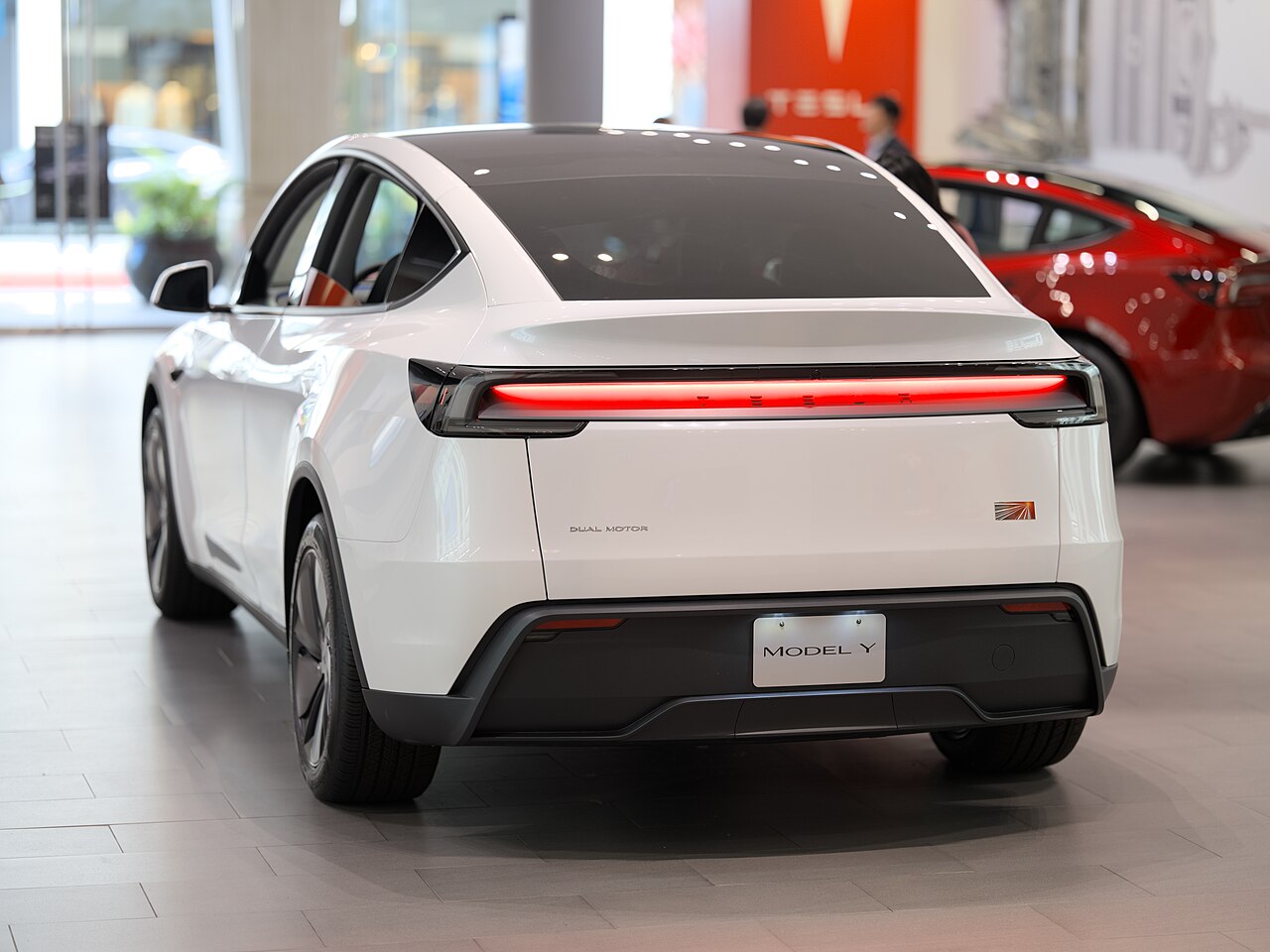
Standard ($39,990 / $41,990): see clearly what the low price costs you
On October 7, 2025 — a week after the federal credit ended — Tesla rushed out the Standard to hold its base. It undercuts the Premium by $6,000, but that $6,000 was carved out one cut at a time, and the deletion list is long: no full-width light bar (the most obvious “status difference”), cloth/synthetic-leather seats (front heating only, no ventilation), no rear 8-inch screen, a 7-speaker system with no AM/FM radio, no ambient lighting, no power-folding mirrors, manual rear seat fold, no HEPA filter, and a main screen shrunk from 16 to 15.4 inches. The most absurd cut: the glass roof is still there, but it’s sealed off entirely by an opaque headliner — Tesla’s cost accounting wouldn’t even spend the money to delete the glass and redesign the sheet metal.
Sounds like a deal-breaker? Look at it differently: the powertrain, body structure, safety equipment, and Autopilot hardware are identical to the Premium; 321 miles of range is plenty for daily use; and 6.8 seconds to 60 is still spirited by gas-car standards. If a car is “an efficient tool to get from A to B,” the Standard’s logic holds up completely. The AWD added in February 2026 adds just $2,000 for dual motors and 4.6-second acceleration — well worth it in snow-belt states. In short, the Standard is Tesla absorbing about half of that vanished $7,500 itself by trading content for price.
Premium ($45,990 / $49,990): everything you’d want — RWD or AWD?
Premium is the former Long Range: perforated synthetic-leather seats (front heating + ventilation), power-folding heated rear seats with an 8-inch entertainment screen, a 16-inch main display, a 15-speaker audio system, ambient lighting, and a HEPA filter. RWD or AWD? Simple. The Premium RWD’s 357 miles is the longest range in the entire lineup, and 5.4 seconds is plenty — ideal for mild climates and frequent road trips (California, Texas, the Southeast). The Premium AWD trades 30 miles of range for dual motors and 4.6 seconds; snow-belt drivers (New England, the Great Lakes, the mountains) should just pick it — and it’s the only trim that can be optioned with seven seats (+$2,500). The seven-seat configuration returned to the US in January 2026; the third row suits children, a real need for families shuttling two households of kids.
Performance ($57,990): the all-inclusive performance flagship
3.3 seconds to 60, a 155 mph top speed, 21-inch Arachnid 2.0 wheels, adaptive suspension, sport seats, carbon-fiber trim, and all premium paint colors included free — including the US-exclusive Frost Blue. At launch the white interior and a tow package were also free promotions (confirm in the configurator). For $8,000 over the Premium AWD you get a completely different chassis character plus a whole set of options that would otherwise cost $3,000+ — easy math for an enthusiast. Two costs: 306 miles is the second-shortest range in the range, and a set of 21-inch tires runs $1,900–$2,500 and wears fast — the real “cost of ownership,” covered in the repairs section below.
How to choose a trim, and how to avoid option traps
My three-question framework:
- Budget capped around $40K? Standard RWD/AWD. Go to a store and look at the cloth interior and opaque roof in person first; if you’re OK with it, order. New York buyers have a $2,000 state rebate waiting (below).
- Family’s main car, long trips, want comfort? Premium — RWD in warm states (357 miles), AWD in snow-belt states, add $2,500 for the third row if you need it.
- Obsessed with acceleration and handling? Performance — the all-inclusive pricing actually keeps it simple.
Practical option advice:
- Paint: Stealth Grey is free; Pearl White and Marine Blue (added May 2026, Premium only) are $1,000; Diamond Black is $1,500; all Performance colors are free. White and grey are easiest to resell; pick a bold color if you love it.
- Wheels: Standard upgrade to 19-inch is +$1,500, Premium to 20-inch is +$2,000 — my standing advice is to skip it. Bigger wheels eat 5–8% of real range, tires cost more, and they bubble more easily on rough roads. Put that money toward a full mat set and a home charger instead; for what to buy, see our home charger installation guide.
- Tow hitch: $1,000 ordered with the car (Class II, 3,500 lb, fine for a small boat, bike rack, or light trailer), or $1,300 installed afterward. Unlike Canada’s incentive rules, the US currently has no federal purchase rebate, so there’s no “exceed a price cap and lose your rebate” problem — order to your needs (New Jersey buyers note the MSRP cap, below).
- White interior (+$1,000): looks great and doesn’t bake in summer; how dirty it gets depends on whether you wear dark jeans. Families with kids, think twice.
FSD in the US: buyout is dead, subscription rules, new cars no longer include basic Autopilot
The 2026 FSD rules were rewritten, and every one of these changes touches your wallet:
- The one-time buyout is discontinued. As of February 14, 2026, new cars no longer offer an FSD buyout; the final price before discontinuation was $8,000 (the historical peak was $15,000). Existing buyout owners keep their rights, but the “transfer FSD with the car” window closed March 31 — used cars with a paid-off FSD are now a discontinued asset worth paying up for when shopping used.
- The $99/month subscription is now the only path. Subscribe and cancel at will — turn it on for long-trip season, off for the commuting months, spending a few hundred a year where it counts. Owners who bought the $6,000 Enhanced Autopilot (EAP) get a loyalty half-price rate: $49/month.
- As of January 23, 2026, new cars no longer include basic Autopilot. The once-standard “adaptive cruise + lane centering” was unbundled: new cars ship with only TACC (traffic-aware cruise control), and lane centering (Autosteer) now requires an FSD subscription. Part of the backdrop is a California DMV ruling about the misleading “Autopilot” name, but the practical effect is to push every new owner toward the $99/month subscription. Drivers upgrading from older cars will feel this gap the most — be prepared.
- New cars include a 30-day free FSD trial, active at delivery — enough to experience your commute and one road trip before deciding.
Worth subscribing? My honest take: on the highway (interstate lane changes, passing, on/off ramps) it’s already very mature; on city streets it has improved fast over the last year of version iterations, but extreme weather and complex construction zones still require you to take over at any moment — the name FSD (Supervised) carries legal meaning. Money-saving tip: ordering through an existing-owner referral link gets you 3 months of FSD (about $300 of value), which generally doesn’t stack with the 30-day trial (Tesla confirms the final perk on your order); link at the bottom. If you’re still torn between the Model Y and the Model 3, see our US Model 3 guide.
After the $7,500 is gone, where can you still save on a 2026 Model Y?
First, the bad news straight: the $7,500 federal new-car credit that ran for three years ended permanently on September 30, 2025 under the OBBBA law, the $4,000 used-car credit was eliminated alongside it, and there is no federal purchase credit of any kind for 2026 — which is exactly why Tesla posted its strongest-ever delivery quarter of 497,000 vehicles in Q3 of last year as everyone rushed to beat the deadline. But “no federal credit” doesn’t mean “nothing to save.” For 2026, the savings paths become these four, in priority order:
1. Auto-loan interest deduction (tax years 2025–2028): every Tesla qualifies
The same OBBBA law opened a new window: on a new vehicle assembled in the US, up to $10,000 of auto-loan interest per year can be deducted from taxable income (above-the-line — you can use it without itemizing), for tax years 2025–2028. The entire Model Y range is built in Fremont/Austin and qualifies automatically. Do the math: borrow $40,000 at 6.5% over 72 months, and first-year interest is about $2,500 — at a 22% rate that returns roughly $550, totaling around $1,500 over the early years. Note the income phase-out: it begins reducing above $100,000 MAGI single / $200,000 married. It’s not the force of the old $7,500, but it’s real money — if you finance, don’t forget to claim it.
2. Promotional financing: 0% APR on the Model Y RWD in July
With no credit to give away, Tesla has been competing on money cost instead. As of late July 2026 the official financing offers are: 0% APR for 72 months on the Model Y RWD (requires at least 5% down; below that it’s 0.99%), 0.99%/72 months on the Standard AWD and both Premiums, and 3.99%/72 months on the Performance. On a $40,000 loan, 0% versus a market-rate 6.5% is worth roughly $8,000 in interest over the term — quietly bigger than the old federal credit. These promos change monthly, so treat the numbers as a snapshot and confirm the current APR on Tesla’s site before ordering. (One related note: the 30C home-charger credit — 30% of equipment and install, up to $1,000 — expired on June 30, 2026. If you missed it, there’s no federal help for home-charging installs anymore; the install itself is still worth doing, see our home charger installation guide.)
3. State rebates: New York, New Jersey, and Massachusetts are still paying
| State | Program and amount | Model Y eligibility |
|---|---|---|
| New York (NY) | Drive Clean: $2,000 if price ≤$42,000, $500 above that (applied at purchase) | Standard RWD ($39,990) and AWD ($41,990) both squeak in for $2,000; Premium/Performance only $500. Funds are first-come; check the NYSERDA balance before ordering |
| New Jersey (NJ) | Charge Up NJ (FY27, from Jul 1, 2026): base $1,500 at point of sale + low-income Charge Up+ (pre-approval required) for up to $4,000 combined, MSRP ≤$55,000 | Standard/Premium all qualify; Performance ($57,990) is out. FY27 funding is $30M, first-come. Note NJ’s EV sales-tax exemption is fully gone (6.625% applies), and from July 2026 NJ charges a $270/year EV registration surcharge |
| Massachusetts (MA) | MOR-EV: new car $3,500 (MSRP ≤$55,000) + low-income $1,500 + gas-car trade-in $1,000 | Standard/Premium qualify, Performance out; stacked it can reach $6,000 — the most generous still standing nationwide |
| California (CA) | CVRP is closed (late 2023); only income-qualified programs remain (Clean Cars 4 All, five air districts, up to $12,000 + $2,000 charging) | No state rebate for ordinary buyers; low-income families trading in an old car should check CC4A eligibility |
Other states’ smaller programs (Colorado, Delaware, etc.) and utility home-charging rebates are scattered around; before ordering, spend ten minutes on your state energy office and your utility’s site — a few hundred dollars is often just sitting there.
4. The tax reality: sales tax + EV registration fees
What you pay to buy: sales tax ranges from 0% (Oregon, Montana, New Hampshire, Delaware, Alaska) to 10%+ (parts of California, Louisiana). On the Standard RWD’s pre-tax $41,630, California would add roughly $3,500–$4,300 in tax. What you pay to own: 41 states charge an annual EV registration surcharge (a replacement for gas tax), with a median around $150/year — Texas is $200/year (a new car’s first registration prepays two years, $400 upfront), Georgia about $235, Ohio $200. Subtract this honestly when you tally your “EV gas savings.”
Six years of price history: from the $65,990 frenzy to the $39,990 grind
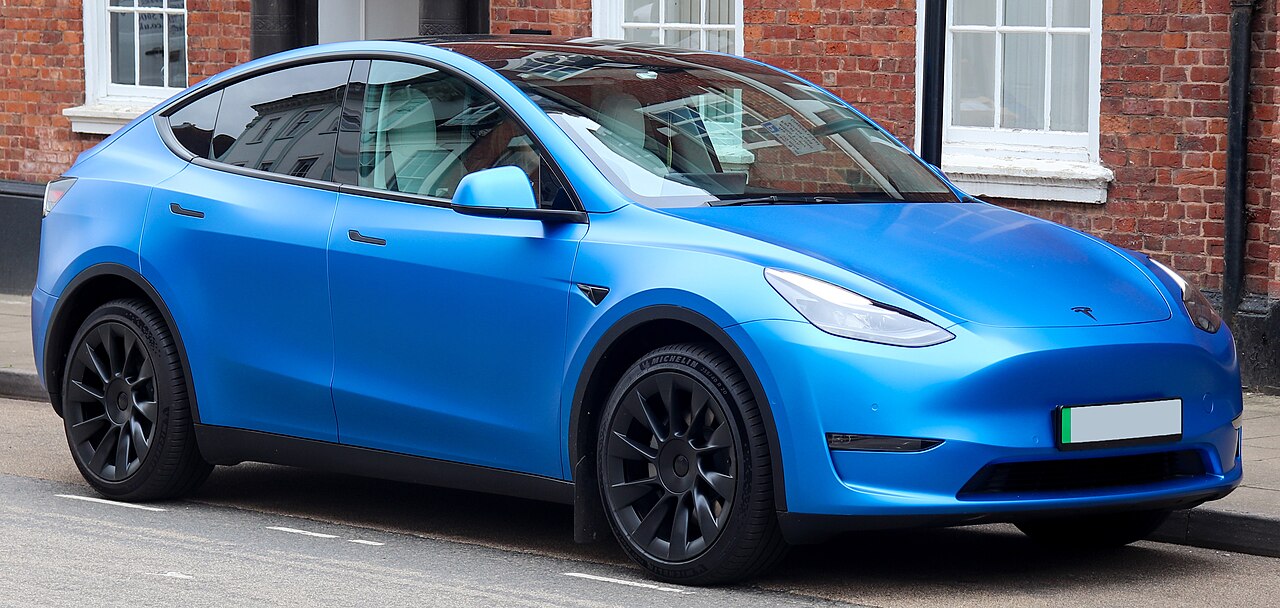
The Model Y’s US price history is a complete roller coaster. First the timeline:
| Date | Event | Representative price (USD) |
|---|---|---|
| Mar 2020 | First deliveries | LR AWD $52,990 / Performance ~$60,990 |
| Jan–Feb 2021 | Short-lived Standard Range ($41,990, 244 mi), cut six weeks later by Musk as “range unacceptably low” | $41,990 |
| 2021–Jun 2022 | Chip shortage + demand boom, a dozen-plus consecutive price hikes | Peak: LR $65,990 / Perf $69,990 |
| Jan 13, 2023 | Global price cut, −20% overnight; IRA $7,500 credit takes effect (from Feb, $80k SUV cap) | LR $52,990 / Perf $56,990 |
| Oct 2023 | Yet another cut + new RWD trim | RWD $43,990 (effective $36,490 after credit — historic low) |
| Apr 2024 | Range-wide $2,000 cut; credit becomes a point-of-sale discount | RWD $42,990 / LR $47,990 / Perf $51,490 |
| Jan 2025 | Juniper refresh opens for order | Launch Series $59,990; LR AWD $48,990 from March |
| Sep 30, 2025 | $7,500 federal credit ends permanently; Q3 rush sets a 497,000-unit record quarter | — |
| Oct 7, 2025 | Response to the credit ending: stripped-down Standard launches, old LR renamed Premium | Standard $39,990 |
| Feb 3, 2026 | Standard AWD added | $41,990 |
| May 16, 2026 | First price increase in two years: Premium +$1,000 each, Performance +$500 | Current $39,990–$57,990 |
Read this table as three acts:
Act I (2020–2022): the seller’s-market party. A post-pandemic chip shortage collided with an EV-demand explosion, orders stretched out six months, and Tesla raised prices steadily to test the ceiling, the Long Range climbing from $49,990 to $65,990. In those two years a used Model Y cost more than a new-car order; “take delivery, make money” was no joke.
Act II (2023–Sep 2025): the golden age of cuts plus credit. With Shanghai, Berlin, and Austin all at full capacity, Tesla pivoted into a price war: six rounds of cuts in 2023, and in October the RWD’s $43,990 stacked with the $7,500 credit for an effective $36,490 — the genuine bottom of the Model Y’s US price history, briefly refreshed again by April 2024’s $42,990 (effective $35,490). Buy in that window and you bought in the valley.
Act III (Oct 2025–now): repricing the post-credit era. When the credit died, Tesla didn’t simply eat $7,500 — it used the stripped-down Standard to pull the entry price back to $39,990, meaning “Tesla swallows half, the buyer accepts half”; and on May 16 this year Premium and Performance even ticked up. So the honest truth: in real purchasing power, buying a Model Y in 2026 is roughly $3,000–$5,000 more than the 2023–2024 golden window — a missed window is a missed window. But conversely, post-credit pricing has stabilized; Tesla daring to raise prices for the first time in two years says demand held, so the odds of more big cuts are low. The remaining levers are the ones in the chapter above: the loan-interest deduction, July’s 0% financing on the RWD, and the state rebates that survive.
The lesson for used buyers: about 60% depreciation over five years means the people who took delivery at the $65,990 peak in 2021–2022 ate the worst of it — their cars now sell for $22,000–$28,000; 2023–2024 cars run $30,000–$35,000. When buying used, hunt for two things: a car with a paid-off FSD (now discontinued) and ample battery-warranty runway. Used EV prices stabilized in 2026, so the bargain window is smaller than the panic period, but it’s still the value play.
Charging costs: $0.04 a mile at home, and Supercharging is still half of gas

A Model Y’s real consumption is about 0.25 kWh/mile (including charging losses), so at 15,000 miles a year that’s roughly 3,750 kWh. The bill depends entirely on where you charge:
- Home charging (the main plan): the US average residential rate is about 17.7¢/kWh, so the annual bill is around $660 — just over four cents a mile. State variation is huge: Texas about 15¢ (~$580/year), New York about 30¢ (~$1,125), California about 33¢ (~$1,240, though an EV time-of-use rate can push that toward 20¢). Texas has a special move: free-overnight-electricity plans from retailers like Reliant and TXU (energy free 9pm–6am) mean charging at night is effectively free — Texas owners should study this. For details on rates and savings, see our Supercharger cost guide.
- Superchargers: mainstream stations run $0.30–$0.45/kWh, California peaks hit $0.50–$0.60, and Texas and the Midwest dip to $0.18–$0.25; most stations are time-of-use, viewable live in the app. Relying entirely on Superchargers runs about $1,300–$1,700 a year. Two small charges to avoid: idle fees ($0.50/min when the station is half-full, $1.00/min when full) and congestion fees for staying plugged past 80% at busy stations — just build the “leave at 80%” habit.
- Versus gas: a 30-mpg hybrid SUV burns 500 gallons over 15,000 miles, about $1,600 at the $3.20/gallon US average, or $2,400 where gas runs $4.80+. A home-charged Model Y runs about $600 a year, saving $1,000–$1,800 on energy alone; even relying entirely on Superchargers still beats gasoline. Don’t forget to subtract your state’s EV registration fee ($150–$235) from those savings — that’s the honest math.
One note on the install cost: the 30C credit (30% of equipment + install, up to $1,000) expired on June 30, 2026, so there’s no federal help anymore. The Wall Connector unit is $420 and install typically runs $800–$1,500 — still the single best quality-of-life upgrade for ownership, it just no longer comes with a discount.
Insurance: how much does a Model Y cost a year in the US?
The numbers straight (full coverage, an experienced adult driver with a clean record, 2026 market): the US average Model Y premium is $3,400–$4,800 a year (methodologies vary widely; a median expectation of $3,500–$4,000 is safer). For comparison, the average US car runs about $1,700/year for full coverage — the Tesla premium comes mainly from collision-repair cost (aluminum panels, mega-castings, sensor calibration). State spreads are extreme: Hawaii under $2,000, Louisiana averaging $6,200, and New York City reaching $9,000; California and Florida sit firmly in the expensive tier.
Tesla’s own Tesla Insurance is currently sold in 13 states (California, Texas, Arizona, Colorado, Florida, etc., with Indiana and Tennessee in the filing pipeline) and, outside California, prices in real time off your Safety Score — drive well and you can genuinely save 20–30%. But see the other side clearly: its complaint rate is on the order of ten times the industry average, and in 2025 California regulators acted over claims-handling problems. My advice: treat it as a “must-quote option” rather than the default answer, and compare against Progressive, State Farm, and GEICO — at least four companies — before deciding. One iron rule: get a quote before you order, and write the premium into your budget. Canadian readers can see our companion Tesla insurance in Canada guide for how the two countries’ systems differ entirely.
Warranty and extended coverage: what 8 years of battery warranty means
| Warranty item | Term | Notes |
|---|---|---|
| Basic vehicle warranty | 4 years / 50,000 miles | Whichever comes first |
| Battery & drive unit (Standard) | 8 years / 100,000 miles | Guarantees ≥70% capacity retention over the term |
| Battery & drive unit (Premium / Performance) | 8 years / 120,000 miles | Same as above, higher mileage cap |
| Body corrosion perforation | 12 years / unlimited miles | Peace of mind in salt-belt states |
The takeaway: the battery warranty is the ballast for the whole car’s value — the most expensive part (a full pack replacement runs $10,000–$15,000+) is covered by Tesla for 8 years, and real degradation data is far better than the floor (per Tesla, average capacity retention is still around 80% at 200,000 miles); in normal use you won’t approach the 70% threshold. For 2026 Tesla also introduced a Battery ESA at $2,000, extending 2 years/30,000 miles beyond the original 8-year warranty ($500 deductible), which must be purchased before the original warranty expires — set a calendar reminder if you plan to keep a car ten years. Know the real weak spot too: the basic warranty is 4 years/50,000 miles, so a high-mileage commuter doing 20,000+ miles a year is out of basic coverage by year three — a genuine difference versus the Toyotas of the world.
Maintenance and repairs: absurdly cheap day to day, tires and glass are the big-ticket items
The Model Y’s ownership bill is “two extremes.” Routine maintenance runs $300–$650 a year — no oil, filters, spark plugs, or transmission fluid; the official list is just three things: tire rotation (every 6,250 miles), cabin air filter (every 2 years), and brake fluid as needed (tested every 4 years), with regenerative braking pushing brake-pad life well past 100,000 miles. Per RepairPal, Tesla averages $832/year in maintenance/repairs versus $429 for a Toyota RAV4 — more than the RAV4, but roughly half a German luxury SUV, with power from another planet. Before delivery, run through our delivery inspection checklist so any defect is caught while it’s still Tesla’s problem.
Where the money does go, straight:
- Tires: heavy car + big torque wears them faster than a gas car; a 19/20-inch set is $1,000–$1,400, replaced every 30,000–40,000 miles; the Performance’s 21-inch set is $1,900–$2,500 and, driven hard, gone in 15,000–20,000 miles — the Performance’s true cost of ownership.
- Glass: windshield/panoramic glass replacement is $1,500–$3,500 (including camera calibration); check the glass box when buying insurance. For accessories like screen protectors and mats, browse Amazon US (Canadian owners: Amazon Canada). The two I’d fit on day one: a set of 3W all-weather floor mats made for the refreshed Model Y (the carpet stains fast, and mats are far cheaper than detailing), and a Spigen matte screen protector — everything runs through that 15.4/16-inch screen, and the matte finish kills fingerprints and sun glare.
- Collision repair: aluminum parts + mega-castings mean many areas can only be replaced wholesale and must be done at a Tesla-certified shop, so both turnaround and the bill exceed a gas car’s — the root of the high premium, effectively “repair cost collected through your insurer.”
- Small parts: the 12V low-voltage battery is about $150 (every 4–6 years); wipers and filters are a half-hour DIY.
A few cold showers: think these five things through before ordering
- The Standard’s de-contenting is harsher than you’d think. The opaque “fake glass roof,” no radio, cloth seats, no rear screen — saving $6,000 to buy it is fine, but sit in one at a store first; the spec sheet can’t convey that “bare” feel.
- 2026 prices are $3,000–$5,000 above the credit era. Don’t anchor on 2023–2024 forum posts about an “effective $36K”; that window is permanently closed. The baseline now: $39,990 to start, no federal credit, Premium still rising.
- New cars have no basic Autopilot. Even lane centering requires the $99/month FSD subscription — the new reality since January 2026. Budget for it (or confirm TACC is enough for you).
- Quote insurance before you order. $3,500+/year full coverage is normal in many states; a young driver, an accident record, and a city address stacked together can double it — don’t let the delivery-day quote ruin the mood.
- The June 30 deadlines have passed. The 30C home-charging credit is gone for good, and New Jersey has rolled into its FY27 rules ($1,500 base). What’s on the table now is promotional financing — July’s 0% APR on the Model Y RWD is genuinely rare — but those offers reset monthly, so check the configurator rather than this paragraph. The overall price picture is stable; no need to panic-order.
Who should buy which trim? And how to order?
In one paragraph: budget-first and OK with a bare interior — Standard RWD ($39,990), with a $2,000 NY state rebate; add two grand for Standard AWD in snow-belt states; family main car, eyes closed on Premium (RWD for 357 miles in warm states, AWD in the snow belt, +$2,500 for seven seats); performance fans go straight to Performance, all-inclusive and no fuss. The ordering flow: configure online, $250 deposit, no dealer markup, no haggling, new orders typically deliver in 2–6 weeks, book a test drive at your nearest store. Canadian readers should head to the companion Canada coverage — the two countries’ trims, prices, and rebates are entirely separate systems.
🎁 Before you order: the official perk of 3 free months of FSD
Tesla sells direct with no discounts, so the only official deal is the owner referral program: as of July 2026, ordering a Model Y (all five trims qualify) through an existing-owner referral link gets you 3 free months of FSD (Supervised) — about $300 at the $99/month price — which generally can’t be combined with the new car’s 30-day trial; Tesla confirms the final perk on your order. If you don’t know a Tesla owner, you’re welcome to use my referral link; we both benefit:
Order a Model Y with the Tesla referral link, get 3 months of FSD →
Frequently Asked Questions
Standard RWD and Premium RWD differ by $6,000 — where exactly does it go?
The powertrain and safety hardware are identical; the difference is all experience content: the full-width light bar, ventilated synthetic-leather seats, the rear 8-inch screen, the 15-speaker system with radio, ambient lighting, HEPA, a transparent glass roof, and the 16-inch main screen, plus 36 miles of range (321 vs 357). Think of it as “bare shell vs finished build”: both are livable, but the comfort is a different story. Most people who can reach the Premium RWD won’t regret moving into the “finished” version.
Where is the US Model Y built? Is the Standard an LFP battery?
The US market is supplied entirely by the Fremont, California and Austin, Texas factories, with the NCA battery from the Nevada Gigafactory — including the Standard. The US has never received an LFP Model Y (LFP is used on the European/Canadian Standard). So on every US trim the recommended daily charge ceiling is 80–90%, charging to full only before a long trip.
Is the $7,500 federal credit really completely gone? Is there a replacement?
Both the new and used federal purchase credits ended permanently on September 30, 2025, and there is no federal credit for 2026 purchases. The replacement paths now are: the auto-loan interest deduction (tax years 2025–2028, US-assembled cars, up to $10,000 of interest a year), Tesla’s promotional financing (0% APR on the Model Y RWD as of July 2026), state rebates (NY $2,000 / NJ $1,500 / MA $3,500, all with price caps), and use-side savings like Texas’s free overnight electricity. The 30C home-charger credit expired June 30, 2026 and can no longer be claimed. Stacked, the rest can still save $2,000–$5,000 — you just have to go get it yourself.
Buy now or wait? Will it drop right after I buy?
Structurally, the price-cut cycle is over: Tesla raised prices in May 2026 for the first time in two years, signaling that post-credit demand held, and the Standard’s $39,990 entry has no momentum to drop further. What does move month to month is promotional financing — July’s 0% APR on the Model Y RWD (72 months, at least 5% down) is about as good as those offers get. My read: if you need a car, grab the certain rebates and the current APR in hand rather than betting on a cut; if you don’t urgently need one, there’s no need to panic either, because the overall price level is stable.
Is the seven-seat version worth it?
$2,500, Premium AWD only. The third row is a “kids’ seat” — adults can’t do long trips back there — but for families carpooling two households or occasionally traveling three generations, it’s a genuine need, and far cheaper than a dedicated three-row SUV. Families regularly hauling six or seven full-size passengers now have a Tesla answer too: the long-wheelbase, six-seat Model Y L opened for US orders on July 2, 2026 at $61,990 (Launch Series with 1 year of FSD, free Supercharging, and Premium Connectivity; 325 miles EPA; deliveries October–November). Its 2+2+2 layout with a usable third row is a different proposition from the Premium AWD’s kids-only jump seats — if third-row space is the whole reason you’re here, price both before ordering.
How do I pick a used Model Y?
Three points: prioritize a car with a paid-off FSD (discontinued since February 2026, transfer window also closed, so FSD goes with the car); confirm the battery-warranty runway (8 years/100,000–120,000 miles, transfers with the car — a 2021 car doesn’t expire until 2029); 2021–2022 peak-era cars are the most fully depreciated ($22,000–$28,000) and the best value, but the older cars lack the refresh’s chassis, sound insulation, and light bar, so test-drive a comparison before deciding.
- Budget buyers: Standard RWD at $39,990 (NY adds a $2,000 rebate), Standard AWD for +$2,000 in snow-belt states; sit in the bare interior and opaque roof first.
- Families: Premium — RWD for 357 miles in warm states, AWD in the snow belt, +$2,500 for seven seats on Premium AWD only.
- Performance fans: the all-inclusive Performance; budget for the 21-inch tire costs.
- Everyone: quote insurance before ordering, check the current promotional APR (0% on the RWD as of July 2026) and your state’s rebate, and order through an owner referral link for 3 free months of FSD.
Image credits (via Wikimedia Commons): cover and rear shots by Dllu (CC BY-SA 4.0); Inyokern Supercharger by Dllu (CC BY-SA 4.0); 2022 pre-refresh car by Vauxford (CC BY-SA 4.0). Prices, tax, and policy details are current as of July 2026; Tesla’s US site, the IRS, and individual state sites govern. Insurance and repair figures are market reference ranges that vary by person and location. This article is not purchase, insurance, financial, or tax advice. For authoritative specs and pricing, see Tesla’s official Model Y page, range data at fueleconomy.gov, and safety ratings at IIHS.

About the author: Lifei Zhou
Model Y owner since 2022Ontario STO registered apprentice · 310SWorks on Porsche, Mercedes, BMW, Audi weeklyHundreds of readers referred (est.)
Lifei is a Tesla owner based in Canada, writing practical, fact-checked Tesla guides for US and Canadian drivers — buying, ownership, insurance, charging, and TSLA investing, all from first-hand experience.