
Tesla Model 3 Price in Canada (2026): $39,490 to $74,990, With Tax by Province
Tesla Model 3 Price in Canada (2026): $39,490 to $74,990, With Tax by Province

The Tesla Model 3 starts at $39,490 in Canada, and that is the lowest price it has ever carried here. Add freight, fees and Ontario’s 13% HST and the same car costs about $47,600 on the road. This page gives you the price of every trim, the price with tax in each major province, and the few things worth knowing before you order.
Model 3 price in Canada at a glance (checked October 4, 2026)
- Model 3 Premium Rear-Wheel Drive: $39,490, 463 km of range
- Model 3 Premium All-Wheel Drive: $49,990, 570 km of range
- Model 3 Performance: $74,990, 505 km of range, 0–100 km/h in 3.1 seconds
- Add about $2,650 in freight and fees to every trim, then your provincial sales tax
- No Model 3 qualifies for the $5,000 federal EVAP rebate
- Ordering through an owner referral link adds 3 months of FSD (Supervised) for new owners
Disclosure: this article contains a Tesla owner referral link and one Amazon link. If you order through them we may earn a reward at no extra cost to you. See our disclosure page.
📋 Contents
- Tesla Model 3 price in Canada right now (October 2026)
- Model 3 price with tax, by province
- Which Model 3 should you buy?
- No federal rebate, and why that matters less than it sounds
- Why the Model 3 got this cheap
- Model 3 or Model Y?
- Model 3 against the gas cars on your list
- Range and winter driving
- FSD and Autopilot in Canada
- Warranty
- How to order a Model 3 in Canada
- Frequently Asked Questions
Tesla Model 3 price in Canada right now (October 2026)
Every number below was re-checked on Tesla’s Canadian Model 3 page and its configurator on October 4, 2026. Tesla sells the Model 3 in three versions. Two of them share the Premium name, which confuses people, so here they are side by side.
| Trim | List price | Range (EPA est.) | 0–100 km/h | Purchase price with fees | On the road in Ontario |
|---|---|---|---|---|---|
| Premium Rear-Wheel Drive | $39,490 | 463 km | 6.2 sec | $42,136 | about $47,600 |
| Premium All-Wheel Drive | $49,990 | 570 km | 4.4 sec | $52,636 | about $59,500 |
| Performance | $74,990 | 505 km | 3.1 sec | $77,636 | about $87,700 |
The list price is the number in Tesla’s ads. The purchase price is what the configurator shows at the bottom of the screen, and it already includes $2,500 for freight and pre-delivery inspection, a $100 federal air-conditioner excise tax, and a small tire fee. Sales tax and licensing come on top of that.
Rounded estimates. Plate and registration fees are extra and vary by province.
Tesla does not negotiate, and there are no dealers. The one official perk on a new order is the owner referral program: a new owner who orders through a referral link gets 3 months of FSD (Supervised). If you already own or have owned a Tesla, the configurator replaces that with a $650 loyalty credit off the car. Our referral code guide explains how the program works and the mistakes that void the perk.
Order with our referral link and get 3 months of FSD →
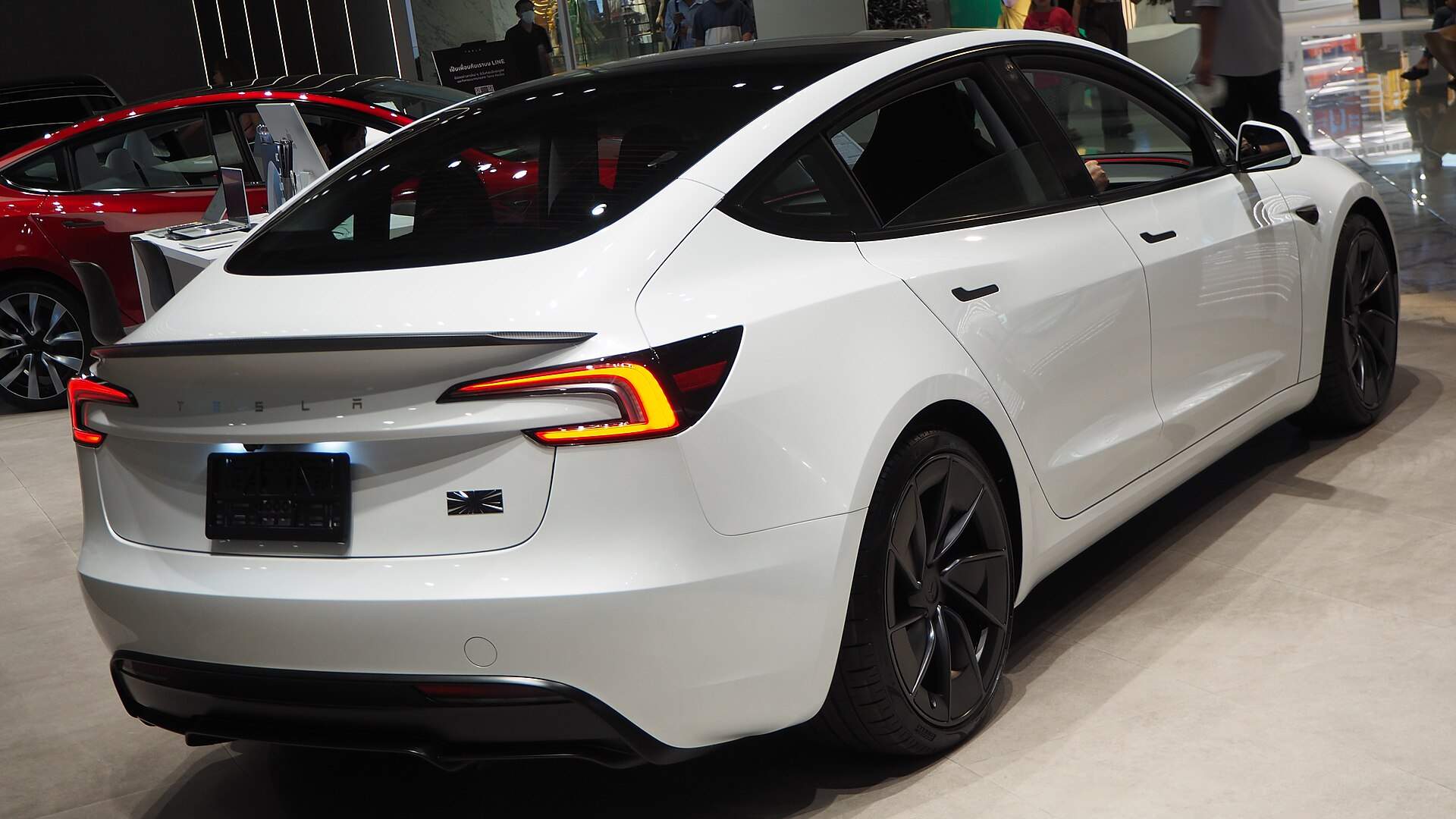
Model 3 price with tax, by province
The car costs the same everywhere in Canada. What changes is the sales tax. The table starts from Tesla’s purchase price with fees and adds each province’s tax.
| Province | Sales tax | Premium RWD | Premium AWD | Performance |
|---|---|---|---|---|
| Ontario | 13% HST | $47,614 | $59,479 | $87,729 |
| British Columbia | 5% GST + 7% PST | $47,192 | $58,952 | $86,952 |
| Quebec | 5% GST + 9.975% QST | $48,446 | $60,518 | $89,262 |
| Alberta | 5% GST | $44,243 | $55,268 | $81,518 |
For any other province, multiply $42,136 by one plus your combined sales tax rate. In a 15% HST province, for example, the Premium RWD comes to about $48,460. These are estimates; your delivery invoice is the final word.
- Car$39,490 · 82.9%
- Freight and fees$2,646 · 5.6%
- 13% HST$5,478 · 11.5%
- Total$47,614
Tax is charged on the car and the fees together, which is why HST is more than 13% of the list price.
Two more ways to lower the bill. Tesla’s Canadian Heroes program takes $1,000 off for military members, first responders, healthcare workers, teachers and students, and you have to verify through ID.me before you place the order. And Alberta buyers simply pay less tax; our Calgary and Alberta buying guide covers the local details.
Which Model 3 should you buy?
Premium Rear-Wheel Drive, $39,490. This is the one most people should look at first. It is not a stripped car: you get the glass roof, the 15.4-inch screen, heated seats and 463 km of rated range. It uses a lithium iron phosphate (LFP) battery, which is happy being charged to 100% every day. That suits anyone who charges at home.
Premium All-Wheel Drive, $49,990. For $10,500 more you get a second motor, 570 km of range and 0–100 km/h in 4.4 seconds. If you drive a lot of highway, or you live where the roads stay snowy for months, this is the trim that takes the stress out of winter.
Performance, $74,990. It reaches 100 km/h in 3.1 seconds and tops out at 262 km/h. It is also $25,000 more than the AWD car, so buy it because you want the speed, not because you need it.
260 km
450 km
540 km
Approximate driving distances from Toronto. Deep cold here means roughly −15°C to −20°C, where 65–75% of the rated range is a normal result. Plan to arrive with a buffer, not at zero.
No federal rebate, and why that matters less than it sounds
The Model 3 does not qualify for the federal EVAP incentive. The program pays up to $5,000 on a battery-electric car, but only if the car is built in Canada or in a country that has a free-trade agreement with Canada. The Model 3 sold here comes from Shanghai, so it is out. You can see the rules and the current list on Transport Canada’s incentive page.
That sounds like a loss until you compare it with the cars you would otherwise buy. Regular hybrids such as the Camry get no federal rebate either. And the one Tesla that does qualify, the Model Y Rear-Wheel Drive, costs $44,990 after its $5,000 rebate, which is still $5,500 more than the Model 3.
On the provincial side, Ontario, British Columbia and Alberta have no purchase rebate. Quebec’s Roulez vert program pays $2,000 on eligible new electric cars registered by December 31, 2026, and then ends. If you are buying in Quebec, check your exact trim on the Roulez vert site before you order.
Why the Model 3 got this cheap
The low price is not a clearance sale. It comes from where the car is built and which tariff applies to it. That changed three times in two years.
- 2024Canada puts a 100% surtax on Chinese-built electric cars. Shanghai-built Model 3s can no longer be sold here at a sensible price, so Tesla switches Canada to cars built in California.
- April 2025Canada adds a 25% counter-tariff on vehicles built in the United States. Tesla raises Canadian prices by 13–22%. The Long Range All-Wheel Drive goes from $68,990 to $79,990 and the Performance reaches $89,990.
- January 2026Canada and China agree to cut the tariff on Chinese-built electric cars to 6.1%, with a yearly quota of 49,000 vehicles that grows toward 70,000 by 2030.
- May 1, 2026Tesla brings the Shanghai-built Model 3 back to Canada at $39,490.
$89,990Performance$79,990Long Range AWD$74,990Performance$49,990Premium AWD$39,490Premium RWD
The all-wheel-drive car is $30,000 cheaper than at the peak and the Performance is $15,000 cheaper. The $39,490 rear-wheel-drive trim did not exist in April 2025.
Two things follow from this. First, the car is the current model, not old stock. Second, the price depends on a quota. The first quota year runs from March 1, 2026 to February 28, 2027, and permits are handed out first come, first served. If the quota runs tight, prices could firm up or waits could grow. Nobody can promise the price will never move, but a car that already sits at its all-time low has less room to fall than one bought at the 2025 peak.
Model 3 or Model Y?
Most people looking at a Model 3 also look at the Model Y. Here is the short comparison for the two entry trims.
| Model 3 Premium RWD | Model Y Rear-Wheel Drive | |
|---|---|---|
| List price | $39,490 | $49,990 |
| Federal EVAP rebate | Not eligible | $5,000 |
| Price after rebate | $39,490 | $44,990 |
| Range (EPA est.) | 463 km | 463 km |
| 0–100 km/h | 6.2 sec | 7.2 sec |
| Body | Sedan with a trunk | SUV with a hatch |
| Built in | Shanghai | Berlin |
The gap is $5,500 after the rebate. If you carry strollers, bikes or a dog, or you want the higher seat, the Model Y is worth it. If you mostly commute and take family trips, the Model 3 does the same job for less. Our Model Y Canada price guide has the full breakdown, and Model Y vs Model 3 compares them in more depth.
Model 3 against the gas cars on your list
For years the safe choice in Canada was a Toyota. It is worth running the numbers again. These are manufacturer starting prices as listed in July 2026; check each maker’s site for today’s figure.
| Car | Type | Starting price |
|---|---|---|
| Tesla Model 3 Premium RWD | Electric mid-size sedan | $39,490 |
| Toyota Camry | Hybrid mid-size sedan | $34,575, with mid trims at $38,770–$45,330 |
| Toyota RAV4 Hybrid | Hybrid compact SUV | $37,500, with the popular XLE near $45,000 including fees |
| Honda Civic Hybrid | Hybrid compact sedan | $34,100 |
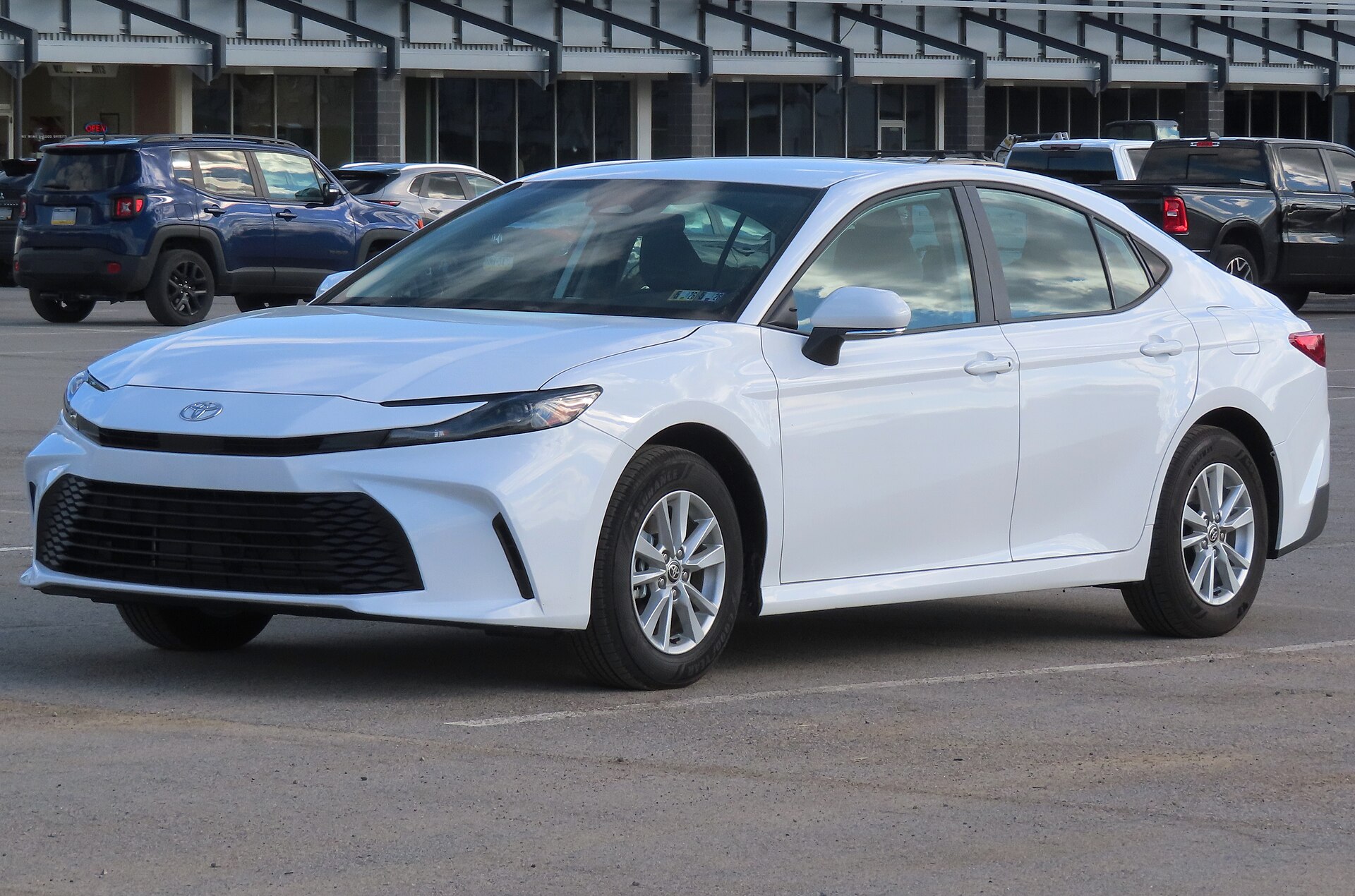
The purchase prices are close. The running costs are not. A Model 3 uses roughly 14 kWh per 100 km, so 20,000 km a year takes about 2,800 kWh. What that costs depends on where you plug in.
Estimates. Ontario’s Ultra-Low Overnight rate is 3.9¢/kWh; Alberta is taken at about 16¢/kWh all in; Superchargers at $0.30–$0.55/kWh; gasoline at $1.60 a litre.
Ontario’s Ultra-Low Overnight plan is the reason the first bar is so short. You need a home charger to use it; our home charger installation guide explains the options and the cost. Maintenance tilts the same way: there is no engine oil, no transmission service, and the brake pads last a long time because the motor does most of the slowing.
Range and winter driving
The Premium RWD’s 463 km rating covers a normal week of commuting on one charge. Winter is the part to be realistic about. In a cold snap of −15°C or lower, expect something like two thirds to three quarters of the rated range, and the LFP battery in the rear-wheel-drive car also charges more slowly when it is cold.
Three habits make winter easy. Leave home with a full battery, which the LFP pack is fine with. Warm the cabin from the app while the car is still plugged in, so the heat comes from the house and not the battery. And let the navigation route you to a Supercharger, because it warms the battery on the way so the charge goes faster.
Traction is better than most people expect, because an electric motor meters out power far more precisely than an engine and gearbox can. It still needs proper winter tires; all-wheel drive helps you get going, not stop. A long snow brush is worth having before the first storm, and this AstroAI extendable snow brush reaches across the glass roof. For the gear I have actually used on my own Tesla, see the owner-tested accessories page.
FSD and Autopilot in Canada
New Teslas no longer include basic Autopilot. Since late January 2026 a new Model 3 comes with Traffic-Aware Cruise Control only. Lane centring and everything else in Full Self-Driving (Supervised) come through a subscription at $99 a month, and the one-time purchase option ended in February 2026. You can start and stop the subscription whenever you like.
FSD (Supervised) is a driver-assistance system. You are responsible at all times and have to keep watching the road. On a long drive down the 401 it takes a real share of the fatigue away, which is why the 3 months that come with a referral order are worth having: that is enough time to try it on your commute and on one proper road trip before you decide whether to pay for it.
Warranty
Tesla’s new vehicle warranty in Canada has two parts that matter. The basic warranty covers the car for 4 years or 80,000 km. The battery and drive unit are covered for 8 years, up to 160,000 km on the rear-wheel-drive car and 192,000 km on the all-wheel-drive and Performance cars, with a guarantee that the battery keeps at least 70% of its capacity over that period.
Insurance is a separate question, and Tesla premiums vary a lot by province and driver. Get a quote on the exact trim before you order; our Tesla insurance guide for Canada shows what to expect.
How to order a Model 3 in Canada
You order on Tesla’s website. There is no dealer, no markup and no haggling.
If you finance through Tesla, the configurator’s default on October 4, 2026 was 5.21% APR over 96 months with $4,300 down. That rate changes from month to month, so compare it with your own bank before you sign.
Start your Model 3 order with the referral link →
For more Canadian coverage, browse the Canada Tesla section.
Frequently Asked Questions
How much is a Tesla Model 3 in Canada?
As of October 4, 2026 the Model 3 Premium Rear-Wheel Drive is $39,490, the Premium All-Wheel Drive is $49,990 and the Performance is $74,990. Freight, fees and sales tax are extra.
How much is a Model 3 in Canada with tax?
The $39,490 Premium RWD comes to about $47,600 in Ontario, $47,200 in British Columbia, $48,400 in Quebec and $44,200 in Alberta. That includes $2,646 in freight and fees plus provincial sales tax.
What is the cheapest Tesla in Canada?
The Model 3 Premium Rear-Wheel Drive at $39,490. The cheapest Model Y is $49,990, or $44,990 after the federal rebate.
Does the Model 3 qualify for the federal EV rebate?
No. The federal EVAP incentive requires the car to be built in Canada or in a free-trade partner country, and the Model 3 sold in Canada is built in Shanghai.
Is the $39,490 Model 3 old inventory?
No. It is the current Model 3, built in Shanghai and on sale in Canada since May 1, 2026. The price fell because the tariff on these cars dropped to 6.1%.
Is a Shanghai-built Model 3 as good as an American-built one?
The Shanghai plant supplies Europe, Australia and much of Asia, and it also supplied Canada before 2024. It has a good reputation for build quality among owners.
Will the price drop again after I buy?
Nobody can rule it out. But $39,490 is already the lowest Canadian price the Model 3 has had, and it depends on a limited import quota, so a large further cut looks less likely than a small rise.
Model 3 or RAV4?
If you need SUV cargo space or the higher seat, get the SUV, or look at the Model Y. If you mainly commute and take family trips, the Model 3 costs about the same as a popular RAV4 Hybrid trim and is far cheaper to run.
Image credits: Model 3 exterior and interior photos by Chanokchon and Ethan Llamas (CC BY-SA 4.0); Toyota Camry photo by MercurySable99 (CC BY-SA 4.0), all via Wikimedia Commons. This article is general information, not purchase, financial or tax advice. Some links are referral or affiliate links; see our disclosure page.

About the author: Lifei Zhou
Model Y owner since 2022Ontario STO registered apprentice · 310SWorks on Porsche, Mercedes, BMW, Audi weeklyHundreds of readers referred (est.)
Lifei is a Tesla owner based in Canada, writing practical, fact-checked Tesla guides for US and Canadian drivers — buying, ownership, insurance, charging, and TSLA investing, all from first-hand experience.