
Tesla Model Y Price in Canada (2026): $44,990 to $74,990, With Tax by Province
Tesla Model Y Price in Canada (2026): $44,990 to $74,990, With Tax by Province

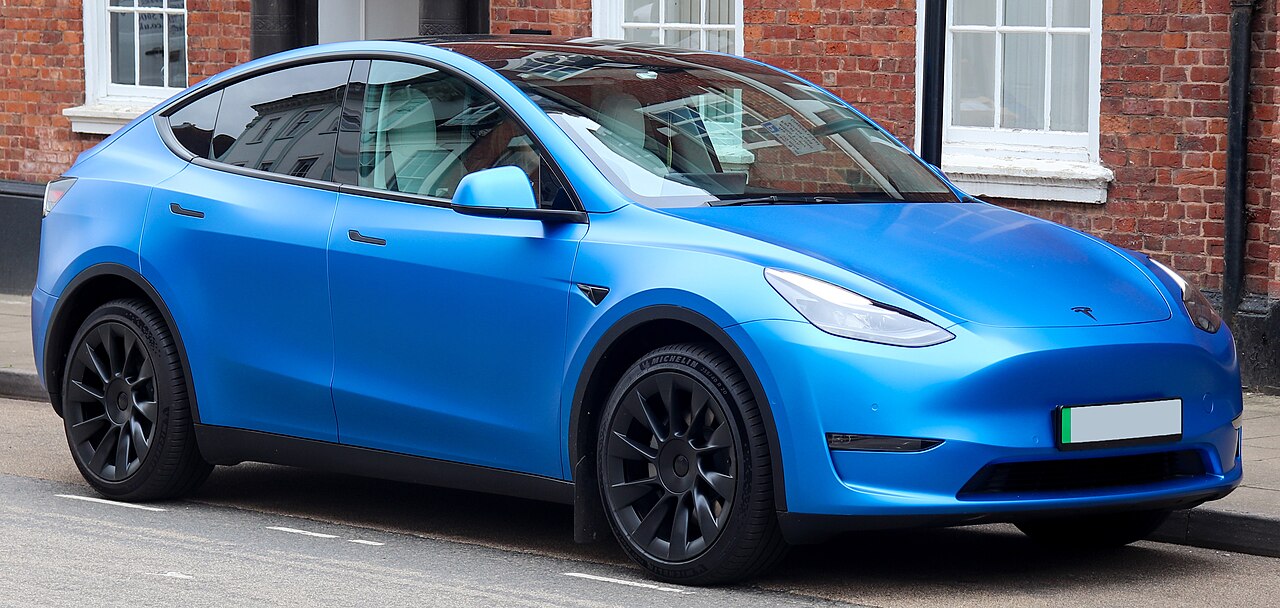
The Tesla Model Y starts at $49,990 in Canada. The entry Rear-Wheel Drive trim also gets the $5,000 federal EVAP rebate, so Tesla advertises it at $44,990, the lowest a Model Y has ever cost here. With freight, fees and Ontario’s 13% HST, that car is about $54,500 on the road. This page covers the price of every trim, the price with tax by province, and what to know before you order.
Model Y price in Canada at a glance (checked October 4, 2026)
- Model Y Rear-Wheel Drive: $49,990, or $44,990 after the $5,000 federal EVAP rebate; 463 km of range
- Model Y Premium All-Wheel Drive: $64,990, 542 km of range, no rebate
- Model Y Performance: $74,990, 494 km of range, 0–100 km/h in 3.5 seconds, no rebate
- Add about $2,650 in freight and fees to every trim, then your provincial sales tax
- Do not add the $1,300 tow hitch to a Rear-Wheel Drive order: it pushes the car over the $50,000 cap and you lose the whole rebate
- Ordering through an owner referral link adds 3 months of FSD (Supervised) for new owners
Disclosure: this article contains a Tesla owner referral link, a Starlink referral link (Canada only) and a JOWUA partner link. If you order through them we may earn a reward at no extra cost to you. See our disclosure page.
📋 Contents
- Tesla Model Y price in Canada right now (October 2026)
- The 2026 Canadian Model Y lineup: three trims in one table
- Which trim, and how to avoid option traps
- FSD in Canada: subscription only, at $99 a month
- Rebates and taxes: Model Y price with tax, by province
- Model Y price history in Canada: from $86,990 to $44,990
- Delivery times: the 2026 allocation is nearly gone
- Charging costs: how it comes out to two cents a kilometre
- The Model Y as a road-trip and camping car (and why Starlink fits)
- Insurance: what’s a realistic annual budget?
- Warranty and extended coverage: what an 8-year battery warranty means
- Service and maintenance: absurdly cheap day to day, painful after a crash
- Five things to think through before ordering
- Who should buy which trim, and how to order
- Frequently Asked Questions
Tesla Model Y price in Canada right now (October 2026)
Tesla’s Canadian prices have not moved since the Rear-Wheel Drive trim became eligible for EVAP in March 2026. These are the figures on Tesla’s Canadian Model Y page and its configurator, re-checked on October 4, 2026. List prices are in Canadian dollars, before freight, taxes and options.
| Trim | List price | After federal EVAP | Freight and PDI | Estimated out-the-door in Ontario (13% HST) |
|---|---|---|---|---|
| Model Y Rear-Wheel Drive (463 km) | $49,990 | $44,990 | $2,500 | about $54,500 |
| Model Y Premium AWD (542 km) | $64,990 | not eligible | $2,500 | about $76,400 |
| Model Y Performance (494 km) | $74,990 | not eligible | $2,500 | about $87,700 |
| Model Y L (six-seat) | not sold in Canada | — | — | US-only for now (US$61,990) |
Rear-Wheel Drive
- List price
- $49,990
- EVAP rebate
- −$5,000
- Range
- 463 km
- 0–100 km/h
- 7.2 sec
Premium AWD
- List price
- $64,990
- EVAP rebate
- none
- Range
- 542 km
- 0–100 km/h
- 4.8 sec
Performance
- List price
- $74,990
- EVAP rebate
- none
- Range
- 494 km
- 0–100 km/h
- 3.5 sec
On-the-road figures are rounded estimates with freight, fees and 13% HST. Plate and registration fees are extra.
Here is how the Rear-Wheel Drive gets from $49,990 to about $54,500. Tesla’s configurator shows a purchase price of $52,636, which is the car plus $2,500 for freight and pre-delivery inspection, a $100 air-conditioner excise tax and a small tire fee. Ontario adds 13% HST on that total, and the $5,000 rebate comes off at the end.
Each step starts where the last one ended. Tax is charged on the car and the fees together, and the rebate comes off the taxed total on your invoice.
Three things are worth knowing before you go further.
- The $44,990 in Tesla’s ads is the Rear-Wheel Drive after the federal rebate. The Premium AWD and Performance cost more than $50,000, so they get nothing.
- The Rear-Wheel Drive has been at this price since March 2026. The same model peaked at $86,990 in 2022; the full price history is further down.
- Demand in Canada roughly doubled in the second quarter, and since summer new custom orders have been quoting delivery in December 2026 to January 2027. If you want a car sooner, look at Tesla’s inventory page first.
Tesla does not negotiate. The one official perk on a new order is the owner referral program: a new owner who orders through a referral link gets 3 months of FSD (Supervised). If you already own or have owned a Tesla, the configurator replaces that with a $650 loyalty credit off the car. Our referral code guide explains how the program works and the mistakes that void the perk.
Order with our referral link and get 3 months of FSD →
I have driven my own Model Y around the Greater Toronto Area for close to four years, through four Ontario winters. The rest of this guide covers the three trims and the option traps, how FSD works now, taxes by province, the price history, delivery, charging costs, insurance, warranty and maintenance. It is long, so use the contents list to jump to what you need.
The 2026 Canadian Model Y lineup: three trims in one table
First, let’s clear up a naming mess that trips a lot of people up. In October 2025 Tesla renamed the whole range to “Standard / Premium,” but around February 2026 the Canadian site switched the entry trim back to “Rear-Wheel Drive (RWD).” So the “Model Y Standard” and “Model Y RWD” you see online are the same car. Three trims are on sale in Canada right now (all on Tesla’s official Model Y page), all the 2025 refresh (codename Juniper, with the full-width front and rear light bars):
| Item | Model Y RWD | Model Y Premium AWD | Model Y Performance |
|---|---|---|---|
| List price | $49,990 (advertised $44,990 after EVAP) | $64,990 | $74,990 |
| Range (EPA est.) | 463 km | 542 km | 494 km |
| 0–100 km/h | 7.2 sec | 4.8 sec | 3.5 sec |
| Top speed | 201 km/h | 201 km/h | 250 km/h |
| Battery type | LFP (lithium iron phosphate), fine to charge to 100% daily | NMC long-range pack | NMC long-range pack |
| Peak Supercharging | 175 kW (~243 km in 15 min) | 250 kW (~253 km in 15 min) | 250 kW (~229 km in 15 min) |
| Wheels | 18″ Aperture (only option) | 19″ standard / 20″ +$2,600 | 21″ Arachnid 2.0 standard |
| Interior | Black cloth seats, no rear screen, no ambient lighting, 7 speakers | Black synthetic leather standard, white interior +$1,300, 8″ rear screen | Sport seats, black/white interior both free, premium connectivity included |
| Tow hitch (1,600 kg) | Optional +$1,300 (watch the EVAP risk — see below) | Optional +$1,300 | Standard |
| Built in | Entire range: Giga Berlin, Germany | ||

Why does the country of origin matter so much? Because it directly sets today’s price. In 2024 Canada slapped a 100% tariff on Chinese-built EVs, locking out Shanghai-made cars; in April 2025 Canada added a 25% retaliatory tariff on US-built vehicles, locking those out too. Tesla’s answer was to source every Canadian Model Y from its Berlin plant: German cars travel under the Canada-EU trade agreement (CETA), which both dodges the retaliatory tariff on US goods and satisfies the federal EVAP requirement that vehicles be built in a free-trade-agreement country. The first Berlin-built Model Ys landed in Halifax in September 2025, and Canada’s Model Y has been “Made in Germany” ever since. The Berlin cars even keep an FM radio (dropped on the US version). For contrast, the Model 3 went the other way — back to Shanghai sourcing — which is the backstory to Model 3’s drop to $39,490: one brother German-built, one Chinese-built, a textbook of Tesla’s global supply-chain flexibility.
RWD: the $44,990 value champion, but understand what’s been cut
Launched January 8, 2026, this entry trim is the one most buyers are looking at. 463 km of rated range, 7.2 seconds to 100 km/h, 18″ wheels and an LFP battery — not a dazzling spec sheet, but plenty in practice: Toronto to Kingston (about 260 km) with a comfortable buffer in mild weather, and roughly one charge a week for a normal commute. The LFP battery can be charged to 100% every day without worry and has a long cycle life, which suits anyone with home charging. It’s also the only trim that qualifies for the $5,000 federal EVAP rebate, bringing its real price to $44,990 — less than the mid-to-upper trims of many gas SUVs.
To be clear, though, this is a genuinely stripped-down version. Cloth seats (not synthetic leather), no rear entertainment screen, no ambient lighting, a manually adjusted steering wheel, and a sound system cut from 15+ speakers to 7. The bigger cut is on driver assistance — more in the FSD section below.
Premium AWD: the all-rounder for $15,000 more (really $20,000)
542 km is the longest range in the lineup, 0–100 in 4.8 seconds, and dual-motor all-wheel drive gives a composure on snow and ice the RWD simply can’t match. The interior is fully loaded (synthetic leather, rear screen, ambient lighting, good audio, power steering-column adjustment). This is the trim formerly called Long Range All-Wheel Drive, and the best-seller in Canada for years. Do the math carefully, though: the list price gap is $15,000, but the RWD gets $5,000 in incentives and this trim doesn’t, so the real difference is $20,000. That buys 79 km of range, AWD, 2.4 seconds of acceleration, and a full suite of comfort features — worth it or not depends on whether you live in the snow belt and how much highway you run.
Performance: the $74,990 sleeper that’s surprisingly shrewd
The new Performance, ordered from November 2025 and delivered in early 2026, does 0–100 in 3.5 seconds, tops out at 250 km/h, rides on 21″ wheels with sport seats, and comes “all-inclusive”: every paint colour free, black or white interior free, tow hitch standard and Premium Connectivity included. If you were going to option a Premium AWD with Ultra Red paint ($2,600) + white interior ($1,300) + 20″ wheels ($2,600) + tow hitch ($1,300), you’d be at $72,790 — add just $2,200 and you’re in a Performance with three-second acceleration and a full sport chassis. The math writes itself. There’s a hidden bonus in its $74,990 price too: it lands just under BC’s $75,000 luxury ZEV PST threshold (see the tax section), which looks like a deliberate choice on Tesla’s part.
Which trim, and how to avoid option traps
Three questions settle it for most buyers.
Is your budget capped under $50,000?Rear-Wheel Drive
Lots of highway, deep snow, or kids in the back?Premium AWD
Were you going to add paint, wheels and a hitch anyway?Performance
A few practical notes on options:
- Paint: the RWD’s three colours (Stealth Grey / Pearl White / Diamond Black) have all been free since March 2026 — an adjustment made to keep it EVAP-eligible, so any colour qualifies. On the Premium, Marine Blue / Pearl White are $1,300; Quicksilver / Ultra Red are $2,600. White and grey resell easiest on the used market.
- Tow hitch ($1,300): Class II, 1,600 kg towing — enough for a small trailer or bike rack. But think twice before adding it to a RWD: the EVAP $50,000 transaction-price cap includes options, and $49,990 + $1,300 blows past it, killing the entire $5,000 incentive. Spending $1,300 to lose $5,000 is the easiest mistake to make on a Canadian Model Y order in 2026. If you really need a hitch, have a third-party one fitted after delivery or step up to the Premium.
- 20″ wheels (Premium, +$2,600): good-looking, but they cost 5–8% of real-world range, and winter tires for them are pricier. My advice: keep the 19s and put the money into a good set of winter tires, which matter far more in Canada. While you’re at it, a set of all-weather floor liners and a centre-console organizer from JOWUA (use code TSLNA for 5% off; DHL to Canada with duties included) saves the cabin from salt and slush. The accessories I have used on my own car are on the owner-tested gear page.
- Seven seats and the Model Y L: the seven-seat option offered in the US can’t be ordered on the Canadian configurator, and the six-seat, long-wheelbase Model Y L that opened for US orders in July 2026 (US$61,990) is not offered in Canada either, with no official timeline. Tesla stopped shipping US-built cars to Canada because of the retaliatory tariff, so a Canadian launch would most likely need a Shanghai-sourced car the way the Model 3 is. Big families needing three rows are stuck with a used Model X or have to wait.
FSD in Canada: subscription only, at $99 a month

The rules for buying FSD in 2026 are completely different from two years ago. Old guides are obsolete; here’s where Canada stands:
- The one-time purchase is discontinued. As of February 14, 2026 (the same day as the US), new cars no longer offer an FSD buyout option; the final price before it ended was CAD $11,000 (it once peaked at $16,000). Owners who already bought it keep their rights, but the “FSD transfers with the car” window also closed on March 31, 2026 — so a used car with purchased FSD is now rare and worth a premium when shopping used.
- The only path now: subscription, CAD $99/month. Start and stop as you like — run it for two months of summer road trips, switch it off in winter, and spend a few hundred dollars a year putting the best experience where it counts. Honestly, the subscription model is friendlier for most people: the $11,000 buyout takes over nine years to break even on a monthly basis.
- The change most people miss: new cars no longer include basic Autopilot. Since late January 2026, new Model 3 and Model Y cars in North America ship with Traffic-Aware Cruise Control only; lane centring (Autosteer), once standard, now needs an FSD subscription. If you’re coming from an older Tesla, adjust your expectations — it’s a clear nudge toward subscribing.
- New cars get a 30-day free FSD trial — activate it after delivery; it’s enough to try your commute and one road trip before deciding.
How well does FSD work in Canada? On highways it’s very capable: lane changes, passing and on/off ramps on the 401 and QEW are smooth, though you must keep your eyes on the road. City driving improved quickly after the late-2025 releases, but snow and faded lane markings on rural roads can still require you to take over at any moment — which is why it’s called Supervised. Either way, get an insurance quote for your own profile before ordering and include it in your budget — see our Tesla insurance Canada guide, since trim affects premiums as well.
Money tip: right now, ordering through an owner referral link gets you 3 months of FSD (Supervised) (worth about $300). It generally can’t be combined with the 30-day trial (Tesla confirms the final perk on your order), but it’s handy if you want to give Autosteer a proper try before committing to a subscription.
Rebates and taxes: Model Y price with tax, by province
Federal EVAP incentive: $5,000, but only the RWD qualifies
Launched February 16, 2026, the federal EVAP program (the successor to iZEV) is the biggest policy windfall for EV buyers in Canada this year: up to $5,000 for a battery-electric car, applied at the point of sale (no tax filing needed). Three eligibility conditions: a final transaction price of $50,000 or less, manufacture in a free-trade-agreement country, and a model on the official list. For the Model Y:
- The RWD at $49,990 squeaks in with $10 to spare. There’s a small backstory: at EVAP’s launch the Model Y didn’t qualify, because its $2,500 “destination fee” counted toward the transaction price; on March 12, 2026 Tesla reclassified that charge as “Freight & PDI” (which EVAP explicitly excludes), and the RWD was officially in — and the three paint colours were made free to keep any configuration eligible. You can dislike the precision of threading the policy line, but it does put a real $5,000 in buyers’ pockets.
- The Premium AWD ($64,990) and Performance ($74,990) exceed the price cap and get nothing. This is the hidden differential people forget when comparing trims.
- EVAP has a total budget of $2.275 billion, first-come-first-served, and officially runs to March 2031 — but the per-vehicle amount is planned to taper in later years, so $5,000 is today’s amount, not a permanent promise.
Quebec’s Roulez vert: another $2,000 to stack, but only three months left
Quebec is currently the only large province still offering a provincial purchase incentive: in 2026 it’s $2,000 for a new BEV (halved again from 2025’s $4,000), for models with an MSRP under $65,000, and it stacks with federal EVAP — so a Quebec Model Y RWD can collect the full $7,000, and Tesla’s site even runs a “save up to $7,000 in Quebec” banner. But note two things: Roulez vert is set to end completely on December 31, 2026, so this is Quebecers’ last window (see our Montreal & Quebec buying guide for local steps); and Quebec will start charging EVs a $125 annual registration surcharge from 2027. BC’s CleanBC purchase rebate was cancelled in 2025, and Ontario has had no provincial rebate since 2018 — those two provinces get only the federal $5,000.
Model Y price with tax in four provinces
Every row starts from Tesla’s purchase price for the Rear-Wheel Drive, $52,636, which is the car plus $2,500 freight and PDI, the $100 air-conditioner excise tax and tire fees. Provincial tax is added to that, and the rebates come off at the end. The $250 order fee is non-refundable and is applied to the price.
| Province | Sales tax | Price with tax | Incentive | Final out-the-door (approx.) |
|---|---|---|---|---|
| Ontario (ON) | 13% HST | $59,479 | −$5,000 (EVAP) | $54,479 |
| British Columbia (BC) | 7% PST + 5% GST | $58,952 | −$5,000 (EVAP) | $53,952 |
| Quebec (QC) | 5% GST + 9.975% QST | $60,518 | −$5,000 − $2,000 | $53,518 |
| Alberta (AB) | 5% GST only | $55,268 | −$5,000 (EVAP) | $50,268 |
Note: the incentive is deducted from the taxed price; provincial plate/registration fees are extra (tens to just over a hundred dollars); figures are rounded estimates — your delivery invoice governs.
On the same basis, a Premium AWD lands around $76,400 in Ontario and a Performance around $87,700 — with no incentive cushion, the real gap between trims is wider than the list prices suggest. A few more tax notes:
- The federal Luxury Tax (kicking in at $100,000) still applies in 2026 (the 2025 budget only scrapped the aircraft and vessel portions), but the Model Y tops out at $74,990, well short of the threshold — no concern here.
- BC carves out a break for zero-emission vehicles: regular passenger cars start incurring tiered PST above $55,000, but the ZEV surcharge threshold was raised to $75,000 (in effect to February 2027) — the Performance’s $74,990 slips right under it, so the whole range pays only 7% PST. BC buyers can also read my regional buying guides for local details.
- Ontario dropped the annual plate sticker fee in 2022, so renewals are free. For Toronto-area specifics (green-plate HOV access, parking, charger installation), see a local buying guide.
Model Y price history in Canada: from $86,990 to $44,990
If you’re tempted to wait, or worried the price will drop right after you buy, read this section. The Model Y’s Canadian price history is really a history of trade policy. Here’s the full timeline:
| Date | Event | Representative price (CAD) |
|---|---|---|
| June 2020 | First Canadian deliveries | Long Range AWD $75,990 / Performance $85,990 |
| July 2020 | Price cut a month after launch | LR $69,990 / Perf $83,990 |
| Oct 2021 – Jun 2022 | Chip shortage + demand boom, serial increases | Peak: LR $86,990 / Perf $91,990 |
| Jan 2023 | Global price cut, back to 2020 overnight | LR $69,990 (−21%) / Perf $75,990 |
| Apr 2023 | Shanghai-built RWD added; Model Y first qualifies for iZEV $5,000 | RWD $59,990 |
| Oct 2024 | 100% China tariff cuts off Shanghai supply; switch to US-built LR RWD | LR RWD $59,990 |
| Jan 2025 | +$1,000 across range exits iZEV; iZEV funds run dry days later; Juniper refresh opens orders | Launch Series $84,990 |
| Apr 2025 | 25% US retaliatory tariff, range jumps 13–22% | New LR AWD $69,990 → $84,990 |
| Jul 2025 | Sales collapse (H1 −67%); Berlin supply dodges the tariff, $20,000 cut | LR AWD $64,990 |
| Oct–Nov 2025 | Renamed Standard/Premium; new Performance opens orders | Premium $64,990 / Perf $74,990 |
| Jan 2026 | Entry Standard (later renamed RWD) arrives in Canada | $49,990 |
| Mar 2026 – now | RWD gains EVAP eligibility, all-time low | Advertised $44,990 after incentive |
$75,990June 2020$86,990June 2022 peak$69,990Jan 2023$84,990Apr 2025 tariff$64,990July 2025$59,990Apr 2023, RWD$49,990Jan 2026$44,990after EVAP
Dots are the documented price points from the table above. The dashed stretch covers 2023 to early 2025, when the all-wheel-drive price moved in smaller steps that are not plotted; the tariff jump in April 2025 started from $69,990.
The six years break down into three phases:
2020–2022: a seller’s market. Chip shortages and surging EV demand pushed Tesla’s order backlog out by half a year, so it kept raising prices; the Long Range climbed from $69,990 to $86,990. For a while, used Model Ys sold for more than new ones because buyers didn’t want to wait.
2023–2024: price cuts and incentives. With Shanghai and Berlin at full output, Tesla started a price war, cutting 21% overnight in January 2023. In April it launched the $59,990 Shanghai-built RWD, which slipped under the iZEV price cap and qualified for the $5,000 federal rebate. Great years for new buyers — and painful depreciation for anyone who bought at the 2022 high.
2025–2026: tariffs, then Berlin. October 2024’s 100% China tariff cut off Shanghai supply; April 2025’s 25% US retaliatory tariff spiked US-built prices $15,000 overnight, briefly making Canada the most expensive Tesla market in the world, with H1 sales down 67% year over year. In July, Tesla used Berlin supply to dodge the tariff and cut $64,990 — note that the retaliatory tariff on US vehicles has still not been removed; the cut came from switching origin, not from a policy thaw. Then early 2026 brought the $49,990 RWD, and March brought EVAP, giving today’s all-time-low advertised price of $44,990.
Three takeaways for buyers. First, Tesla’s Canadian pricing follows supply chains and policy rather than inventory clear-outs, so watching the policy window is more useful than worrying about a surprise cut. Second, today’s $44,990 rests on two pillars — “Berlin origin + EVAP funded” — and EVAP is first-come-first-served with amounts tapering in later years, so the window won’t stay open forever. Third, for used buyers, the 2022-peak cars depreciated hardest (more than halving in three years), which makes them bargain territory — 2021–2023 used Model Ys now go for $33,000–$55,000, and ones with bought-out FSD are worth paying up for.
Delivery times: the 2026 allocation is nearly gone
This is the part of the story that changed most between spring and fall. When the RWD launched in January the wait was two to six weeks. By late July, Drive Tesla Canada reported that new orders for all three trims were quoting December 2026 to January 2027, and that Tesla had effectively sold through its Canadian Model Y allocation for the year. Three things drove it: Model Y sales in Canada were up roughly 98% year over year in the second quarter, every Canadian car now ships from Berlin (weeks of ocean and rail transit, versus days from Fremont), and the sub-$50,000 RWD pulled in a wave of first-time EV buyers. Estimates on the order page move around week to week and vary by province, so treat the configurator’s date as the truth for your order.
Practical implications: if you want the car in 2026, check Tesla’s existing-inventory page (Menu, then Inventory) for cars already in the country; they are often the only route to a fall delivery, and inventory RWDs still qualify for EVAP as long as the transaction price stays under $50,000. If you order a custom build, the $250 order fee locks your price, but the rebate amount itself is determined when the transaction is completed, so a long wait carries some policy risk. And do not add the tow hitch or a paid colour to an RWD order to “use the waiting time”; that is exactly what pushes it over the cap.
Charging costs: how it comes out to two cents a kilometre
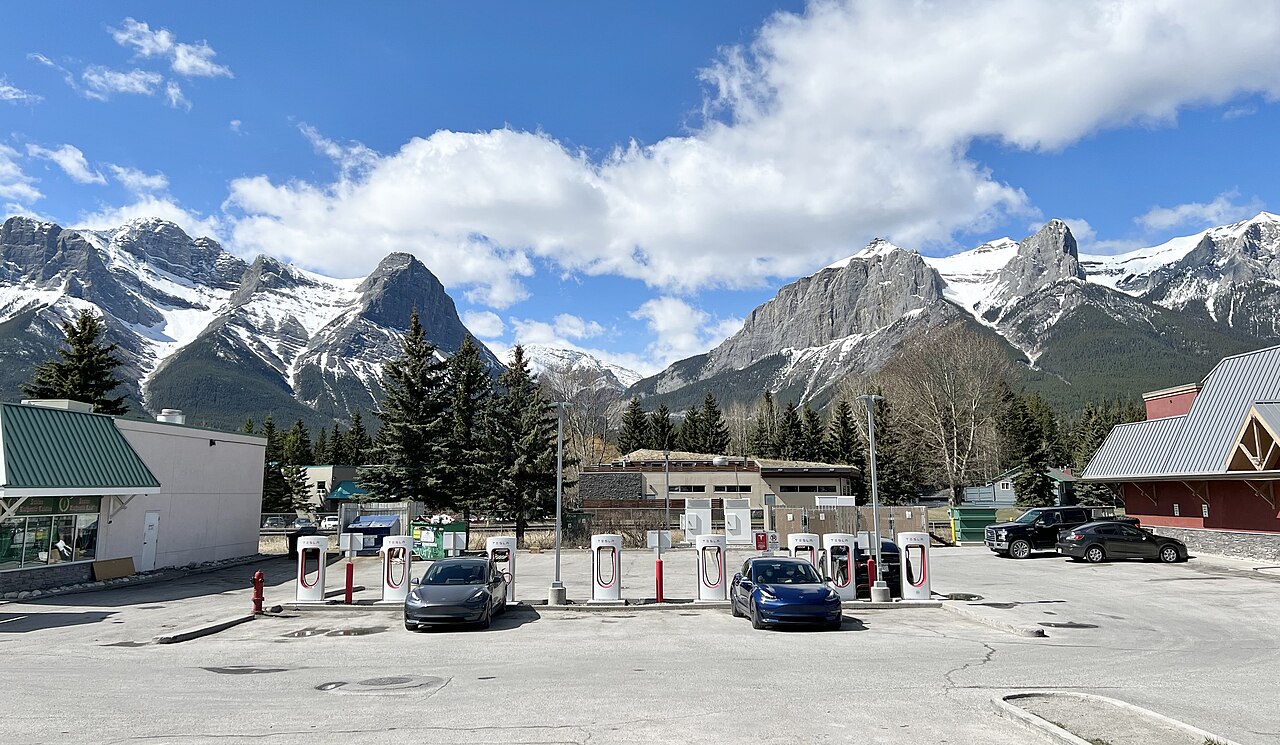
Real-world Model Y energy use is around 16 kWh/100 km (including charging losses — higher in winter, lower in summer), so at 20,000 km a year that’s about 3,200 kWh. The cost depends entirely on where you charge:
Home charging: provincial rates vary wildly, but all beat gas by an order of magnitude
| Province | Best home rate (2026) | Annual charging cost (20,000 km) |
|---|---|---|
| Ontario (Ultra-Low Overnight plan) | Overnight 23:00–7:00 just 3.9¢/kWh | ~$125 |
| Quebec (Hydro-Québec Rate D) | First 40 kWh/day at 6.9¢/kWh | ~$220 |
| BC (BC Hydro, with overnight discount) | Tiered ~11.9¢, ~7¢ after overnight TOU discount | ~$225–$380 |
| Alberta (all-in delivered rate) | ~15–17¢/kWh | ~$480–$540 |
Compare that to gas: a gasoline RAV4 runs about $2,700 a year in fuel over 20,000 km (at $1.60/L), and even the hybrid is around $1,800. On Ontario’s ULO plan, a Model Y costs a hundred-odd dollars a year in electricity, under one cent per kilometre (3.9¢ × 16 kWh/100 km ≈ 0.6¢/km); even at BC or Alberta’s pricier rates it’s around two cents a kilometre — which is where this chapter’s title comes from. If you can install a home charger, this is the thickest pillar in the Model Y’s savings logic. Ontario owners: proactively switch your utility to the ULO rate — a perk many new owners miss entirely. You’ll want a charger sorted before delivery; see our home charger installation guide.
Estimates at about 16 kWh/100 km for the Model Y and $1.60 a litre for gasoline.
Superchargers and third-party DC fast charging: cheaper than gas even without home charging
- Tesla Superchargers: in 2026 generally $0.30–$0.55/kWh in Canada, floating by time of day (some sites ~$0.40 off-peak, ~$0.55 peak), live in the app. Charging only on Superchargers runs about $1,000–$1,700 a year, still around half the gas bill. Watch two small charges: idle fees (about $0.50/min once a site is half full, double when full) and congestion fees (per-minute over 80% at busy sites). Build the habit of unplugging at 80% and you’ll basically never get caught.
- Third-party DC fast charging: Electrify Canada is about $0.27–$0.40/kWh (cheaper with the $4/month Pass+ membership); Petro-Canada / FLO run $0.35–$0.59. The refreshed Model Y has a native NACS port and can use CCS chargers with an adapter, but honestly the density, reliability, and plug-and-charge experience of the Supercharger network remain Tesla’s deepest moat in Canada, especially along the Trans-Canada.
260 km
450 km
540 km
Approximate driving distances from Toronto. Deep cold here means roughly −15°C to −20°C, where 65–75% of the rated range is a normal result. Plan to arrive with a buffer, not at zero.
Budget for winter: in a −20°C Ontario or Quebec cold snap, real range dropping to 65–75% of rated is normal, and the LFP RWD feels it more. The upside is the navigation auto-plans Superchargers en route and pre-heats the battery, and using the app to pre-warm the cabin before a trip (on house power, not battery power) becomes second nature — winter driving is far less anxious than the legends suggest once these habits set in.
The Model Y as a road-trip and camping car (and why Starlink fits)
One thing spec sheets undersell: the Model Y is a very good camping car. Fold the rear seats and the cargo floor is long and nearly flat, enough for most adults to sleep on with a foam mattress. Camp Mode keeps the heat or A/C, fans and lights running all night while the car is parked, and in mild weather it typically uses only a few percent of the battery overnight (more when heating in the cold). Add the frunk for food and gear, quiet cabin, no idling engine and Superchargers along the Trans-Canada, and it handles cottage weekends, provincial-park trips and long drives very well.
The weak spot is internet. The car’s own connectivity runs on cellular networks, and so does your phone’s hotspot. Head to Algonquin, Northern Ontario, the Rockies or a lake with one bar of signal, and both drop out. That’s where Starlink comes in: a Starlink Mini connects straight to satellites, needs only open sky, and creates its own Wi-Fi network for the car’s screen, phones and laptops. It’s made by another Musk company, and in my experience the two work well together. The Tesla supplies the space and the power; Starlink supplies the connection.
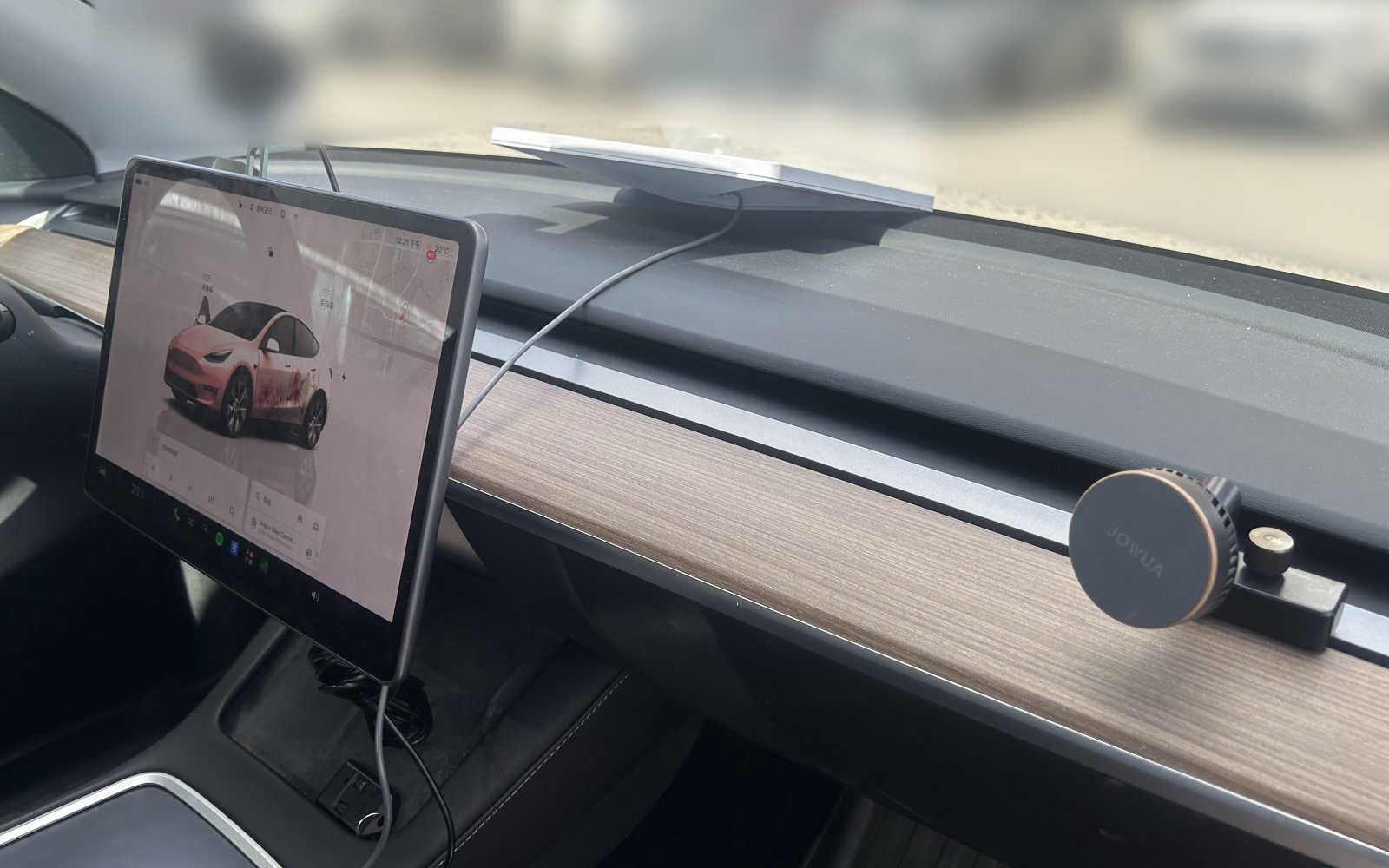
Here’s what I’ve learned running a Mini in my own Model Y since early September 2026:
- Power it from the 12V socket, not the USB-C ports. The Mini needs a 20V/5A (100W-class) USB-C PD supply, and the USB-C ports in a Model 3/Y/S/X don’t output 20V. I use a high-power PD car charger in the 12V socket inside the centre console with a USB-C-to-DC cable to the dish (mine is JOWUA’s cable and 165W charger kit; code TSLNA takes 5% off). Newer Model Ys have a lithium low-voltage system, so pick a charger rated for up to 16V input.
- It barely touches range. The Mini draws about 20–40 W. A full eight-hour day works out to roughly 0.2–0.3 kWh, or one to two kilometres of range. The 12V socket switches off when the car sleeps, so turn on Camp Mode if you want it running while you rest.
- It works through the windshield. On the dashboard, parked, YouTube played in 1080p on the car’s screen without buffering, and the car stayed connected to the Mini’s Wi-Fi while driving. With the dish on the ground beside the car I measured 132 Mbps down, 6 Mbps up and 21 ms latency. If you use it while driving, secure the dish so it can’t slide, and keep it clear of the passenger airbag and the camera area at the top of the windshield.
- Use a Roam plan. Residential plans are tied to one address; Roam is built to travel and allows in-motion use. I pay C$75 a month before tax for Roam 100 GB and can pause it in the months I don’t travel. Larger and unlimited tiers exist, and prices change often, so check starlink.com for your address.
You don’t necessarily have to buy the hardware, either. Starlink now rents equipment in Canada: at many addresses, new Residential customers can rent the standard kit with no upfront hardware cost (just shipping) and return it if they cancel, and Residential customers can add a Mini travel kit as a rental that pairs with a discounted Roam plan (the Mini’s rental fee is waived on Residential Max and for invited customers). If you’d rather use the Mini only for travel, you can buy it outright and pause Roam when you don’t need it. Rental offers vary by address and change frequently, so check what the order page shows you.
More detail: my full Starlink Mini review from Toronto, the Starlink + Tesla road trip and camping guide, and my step-by-step Starlink Mini 12V installation guide for the Model Y (with photos of the wiring).
Canadian readers: getting Starlink for the car
If you sign up through my Starlink referral link, Starlink gives you one month of service free, credited to your second month’s bill; hardware and plan prices are the same as ordering directly. Starlink’s referral program requires both people to be in the same country, so this only works for new customers with a Canadian service address.
Insurance: what’s a realistic annual budget?
Straight to the numbers (full coverage, experienced adult driver, clean record, 2026 market):
- Ontario: Model Y premiums generally run $2,000–$3,000, with the core GTA (especially Brampton and North York) clearly higher and small cities seen as low as $1,600; new or young drivers easily hit $4,000+.
- Quebec: industry data puts the average Model Y around $3,050/year, with the Island of Montreal averaging up to $4,100 and off-island notably cheaper.
- BC: under ICBC, basic coverage isn’t a choice (some files from $650/year); adding collision/comprehensive full coverage commonly lands $2,000–$3,500, with wide individual variation.
- Alberta: a private market with a broad range — $2,000–$4,000 are all common; shop several companies.
Why does a Tesla cost 20–30% more than a comparably priced gas car? The core reason is high collision repair cost (aluminum body + mega-castings + sensor calibration — more in the next chapter), not theft or crash safety. Quite the opposite: the Model Y is a repeat IIHS Top Safety Pick and one of the hardest cars to steal in North America, so the theft portion of comprehensive is actually cheap. The practical levers to compress your premium (high deductible, waiver of depreciation, EV discounts, what to choose after Ontario’s July 1 reform) are covered in full in our complete Tesla insurance guide for Canada (Ontario & BC) — read it before you buy, since picking the right company can save $1,000+ a year on identical terms. One rule above all: get a quote with the VIN before you order and put the premium in your budget, instead of getting blindsided by a quote on delivery day.
Warranty and extended coverage: what an 8-year battery warranty means
The official warranty terms on a 2026 Canadian Model Y:
| Warranty item | Term | Notes |
|---|---|---|
| Basic vehicle warranty | 4 years / 80,000 km | Whichever comes first; covers most components |
| Battery & drive unit (RWD) | 8 years / 160,000 km | Promises ≥70% capacity retention over the term |
| Battery & drive unit (Premium / Performance) | 8 years / 192,000 km | Same, higher mileage cap |
| Restraint system (airbags/belts) | 5 years / 100,000 km | — |
| Body rust-through perforation | 12 years / unlimited km | Very useful on Canada’s salted roads |
The battery warranty is what underpins the car’s value. “8 years or 160,000/192,000 km, at least 70% capacity” means the most expensive component (a $14,000–$22,000 pack) is covered by Tesla for most of the car’s life. Real-world data is much better than that floor: Tesla’s impact reports put typical capacity loss at roughly 15% after about 320,000 km, so normal use comes nowhere near 70%. When buying used, count the remaining warranty: cars first delivered after April 2023 generally still carry battery coverage out to 2031. Tesla also sells an extended service agreement (ESA) for the battery and drive unit (US$2,000 in the US; check the Tesla app for the current Canadian price and terms), which may be worth a look if you plan to keep the car ten years or more. The 4-year/80,000 km basic coverage is relatively short (especially for high-mileage commuters) — a real difference to keep in mind versus, say, Toyota’s 3-year/60,000 km basic + 5-year/100,000 km powertrain.
Service and maintenance: absurdly cheap day to day, painful after a crash
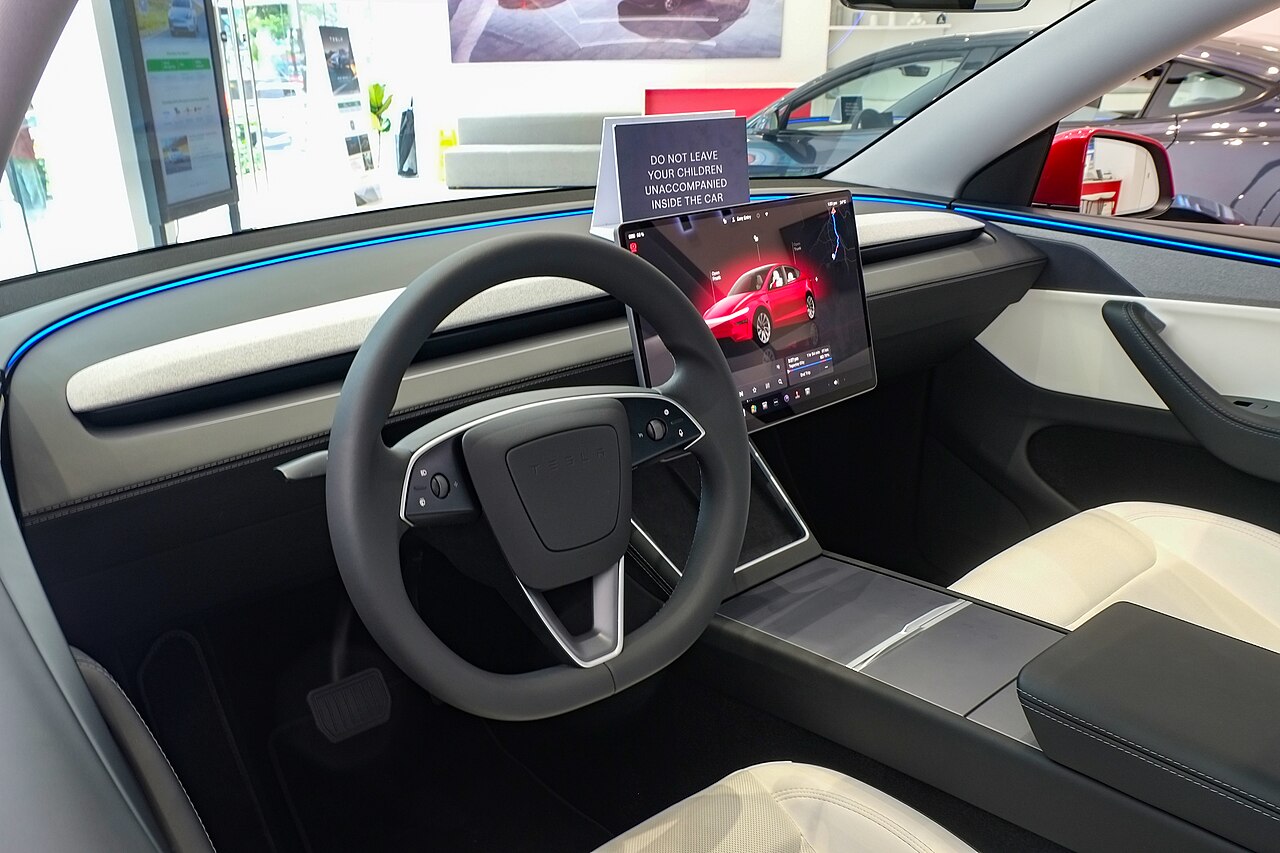
The Model Y’s maintenance is a study in extremes: day-to-day upkeep is dirt cheap; collision repair runs expensive.
Routine maintenance: a few hundred dollars a year, tops
Tesla’s recommended service is a short list: tire rotation every 10,000 km (~$75–$150), cabin air filter every 2 years (~$75–$150), brake fluid test every 4 years and replace as needed (~$150), and periodic A/C desiccant checks. No oil or filter changes, no spark plugs, no transmission fluid, no belts, and regenerative braking pushes brake-pad life well past 150,000 km. Real-world annual maintenance for Canadian owners runs $400–$600, versus $800–$1,500 for a comparable gas SUV (including reliability champs like the RAV4). The real big-ticket item is tires: the Model Y is heavy and torquey, wearing tires faster than a gas car — a set of 19″ all-seasons is $1,000–$1,400 and needs replacing around 40,000 km. Budget a set of winter tires on top (mandatory by usage in Canada, by law in Quebec) — the most-underestimated real cost of ownership. Grab the basics like a tire inflator kit or winter gear from Amazon Canada.
Repairs: expensive in a crash, not mechanically
Mechanically, EVs are simple with few failure points — beyond the 12V battery ($150–$340), wipers, and filters, there’s basically nothing to pay for in the warranty period. The expense is post-collision repair:
- Windshield replacement: $1,200–$2,500 (mandatory front-camera recalibration is the core reason it costs more than a gas car);
- Bumper: minor scrapes $600–$1,500; damage to the reinforcement beam and sensors $1,500–$4,000, plus $200–$400 in calibration;
- Mega-castings and aluminum parts: many areas can’t be panel-beaten and must be replaced whole, and structural repairs must be done by a Tesla-certified body shop — the certified shops are limited, so big cities queue and turnaround is slow;
- Battery pack: worst case, replacement is $14,000–$22,000 — but note the context: the 8-year warranty covers quality issues, and nearly all out-of-pocket battery replacements come from major collisions, which is exactly what insurance is for.
So the “Teslas are expensive to repair” rumour is more accurately stated as: most of the repair money isn’t yours directly — it’s paid indirectly through your premium, which is exactly why the previous chapter said get an insurance quote before you order. In day-to-day use, it’s the lowest-maintenance car I’ve owned. I also work hands-on in a Markham repair shop that mostly services European cars, and the contrast is striking: no oil changes, no belts, no spark plugs, and far fewer moving parts to go wrong.
Five things to think through before ordering
- The RWD is a real base model. Cloth seats, no rear screen, no ambient lighting, manual steering-wheel adjustment, and most importantly — no basic Autopilot; even lane centring requires an FSD subscription. Budget permitting, go sit in one before deciding; the drop-off will be real if you’re coming from an older car.
- Set expectations for the LFP battery in winter. The 463 km rating could be 300–330 km in a −20°C real world, and charging is slower in the cold too. Fine for daily commuting, but if you run intercity highway every week without home charging, the Premium AWD’s 542 km and 250 kW fast charging earn back the difference.
- Both pillars of the $44,990 price have expiry dates. EVAP is first-come-first-served with amounts tapering in later years; the US retaliatory tariff hasn’t been removed and Berlin supply is a business decision, not an iron law; Quebec’s $2,000 zeroes out at year-end. Don’t assume waiting will get you a better deal.
- Premium and Performance get zero incentive. The real cost of stepping up = list-price gap + $5,000; put that on the table before deciding.
- The Model 3 next door is $5,500 cheaper. The Shanghai-built Model 3 Premium RWD is just $39,490 (no EVAP, but the list price is already lower); if you don’t strictly need SUV space and a higher seating position, run the same math. Readers in the US should head to the sister piece on the US Model Y, since the two countries’ trims, prices, and incentives are entirely separate systems — find both via our Canada Tesla section.
Who should buy which trim, and how to order
My recommendation in short: if you’re budget-conscious, have home charging and mostly drive in the city, get the RWD at its $44,990 all-time low. If you live in the snow belt, drive long distances with family or camp a lot, the Premium AWD’s range and all-wheel drive are worth the real $20,000 difference. If you love driving or were going to load up on options anyway, the all-inclusive Performance is the smart buy. Whichever trim, the order process is identical: configure online, $250 (non-refundable) deposit, no dealer markup, no haggling. The RWD’s three colours are currently free. New custom orders are quoting December 2026 to January 2027, so check the inventory page first if you want a car sooner, and book a test drive at your nearest store on Tesla’s site.
Some Canadian owners go from driver to investor, too. If you’d like to own a piece of the company, see how to buy Tesla (TSLA) stock from Canada.
Before you order: the official perk of 3 free months of FSD
Tesla sells direct with no discounts, and the only official deal is the owner referral program: right now, ordering a Model Y (RWD / Premium / Performance) through an existing owner’s referral link gets you 3 free months of FSD (Supervised) — worth about $300 at the $99/month price. It generally can’t be combined with the new car’s 30-day trial; Tesla confirms the final perk on your order. If you don’t know a Tesla owner, you’re welcome to use my referral link — we both benefit:
Order your Model Y with the Tesla referral link, claim 3 months of FSD →
Frequently Asked Questions
Where is the 2026 Canadian Model Y built, and is the quality reliable?
The entire range is built at Giga Berlin in Germany, supplying Canada since September 2025. The Berlin plant has supplied the European market for years and has one of the better build-quality reputations among Tesla’s factories — European owners generally rate its quality control higher than the early California plant — and it even keeps an FM radio. There’s no “different origin means de-contenting” issue; the Canadian and European cars share the same source.
How do I claim the $5,000 EVAP — do I apply myself?
No. EVAP is an instant point-of-sale rebate. Order the RWD on Tesla’s site and the incentive shows up directly on your final invoice — the $44,990 advertised price already includes it. Three caveats: only the RWD qualifies; adding the $1,300 tow hitch pushes the transaction price over the $50,000 cap and forfeits the entire $5,000; and program funds are first-come-first-served, so the amount is whatever applies at the time of your transaction.
Will it drop again soon and “backstab” me right after I buy?
Nobody can promise, but look at the structure: $44,990 is already the lowest in the Model Y’s six years in Canada, and there’s little to push it lower (the EVAP cap and Berlin costs are both fixed). The more realistic “upward risks” are EVAP funds depleting, Quebec’s incentive ending at year-end, and trade-policy swings. Recall the 2025 script — those who waited got a $15,000 overnight increase. Buying at a low during a policy-windfall window gives you the thickest depreciation cushion in the car’s history.
Model Y RWD vs Model 3 — how do I choose with a $5,500 gap?
Want SUV space, the hatchback’s load capacity (fold the rear seats and swallow IKEA furniture or skis), a higher seating position, and better winter clearance? Choose the Model Y. Pure commuting, sharper handling, lower energy use? The Model 3 Premium RWD ($39,490) is the keener value. The two share their mechanical bones — a half-hour test drive gives you the answer.
Are used older (2020–2024) Model Ys worth buying?
Worth a look, but shop smart: 2021–2023 cars now go for $33,000–$55,000, and the 2022-peak models have already bottomed out on depreciation, making them stand-out value. Three buying tips: prioritize cars with bought-out FSD (now discontinued, so the used premium is fair); confirm the remaining battery warranty (8 years / 160,000–192,000 km transfers with the car); older cars lack the full-width light bar and the refresh’s ride-comfort upgrades, so if the styling generation gap bothers you, just buy the new RWD — after incentives it’s only $44,990, which compresses the used price gap considerably.
How much does a Tesla Model Y cost in Canada in 2026?
As of October 4, 2026: RWD $49,990 ($44,990 after the $5,000 federal EVAP rebate), Premium AWD $64,990 and Performance $74,990, all before $2,500 freight and PDI, a $250 order fee, provincial sales tax and options. In Ontario that works out to roughly $54,500 out the door for the RWD, $76,400 for the Premium AWD and $87,700 for the Performance. Prices have been unchanged since March 2026.
What is the Tesla Model Y price history in Canada?
Launched at $75,990 (Long Range) in June 2020, cut to $69,990 a month later, climbed to a peak of $86,990 during the 2021 to 2022 chip shortage, dropped to $69,990 in January 2023, hit $59,990 with the Shanghai-built RWD in April 2023, spiked to $84,990 after the April 2025 tariff, fell to $64,990 when Berlin supply arrived in July 2025, and reached today’s $49,990 RWD ($44,990 after EVAP) in early 2026. The full timeline with the reasons for each move is in the “six-year price rollercoaster” section above.
How long is the wait for a new Model Y in Canada?
Longer than at any point since 2022. New custom orders on all three trims have been quoting December 2026 to January 2027 since late July, because the 2026 Berlin allocation is largely sold. Existing inventory in Canada is the fastest route to a 2026 delivery; check it before placing a custom order.
Is the Model Y L available in Canada?
Not as of early October 2026. The six-seat Model Y L is on sale in the US (US$61,990, first deliveries October to November 2026) and in China, Australia and New Zealand, but Tesla has not opened Canadian orders or given a timeline. Because US-built cars no longer ship to Canada, any Canadian Model Y L would most likely be Shanghai-built.
Is the Model Y good for camping, and can I get internet off-grid?
Yes. With the rear seats folded, most adults can sleep in the back, and Camp Mode keeps the climate running overnight on a small share of the battery. For internet where there’s no cell signal, a Starlink Mini powered from the 12V socket (through a 100W-class USB-C PD car charger) on a Roam plan works well and uses only 20–40 W. Canadians can also rent Starlink hardware with some Residential plans instead of buying it.
Is a Model Y realistic without home charging?
Realistic, but the savings shrink: relying entirely on Superchargers runs about $1,000–$1,700 a year — still half the gas bill, just an order of magnitude more than home charging. First inventory the charging options around your home and work: condo buildings can apply to install a charger (BC has legislation supporting this), and many municipal lots and malls have destination chargers. If you commute 100+ km a day with no charging access at all, think carefully.
Image credits: showroom photo by Chanokchon (CC BY-SA 4.0); driving photo by OWS Photography (CC BY 4.0); 2022 pre-refresh by Vauxford (CC BY-SA 4.0); Canmore Supercharger by Sharon Hahn Darlin (CC BY 2.0); interior by Ethan Llamas (CC BY-SA 4.0) — all via Wikimedia Commons. Dashboard Starlink photo by the author. Prices, incentives, and policy details in this article were re-checked on October 4, 2026 (first published June 2026); Tesla Canada’s site, Transport Canada, Starlink’s Canadian order page and provincial government sites govern. Insurance premiums and repair costs are market reference ranges that vary by person and place. This article is not purchase, insurance, financial, or tax advice. Some links are affiliate/referral links; see our disclosure page.

About the author: Lifei Zhou
Model Y owner since 2022Ontario STO registered apprentice · 310SWorks on Porsche, Mercedes, BMW, Audi weeklyHundreds of readers referred (est.)
Lifei is a Tesla owner based in Canada, writing practical, fact-checked Tesla guides for US and Canadian drivers — buying, ownership, insurance, charging, and TSLA investing, all from first-hand experience.