
Seattle & Washington State Tesla Buying Guide 2026: Sales Tax, Fees & Charging
Seattle & Washington State Tesla Buying Guide 2026: Sales Tax, Fees & Charging

In one sentence
Buying a Tesla in Washington in 2026? Every incentive expired in 2025. Here's the real cost — Seattle sales tax, the $225 EV fee, the new luxury tax, and charging savings.
Washington is one of the most EV-friendly places to live in North America by sheer adoption — Teslas are everywhere from Seattle to Spokane, the Supercharger network is dense, and the state’s hydro-heavy grid makes charging genuinely clean. But 2026 is a turning point for buyers. The generous incentives that used to make a Tesla a no-brainer here have all expired, while Washington has simultaneously rolled out some of the highest EV ownership fees in the country. If you’re buying a Tesla in Washington this year, the math has changed — and this guide walks you through exactly what you’ll pay, where to charge, and how to still save real money.
Disclosure: some links are affiliate/referral links. If you order a Tesla or buy gear through them, we may earn a commission or referral credit at no extra cost to you. See our disclosure page.
📋 Contents
- Why Washington Is Still a Great Place to Own a Tesla
- The Bad News: Every Tesla Incentive Expired in 2025
- Washington Sales Tax on a Tesla: What You’ll Actually Pay
- Annual Costs: Washington’s $225 EV Fee and the New Luxury Tax
- Charging Your Tesla in Seattle and Across Washington
- Buying New vs. Used in Washington in 2026
- Tesla Accessories Worth Buying for the Pacific Northwest
- Frequently Asked Questions
- The Bottom Line
Why Washington Is Still a Great Place to Own a Tesla
Even with the incentives gone, Washington remains one of the best Tesla states for three reasons. First, electricity is cheap and clean. Roughly two-thirds of the state’s power comes from hydroelectric dams, and residential rates in much of the state sit well below the national average, so charging at home is a fraction of the cost of gasoline.
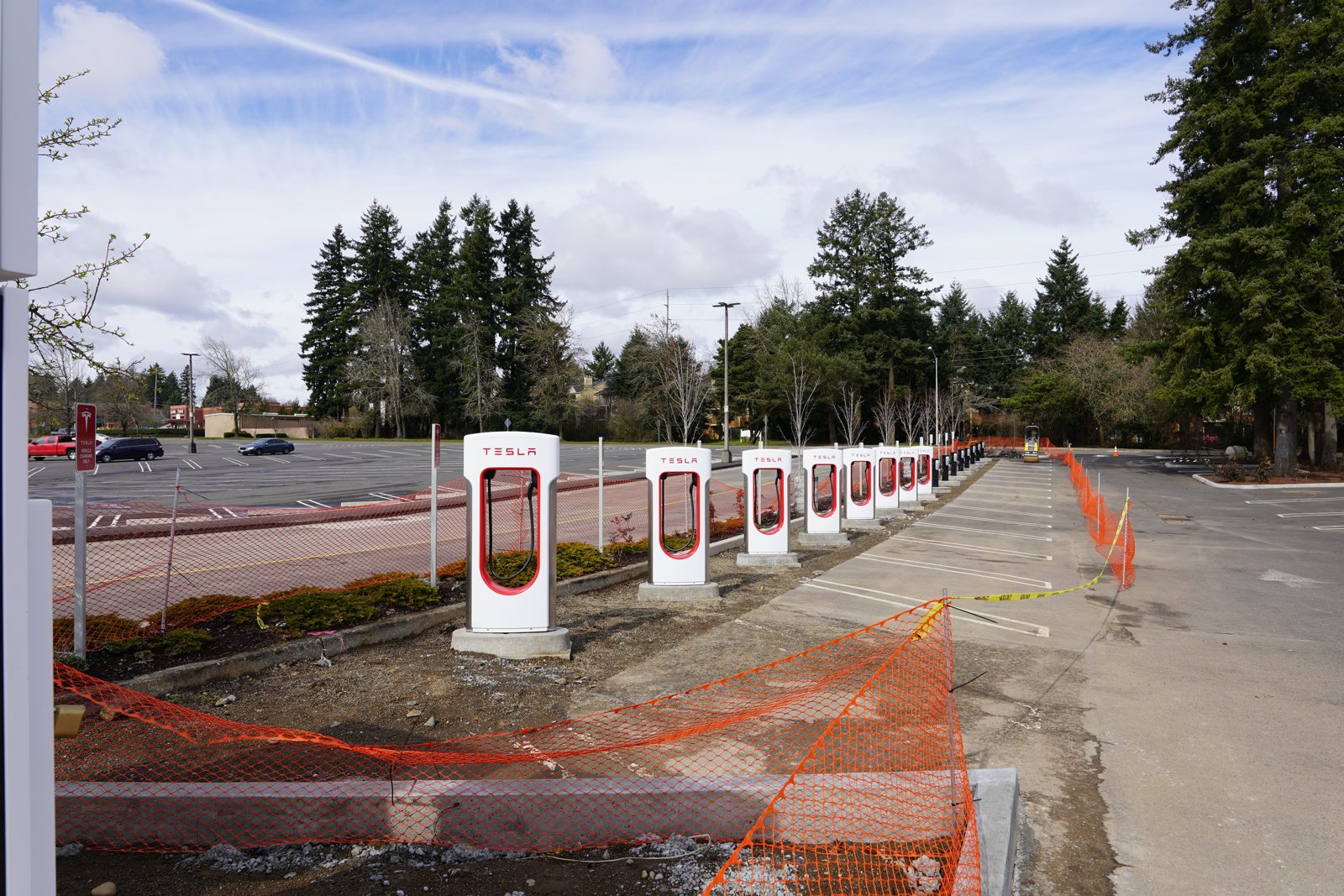
Second, the charging infrastructure is excellent. As of early 2026 Washington has more than 2,900 public charging locations, including over 2,500 Level 2 stations and roughly 480 DC fast-charging sites. Tesla alone operates around 84 Supercharger stations with nearly 950 stalls statewide, so road trips along I-5 and I-90 are effortless.
Third, Washington drivers cover a lot of miles in a climate that’s kind to EVs. The Pacific Northwest rarely sees the brutal sub-zero cold that hammers battery range in the Midwest or Prairies, and mild summers mean less air-conditioning drain too. Range anxiety here is largely a non-issue.
The Bad News: Every Tesla Incentive Expired in 2025
Let’s get the disappointing part out of the way, because it reshapes the entire buying decision. Two separate incentives that Washington buyers leaned on are now gone:
- The federal $7,500 EV tax credit ended September 30, 2025. Under the One Big Beautiful Bill Act, the Section 30D new-EV credit and the used-EV credit were repealed for vehicles delivered after that date. There is no federal purchase credit on a Tesla in 2026, period.
- Washington’s state sales-and-use-tax exemption expired July 31, 2025. For years, qualifying new EVs under $45,000 and the first $16,000 of used EVs priced at $30,000 or less were exempt from sales tax. That exemption was not renewed, so as of 2026 there is no statewide EV rebate, tax credit, or sales-tax break for battery-electric cars.
The practical upshot: a Washington Tesla buyer in 2026 pays full price plus full sales tax — a swing of several thousand dollars compared with a buyer who closed the same deal in mid-2025. The one narrow exception is hydrogen fuel-cell vehicles, which keep their sales-tax exemption through 2028, but that’s irrelevant to Tesla shoppers.
Washington Sales Tax on a Tesla: What You’ll Actually Pay
Washington’s combined sales tax is the state’s 6.5% base plus a local rate that varies by city and county. In Seattle the combined rate rose to 10.55% on January 1, 2026 (one of the highest in the country), after King County and the City of Seattle each added a 0.1% public-safety tax. Other cities are a bit lower. Because car sales tax is generally charged based on where the vehicle is registered (your home address), where you live matters more than where the Tesla store is.
| City / Area (2026) | Approx. combined rate | Tax on a $44,990 Model Y |
|---|---|---|
| Seattle | ~10.55% | ~$4,746 |
| Bellevue / Eastside | ~10.3% | ~$4,634 |
| Tacoma | ~10.3% | ~$4,634 |
| Spokane | ~9.0% | ~$4,049 |
| Vancouver, WA | ~8.7% | ~$3,914 |
Rates are approximate and change periodically; confirm your exact rate with the Washington Department of Revenue before signing. The takeaway is clear: on an entry-level Model Y you’re looking at roughly $3,900–$4,800 in sales tax depending on where you live, and there’s no exemption to soften it anymore. For reference, 2026 Tesla pricing in the U.S. starts around $36,990 for the Model 3 (Standard Range RWD) and $39,990 for the Model Y.
Annual Costs: Washington’s $225 EV Fee and the New Luxury Tax
Sales tax is a one-time hit. The recurring costs are where Washington stings EV owners harder than almost any other state. Effective October 1, 2025, fully electric vehicles (and plug-in hybrids with at least 30 miles of electric range) pay an extra $225 per year at registration:
- $150 annual EV registration fee (RCW 46.17.323)
- $75 transportation electrification fee (RCW 46.17.324)
That $225 surcharge — the highest EV fee in the nation — is on top of your normal vehicle tab fees and, in the Sound Transit district, the Regional Transit Authority (RTA) excise tax, which can add hundreds more for a newer car. Budget for it.
There’s also a brand-new 2026 wrinkle: Washington adopted a luxury tax on motor vehicles, adding an 8% tax on the portion of a vehicle’s value above a $100,000 threshold. The vast majority of Teslas — Model 3, Model Y, and most Cybertruck configurations — fall well under $100,000 and are unaffected. But if you’re eyeing a fully loaded Cybertruck Cyberbeast or a Model X Plaid that creeps past six figures, factor in the extra bite.
Charging Your Tesla in Seattle and Across Washington
This is where Washington shines and helps offset those fees. Home charging is the cheapest option by far — with the state’s low residential electricity rates, most owners spend far less per mile than they would on gasoline. If you have a garage or driveway, installing a Tesla Wall Connector is the single best money-saving move you can make; we cover the process and rebates in our Tesla home charger installation guide.
For public charging, Seattle City Light operates curbside Level 2 stations at about $0.21 per kWh (roughly equivalent to paying $2.30 a gallon for gas), with a small extra fee per session at city DC fast chargers. Tesla Superchargers are priced dynamically and cost more than home charging but remain the most convenient option on the highway. For a full breakdown of what charging actually costs, see our guides on how much it costs to charge a Tesla and Supercharger pricing.
Practically, a Washington Tesla owner who charges mostly at home and takes the occasional Supercharger road trip will spend a small fraction of what a comparable gas car costs to fuel — which is exactly how you claw back that $225 annual fee and then some.
Buying New vs. Used in Washington in 2026
With incentives gone on both new and used cars, the new-vs-used decision comes down to pure price and condition. New Teslas are ordered directly from Tesla (Washington has stores in Seattle, Bellevue, Lynnwood, Tacoma, Fife, and Spokane), and ordering is fast and transparent.
One genuine perk that still exists for new buyers: ordering through a Tesla referral link currently gets you 3 months of free Full Self-Driving (Supervised) — a real benefit now that the tax credit is gone. It costs you nothing extra and is the only “discount” lever left on a new car.
The used market is large and liquid in the Puget Sound region. Since the used-EV sales-tax break is gone, a private-party purchase no longer carries a tax advantage over a dealer or Tesla CPO car, so prioritize battery health and history over chasing the lowest sticker. Our used Tesla buying guide covers inspection, warranty, and what to watch for. Whichever way you go, do a thorough delivery inspection before you sign.
Tesla Accessories Worth Buying for the Pacific Northwest
Washington’s wet, gritty winters and rainy commutes make a few accessories genuinely worthwhile rather than optional:
- All-weather floor mats. Rain, mud, and ferry-line slush wreck carpet mats fast. A set of laser-fit rubber mats is the first thing most PNW owners buy — browse options on Amazon.
- A quality Sentry Mode USB drive. Theft and break-ins are a real concern in Seattle; a dedicated high-endurance drive keeps Sentry footage reliable. See our Sentry Mode and dashcam guide for setup.
- Mud flaps and a portable tire kit for gravel forest-service roads and trips over the Cascades.
Skip the gimmicks — most owners regret over-buying. A handful of practical items beats a cart full of accessories that gather dust.
Frequently Asked Questions
Are there any Tesla tax credits or rebates in Washington in 2026?
No. The federal $7,500 EV tax credit ended September 30, 2025, and Washington’s state sales-and-use-tax exemption for EVs expired July 31, 2025. As of 2026 there are no statewide purchase incentives for battery-electric vehicles, including Teslas.
How much sales tax will I pay on a Tesla in Seattle?
Seattle’s combined sales tax rate is about 10.55% as of January 1, 2026. On a $44,990 Model Y that’s roughly $4,746. Rates are lower in cities like Spokane (~9%) and Vancouver, WA (~8.7%), and tax is generally based on where you register the car.
What is Washington’s annual EV fee?
EVs pay an extra $225 per year at registration — a $150 EV fee plus a $75 transportation electrification fee, effective October 1, 2025 — on top of standard tab fees and any RTA excise tax in the Sound Transit district. It’s the highest EV surcharge in the U.S.
Does the new Washington luxury tax apply to my Tesla?
Only if the vehicle’s value exceeds $100,000. The 2026 luxury tax adds 8% on the portion above that threshold. Most Teslas — Model 3, Model Y, and standard Cybertrucks — are under $100,000 and are not affected; only top-tier configurations might trigger it.
Is it cheaper to charge a Tesla at home in Washington?
Yes, by a wide margin. Washington’s hydro-powered grid keeps residential electricity rates low, so home charging costs far less per mile than gasoline and less than public DC fast charging. Installing a Wall Connector is the best way to minimize running costs.
Where can I buy a Tesla in Washington?
Tesla operates stores and delivery centers in Seattle, Bellevue, Lynnwood, Tacoma, Fife, and Spokane. New cars are ordered online directly from Tesla; there are no franchised dealers. Used Teslas are widely available through Tesla CPO, dealers, and private sellers across the Puget Sound area.
The Bottom Line
- All incentives are gone in 2026. No federal $7,500 credit (ended Sept 30, 2025) and no Washington EV sales-tax exemption (ended July 31, 2025).
- Expect ~$3,900–$4,800 in sales tax on an entry Model Y, depending on your city, plus a $225/year EV fee — the highest in the nation.
- A new 8% luxury tax hits only vehicles valued over $100,000, so most Tesla buyers won’t pay it.
- Charging is the bright spot: cheap, clean home power and a dense Supercharger network make running costs very low.
- The only discount left on a new car is ordering through a referral link for 3 months of free FSD (Supervised).
Information is current as of June 2026 and is for general guidance only — tax rates, fees, and Tesla pricing change frequently; verify current figures with the Washington Department of Revenue, the Department of Licensing, and Tesla before purchasing. This article is not financial or tax advice. Some links are affiliate/referral links; see our disclosure page. Image credit: Steven Baltakatei Sandoval, CC BY-SA 4.0, via Wikimedia Commons.
Sources and further reading: WA Department of Licensing — EV tax exemptions, RCW 46.17.324 (transportation electrification fee), AFDC — Washington laws & incentives, and fueleconomy.gov — EV tax credit status.
About the author: Lifei Zhou
Model Y owner since 2022Ontario STO registered apprentice · 310SWorks on Porsche, Mercedes, BMW, Audi weeklyHundreds of readers referred (est.)
Lifei is a Tesla owner based in Canada, writing practical, fact-checked Tesla guides for US and Canadian drivers — buying, ownership, insurance, charging, and TSLA investing, all from first-hand experience.