
Colorado Tesla Buying Guide 2026: State EV Credit, Sales Tax & Charging
Colorado Tesla Buying Guide 2026: State EV Credit, Sales Tax & Charging

In one sentence
Buying a Tesla in Colorado in 2026: the state EV credit dropped to $750, the federal $7,500 is gone, plus sales tax, ownership tax, Xcel charging rebates and which model fits mountain winters.
Buying a Tesla in Colorado in 2026 feels different than it did even a year ago. The generous incentives that once knocked thousands off the price have shrunk, the federal $7,500 credit is gone entirely, and yet Colorado is still one of the best states in the country to own an EV. Cheap off-peak electricity, a dense Supercharger network along the Front Range, and utility rebates that pay for your home charger all work in your favor — you just have to know where the real savings now live.
This guide breaks down exactly what a Tesla costs to buy and register in Colorado in 2026, what state and utility incentives still apply, how to handle mountain driving and cold-weather range, and the smartest way to actually place your order. Every number below is current for 2026 — but incentive programs change fast and some run out of funding mid-year, so always confirm on official sites before you sign.
Disclosure: some links are affiliate/referral links. If you use them we may earn a commission or referral credit at no extra cost to you. See our disclosure page.
📋 Contents
- What Changed for Colorado Tesla Buyers in 2026
- Colorado’s State EV Tax Credit in 2026
- Sales Tax, Ownership Tax and Fees: What a Tesla Really Costs to Register
- Charging in Colorado: Rebates, Cheap Off-Peak Power and Mountain Range
- Which Tesla Makes Sense in Colorado
- How to Actually Buy: Ordering, Referral and Delivery
- Frequently Asked Questions
- The Bottom Line for Colorado Buyers
What Changed for Colorado Tesla Buyers in 2026
Two big things shifted going into 2026, and both cut the same direction — smaller upfront discounts:
- The federal EV tax credit is gone. The $7,500 federal credit for new EVs ended for vehicles acquired after September 30, 2025. There is no federal purchase incentive on a new Tesla in 2026.
- Colorado’s state credit dropped sharply. The state’s Innovative Motor Vehicle Credit fell to $750 for a new qualifying EV in 2026, down from $3,500 in 2025 — and the point-of-sale “cash at the dealer” option expired on January 1, 2026, so you now claim it on your Colorado tax return instead.
That sounds grim, but it isn’t the whole story. Tesla dropped its own prices when the federal credit expired, Colorado still has some of the lowest EV “fuel” costs in the country, and the utility rebates for home charging remain strong. There’s also a new federal consolation prize: if you finance a new, US-assembled car (every new Tesla qualifies), you can deduct up to $10,000 of loan interest per year on your federal return through 2028, subject to income limits. The math still works — it just looks different now. Below we walk through each piece so you can build a realistic out-the-door budget.
Colorado’s State EV Tax Credit in 2026
Colorado’s Innovative Motor Vehicle Credit (IMVC) is the main state incentive. For 2026 the base credit is $750 for the purchase or lease of a new battery-electric or plug-in hybrid vehicle with an MSRP at or below $80,000. There’s an additional $2,500 credit reserved for vehicles with an MSRP under $35,000 — but note that every new Tesla in 2026 starts above that threshold, so a new Tesla qualifies for the $750 base amount only.
| Incentive | 2025 | 2026 |
|---|---|---|
| Federal EV tax credit | $7,500 | $0 (ended Sept 30, 2025) |
| CO state credit (new Tesla) | $3,500 | $750 |
| Point-of-sale discount option | Yes (assign to dealer) | Expired — claim on tax return |
| Extra credit, MSRP under $35k | Yes | $2,500 (no new Tesla qualifies) |
One important exception: if you’re income-qualified, the Vehicle Exchange Colorado (VXC) program is far more generous — up to $9,000 toward a new EV or $6,000 toward a used one when you trade in and recycle an older, high-emitting vehicle. It’s need-based and has its own eligibility rules, but for households that qualify it’s the single biggest EV incentive left in the state. Check the official Electric Vehicle Colorado site for current VXC rules and funding status.
Sales Tax, Ownership Tax and Fees: What a Tesla Really Costs to Register
Colorado’s vehicle tax is where a lot of first-time buyers get surprised, because there isn’t one single rate — it’s stacked. Here’s what actually hits your wallet:
- State sales tax: 2.9% on the purchase price (minus any trade-in value — Colorado lets you subtract the trade-in before tax).
- Local sales tax: varies a lot. Tax is charged based on where you register the car, not where you buy it. In Denver the combined rate is roughly 9.15%; some suburbs and mountain towns are lower, a few are higher.
- Specific Ownership Tax (SOT): an annual, MSRP-based tax you pay at registration. In Year 1 it’s about 2.1% of 85% of MSRP — so a ~$44,000 Model Y runs roughly $780 the first year. It drops steeply every year after that.
- Base registration and plate fees: typically a few hundred dollars, plus Colorado’s EV road-usage fee of roughly $57 per year.
The practical takeaway: budget for combined sales tax in the 7%–9%+ range depending on your county, plus a first-year SOT of several hundred dollars. Use the official Colorado DMV taxes and fees page (or the MyDMV fee estimator) to get an exact number for your ZIP code before you finalize your budget.
Charging in Colorado: Rebates, Cheap Off-Peak Power and Mountain Range
This is where Colorado shines and quietly makes up for the smaller purchase incentives. If you can charge at home, your effective “fuel” cost is a fraction of gas.
Xcel Energy home wiring rebate. Xcel — the largest utility along the Front Range — offers a home wiring rebate of up to $1,300 to cover the electrical work for a Level 2 charger, and up to $2,300 for income-qualified customers or those in designated communities. To qualify you generally need to enroll in a time-of-use rate or a managed-charging program. Black Hills Energy and some municipal utilities offer smaller charger rebates too. Details and enrollment are on the Xcel Energy EV charging site.
Off-peak charging is cheap. On a time-of-use plan, overnight rates in Colorado are low, and pairing that with a Tesla Wall Connector scheduled to charge after midnight is the single best money-saver an owner has. If you’re weighing home charging, our Tesla home charger installation guide walks through costs and the Wall Connector vs. a NEMA 14-50 outlet. (Note: the federal 30C charger credit expired June 30, 2026 — the Xcel rebate is now the main help with install costs.)
Mountain and cold-weather range. Colorado’s altitude and winters are real considerations. Cold cuts range, and climbing from Denver (5,280 ft) to a ski town burns more energy on the way up — though regenerative braking claws a good chunk back on the way down. In practice, plan road trips with the in-car trip planner, precondition the battery before fast-charging, and expect winter range to dip 20–30% on the coldest days. Our Tesla winter driving guide covers preconditioning, tire choices and range-preserving habits in detail. A set of dedicated winter tires makes a bigger safety difference in the high country than most owners expect — you can compare Model Y winter tire options on Amazon and have them mounted locally. Two more cheap items worth keeping in the trunk all winter: an AstroAI extendable snow brush with ice scraper (Teslas have no engine heat to melt anything off), and a NOCO Boost Plus GB40 jump starter — if the 12V battery ever dies in a cold snap, it lets you wake the car yourself instead of waiting for roadside assistance.
Which Tesla Makes Sense in Colorado
For Colorado’s mix of highway commuting, mountain trips and snow, all-wheel drive and ground clearance matter more than in flatter states. Here’s how the current lineup stacks up for a Front Range buyer:
| Model | Starting MSRP (2026) | Best for Colorado? |
|---|---|---|
| Model Y Standard RWD | from ~$39,990 | Good value; consider AWD for snow country |
| Model Y Standard AWD | ~$41,990 | Cheapest way to get dual-motor traction |
| Model Y Premium AWD | ~$49,990 | The sweet spot — space, range, AWD (7-seat option) |
| Model 3 Standard RWD | from ~$36,990 | Cheapest entry; fine for city commuters |
| Model 3 Premium AWD | ~$47,490 | Best range-per-dollar sedan for road trips (363 mi) |
For most Colorado households the Model Y Premium AWD is the default answer: it has the cargo room for gear, enough range to reach the mountains and back, and all-wheel drive for winter — and as of July 2026 Tesla is offering promotional financing on most Model Y trims (0% APR on the Standard RWD with 5% down, 0.99% on several others; check tesla.com for current terms). If you rarely leave the city and want the lowest price, a Model 3 Standard RWD is plenty. For a deeper trim-by-trim breakdown, see our full Model Y USA guide and Model 3 USA guide. Prices move often, so always confirm on the live Tesla configurator before ordering.
How to Actually Buy: Ordering, Referral and Delivery
Tesla sells direct in Colorado — there are stores and delivery centers in the Denver metro (including locations near Cherry Creek and in the suburbs) plus Colorado Springs. You order online, choose delivery or pickup, and complete most paperwork through your Tesla account. A few tips specific to Colorado buyers:
- Use a referral link for free FSD. When you order through a Tesla referral link, you currently get 3 months of free Full Self-Driving (Supervised) — a genuine perk that costs you nothing. If this guide helped, you’re welcome to order through our Tesla referral link.
- Check inventory cars first. In-stock and demo vehicles often ship faster and sometimes carry small discounts versus a custom build. If timing matters, browse existing inventory before configuring from scratch.
- Register where you live. Because local tax follows your registration address, confirm your county’s combined rate before you assume Denver’s number applies to you.
- Inspect at delivery. Do a careful walk-around before you accept — panel gaps, paint, tire condition and that all promised features are installed. Ordering through the referral link for the free FSD trial is a nice bonus, but delivery inspection is where you protect yourself.
Want more Colorado and U.S. buying resources? Browse our US Tesla guides for state-by-state cost breakdowns and ownership tips.
Frequently Asked Questions
Does Colorado still have an EV tax credit in 2026?
Yes, but it’s much smaller. The Innovative Motor Vehicle Credit is $750 for a new qualifying EV in 2026 (down from $3,500 in 2025), with an extra $2,500 only for vehicles under $35,000 MSRP — which no new Tesla currently meets. You claim it on your Colorado state tax return; the point-of-sale option ended January 1, 2026.
Is there any federal tax credit on a Tesla in 2026?
No. The federal $7,500 new-EV tax credit ended for vehicles acquired after September 30, 2025. There is no federal purchase credit on a new Tesla in 2026.
How much is sales tax on a Tesla in Colorado?
The state rate is 2.9%, but local taxes push the combined rate to roughly 7%–9%+ depending on where you register. In Denver it’s about 9.15%. Colorado subtracts any trade-in value before applying tax, which can save you real money.
What is the Specific Ownership Tax and how much will I pay?
It’s an annual MSRP-based vehicle tax paid at registration. In Year 1 it’s about 2.1% of 85% of the MSRP — roughly $780 on a $44,000 Model Y — and it drops sharply each year afterward.
Can I get help paying for a home charger in Colorado?
Yes. Xcel Energy offers a home wiring rebate of up to $1,300 (up to $2,300 for income-qualified customers) when you install a Level 2 charger and enroll in a qualifying rate or program. Some other utilities offer smaller charger rebates.
Which Tesla is best for Colorado winters and mountains?
A Premium AWD Model Y or Model 3. AWD helps in snow, and the bigger-battery Premium trims give you the buffer you need for altitude climbs and cold-weather range loss. Add dedicated winter tires for the high country.
Do I really get free Full Self-Driving with a referral link?
Currently, ordering a new Tesla through a referral link grants 3 months of free FSD (Supervised). Terms can change, so confirm the current offer when you place your order.
The Bottom Line for Colorado Buyers
- The federal $7,500 credit is gone and Colorado’s state credit dropped to $750 for a new Tesla in 2026 — claimed on your tax return, not at the dealer.
- Income-qualified households should look hard at Vehicle Exchange Colorado (up to $9,000 new / $6,000 used).
- Budget for combined sales tax of roughly 7%–9%+ plus a first-year Specific Ownership Tax of several hundred dollars.
- The real ongoing savings are in charging: cheap off-peak power plus Xcel’s home wiring rebate of up to $1,300–$2,300.
- For most buyers, a Model Y Premium AWD with winter tires is the ideal Colorado Tesla — and ordering through a referral link adds 3 months of free FSD.
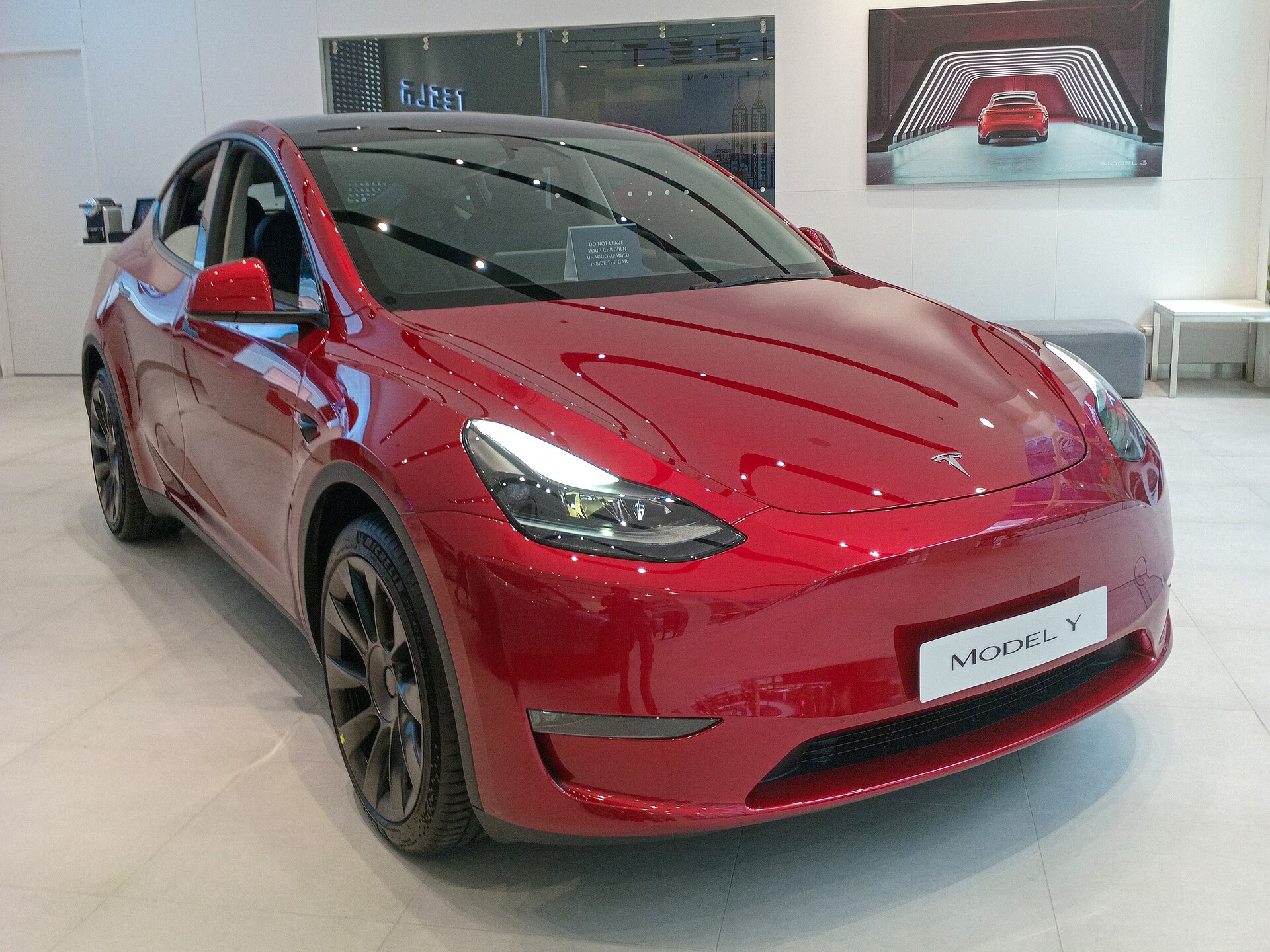
Information is current as of 2026 and provided for general guidance only — it is not tax, legal or financial advice. Incentive amounts, tax rates and vehicle prices change frequently and some rebate programs run out of funding mid-year; verify all figures on official state, utility and Tesla sources before purchasing. Some links are affiliate/referral links; see our disclosure page. Image credit: “2025 Tesla Model Y Long Range AWD in Ultra Red” by Ethan Llamas, licensed under CC BY-SA 4.0, via Wikimedia Commons.

About the author: Lifei Zhou
Model Y owner since 2022Ontario STO registered apprentice · 310SWorks on Porsche, Mercedes, BMW, Audi weeklyHundreds of readers referred (est.)
Lifei is a Tesla owner based in Canada, writing practical, fact-checked Tesla guides for US and Canadian drivers — buying, ownership, insurance, charging, and TSLA investing, all from first-hand experience.