
Tesla Insurance Cost in the USA (2026): Prices by Model, State & How to Save
Tesla Insurance Cost in the USA (2026): Prices by Model, State & How to Save

Insuring a Tesla in the United States costs about $4,500 a year on average for full coverage, compared with roughly $3,000 for all cars. A Model 3 is the cheapest to insure and a Cybertruck the most expensive, and the insurer you pick can change the price by two or three times.
Tesla insurance cost in short
- National average: about $4,512 a year, or $376 a month, for full coverage (Insurify, 2026).
- By model, for a clean record in an average-cost state: Model 3 $2,300 to $2,900; Model Y $2,900 to $3,900; Cybertruck $3,500 to $5,500 or more.
- By state: Louisiana is among the most expensive, Hawaii among the cheapest.
- Tesla’s own insurance is sold in 15 states and is often the cheapest quote for smooth drivers.
- Get at least three quotes before you order the car.
If you just bought a Tesla — or you’re pricing one out — the insurance quote can be a nasty surprise. In 2026 the average Tesla costs around $4,500 a year to insure, well above the roughly $3,000 national average for all vehicles. The good news: those numbers hide a huge amount of spread. Two people in the same city, driving the same Model Y, can pay $1,500 or $4,000 depending on the company, coverage, ZIP code and driving record. This guide breaks down what a Tesla actually costs to insure in the United States, why the premiums run high, how Tesla’s own real-time insurance stacks up, and the concrete steps that move your quote down.
Disclosure: some links are affiliate/referral links, meaning we may earn a commission or referral credit at no extra cost to you if you order or sign up through them. See our disclosure page.
📋 Contents
- How much does Tesla insurance cost in 2026?
- Tesla insurance cost by state
- Why is Tesla insurance so expensive?
- Best insurance companies for a Tesla
- Tesla’s own insurance: how real-time pricing works
- How to lower your Tesla insurance premium
- Insurance and buying a Tesla: budget for it up front
- Frequently Asked Questions
- The bottom line
How much does Tesla insurance cost in 2026?
Nationally, insuring a Tesla runs about $4,512 per year — roughly $376 a month — for full coverage, according to 2026 rate data compiled by Insurify. That’s noticeably higher than the ~$3,037 average for all cars. Remember these are survey averages, not quotes — the only number that matters is the one on a live quote for your exact car and ZIP code. But the model you drive matters a lot. The Model 3 and Model Y sit at the affordable end; the Model S, Model X and Cybertruck climb from there because they’re worth more and cost more to fix.
Here’s a realistic picture of full-coverage costs for a clean-record driver in an average-cost state. Treat these as ballpark ranges — your own quote depends heavily on ZIP code, age and history.
| Tesla model | Typical full-coverage / year | Roughly / month | Why |
|---|---|---|---|
| Model 3 | $2,300 – $2,900 | $190 – $240 | Lowest MSRP, cheapest to repair |
| Model Y | $2,900 – $3,900 | $240 – $325 | Best-seller; good parts availability |
| Model S | $3,000 – $4,200 | $250 – $350 | High value, Plaid pushes it higher |
| Model X | $3,200 – $4,500 | $265 – $375 | Falcon doors, high MSRP |
| Cybertruck | $3,500 – $5,500+ | $290 – $460+ | New, scarce parts, few body shops |
Ballpark ranges for a driver with a clean record in an average-cost state. Your own quote depends on ZIP code, age and history.
Where you live swings these numbers dramatically. Louisiana is one of the most expensive states to insure a Model 3 — averaging close to $6,900 a year in recent surveys — while Hawaii comes in cheapest at around $2,200. Michigan, Florida, Nevada and New York also run high; Maine, Vermont and Idaho tend to be cheap. A five-minute drive across a state line can change your premium by hundreds of dollars.
Tesla insurance cost by state
Your ZIP code is one of the biggest factors in your premium — sometimes bigger than which Tesla you drive. States with heavy traffic, high litigation, frequent theft or lots of uninsured drivers push rates up; rural, low-density states pull them down. The table below shows approximate full-coverage Model 3 ranges to illustrate the spread; a Model Y or S will run higher in each state.
| State group | Examples | Approx. Model 3 full coverage / year |
|---|---|---|
| Most expensive | Louisiana, Florida, Michigan, Nevada, New York | $4,500 – $6,900 |
| Above average | California, Georgia, Texas, Colorado | $3,200 – $4,500 |
| Around average | Illinois, Washington, Arizona, Minnesota | $2,400 – $3,200 |
| Cheapest | Hawaii, Maine, Vermont, Idaho, Ohio | $2,000 – $2,600 |
If you’re relocating, it’s worth pulling a fresh quote before you commit to a new address or lease — the same car in a new metro can cost $1,000+ more or less per year. And in no-fault states like Florida, Michigan and New York, mandatory personal-injury coverage adds cost on top of the Tesla-specific repair premium.
Why is Tesla insurance so expensive?
Teslas aren’t punished for being electric so much as for being expensive to repair. A few structural reasons keep premiums up:
- High repair bills. One 2026 body-shop analysis pegged the average Tesla repair at roughly $3,900 versus about $1,600 for a Honda. Insurers price for what a claim will cost them.
- Limited repair network. Not every shop can fix a Tesla, and those that can — often Tesla-approved centers — charge accordingly. Parts are mostly OEM-only.
- Sensor recalibration. Cameras and radar tied to Autopilot need recalibration after even minor front- or rear-end damage, adding cost to otherwise small claims.
- Battery exposure. A damaged pack can cost $13,000–$20,000 to replace, so insurers hedge against total-loss risk.
- High MSRP and theft-attractive tech. The more the car is worth, the more it costs to make you whole.
None of this means you’re stuck paying the average. The single biggest lever is which company you choose — quotes for the identical car and driver routinely vary by 2–3x.
Best insurance companies for a Tesla
There’s no universal “cheapest” insurer for Teslas — the winner changes by state and profile. But a handful consistently come up well for EV owners: GEICO and State Farm often post the lowest base rates, USAA leads for military families, and Progressive’s Snapshot telematics can reward low-mileage drivers. Tesla’s own insurance is frequently the cheapest option where it’s available (more below). Farmers and AIG tend to sit at the pricier end for Teslas.
| Insurer | Best for | Notes |
|---|---|---|
| Tesla Insurance | Safe drivers in eligible states | Usage-based; often ~40–50% below average, but only 15 states |
| GEICO | Lowest base rates | Widely available, strong minimum-coverage pricing |
| State Farm | Overall value | Local agents, good bundling discounts |
| USAA | Military families | Consistently low rates, top service scores |
| Progressive | Low-mileage drivers | Snapshot telematics can cut costs for careful drivers |
The takeaway isn’t “pick this one.” It’s get at least three quotes — always including Tesla Insurance if you’re in an eligible state — because your winner depends on your ZIP code and record.
Tesla’s own insurance: how real-time pricing works
Tesla sells its own auto insurance, and in most states it prices you on how you actually drive rather than credit-based proxies. Tesla Real-Time Insurance uses your monthly Safety Score — a 0–100 rating built from data the car already collects (hard braking, aggressive turning, forward-collision warnings, unsafe following, forced Autopilot disengagements) — plus how many miles you drive, your ZIP code and coverage. Drive gently and your premium can fall the next month; drive hard and it climbs. Tesla says its rates average well below traditional carriers for safe drivers.
As of September 2026 Tesla Insurance operates in 15 states: Arizona, California, Colorado, Florida (added in late 2025), Illinois, Indiana, Maryland, Minnesota, Nevada, Ohio, Oregon, Tennessee, Texas, Utah and Virginia. Indiana and Tennessee are the two newest. One important caveat: in California, state rules bar behavior-based pricing, so Tesla offers a policy there that does not use Safety Score. Tesla’s newer Safety Score 3.0, rolled out in 2026, also began rewarding miles driven on FSD (Supervised) with a perfect trip score in a handful of launch states.
Is it worth it? If you’re a genuinely smooth driver in an eligible state, Tesla Insurance is often the cheapest quote you’ll get. If your Safety Score bounces around — lots of highway commuting, city stop-and-go, or a heavy right foot — a traditional flat-rate carrier can be steadier and cheaper. Always compare it head-to-head rather than assuming the Tesla-branded product wins.
How to lower your Tesla insurance premium
These are the moves that actually shift the number, roughly in order of impact:
- Shop three-plus quotes. The biggest savings come from switching companies, not from any single discount. Re-shop every renewal.
- Raise your deductible. Going from a $250 to a $500 deductible can trim 15–30% off your premium, per the Insurance Information Institute — just keep that deductible in savings.
- Use telematics. Tesla Insurance, Progressive Snapshot or State Farm Drive Safe & Save reward smooth driving. Safe Tesla drivers usually win here.
- Bundle. Adding home, renters or a second car to the same policy commonly saves 5–25%.
- Protect the car to protect the claim. A quality dashcam and Sentry Mode footage can settle not-at-fault disputes fast; paint protection film reduces small cosmetic claims that raise your rate. You can price a Tesla-compatible dashcam drive on Amazon for a few dollars.
- Mind your mileage and ZIP. Lower annual mileage lowers risk; if you’re moving, a quick quote check before you sign a lease can save real money.
- Keep the Safety Score high. Even outside Tesla Insurance, a clean record and no hard-braking events keep every quote lower.
Insurance and buying a Tesla: budget for it up front
Insurance is the line item most new owners underestimate. Before you configure a car, pull a real quote for the exact model and trim — a Model 3 Long Range and a Model S Plaid are different animals to insure. If you’re still choosing, our Model 3 USA guide and Model Y USA guide lay out prices and trims, and the Model 3/Y sit at the friendly end of the insurance table above.
If you do decide to order, placing your order through a current owner’s Tesla referral link gets you 3 months of free Full Self-Driving (Supervised) at no cost — a nice offset against year-one running costs. You can use our Tesla referral link when you place the order. Buying used instead? See our used Tesla buying guide — and note that dropping collision coverage often makes sense once an older Tesla’s value falls. North of the border, our Tesla insurance in Canada guide covers the very different provincial system. For more US ownership guides, browse our US Tesla section.
Frequently Asked Questions
How much is Tesla insurance per month in 2026?
On average about $376 a month for full coverage, but a Model 3 or Model Y for a clean-record driver often lands closer to $190–$325. Model S, Model X and Cybertruck run higher. Your state, ZIP code, age and record can move that by hundreds of dollars either way.
Is Tesla’s own insurance cheaper than GEICO or State Farm?
Often, yes — for safe drivers in the 15 states where it’s offered, Tesla Insurance’s usage-based pricing frequently beats traditional carriers. But it isn’t automatic. If your Safety Score fluctuates, a flat-rate insurer can be cheaper and more predictable. Always compare all three.
Why is my Tesla so expensive to insure when it has a great safety record?
Safety ratings reduce injury claims, but insurers price mostly on repair cost. Teslas use OEM-only parts, need sensor recalibration after minor hits, and have pricey battery packs — so even small accidents generate big bills, which keeps premiums high.
Does a higher Tesla Safety Score really lower my rate?
With Tesla Real-Time Insurance, yes — your monthly premium is recalculated from your Safety Score, so smoother driving directly cuts your bill. With traditional insurers your Safety Score doesn’t feed the rate, but a clean driving record and low mileage still lower every quote.
Which Tesla is the cheapest to insure?
The Model 3 is usually the cheapest, followed closely by the Model Y, because they have the lowest values and the widest repair-shop coverage. The Cybertruck is currently the priciest due to scarce parts and few certified body shops.
Can I lower my premium without switching cars?
Yes. Re-shop at least three quotes each renewal, raise your deductible, enroll in a telematics program, bundle policies, and keep your mileage and Safety Score in check. Together these can cut a Tesla premium substantially.
The bottom line
- Expect roughly $4,500/year on average to insure a Tesla in 2026 — but a Model 3 or Model Y for a good driver often costs far less.
- Premiums are high because of repair cost, OEM parts, sensor recalibration and battery risk, not because the cars are unsafe.
- Your choice of company matters most — identical drivers can pay 2–3x depending on the insurer, so get at least three quotes.
- Tesla Insurance is often cheapest for safe drivers in its 15 eligible states, but it’s not offered everywhere and works differently in California.
- Raising deductibles, using telematics, bundling and keeping your Safety Score high are the practical levers that move the number down.
Ready to order? Placing your Tesla order through a current owner’s referral link adds 3 months of free FSD (Supervised) — a small but real offset while you get your insurance dialed in.
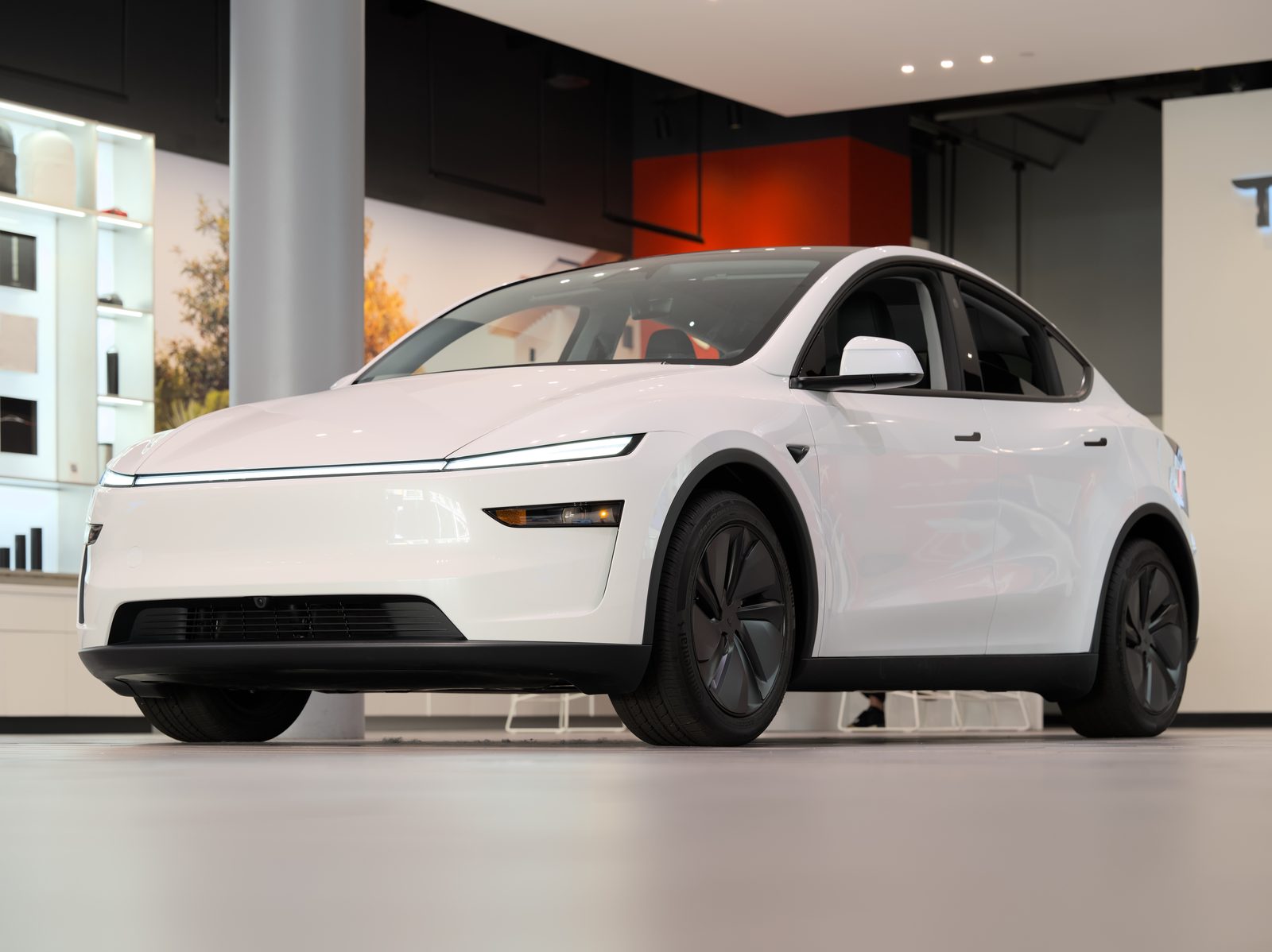
Information current as of July 2026. Insurance rates, discounts and Tesla Insurance state availability change frequently — always pull a live quote for your exact vehicle and ZIP code before you buy. Cost figures are illustrative averages, not quotes, and nothing here is financial or insurance advice. Some links are affiliate/referral links; see our disclosure page. Image credit: Tesla Model Y by Dllu, licensed under CC BY-SA 4.0, via Wikimedia Commons.

About the author: Lifei Zhou
Model Y owner since 2022Ontario STO registered apprentice · 310SWorks on Porsche, Mercedes, BMW, Audi weeklyHundreds of readers referred (est.)
Lifei is a Tesla owner based in Canada, writing practical, fact-checked Tesla guides for US and Canadian drivers — buying, ownership, insurance, charging, and TSLA investing, all from first-hand experience.