
Tesla Lease vs Buy (2026): Which One Actually Saves You Money?
Tesla Lease vs Buy (2026): Which One Actually Saves You Money?

Leasing a Tesla used to be a no-brainer for a lot of buyers, thanks to a federal tax-credit “loophole” that let leasing companies pass $7,500 in savings straight into your monthly payment. That trick is gone in 2026. With no federal EV credit on either side of the ledger, the lease-versus-buy math has been reset to first principles: how long you keep the car, how many miles you drive, and how much you care about owning an asset at the end. This guide walks through Tesla’s current 2026 lease and finance terms, runs a real three-year cost comparison, and gives you a clear rule of thumb for which path fits your situation.
Disclosure: some links are affiliate/referral links, which may earn us a commission at no extra cost to you. See our disclosure page.
📋 Contents
- The 2026 twist: no federal tax credit on either side
- Tesla lease terms in 2026: what you actually sign
- Tesla financing terms in 2026: buying with a loan
- Lease vs buy: a real three-year cost comparison
- When leasing a Tesla makes sense
- When buying (financing) a Tesla makes sense
- The fine print that trips people up
- How to lower your cost either way
- Frequently Asked Questions
- The bottom line
The 2026 twist: no federal tax credit on either side
For years, the biggest reason to lease an EV wasn’t the lease itself — it was the tax credit. When you bought a Tesla, you had to qualify for the $7,500 clean-vehicle credit yourself (income caps, price caps, the works). But when you leased, the leasing company claimed the commercial-vehicle credit and could pass it through as a discount, no strings attached. That was the famous “leasing loophole.”
Both are gone now. The federal $7,500 new-EV credit — and the leasing pass-through along with it — ended on September 30, 2025. For any Tesla you order in 2026, there is no federal credit whether you lease or buy. Tesla responded by rebuilding the lost incentive into sticker lease pricing: Model Y lease payments jumped by as much as $70/month and Model 3 by as much as $80/month right after the credit expired.
The practical upshot: leasing no longer has a built-in $7,500 head start. The decision now comes down to the fundamentals, which is actually good news — it makes the comparison honest. (For the full story on what happened to incentives, see our 2026 EV tax credit guide. Note that a handful of state and provincial programs still exist and sometimes treat leases and purchases differently, so always check local rules.)
Tesla lease terms in 2026: what you actually sign
Tesla leases in the U.S. are handled through Tesla Finance and its banking partners. Terms are set when you configure the car on Tesla’s current offers page, and the headline monthly number depends heavily on your down payment and mileage tier. Here are representative 2026 terms for the two most popular models (offers change weekly, so treat these as a snapshot):
| Term | Model 3 RWD | Model Y Premium RWD |
|---|---|---|
| Sample monthly payment | ~$299/mo | ~$399/mo |
| Due at signing | ~$3,994 | ~$2,094 |
| Lease length | 36 months | 36 months |
| Base mileage | 10,000 mi/yr | 10,000 mi/yr |
| Mileage upgrades | 12,000 or 15,000 mi/yr | 12,000 or 15,000 mi/yr |
| Excess mileage fee | $0.25/mile | $0.25/mile |
| Disposition fee | ~$395 at return | ~$395 at return |
A few things to internalize before you sign:
- The monthly number is only half the cost. A $299 lease with $3,994 down is really about $410/month once you amortize the drive-off. Always compare total cost, not the teaser payment.
- Mileage is a hard limit. If you’ll drive more than 10,000 miles a year, buy the higher tier up front — pre-purchasing 15,000 miles is far cheaper than paying $0.25/mile at the end.
- You never build equity. At month 36 you hand the keys back (minus the disposition fee) and walk away with nothing but a clean start on your next car.
Tesla financing terms in 2026: buying with a loan
If you buy, you’ll either pay cash or finance through Tesla or your own bank/credit union. Tesla’s promotional APRs in 2026 have been unusually aggressive on select trims to keep sales moving without the tax credit:
- Model Y: as of July 2026, the RWD carries 0% APR for 72 months (it requires at least 5% down — put down less and the rate becomes 0.99%); the Standard AWD and Premium RWD/AWD run 0.99% for 72 months, and the Performance is at 3.99%.
- Model 3: the Premium and Performance trims are at 0.99% APR for 72 months, while the base Standard currently has no promotional rate — expect ordinary market APRs there.
These promo rates rotate monthly and often require a specific trim, down payment, or delivery window, so confirm the exact number on tesla.com and in your Tesla account at order time and compare it against a pre-approval from your own credit union. Even a great APR still means a bigger monthly payment than the equivalent lease — because you’re paying down the whole car, not just its depreciation. The payoff is that when the loan ends, the Tesla is yours. One buyer-only federal perk also survives: under the 2025 tax law, interest on a loan for a new U.S.-assembled vehicle — which every current Tesla is — is deductible from 2025 through 2028, up to $10,000 of interest per year (income phase-outs start at $100k single / $200k joint, and you’ll need the VIN on Schedule 1-A). Leases don’t qualify, so this quietly tilts the math a little further toward financing. For a deeper look at how much value it will still hold, see our Tesla resale value and depreciation guide.
Lease vs buy: a real three-year cost comparison
Let’s put numbers to it. Take a Model 3 RWD around $42,000 out the door and compare a 36-month lease against a 72-month loan, looking only at the first three years so it’s apples-to-apples. (Illustrative figures — your rate, taxes, and insurance will vary.)
| Over first 3 years | Lease (36 mo) | Buy / finance (72 mo loan) |
|---|---|---|
| Up-front cash | ~$3,994 | ~$4,000 down (optional) |
| Monthly payment | ~$299 | ~$600 |
| Total paid over 36 mo | ~$14,700 | ~$25,600 |
| What you own at month 36 | Nothing (return the car) | A Tesla worth ~$24,000, with ~$14,000 still owed |
| Net position at month 36 | –$14,700 | ≈ –$15,600 (but with ~$10,000 of equity) |
Read that bottom row carefully. In pure cash-out terms over three years, leasing and buying land in a similar ballpark — leasing is a bit cheaper month-to-month, but the buyer is building equity the whole time. Keep the bought car past year six and it turns dramatically in the buyer’s favor: those are payment-free years driving a car you own outright. Leasing only “wins” if you were always going to replace the car at 36 months anyway — in which case you’re paying purely for the newest tech and the lowest monthly outlay.
When leasing a Tesla makes sense
Leasing is the right call if most of these describe you:
- You want a new Tesla every 2–3 years. If you’d trade in around that mark regardless, a lease avoids the depreciation hit and the hassle of selling.
- You drive predictable, moderate miles — comfortably under your 10,000–15,000-mile allowance.
- You want the lowest cash outlay and payment. Leasing frees up monthly cash flow versus a loan on the same car.
- You don’t want to think about resale value or long-term battery health. That’s the leasing company’s problem, not yours.
- You value the newest hardware. Tesla iterates fast; a lease keeps you on current-gen cameras, chips, and range.
When buying (financing) a Tesla makes sense
Buying wins if you see yourself in these:
- You keep cars a long time — five, seven, ten years. The math tilts hard toward ownership once the loan is paid off.
- You drive a lot. Heavy mileage blows through lease allowances and racks up $0.25/mile fees; an owned car just gets more valuable use.
- You want an asset. A paid-off Tesla is money you can sell, trade, or borrow against. Teslas also hold value relatively well among EVs.
- You want freedom. No mileage police, no wear-and-tear inspection, no disposition fee — modify it, road-trip it, keep it as long as you like.
- You snagged a low promo APR. A 0.99% or 0% Tesla loan makes financing remarkably cheap versus paying a lease’s built-in money factor.
The fine print that trips people up
Whichever way you lean, these details decide whether your deal is actually good:
- Lease buyouts are inconsistent. Tesla has flip-flopped on whether you can purchase your leased car at the end. As of 2026 it’s available on some leases and blocked on others, and a couple of states (such as Iowa and Louisiana) are excluded entirely. If the option to buy your car later matters to you, get it confirmed in writing in your lease contract — don’t assume.
- Residual value is fixed. Tesla typically sets a lease residual near 58% of the price after 36 months. If used Teslas hold value better than that, the leasing company keeps the upside, not you.
- Wear-and-tear on returns. Curb-rashed wheels, tire wear below the limit, and interior damage all get billed at turn-in. Budget for a set of decent tires and clean wheels before inspection.
- Insurance is required either way, and lenders/lessors require full coverage. Get quotes before you commit — premiums vary wildly by state.
- Gap coverage. Leases usually include gap protection; a purchase loan may not, so add it if you’re financing with little down.
If you’re new to Tesla ownership, our guide to saving money on a Tesla in the US covers timing, trims, and fees that apply to both leasing and buying.
How to lower your cost either way
Two levers cut your effective price no matter which path you choose:
1. Order through a referral link for free FSD. If you place a new Tesla order through a referral link, you currently get 3 months of free Full Self-Driving (Supervised) — a real perk whether you lease or buy, since it’s a trial you’d otherwise pay for. You’re welcome to use ours: order through our Tesla referral link. It costs you nothing extra and adds the FSD trial to your delivery. (For how referral perks work in detail, see our US Tesla guides.)
2. Protect your deposit and avoid fees with a few cheap accessories. On a lease especially, keeping the car clean and undamaged pays off at inspection. Floor liners, seat protectors, and a wheel-scuff kit run far less than the fees they prevent — browse all-weather floor mats and interior protectors on Amazon. Canadian shoppers can find the same essentials on Amazon Canada.
And whichever you pick, plug your real numbers into Tesla’s estimator and cross-check running costs against independent data from fueleconomy.gov and the official Tesla leasing support page before you sign.
Frequently Asked Questions
Is it cheaper to lease or buy a Tesla in 2026?
Month-to-month, leasing is cheaper — often $250–$300 less per month than a loan on the same car. But over five-plus years, buying is cheaper overall because you eventually own an asset and drive payment-free once the loan is paid off. Leasing is only cheaper long-term if you were always going to replace the car every three years anyway.
Does leasing a Tesla still qualify for the $7,500 tax credit?
No. The federal $7,500 EV credit and the leasing “pass-through” loophole both ended on September 30, 2025. There is no federal credit for leasing or buying a Tesla in 2026. Some state or provincial programs remain, so check your local rules.
Can I buy my Tesla at the end of the lease?
Sometimes. Tesla’s lease-buyout policy has changed repeatedly and varies by state and lease. Some 2026 leases allow an end-of-term purchase at the pre-set residual value; others don’t, and states like Iowa and Louisiana are excluded. Confirm the buyout option in your signed lease contract before assuming it’s available.
How many miles do Tesla leases include?
The standard allowance is 10,000 miles per year, with options to upgrade to 12,000 or 15,000 at signing. Going over costs $0.25 per mile at return, so if you drive a lot, pre-buy the higher tier — it’s much cheaper than the overage fee.
What is the disposition fee on a Tesla lease?
Most Tesla leases carry a disposition (turn-in) fee of about $395 when you return the car, on top of any excess-mileage or wear-and-tear charges. Factor it into your total lease cost.
Should I put money down on a Tesla lease?
Generally, put down as little as the deal allows. A large down payment on a lease isn’t equity — if the car is totaled early, you can lose that cash. Keeping the drive-off low protects you and keeps the comparison against buying fair.
The bottom line
- The 2026 tax-credit change removed leasing’s biggest artificial advantage — decide on fundamentals now.
- Lease if you want a new Tesla every 2–3 years, drive moderate miles, and want the lowest payment with no resale worries.
- Buy/finance if you keep cars 5+ years, drive a lot, and want to own an asset — especially if you land a 0–0.99% promo APR.
- Watch the fine print: mileage tiers, the $395 disposition fee, $0.25/mile overage, fixed residuals, and inconsistent buyout rights.
- Order through a referral link for 3 months of free FSD (Supervised), and protect a leased car with cheap floor mats and wheel guards to dodge return fees.
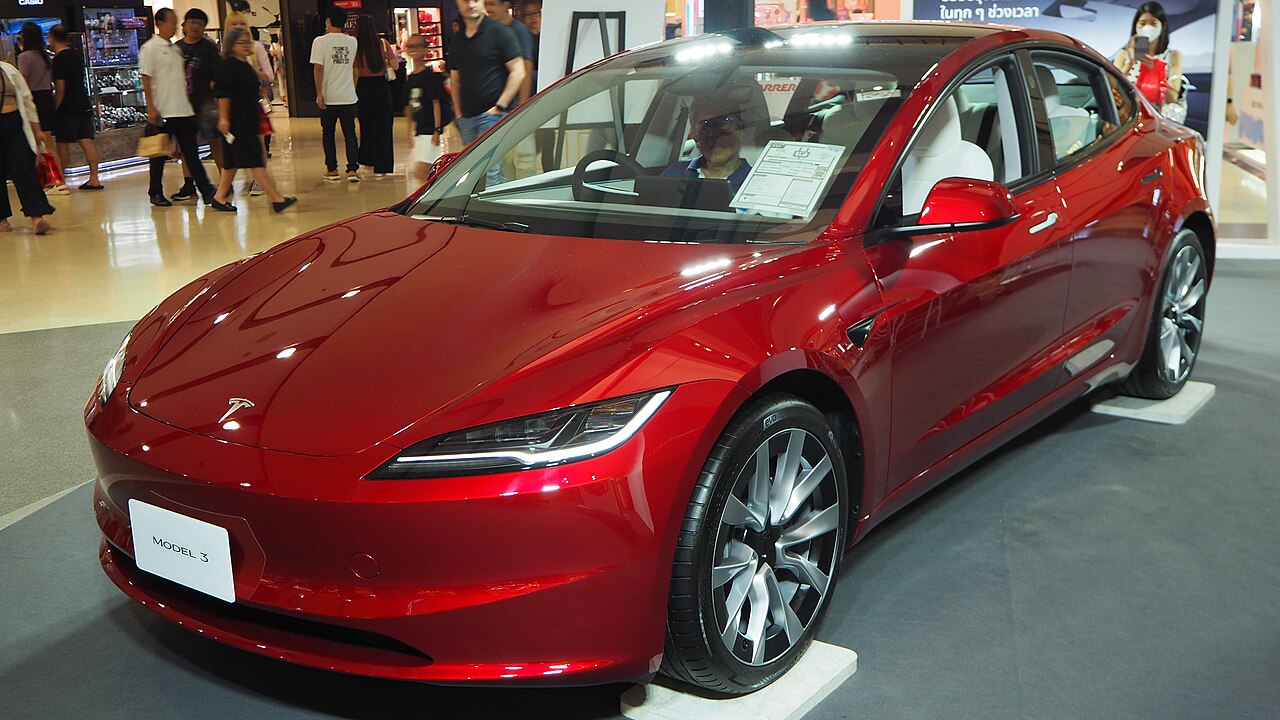
Information current as of July 2026. Tesla lease and finance offers, APRs, residuals, and buyout policies change frequently and vary by trim, state/province, and delivery window — always confirm current terms in your Tesla account and lease contract before ordering. This article is for general information only and is not financial or tax advice. Some links are affiliate/referral links; see our disclosure page. Image credit: “2023 Tesla Model 3 Highland Long Range AWD” by Chanokchon, licensed under CC BY-SA 4.0, via Wikimedia Commons.

About the author: Lifei Zhou
Lifei is a Tesla owner based in Canada, writing practical, fact-checked Tesla guides for US and Canadian drivers — buying, ownership, insurance, charging, and TSLA investing, all from first-hand experience.
