
Owning a Tesla in a Rural Area: Charging, Range, Service and Connectivity (2026 Guide)
Owning a Tesla in a Rural Area: Charging, Range, Service and Connectivity (2026 Guide)

Ask a Tesla owner in downtown Toronto or Los Angeles whether an EV is practical and you will get a shrug: of course it is. Ask the same question 90 minutes outside the city, where the nearest Supercharger is a county over, the driveway is gravel, the house sits on a 100-amp panel and the cell signal drops to one bar past the grain elevator, and the answer gets more interesting. Rural drivers cover more miles than anyone else, they can’t lean on public chargers the way apartment dwellers do, and a dead car is a much bigger problem when the tow truck is an hour away. Surveys still put EV adoption in rural counties roughly 40% below city rates, mostly on those worries. The good news is that a Tesla is one of the better-suited EVs for country living, precisely because home charging does the heavy lifting and the Supercharger network is the densest one on the continent. This guide covers what actually changes when you own a Tesla outside the suburbs: charging at home on limited electrical service, planning around sparse Superchargers, winter and gravel-road range, service when the nearest Tesla center is three hours away, and staying connected when the car’s own LTE gives up.
Disclosure: some links are affiliate/referral links, which means we may earn a small commission at no extra cost to you. It never changes the price you pay or our recommendations. See our disclosure page.
📋 Contents
- Is a Tesla Practical in a Rural Area? The Honest Answer
- Home Charging Is the Whole Game (Even on a 100-Amp Panel)
- Planning Around Sparse Superchargers
- Range on Gravel, Hills and Real Winter
- Service, Roadside Help and the Dead-12V Problem
- Emergency Charging: Generators, Outages and Power Sharing
- Connectivity: When the Car’s LTE Disappears
- Buying a Tesla When You Live Far From a Store
- Frequently Asked Questions
- The Bottom Line
Is a Tesla Practical in a Rural Area? The Honest Answer
Yes, for the large majority of rural households, with two conditions: you can charge at home, and your regular round trips stay comfortably inside the car’s real-world range. Most rural driving is a repeated loop, whether that’s the 40-mile run to town for groceries or a 120-mile round-trip commute to a regional hospital or plant. Every current Tesla covers that with margin, and a car that leaves the driveway full every morning simply never needs a public charger for daily life. That is the part city buyers underestimate: a rural Tesla owner with a 240-volt outlet in the garage will typically use Superchargers a handful of times a year, on long trips only.
Here is how the 2026 lineup stacks up on the numbers that matter in the country, using EPA-rated range. Real-world figures at 70–75 mph highway speeds run about 15–25% lower, and winter takes another bite, which we cover below.
| Model (2026, U.S.) | EPA range | Drive | Rural fit |
|---|---|---|---|
| Model 3 Premium AWD | 363 mi | Dual motor | Longest range in the lineup; low ground clearance limits it on rough tracks. |
| Model Y Premium RWD | 357 mi | Single motor | Best range-per-dollar; fine on plowed gravel, less ideal in deep snow. |
| Model Y Premium AWD | 327 mi | Dual motor | The default rural pick: AWD, 6.6 in. clearance, 3,500 lb towing with the hitch. |
| Model Y Standard RWD | 321 mi | Single motor | Cheapest way in; LFP-style daily 100% charging suits long rural loops. |
| Cybertruck AWD | 325 mi | Dual motor | Real truck bed, 7,500 lb towing, adjustable air suspension for ruts and washouts. |
If you are still choosing, our Model Y U.S. guide and Cybertruck buying guide go deeper on trims. Whichever you land on, ordering through a Tesla referral link currently adds 3 months of free FSD (Supervised) on Model 3, Model Y and Cybertruck, on top of the standard 30-day trial. Supervised FSD, incidentally, handles long empty two-lane highways well; it is the unmarked farm intersections where you still need to pay close attention.
Home Charging Is the Whole Game (Even on a 100-Amp Panel)
A rural Tesla lives or dies on home charging, so start here before you order the car. Three realities are more common in the country than in the suburbs: older 100-amp electrical service, a detached garage or barn fed by a modest sub-panel, and a long run from the panel to wherever the car parks. None of these is a deal-breaker, but each changes what you install.
The simplest rural setup is a NEMA 14-50 outlet on a 50-amp breaker and Tesla’s Mobile Connector. It charges at 32 amps, which adds roughly 25–30 miles of range per hour on a Model 3 or Model Y, so even a completely empty car refills overnight. The Mobile Connector ships with the 5-15 (regular household) and 14-50 adapters and a 20-foot cable, and at roughly $230–$300 it costs a fraction of a hardwired unit. If you buy it on Amazon (Tesla Mobile Connector, NACS, 32A/20 ft), check the listing is the current NACS version with both adapters in the box, because older Gen 2 bundles are still floating around. For a rural owner the Mobile Connector has a second job: it rides in the frunk and turns any campground pedestal, cottage dryer outlet or friend’s welder plug into a charger, which is the closest thing an EV has to a jerry can.
If your panel is already crowded, Tesla’s hardwired Wall Connector is the better tool, not because it’s faster but because of power management. A Gen 3 Wall Connector can be set to any lower amperage during commissioning, and with dynamic power management it watches the whole house and throttles the car whenever the well pump, electric range and dryer are all pulling at once. Tesla’s own power management documentation describes the static and dynamic modes; in practice a 100-amp home can usually run a Wall Connector at 24–32 amps with no service upgrade, and that is still 20–30 miles of range per hour. Up to six Wall Connectors can share one circuit, which matters when the second EV arrives. Our home charger installation guide walks through permits, breaker sizing and what an electrician should charge.
Two rural-specific tips. First, if the car will park in a detached outbuilding, price the trench and conductor run before anything else; 150 feet of appropriately sized copper often costs more than the charger itself, and aluminum feeder to a sub-panel is the usual money-saver. Second, ask your electric utility about EV programs before you install. The federal 30C home charger tax credit in the U.S. expired on June 30, 2026, but many rural electric cooperatives run their own rebates or off-peak rates, and in Ontario the Ultra-Low Overnight plan drops overnight electricity to a few cents per kWh (confirm the current OEB rate). Charging a Model Y from 20% to 80% overnight on a rate like that costs less than a coffee.
Planning Around Sparse Superchargers
Tesla’s network is the one advantage a rural EV buyer can’t get from another brand. North America now has more than 42,000 Supercharger stalls, the U.S. passed 3,000 stations in 2026 with over 37,000 ports, and Canada has well over 230 Supercharger sites, with Tesla targeting several hundred more Canadian fast-charging ports and the first V4 cabinets this year. Tesla has also started filling notorious gaps: after a customer’s post about the Southern Plains went viral in spring 2026, the company confirmed new sites across rural Oklahoma and Texas, and federally funded NEVI stations are finally coming online along interstates in states that were slow to build. None of that means every county has a charger. It means the corridors are covered and the last 60 miles are yours to plan.
The practical workflow rural owners settle into looks like this:
- Use the car’s trip planner for the interstate legs; it accounts for elevation, temperature and speed and rarely leaves you short. Tesla’s Find Us map shows every Supercharger and Destination Charger, and the U.S. Department of Energy’s Alternative Fuels Data Center station locator is the most complete list of non-Tesla chargers on both sides of the border.
- Learn where the Level 2 chargers hide: hotels, municipal lots, hospitals, breweries, ski hills, RV parks and small-town libraries. Many are free or a few dollars an hour, and you are usually parked there for a while anyway.
- Carry a J1772 adapter. Tesla includes one with new cars, but a spare like the Lectron J1772-to-Tesla adapter (rated to 80 amps, roughly $40–$60) means the one that lives in the car never goes missing, and it opens up every public Level 2 charger in rural America and Canada. See our NACS and adapter guide for which adapters do what.
- RV parks are the rural driver’s backup Supercharger. Almost all have 50-amp (14-50) pedestals; with the Mobile Connector you get 30 miles an hour for the price of an overnight site, and many will sell you a couple of hours for a small fee.
The habit that removes most of the stress is simple: in the country, don’t let the car drop below about 30% unless you know exactly where the next plug is. A Tesla’s real advantage isn’t that it never needs a charger; it’s that the charger you use 95% of the time is in your own garage.
Range on Gravel, Hills and Real Winter
EPA range is measured on a dynamometer, not on a washboard county road at 20°F with a headwind. Rural driving stacks several small penalties on top of one another, and it helps to know roughly what each costs so you can plan instead of guess.
| Condition | Typical range penalty | What helps |
|---|---|---|
| Sustained 75 mph highway vs. 60 mph | 25–35% more energy | Set cruise 5 mph lower on long empty stretches; aero wheel covers on. |
| Freezing temperatures at highway speed | 25–35% less range | Precondition while plugged in; use seat heaters over cabin heat. |
| Snow-packed or wet gravel roads | 5–10% on top of the above | Proper winter tires; slower steady speed beats stop-and-go. |
| Roof box, bike rack or open trailer | 10–30% depending on load | Hitch-mounted carriers cost less range than roof boxes. |
| Parked outside unplugged in a cold snap | 1–3% per day of standby loss | Plug in overnight even on a 120 V outlet; keep Sentry off at home. |
Put together, a Model Y Premium AWD rated at 327 miles is honestly a 200–220 mile car on a January highway in Manitoba or Minnesota, and about 260–280 in summer at real speeds. Plan rural winter trips on those numbers and the car will never surprise you. Gravel itself is not the villain people expect; the extra rolling resistance is modest, and low speeds on back roads are actually efficient. What gets you is the combination of cold, speed and wind on the open highway. Our winter driving guide covers preconditioning, tire choice and cold-weather charging in detail, and it applies doubly when the nearest Supercharger is 80 miles off.
Ground clearance deserves a mention. Model 3 and Model Y sit low compared with a pickup, and a rutted, frozen laneway can find the underbody. Owners on unpaved roads lean toward the Model Y for its extra clearance, and the Cybertruck’s air suspension is genuinely useful on washouts. Whatever you drive, a set of all-weather floor mats and mud flaps earn their keep in the first muddy spring.
Service, Roadside Help and the Dead-12V Problem
This is the part of rural Tesla ownership that needs the most honesty. Tesla has fewer service centers than a legacy brand has dealers, and in much of the interior West, the Prairies and Atlantic Canada the closest one is several hours away. Three things soften that considerably.
First, Tesla Mobile Service handles a surprising share of jobs in your driveway: tire rotations, 12-volt battery swaps, wiper and cabin filter replacement, door handle and window regulator fixes, and many warranty repairs. Coverage is decided case by case in the app based on technician availability and distance, and there is no published radius; rural owners report rangers driving a few hundred miles for warranty work, but also being told to bring the car in. Book through the app and let it tell you. Second, the car has far less to go wrong: no oil changes, no transmission, no exhaust, and brake pads that last well past 100,000 miles because regenerative braking does most of the stopping. Our maintenance and service guide lists what actually needs attention and when. Third, most software and diagnostic issues get solved remotely; Tesla technicians can pull logs and push fixes over the air, which no rural gas-car dealer can match.
Two failure modes deserve a plan. A flat tire is the most common rural breakdown and Teslas carry no spare, so a plug kit and inflator are not optional out here. A Slime tire repair kit in the trunk (typically $30–$50) gets you off a gravel road to the nearest tire shop, and Tesla roadside assistance will tow to a service center under warranty but may take a long time to reach you. Our flat-tire guide covers the full procedure. The second is the low-voltage battery. A failing 12-volt (or 16-volt lithium in newer cars) can lock you out or immobilize the car with a full main pack, and it happens with little warning. The car normally alerts you days ahead; when it does, book mobile service immediately rather than waiting, because a dead low-voltage battery in a farm driveway at minus 20 is exactly the scenario you want to avoid. Details are in our 12-volt battery guide.
Emergency Charging: Generators, Outages and Power Sharing
Rural power goes out more often and stays out longer, and an ice storm that knocks out the grid for three days raises an obvious question: can you charge the car from a generator? Tesla’s Mobile Connector and Wall Connector manuals both say not to use private generators, and you should take that seriously as the default. The reasons are practical. The car checks for a proper ground before it will charge, and most portable generators have a floating neutral, so the Mobile Connector simply refuses to start. Cheap open-frame generators also produce rough power that the onboard charger may reject or that can shorten the charger’s life.
That said, plenty of rural owners keep a generator as a last resort, and if you are going to do it, do it the way electricians recommend. Use a pure sine wave inverter generator of at least 3,000 watts, so it can sustain 120 V at 12 amps with headroom. Fit a neutral-ground bonding plug in a spare 120 V outlet on the generator, which is the small part that makes a floating-neutral generator look like a properly grounded circuit to the car. Plug the Mobile Connector into the generator directly, never through a household transfer switch that already bonds neutral and ground. Expect about 3–4 miles of range per hour on 120 V, which is slow but enough to turn a stranded car into a car that can reach town. A larger 240 V inverter generator with a 14-50 outlet can charge at up to 24–32 amps, but that is a serious piece of equipment and worth a conversation with an electrician first.
The better answer for rural homes that lose power regularly is a Powerwall. A Powerwall 3 keeps the well pump, freezer and furnace running through a multi-day outage and, with the right settings, keeps the car topped up too; Cybertruck owners can even run the house from the truck with Powershare. The 30% federal residential battery credit in the U.S. ended for systems placed in service after 2025, so it is a full-price purchase now, but for a property at the end of a long feeder line the math often still works. Our Powerwall 3 guide covers pricing and sizing.
Connectivity: When the Car’s LTE Disappears
A Tesla depends on a data connection more than most cars. Navigation, live traffic, Supercharger availability, music streaming, Sentry alerts to your phone, remote preconditioning from the house and, critically, software updates all ride on the built-in cellular modem or on Wi-Fi. In cellular dead zones the car still drives perfectly well and the maps are cached, but the extras go quiet, and an owner who parks in a barn with no signal will find updates never download and the app can’t wake the car.
The fix most rural owners already have is home Wi-Fi reaching the parking spot. Tesla downloads updates over Wi-Fi by preference, so a cheap outdoor access point on the garage or a mesh node near the window solves the update problem entirely. Where the home internet itself is the weak link, Starlink has become the default rural answer, and there is an obvious synergy for a Tesla household: it is the same corporate family, the car connects to it like any other network, and the Starlink app runs alongside the Tesla app on the same phone. In the U.S., Starlink’s residential service starts around $55 a month for the 100 Mbps tier and the hardware is now rented with the plan; in Canada the residential tiers run C$75–C$150 a month as of the June 2026 price adjustment. Canadian readers who are setting up a rural property can order through our Starlink referral link; it is a Canada-only link, so U.S. readers should order directly from starlink.com.
The more interesting piece for drivers is the Starlink Mini, a laptop-sized dish that runs off the car’s USB-C port or a small power bank and creates a Wi-Fi hotspot the Tesla can join. On a Roam plan (U.S. pricing is currently about $55 a month for 100 GB, $80 for 300 GB and $175 for unlimited, with in-motion use allowed on the unlimited tier) it gives you working navigation data, streaming for the kids and a video call from a hunting camp or a Supercharger in the middle of nowhere. The hardware dropped to about $199 in the U.S. this year, and it is sold on Amazon (Starlink Mini kit) as well as directly from Starlink; the Amazon route is handy if you want it before a trip and Starlink’s own shipping is backed up. You can pause the Roam plan for a small standby fee in the months you don’t travel. We cover mounting, power draw and plan choice in our Starlink and Tesla road-trip guide, and the short version is that it pairs with a Tesla better than with almost any other car, because the car’s screen, USB-C power and camp mode suit exactly this kind of use. Premium Connectivity, at $9.99 a month in the U.S. or C$13.99 in Canada, is still worth keeping for the built-in LTE where it exists; the Mini is for where it doesn’t.
Buying a Tesla When You Live Far From a Store
Ordering is fully online and delivery can be arranged at a Tesla location or, in many regions, to your home for a fee, so distance from a store matters less than it once did. A few rural-specific points are worth knowing before you click. In the U.S., the federal EV purchase credit ended in 2025, but interest on a loan for a new U.S.-assembled vehicle, which includes every Tesla sold there, is deductible through 2028 under the auto-loan interest deduction, subject to income limits; that is often worth a couple of thousand dollars a year to a rural household financing a Model Y. State incentives vary widely and are covered in our 2026 EV incentives guide. In Canada, the federal EVAP rebate is worth $5,000 on a Model Y RWD ordered under $50,000, and Quebec still adds $2,000 through the end of 2026; the Shanghai-built Model 3 does not qualify. Check Transport Canada for remaining program funds before you order, because it is first-come, first-served.
Insurance is usually cheaper in rural zip codes and postal codes than in cities, but ask specifically about glass and collision coverage; deer strikes and windshield chips from gravel are the two claims rural Tesla owners file most, and a Model Y windshield is not a cheap piece of glass. Our deer-season driving guide has more on that. And if you have read this far and decided the country is exactly where a Tesla belongs, ordering through a referral link still gets you 3 months of FSD (Supervised) free, which is a good way to find out how well it handles your particular stretch of two-lane highway before you pay for it.
Frequently Asked Questions
Can I own a Tesla if the nearest Supercharger is 100 miles away?
Yes, as long as you can charge at home. Rural owners with a 240-volt outlet or Wall Connector use Superchargers only on long trips. A Supercharger 100 miles away is well inside the range of every current Tesla, even in winter, and Level 2 chargers at hotels, RV parks and municipal lots fill the gaps in between.
Will a Tesla charge on a 100-amp electrical service?
Yes. A Wall Connector can be configured for a lower amperage, and dynamic power management lets it throttle automatically when the rest of the house is drawing power. A 24–32 amp setting on a 100-amp panel still adds 20–30 miles of range per hour, which is more than enough to refill overnight, and usually avoids a service upgrade.
Can I charge a Tesla with a portable generator?
Tesla’s manuals say not to, and it should be an emergency measure only. If you must, use a pure sine wave inverter generator of 3,000 watts or more with a neutral-ground bonding plug installed, plug the Mobile Connector directly into the generator, and expect 3–4 miles of range per hour on 120 volts. A Powerwall is the better long-term outage solution.
How much range does a Tesla lose on gravel roads in winter?
Gravel alone costs little; cold and speed are the real factors. At highway speed in freezing weather, plan on 25–35% less than the EPA rating, with snow-packed roads adding another 5–10%. A Model Y rated at 327 miles is realistically a 200–220 mile car on a January highway.
Does Tesla Mobile Service come to rural areas?
Often, but not guaranteed. Availability is decided in the app based on technician staffing and distance, with no fixed radius. Rural owners report rangers travelling a few hundred miles for warranty repairs, tire rotations and 12-volt battery replacements, while some jobs require a trip to a service center.
How do I get software updates if my car has no cell signal at home?
Connect the car to home Wi-Fi. Tesla prefers Wi-Fi for updates, so an outdoor access point or mesh node that reaches the garage solves it. If the property has no reliable internet, Starlink residential service is the usual rural fix, and a Starlink Mini on a Roam plan can provide a hotspot on the road.
Which Tesla is best for rural living?
The Model Y Premium AWD is the most common rural choice: dual-motor traction, more ground clearance than the Model 3, 327 miles of EPA range and 3,500 pounds of towing. The Cybertruck adds a real bed, 7,500 pounds of towing and air suspension for properties with rough access roads.
The Bottom Line
- A Tesla works in rural America and Canada if you can charge at home; with a 240 V outlet or Wall Connector you will rarely need a public charger for daily driving.
- A 100-amp panel is not a barrier: run the Wall Connector at 24–32 amps with power management, or install a NEMA 14-50 for the Mobile Connector, and the car still refills overnight.
- Plan winter highway trips on 65–75% of EPA range, keep the battery above 30% when you are far from chargers, and treat RV parks and Level 2 chargers as your backup network.
- Carry a J1772 adapter, a tire plug kit and inflator, and act on low-voltage battery warnings immediately; a flat or a dead 12 V is far more likely to strand you than an empty pack.
- Generator charging is a last resort that needs a pure sine inverter generator and a bonding plug; a Powerwall is the real answer for frequent outages.
- Home Wi-Fi to the parking spot, or Starlink where there is no other internet, keeps updates, the app and navigation working when the car’s LTE can’t.
- Ordering through a Tesla referral link currently includes 3 months of free FSD (Supervised).
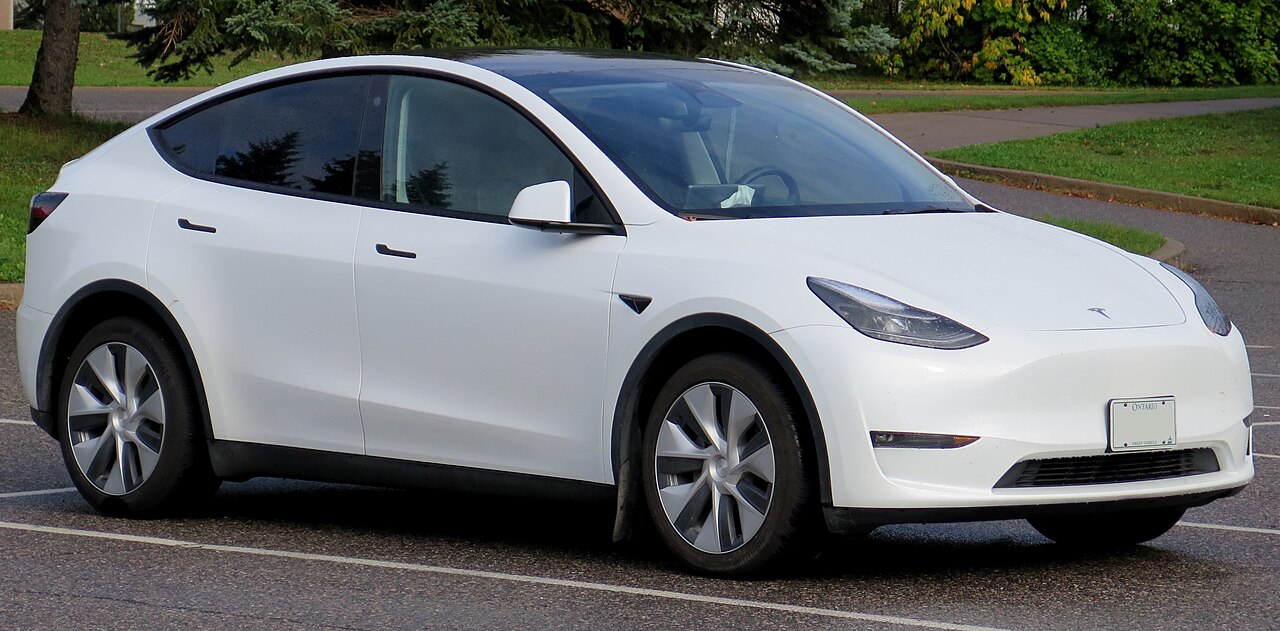
Information current as of September 2026. Vehicle prices, range ratings, incentives, Supercharger counts and Starlink pricing change frequently; confirm with Tesla, your utility, Transport Canada, the IRS and Starlink before making decisions. This article is general information, not legal, tax, electrical or financial advice; always have charging equipment installed by a licensed electrician. Some links are affiliate or referral links; see our disclosure page. Image credit: Elise240SX, CC BY-SA 4.0, via Wikimedia Commons.

About the author: Lifei Zhou
Lifei is a Tesla owner based in Canada, writing practical, fact-checked Tesla guides for US and Canadian drivers — buying, ownership, insurance, charging, and TSLA investing, all from first-hand experience.
