
Tesla Accessories for New Owners 2026: 6 Essentials & What to Skip
Tesla Accessories for New Owners 2026: 6 Essentials & What to Skip

In one sentence
A no-nonsense 2026 Tesla accessories guide for new owners: the 6 must-have essentials, what to buy only if it fits your needs, and the viral gear to skip. US & Canada.
The excitement of delivery day hasn’t even worn off before most new Tesla owners go on a shopping spree: floor mats, screen protectors, organizers, camping mattresses. Those “must-have Tesla accessory” lists floating around online routinely run to thirty or fifty items, and if you buy them all you can easily blow $1,000–2,000 — half of which ends up gathering dust in the garage.
This guide does the opposite. As an owner who has driven Teslas for a few years (and made plenty of mistakes along the way), I’ve split accessories into three tiers: essential, buy-if-it-fits-you, and don’t-waste-your-money. For each one I explain why to buy it (or why not), and where to get it in both the US and Canada. Everything is written around the 2026 Model 3 (Highland) and Model Y (Juniper) on sale today, though most of the advice applies just as well to older cars.
Disclosure: some links in this article are affiliate/referral links. If you place an order through them, we may earn a small commission at no extra cost to you. All recommendations are based on real-world use, with no paid brand placement. See our disclosure page.
📋 Contents
- First, where to buy: the real differences between three channels
- The essentials: six things to order before delivery day
- Buy if it fits you: these depend on how you actually drive
- For Canadian owners: the three-piece winter kit
- Don’t waste your money: three “viral accessories” to skip
- When and how to save money
- Frequently Asked Questions
First, where to buy: the real differences between three channels
Before any shopping list, it helps to know your options. Tesla accessories come from three main places, and each is better at a different job. Standard parts are best price-shopped on Amazon, model-specific parts are best from Tesla-focused brands, and anything involving electricity or safety should come from the factory or a major certified name.
| Channel | Strengths | Drawbacks | Best for |
|---|---|---|---|
| Amazon (US/CA) | Easy returns, fast delivery, lots of real reviews | A free-for-all of generic brands; you have to choose carefully | Floor mats, screen protectors, organizers, USB drives and other standard parts |
| Tesla-specific brands (JOWUA — code TSLNA for 5% off, Abstract Ocean, etc.) |
Tesla-only focus, excellent fit, quick to support new models | Shipping and returns aren’t as painless as Amazon | Model-specific parts: interior trim, dedicated organizers, new-model fitments |
| Official Tesla Shop | Factory quality and warranty, guaranteed perfect fit | Expensive, limited selection | Charging equipment, OEM all-weather mats |
My own rule: buy standard parts on Amazon after comparing prices, get model-specific parts from Tesla brands, and buy anything electrical or safety-related from the factory or a major name. The list below is tagged by channel using exactly that logic.
The essentials: six things to order before delivery day
1. All-weather floor mats — the number-one priority
Tesla’s factory carpet mats are basically decorative, and one rainy or snowy day ruins them. In a North American climate, full-coverage TPE/rubber all-weather mats are a genuine necessity, and that goes double for Canadian owners — slush mixed with road salt does irreversible damage to carpet. Popular picks from 3W and JOWUA use laser-measured templates with a great fit; a 3W set (front, rear, and trunk) usually runs $100–200, while JOWUA’s Model Y 2025+ floor liner combo and Model 3 2024+ floor liners list around $225 before the 5% code TSLNA; if budget allows, Tesla’s OEM set is an option too. Just make sure you match your exact model year — the mats for the Highland/Juniper cars are not interchangeable with older Model 3/Y.
Buy: 3W all-weather mats — Amazon US | Amazon Canada
2. Center screen tempered-glass protector — $20 to guard the car’s “face”
Every control in a Tesla lives on that one screen, and rings, fingernails, and kids’ toys can all leave scratches; replacing the display can cost over a thousand dollars. A tempered-glass protector runs $20–35, installs in ten minutes, and is essentially a one-and-done fix. When choosing, go for a matte (anti-glare) version — readability in direct daytime sun is noticeably better and it shows fewer fingerprints — with at least 9H hardness. Worried about touch sensitivity? In practice the effect is negligible (more in the FAQ at the end).
Buy: Spigen matte tempered-glass protector — Amazon US | Amazon Canada
3. A dashcam-grade USB drive or SSD — don’t make do with an ordinary stick
Sentry Mode and the built-in Dashcam are a Tesla owner’s secret weapon for settling fender-bender disputes, but they write to storage around the clock. An ordinary USB stick will wear out within a few months, and losing footage at the critical moment is the real loss. If you’re going to buy storage, buy a High Endurance grade: a Samsung or SanDisk High Endurance microSD plus a reader, or a small portable SSD. 256GB is a comfortable starting point. Once you plug in new storage, the car formats it directly (Safety → Format USB Drive).
Buy: SanDisk Ultra Fit 256GB — Amazon US | Amazon Canada; stepping up to an SSD: Samsung T7 Shield 1TB — Amazon US
4. Center-console anti-slip mats + storage dividers — no more sliding around
Tesla’s piano-black, open-tray center console looks great, but phones, key cards, and sunglasses slide right off it the moment you take a corner, and the glossy surface scratches easily. A set of TPE center-console mats plus an armrest-box divider runs $25–50 combined and is a textbook example of spending a little to noticeably improve daily life. The Tesla-specific brands all make versions molded to your model year, with a better fit than Amazon’s generic options.
Buy: BANKKY console organizer (Highland/Juniper) — Amazon US | Amazon Canada
5. A home-charging setup — worth more than any accessory
Strictly speaking this isn’t an “accessory” but infrastructure, yet it improves the ownership experience more than everything else combined: plug in at home each evening, leave with a full battery every morning, and Superchargers become a road-trip-only affair. The mainstream choice is Tesla’s official Wall Connector (around $450–480, requiring an electrician to install a 240V circuit) or a mobile charging solution with a NEMA 14-50 plug. Note that since 2022 new cars no longer include a Mobile Connector (about $300 sold separately on Tesla’s site), so confirm whether you have one before ordering other gear. Electrician costs vary widely by region ($300–1,500+), so get two or three quotes; some Canadian provinces and US states or utilities offer home-charging install rebates, so check your local program before you install — it can save you a few hundred dollars. If you haven’t taken delivery yet, ordering through an owner referral link currently gets you 3 months of free FSD (Supervised).
Buy: Official Tesla Shop (for anything electrical, stick to OEM or a UL-certified major brand)
6. Confirm your J1772 adapter + wheel protection (as needed)
North American Teslas usually ship with a J1772 adapter for connecting to third-party AC chargers — dig through your glovebox and frunk to confirm it’s there, and replace it (around $50) if it’s missing. Buy a reputable brand rather than the cheapest one; poor-quality adapters can overheat. Separately, if your car has 19-inch-plus wheels with low-profile tires, curbing a wheel while parallel parking is almost a rite of passage for new drivers. A set of wheel-protection rings runs $30–60, far cheaper than refinishing; if you’re confident in your parking, skip it.
Buy if it fits you: these depend on how you actually drive
Whether the following are worth it comes down entirely to your use case. None of them are wrong purchases, but plenty of owners regret buying things they never use.
- Trunk + frunk liners ($60–120): a must if you regularly haul cargo, travel with pets, or load wet ski/sports gear; for pure commuting you can wait.
- Glass-roof sunshade ($50–100): Tesla’s glass roof blocks the vast majority of UV, but how much “head heat” the infrared lets through varies by person. Worth it in the US South (Texas, Florida, inland California) in summer; most of Canada genuinely doesn’t need one.
- Camping mattress ($100–250): Camp Mode is one of Tesla’s party tricks — fold the rear seats flat, add a dedicated air mattress, and overnighting at a national park is fantastic. Worth it if you camp more than twice a year; otherwise it’s a prime dust collector.
- Tire inflator + sealant ($40–80): Teslas have no spare tire, so this kit plus roadside assistance handles most tire-pressure issues. Owners who do a lot of long trips should keep one in the car.
- 12V jump starter ($70–110): a Tesla’s low-voltage battery rarely dies, but when it does the whole car locks you out — even the door handles need it. A compact lithium pack like the NOCO Boost Plus GB40 (Amazon Canada) lives in my trunk year-round; it wakes the 12V system in a pinch and rescues friends’ gas cars too. Most valuable for owners who park outdoors in cold climates or leave the car sitting for weeks.
- Magnetic phone mount ($20–40): the car’s navigation is excellent, but many people still can’t live without a phone mount. Choose a behind-the-screen or vent-mounted type, and avoid suction mounts on the windshield — they’re illegal in some states and provinces.
- CCS fast-charging adapter (around $175–250): lets a Tesla use third-party CCS DC fast chargers. As more third-party stations add NACS connectors, this need is shrinking; only people who frequently travel through areas with thin Supercharger coverage (northern Canada, remote US states) really need it.
For Canadian owners: the three-piece winter kit
For friends in Toronto, Montreal, and Calgary, the following three items jump straight up to “essential” tier:
- Winter tires: not an accessory, a safety item. In Quebec winter tires are legally mandatory (December 1 – March 15); elsewhere they aren’t required, but on snow the braking-distance gap between winter and all-season tires is enough to decide whether you have a crash. X-Ice, Blizzak, and other mainstream winter tires come in common Tesla sizes; buying tires yourself and having a local shop install them is usually cheaper than going through Tesla, and remember to use a TPMS solution compatible with the wheel-speed sensors.
- Extended snow brush + ice scraper: the glass roof is large, and an ordinary short brush can’t reach the middle; choose a foam-head model, since metal heads risk scratching the glass roof.
- −40°C washer fluid: the washer-fluid fill is under the frunk lid and is easy to top up yourself. Before winter, use up your summer fluid and switch to the antifreeze type — it’s the small detail newcomer owners most often forget.
On a tight budget, the pre-winter priority order is: winter tires > all-weather floor mats > snow brush and washer fluid > everything else. For more Canadian ownership details, see our used Tesla buying guide.
Don’t waste your money: three “viral accessories” to skip
- Steering-wheel weights: used to trick the Autopilot/FSD hands-off detection — dangerous, potentially damaging to an insurance claim, and largely useless under the newer cars’ gaze-monitoring. Hard no.
- Cheap “full-coverage” oversized mod kits: the $30 clip-on body trim, glowing door sills, and starlight headliners reek of off-gassing, are shoddily made, damage the interior on removal, and drop your resale value. If you want to modify, do it once and properly at a reputable shop.
- “Stockpile” organizers you’ll never use: seat-gap boxes, door-sill trays, rear seat-back tables — each one sounds reasonable, but 90% of the compartments sit empty year-round. Drive for a month first, then buy only what you’re actually missing.
When and how to save money
- Black Friday / Cyber Monday (late November): the biggest discount season of the year for Tesla-specific brands, so big-ticket items like mats and mattresses are worth waiting for; Amazon’s Prime Day (July) often discounts accessories too.
- Amazon Warehouse / open-box returns: for staples like floor mats, returned-and-refurbished units are 20–30% cheaper with almost no risk.
- Don’t forget savings on the car itself: if you haven’t taken delivery, ordering a Model 3 / Model Y / Cybertruck through an owner referral link currently gets you 3 months of free FSD (Supervised) — worth about $297 at the $99/month subscription price — which beats any accessory discount. Before delivery, also read our delivery inspection checklist so you don’t miss anything at handover.
Reader offer: 5% off JOWUA Tesla accessories
JOWUA makes model-specific floor liners, screen protectors, console organizers, phone mounts and charging hubs for Model 3 / Y / S / X / Cybertruck. Shop through our partner link and use code TSLNA at checkout for 5% off. Free worldwide shipping on orders over US$130, DHL Express delivery in 5–7 days, and duties and taxes are included for US and Canadian buyers.
Frequently Asked Questions
How do I choose between OEM and third-party accessories?
For anything involving electricity or safety (home charger, adapters, child-seat anchoring), prioritize OEM or a UL/CSA-certified major brand. For floor mats, films, and organizers, third-party offers clearly better value — on fit, Tesla-focused brands like 3W are very close to OEM, often at half the price.
Does a tempered-glass protector hurt touch response or image quality?
With a reputable brand, touch latency is imperceptible; a matte protector sacrifices a sliver of clarity in exchange for far less glare and fewer fingerprints, which is actually more practical for daytime driving. If image quality matters most to you, pick a clear (glossy) version instead.
What format does the Sentry Mode USB drive need?
The car can format it directly: insert the drive and go to Controls → Safety → Format USB Drive to do it in one step, no computer required. The key isn’t the format but the endurance — always choose High Endurance storage, since ordinary sticks have a short life under constant high-frequency writes.
Are Model 3 Highland / Model Y Juniper accessories interchangeable with older cars?
Mostly not. The refreshed cars changed the center console, mat shapes, screen size, and door-panel structure, so always check the model-year fitment listed on the accessory page before ordering; Tesla-specific brands typically support new models faster than Amazon’s generic sellers. For more on choosing a car, see our US Model 3 guide.
How much should a new owner budget for the first round of accessories?
A reasonable budget for the six essentials (excluding home-charger installation) is about $300–500. The advice: put your “want-to-buy” items in the cart and cool off for a week, then top up after you’ve driven a while — you’ll find that what you actually use every day is the floor mats, the screen protector, and that USB drive. Browse more options in our Tesla accessories section.
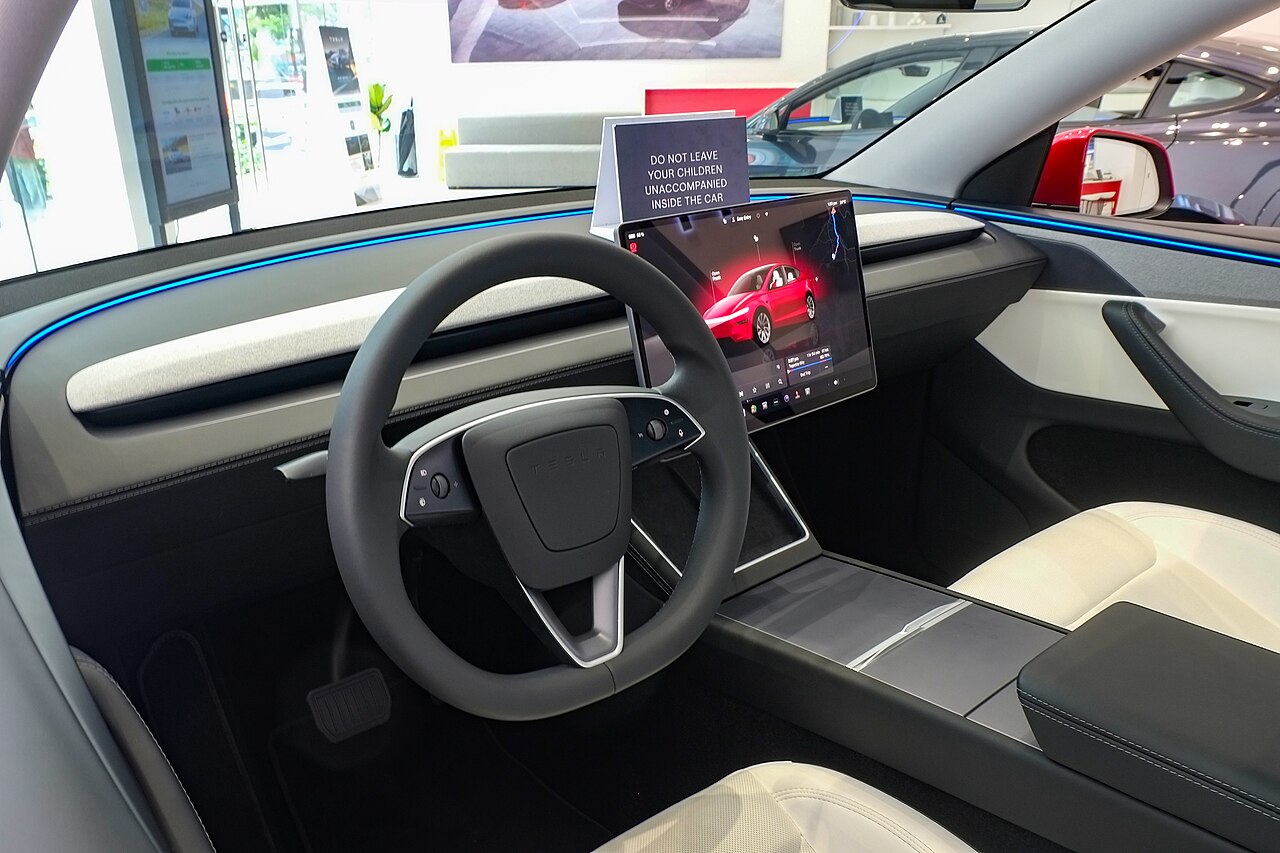
Image credit: 2025 refreshed Tesla Model Y interior, photo by Ethan Llamas, CC BY-SA 4.0, via Wikimedia Commons. Prices reflect approximate ranges as of July 2026 — the live price on each retailer’s page governs. For any charging-equipment installation, consult a licensed electrician and follow local electrical codes. This article contains affiliate/referral links; see our disclosure page. All recommendations are based on real-world use and are not purchasing advice.

About the author: Lifei Zhou
Model Y owner since 2022Ontario STO registered apprentice · 310SWorks on Porsche, Mercedes, BMW, Audi weeklyHundreds of readers referred (est.)
Lifei is a Tesla owner based in Canada, writing practical, fact-checked Tesla guides for US and Canadian drivers — buying, ownership, insurance, charging, and TSLA investing, all from first-hand experience.