
Chicago & Illinois Tesla Buying Guide 2026: Rebates, Tax & Winter Range
Chicago & Illinois Tesla Buying Guide 2026: Rebates, Tax & Winter Range

Buying a Tesla in Chicago and Illinois is a genuinely mixed experience. On one hand, this is one of the few places in the country where the federal credit may be gone but the state still puts its own cash on the table — Illinois runs a state-level EV rebate, and the local utility, ComEd, will reimburse up to $2,500 toward a home charger. On the other hand, Chicago’s vehicle tax rates are eye-wateringly high — the combined city sales tax tops out at 10.25% — EVs pay an extra $100 road-use fee every year, and a Midwest winter in the teens below freezing will eat straight into your range.
So this isn’t a question you can answer by just asking “is there a rebate?” You have to run the taxes, the rebates, the electricity rates, and winter driving together before you know whether it’s worth it and how to buy smart. And in the Chicago area specifically, it really matters where you live — downtown, the South Side, or the western suburbs around Naperville and Westmont all play out differently.
This guide does the math once and lays it all out: exactly what you’ll pay in Chicago taxes, how the state rebate works, how to grab the ComEd reimbursement, what’s still left to save now that the $7,500 federal credit is gone, and how to choose and live with the car through a brutal winter.
Disclosure: some links in this article are affiliate/referral links. If you order or sign up through them, we may earn a small commission at no extra cost to you. All analysis is based on public information and real owner experience, with no paid placement. This is general information, not tax or legal advice. See our disclosure page.
Key facts (checked October 5, 2026)
- The federal $7,500 new-EV tax credit ended on September 30, 2025.
- The federal 30C home-charger credit expired on June 30, 2026.
- Tesla financing (orders from September 28, 2026): 1.99% APR on Model Y except Performance (3.99%), up to 72 months.
- Tesla warranty: 4 years / 50,000 miles on the vehicle, 8 years on the battery and drive unit.
- Ordering a new Tesla through a referral link currently adds 3 months of FSD (Supervised).
📋 Contents
- Buying a Tesla in Illinois: rebates are still here, but the bar isn’t low
- The full bill: what you actually pay to buy a Tesla in Chicago
- The Illinois state EV rebate: up to $4,000, but watch the window
- ComEd’s money-saver: charger reimbursement plus off-peak rates
- The federal $7,500 is gone — what’s left to save
- Choosing your Tesla: how to pick a Model Y or Model 3 for a cold climate
- The Chicago winter: how much range you lose and how to handle it
- Charging: home, Supercharger, and options for apartment dwellers
- New or used? The angle on used Teslas in Illinois
- Insurance: how pricey is Illinois coverage, and is Tesla Insurance worth it?
- Buying by neighborhood: downtown, western suburbs, and the North Shore
- Delivery and registration: how to take the car without getting burned
- Frequently Asked Questions
- The bottom line: turn this into your action plan
Buying a Tesla in Illinois: rebates are still here, but the bar isn’t low
Here’s the bottom line first: Illinois is a carrot-and-stick state. The carrots are generous — a state EV cash rebate plus a very generous ComEd charger reimbursement. The sticks are real costs — some of the highest tax rates in the country, meaningful annual ownership fees, and a hard winter you’ll actually have to manage.
That’s the opposite of low-tax, no-rebate states. Illinois is high-cost but pays you back — which means how well you do the math directly decides whether you spend thousands more or thousands less than your neighbor. Whether you live in Chicago proper or out in the suburbs, the same Tesla can carry very different out-the-door numbers.
The good news: Illinois is also one of the states where Tesla’s own insurance product is available (more on that below). Overall, as long as you capture every rebate and reimbursement and use the right charging strategy, the all-in cost of owning a Tesla in Illinois can land at a very reasonable level.
The full bill: what you actually pay to buy a Tesla in Chicago
This is where Illinois trips people up, because the tax structure is more complicated than in most states. Break out the official costs of buying a new Tesla in Chicago:
- Sales tax — the big one. The Illinois state rate is 6.25%, but Chicago stacks on Cook County (1.75%), the City of Chicago (1.25%) and other local taxes, pushing the combined city rate to a steep 10.25%. On a $45,000 Model Y, tax alone can run over $4,600. Suburban counties are lower, but most still land in the 7%–9% range.
- Trade-in reduces your tax — the Illinois bright spot. Since 2022, the full value of a trade-in can be deducted from the purchase price before tax is calculated, with no cap. If you have a valuable car to trade, you can save a meaningful chunk of tax — use it.
- EV registration fee. A battery-electric vehicle costs roughly $251 a year to register, which includes a $100 EV surcharge that replaces gas-tax revenue. A first-time title and plate typically runs around $416 (including the ~$165 title fee). Note that Illinois has floated proposals to raise these fees, so they may climb.
- Chicago City Sticker. Residents inside the city limits must buy an annual city vehicle sticker — roughly $90–$150 for a standard passenger vehicle, priced by weight. Suburban residents don’t pay this.
Put it together, and the first-year government taxes and fees on a Model Y bought in the City of Chicago look roughly like this:
| Item | Amount (approx.) | Notes |
|---|---|---|
| Sales tax (City of Chicago) | Price × ~10.25% | ~$4,612 on a $45,000 car; lower in the suburbs |
| Registration (incl. EV surcharge) | ~$251/year | Includes the $100 EV fee |
| First-time title fee | ~$165 | One-time |
| Chicago City Sticker | $90–$150/year | City residents only |
See the pattern? Illinois’s pain is the sales tax, not the miscellaneous fees. That’s exactly why suburban buyers — lower tax rate, no city sticker — end up with a noticeably lower out-the-door cost. Before you buy, nail down which address you’ll register at and what tax rate it carries; the difference can be well over a thousand dollars.
The Illinois state EV rebate: up to $4,000, but watch the window
Illinois runs its own electric-vehicle cash rebate, which is what sets it apart from most states. The program pays $2,000 for a qualifying new or used battery-electric vehicle, with low-income households eligible for another $2,000, up to $4,000 total. The conditions: the vehicle must be priced under $80,000, bought from a licensed Illinois dealer, claimed only once per 10 years, and applied for within 180 days of purchase. Teslas generally qualify.
But there’s a timing point you have to understand: the FY26 round of applications closed on May 31, 2026, and as of June 2026 new applications weren’t being accepted (check the Illinois EPA rebate page for the current window). The Illinois EPA (IEPA) typically releases the budget in batches by fiscal year, so the right move is to watch for the official announcement and submit when the next application window opens — and always file within 180 days of buying.
In plain terms: if you’re not in a rush and you want that $2,000, you can wait for the next application cycle; if you’re taking delivery now, you’ve missed this round and will rely on ComEd and manufacturer incentives below. Run your budget honestly and don’t spend money you can’t yet claim.
ComEd’s money-saver: charger reimbursement plus off-peak rates
If the state rebate makes you wait, the ComEd benefits are available right now — and Chicago-area drivers should not miss them. ComEd is the utility serving Chicago and northern Illinois, and in 2026 it launched a $70 million EV support program. The two pieces most useful to residents are:
- Home charger reimbursement. Residents who install a qualifying Level 2 home charger can get back up to $2,500 per household, covering both equipment and installation. You’ll need an ICC-licensed electrician to do the work, and you have to enroll in a ComEd time-of-use rate and stay on it for at least 3 years. That’s a substantial sum — enough to cover most of a home-charging setup.
- Off-peak rates that cut charging costs. ComEd offers Hourly Pricing (BESH) and, new for 2026, a time-of-use delivery rate (DTOD). Prices float with real-time supply and demand, and overnight off-peak hours can be extremely cheap — occasionally even negative (you get a credit for using power). Set the car to charge automatically in the middle of the night and the savings add up over time.
These two can be stacked: use the reimbursement to get the charger installed, then use off-peak rates to drive down the cost per kilowatt-hour. For anyone who charges at home daily, the running savings over a few years can exceed any one-time rebate. Before installing, check the ComEd website for current program details and remaining budget — slots are limited. For how to pick and install a home charger, see our Tesla home charger installation guide.
The federal $7,500 is gone — what’s left to save
Let’s be clear about reality: the federal clean-vehicle tax credit of up to $7,500 ended for new vehicles delivered after September 30, 2025, and no Tesla model qualifies anymore. Don’t let outdated guides mislead you.
The federal home-charger credit (30C), worth 30% of cost up to $1,000, expired on June 30, 2026, so a charger installed now can’t claim it. ComEd’s $2,500 reimbursement is a utility rebate, not a federal credit, so it is unaffected.
Separately, Tesla periodically runs its own financing incentives — for orders placed from September 28, 2026, for example, 1.99% APR on every Model Y except the Performance (3.99%), for up to 72 months, which cuts interest costs substantially. These terms change fast, so go by what Tesla’s website shows at the time you order.
Choosing your Tesla: how to pick a Model Y or Model 3 for a cold climate
Illinois winters are cold, so beyond budget you should add one more layer of thinking: cold-weather resilience. The good news is that current Teslas come with a heat pump, which is far more efficient at heating in low temperatures than the old resistive systems — meaning a much smaller hit to range.
For families and anyone who hates the cold, lead with the Model Y. The SUV gives you more space, higher ground clearance, and an easier time on snow and slush, and the heat pump plus heated seats and heated steering wheel are a winter blessing. The Model Y Standard recently started around $41,380 including destination — nearly ten thousand dollars less than higher trims, which makes it strong value. For range and configuration differences across versions, see our U.S. Model Y complete guide.
For singles, couples, or mostly-city commuters, the Model 3 is the more economical pick — lower energy use, friendlier price, and four versions to choose from; the trade-offs are covered in our U.S. Model 3 complete guide. Whichever you choose, buy a little extra range than you think you need — winter range can shrink by around 20%, so a cushion buys peace of mind.
One easy perk when you order: buying through an existing owner’s referral link currently gets you 3 months of free FSD (Supervised). At the $99/month subscription price that’s worth about $297 — effectively a free quarter of advanced driver assistance. You’re welcome to use our Tesla referral link, at no extra cost to you.
The Chicago winter: how much range you lose and how to handle it
This is the question Illinois owners care about most. Chicago winters routinely drop into the teens below freezing, and wind chill makes it feel colder still. EV range commonly drops to 70–80% in deep cold, and an extreme cold snap can cut it further. That’s not a Tesla flaw — every EV behaves this way — and the difference comes down to knowing how to use it.
A few habits that pay off immediately:
- Precondition before you leave. Use the app to remotely warm the cabin and battery ahead of time, ideally while still plugged in, so you’re drawing from the grid rather than the car’s battery. You get a warm cabin and you protect your range.
- Lean on the seat and steering-wheel heaters. They use far less power than blasting the cabin heat. Warm yourself with the seat heaters first and keep the cabin temperature lower; your range will go further.
- Park in a garage when you can. Even an unheated garage is warmer than the open street, keeps the battery happier, and lets it charge faster.
- Charge while the battery is warm. A cold battery charges slowly. On a road trip, set the Supercharger as your navigation destination so the car preconditions the pack on the way — you’ll see noticeably faster speeds when you arrive.
- Keep a buffer. Don’t run the battery to empty in winter; top up at 15%–20% so you’re never stranded by range anxiety in subzero weather.
Do these well and a Chicago winter isn’t nearly as scary for Tesla owners. In fact, many longtime owners find that climbing into a pre-warmed, quiet, toasty EV on a frigid morning beats scraping a windshield and waiting for a gas car to warm up.
Charging: home, Supercharger, and options for apartment dwellers
If you have a dedicated parking spot, home charging is the best answer — paired with the ComEd reimbursement and off-peak rates above, your cost per kilowatt-hour can be very low. Install a Tesla Wall Connector, plug in at night, and wake up full. It’s the most painless setup there is.
For trips, you’ll rely on Superchargers. The Chicago metro and the interstate corridors have dense Supercharger coverage, so long-distance charging isn’t something to stress about. Pricing is per kilowatt-hour and varies between off-peak and peak — off-peak is cheaper. Frequent road-trippers can do the math on whether a Supercharger membership is worth it; occasional users can just pay per session.
Apartment dwellers without a fixed spot shouldn’t despair, either. Check whether your building or workplace has a Level 2 public charger, or find a convenient nearby Supercharger and make one or two scheduled visits a week — combined with a normal weekday commute, that’s usually plenty. Chicago malls, parking structures, and the city itself keep adding chargers, so it only gets easier. Before you buy, think clearly about “where will I normally charge?” — that matters more than agonizing over configuration.
New or used? The angle on used Teslas in Illinois
If your budget is tight, used Teslas in Illinois have an advantage you don’t see in most states: the state EV rebate also applies to qualifying used battery-electric vehicles. That means buying a qualifying used Tesla from a licensed Illinois dealer can also be eligible for that $2,000 (plus another $2,000 for low-income households) — again, subject to the application window being open, a price under $80,000, and filing within 180 days. That makes used EVs in Illinois more attractive than in many other places.
But to claim the rebate, you must buy from a licensed dealer; a private-party sale generally doesn’t qualify, just as with a new car. A private sale may be cheaper, but you lose the state rebate and the dealer’s inspection and short-term protection — so weigh it carefully.
When buying a used Tesla, focus on two things. First, how much factory warranty is left (4 years/50,000 miles on the vehicle, 8 years on the battery and drive unit) — that directly governs your exposure to expensive future repairs, and in a cold climate you especially want to confirm battery health. Second, whether paid software like FSD transfers with the car — FSD is usually tied to the vehicle, but always confirm the actual activation status in the car’s menus before buying rather than taking the seller’s word. For a structured inspection and pitfall-avoidance routine, see our Tesla delivery inspection checklist before you commit. Worth noting: if you’re trading in your old car toward a new one, Illinois lets you deduct the full trade-in value before tax — the higher the trade value, the more you save, which often beats selling the old car separately and buying.
Insurance: how pricey is Illinois coverage, and is Tesla Insurance worth it?
Illinois auto insurance sits around the national middle overall, but the City of Chicago — with heavy traffic and higher theft and accident rates — costs noticeably more than the suburbs or out-of-state areas. As a high-value car, a Tesla typically costs more to insure than a comparably priced gas car, and battery and sensor repairs push up claim costs.
The upside: Illinois is one of the states where Tesla’s own insurance is available. Tesla Insurance prices by actual driving behavior, calculating premiums dynamically from your monthly Safety Score, mileage, and FSD usage — so steady drivers can save substantially. Tesla says the average driver can pay 20%–40% less than with traditional insurance, and the safest drivers can come in as much as 60% lower.
Practical advice: get a Tesla Insurance quote and compare it side by side with the big traditional carriers like Geico, State Farm, and Progressive. If you live in the city, drive steadily, and don’t rack up high mileage, Tesla Insurance often wins; if you carry a lot of legacy discounts or have a so-so score, a traditional company may be cheaper. Quote several, have your VIN, address, and annual-mileage estimate ready, and you’ll have prices online in minutes.
Buying by neighborhood: downtown, western suburbs, and the North Shore
Where you live in the Chicago area changes the calculus.
- Downtown and the near South Side (Chinatown / Bridgeport area). Convenient and close to the core, but registration falls under the high city tax rate, you have to buy a city sticker, and parking is tight. If you can register at your actual residence in an outer county, your out-the-door cost drops noticeably; if home charging is hard, plan your public-charging strategy in advance.
- Western suburbs (Naperville, Westmont and nearby). A magnet for families, with plenty of single-family homes and ample parking — the ideal place to install a home charger and claim the ComEd reimbursement, and the tax rate is lower than downtown. This is arguably the most comfortable area in Illinois to own a Tesla.
- North Shore (Skokie, Northbrook and similar). Also mostly suburban single-family homes, with good charging conditions, moderate tax rates, and an easy commute into the city — well suited to families.
Wherever you are, a Tesla is sold at one national price online, with no haggling between stores. The way to save is through trade-in tax savings, the state rebate, the ComEd reimbursement, manufacturer financing, and a referral link — not by negotiating with a salesperson.
Delivery and registration: how to take the car without getting burned
Buying a Tesla in Illinois is highly standardized: configure online, pay the deposit, upload your license and insurance, and schedule delivery. If there’s inventory in the Chicago area, delivery is usually quick. On delivery day, don’t rush — go item by item through the paint, panel gaps, interior, and functions, and document anything wrong on the spot.
Registration and taxes are generally handled with Tesla’s help: sales tax, registration, and title are processed within the transaction, you drive on temporary plates first, and permanent plates arrive later. City of Chicago residents, remember to separately obtain your city sticker. Before you buy, confirm your insurance is in force — Illinois law requires coverage to drive.
And if you plan to use a referral link for those 3 free months of FSD, you must enter through an owner referral link at the ordering step — the reward only lands after the order is placed, and it can’t be added retroactively. A lot of people forget this. While you’re prepping for winter, you can grab a snow brush, an ice scraper, and -40°F washer fluid in one go on Amazon so you’re ready for that first cold snap.
Frequently Asked Questions
Can I still get the Illinois state rebate when buying a Tesla now?
Illinois has a state EV rebate ($2,000, plus another $2,000 for low-income households, up to $4,000), but the FY26 round of applications closed on May 31, 2026. To get it, watch for the Illinois EPA (IEPA) announcement of the next application window and file within 180 days of purchase. If you’re taking delivery now, you’ve missed this round and can lean on the ComEd reimbursement and manufacturer incentives instead.
How high is the sales tax on a car in Chicago, really?
The combined motor-vehicle sales tax in the City of Chicago is about 10.25% (state 6.25% + Cook County 1.75% + City of Chicago 1.25% and other local taxes), one of the highest in the nation. Suburban rates are generally lower, roughly 7%–9%. If you have a trade-in, Illinois lets you deduct its full value before tax with no cap — a real saving, so use it.
How do I get the ComEd charger reimbursement, and can I stack it with the federal credit?
ComEd residents who install a qualifying Level 2 home charger can get back up to $2,500 per household, using an ICC-licensed electrician and enrolling in a time-of-use rate for at least 3 years. The federal 30C home-charger credit (up to $1,000) expired on June 30, 2026, so for a new install the ComEd reimbursement is the incentive that remains. Check the ComEd website for current rules and remaining slots before installing.
Chicago is so cold — how much range will my Tesla lose?
In deep cold, EV range commonly drops to 70–80%, and a cold snap can cut it more; this is common to all EVs. Current Teslas have a heat pump, so the impact is smaller than on older models. Preconditioning while plugged in before you leave, leaning on the seat and steering-wheel heaters, parking in a garage, and preheating the battery before charging all help noticeably. Buy a little extra range up front for a safer cushion.
I live in an apartment with no fixed parking — can I still buy a Tesla?
Yes, but solve charging first. Check whether your building or workplace has a Level 2 public charger, or find a convenient nearby Supercharger to visit once or twice a week. Chargers at Chicago malls and parking structures keep growing. As long as your daily commute isn’t extreme, apartment dwellers can own a Tesla comfortably — the key is to plan your charging before you buy.
The bottom line: turn this into your action plan
Buying a Tesla in Chicago and Illinois is a math problem: high taxes and cold winters are the sticks; the state rebate and ComEd reimbursement are the carrots. People who do the math — using a trade-in to cut tax, watching for the next state-rebate round, capturing the full ComEd charger reimbursement and off-peak rates — can drive the all-in cost down to a very attractive level. People who don’t can end up overpaying through the city’s high tax rate and winter range anxiety. Get the numbers in this guide straight, and owning a Tesla in Illinois is genuinely a great experience. One more reminder: rebate and reimbursement budgets are limited and first-come, first-served, and policies change yearly — once you’ve decided, act early rather than regretting a closed window.
And if this guide helped clarify your thinking and you’re about to order, using our Tesla referral link gets you 3 months of free FSD (Supervised), worth about $297, at no extra cost to you — and it helps support this site. Entirely optional, no pressure.
Information currency: this article draws on public information from the Illinois Department of Revenue and the Illinois EPA (EV rebate), the Illinois Secretary of State (vehicle registration / EV plate fees), ComEd (charger reimbursement and time-of-use rates), Tesla’s official site, and multiple industry sources, current as of June 2026. Tax rates, fees, rebates, and manufacturer incentives can change at any time — before you order or register, rely on the latest information from the relevant Illinois government agencies, ComEd, and Tesla’s official pages. See the Tesla website, the Illinois EPA EV rebate page, the Illinois SOS EV registration page, and fueleconomy.gov for authoritative details. For more U.S. Tesla coverage, see our U.S. Tesla section.
Disclaimer: this article is for information sharing and does not constitute investment, tax, or legal advice. For your specific tax and insurance situation, consult a licensed professional. Some links are affiliate/referral links; see our disclosure page.
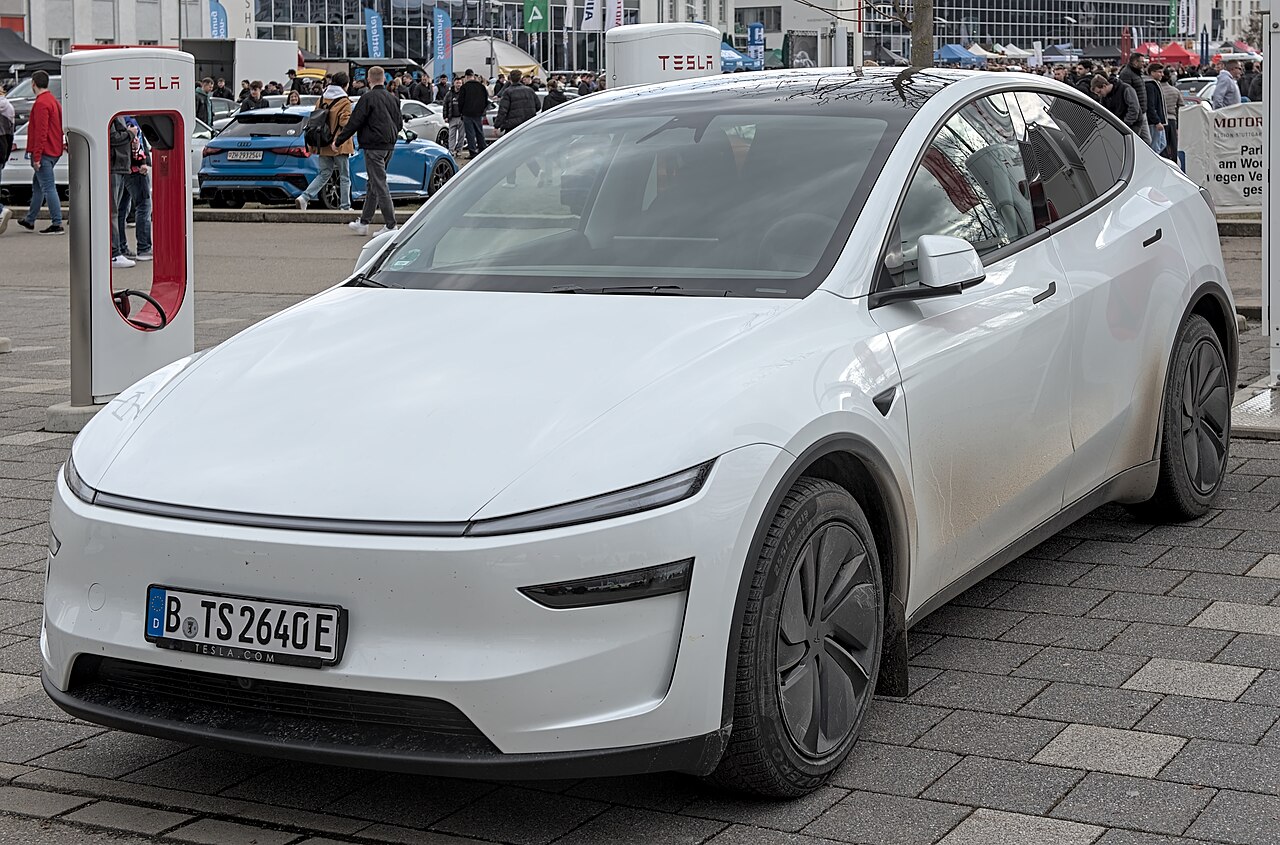
Image credit: Tesla Model Y photo by Alexander Migl (file page, CC BY-SA 4.0).

About the author: Lifei Zhou
Model Y owner since 2022Ontario STO registered apprentice · 310SWorks on Porsche, Mercedes, BMW, Audi weeklyHundreds of readers referred (est.)
Lifei is a Tesla owner based in Canada, writing practical, fact-checked Tesla guides for US and Canadian drivers — buying, ownership, insurance, charging, and TSLA investing, all from first-hand experience.