
Tesla Cybertruck Price in Canada and the US (2026): C$139,990 and US$74,990, Trims and Range
Tesla Cybertruck Price in Canada and the US (2026): C$139,990 and US$74,990, Trims and Range

The Tesla Cybertruck costs C$139,990 in Canada and US$74,990 in the United States for the cheapest version on sale in each country. Canadian buyers also pay the federal luxury tax, so a Premium All-Wheel Drive comes to roughly C$170,500 on the road in Ontario. This guide covers the prices, the trims, real-world range, the stainless-steel upkeep, and who should and should not buy one.
Cybertruck prices at a glance (checked October 5, 2026)
- Canada: Premium All-Wheel Drive C$139,990, Cyberbeast C$167,990. There is no cheaper trim in Canada.
- United States: Dual Motor All-Wheel Drive US$74,990, Premium All-Wheel Drive US$84,990, Cyberbeast US$99,990.
- Canada adds about C$2,900 in freight and fees, the federal luxury tax (about C$8,000 on the Premium AWD) and provincial sales tax.
- No federal rebate or tax credit applies in either country.
- A referral order adds 3 months of FSD (Supervised) for new owners. In the US the Dual Motor trim is excluded.
The Cybertruck is now one of Tesla’s niche models. The flagship Model S and Model X were discontinued in 2026, so most buyers compare it with the Model 3 and Model Y. It has very sharp upsides and very sharp downsides, and it is not a buy-it-without-thinking family car the way a Model Y is.
Disclosure: some links in this article are Tesla owner referral / affiliate links. If you place an order through them, it costs you nothing extra, but the site may earn a referral reward that helps keep it running. All analysis is based on public information and real owner experience, with no paid placement. This is general information, not purchase, financial, or legal advice. See our disclosure page.
📋 Contents
- What the Cybertruck actually is, and why it stands out so much
- The 2026 US lineup: three trims, pricing and how to choose
- Cybertruck price in Canada: C$139,990 and C$167,990
- Range, charging, and NACS: how it performs in the real world
- That signature stainless steel: the upkeep behind the looks
- What driving a Cybertruck in winter is actually like
- Who should buy one, and who should walk away
- Ordering, taking delivery, and saving where you can
- Frequently Asked Questions
- The bottom line
What the Cybertruck actually is, and why it stands out so much
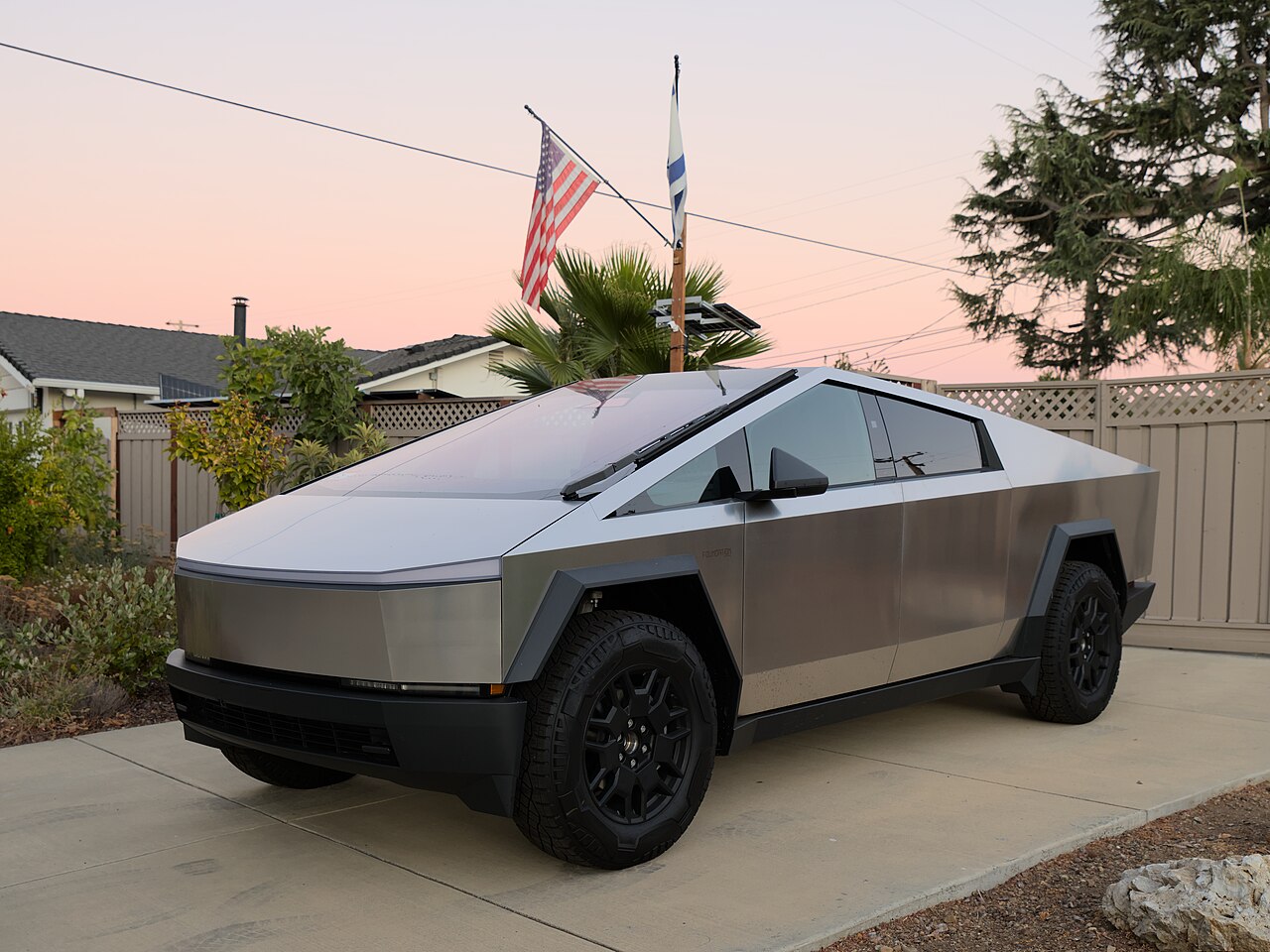
The Cybertruck is Tesla’s first all-electric pickup. Deliveries began in late 2023, and by 2026 it’s a relatively mature product. It carries three headline traits. First, the unpainted 30X-series cold-rolled stainless-steel exoskeleton, hard enough to shrug off everyday dings. Second, a 48-volt low-voltage electrical architecture and steer-by-wire — there’s no mechanical link between the steering wheel and the front wheels, which makes low-speed maneuvering feather-light. Third, absurd performance: even the base dual-motor version does 0–60 mph in about 4.1 seconds, and the top Cyberbeast hits it in 2.6 — supercar numbers from a truck that weighs well over 6,000 lb.
But understand what it fundamentally is: a full-size American pickup. It’s over 18.5 feet long and nearly 8 feet wide including mirrors. In North America’s generous parking spots and garages that’s fine, but if you live in an older urban core, deal with height- and width-restricted underground garages, or constantly need to turn around on narrow streets, this thing will remind you of its size constantly. For families used to a Model 3 or Model Y, jumping from a sedan or SUV up to a pickup this big takes real adjustment.
Lengths to scale. Parking stall sizes vary by city and by garage; 18 feet is a common length in North America.
And don’t let the word “pickup” fool you. The cargo bed (Tesla calls it the vault, with a powered tonneau cover) genuinely hauls and tows — the payload and towing figures aren’t bad. But it’s positioned more as “a wildly cool toy that occasionally does heavy lifting” than as a jobsite workhorse pulling concrete every day. Among the people buying it, very few treat it as a true work tool; most are in it for the uniqueness, the tech, and the head-turning factor.
The 2026 US lineup: three trims, pricing and how to choose
In February 2026 Tesla reshuffled the Cybertruck lineup. The attention-grabbing single-motor rear-wheel-drive entry trim was cancelled outright — it was offered only briefly before being pulled. The US market now offers just three trims, all all-wheel drive:
- Dual Motor AWD (base) — starts at $74,990. About 600 hp, 0–60 in 4.1 seconds, an EPA range of roughly 325 miles, and a max tow rating of 7,500 lb. It drops the rear screen and premium audio, but its power and range are nearly identical to the mid trim — the value pick.
- Premium AWD — $84,990. Power and range close to the base, but it adds a 15-speaker audio system, a 9.4-inch rear touchscreen, air suspension, and other comfort features, with towing bumped up to 11,000 lb.
- Cyberbeast (performance) — $99,990 after a $15,000 price cut in the February restructure. Tri-motor, 845 hp, 0–60 in 2.6 seconds — one of the quickest production pickups on the planet, and the “money is no object” pick.
All three share the same roughly 123 kWh structural battery pack, so range differences are small. The real gaps are in power, comfort features, and tow limits. My advice is blunt: tight budget, take the Dual Motor base — it drives much the same as the Premium, which costs $10,000 more. Want the rear screen and air suspension for both comfort and bragging rights, go Premium. Chasing pure acceleration and treating it as a big toy, then consider the Cyberbeast.
One cold splash of water: there is no federal tax credit to be had. The $7,500 federal new-vehicle clean-energy credit ended at the close of September 2025, with no revival bill in sight. Don’t pencil any tax credit into your Cybertruck math — though if you finance an American-assembled vehicle like this one, the OBBBA car-loan interest deduction (2025–2028, income limits apply) can still claw back a couple thousand a year in tax savings.
| US trim | Starting price (USD) | Motors / power | 0–60 mph | EPA range | Max towing |
|---|---|---|---|---|---|
| Dual Motor AWD | $74,990 | Dual motor / ~600 hp | 4.1 s | ~325 mi | 7,500 lb |
| Premium AWD | $84,990 | Dual motor / ~600 hp | 4.1 s | ~325 mi | 11,000 lb |
| Cyberbeast | $99,990 | Tri-motor / 845 hp | 2.6 s | ~320 mi | 11,000 lb |
Prices exclude a destination fee of roughly $1,995 plus taxes and fees; the live configurator on Tesla’s official Cybertruck page governs.
Cybertruck price in Canada: C$139,990 and C$167,990
Tesla’s Canadian configurator lists the Cybertruck with an Order Now button again. As of October 5, 2026 there are two trims: the Premium All-Wheel Drive at C$139,990 and the tri-motor Cyberbeast at C$167,990. The cheaper Dual Motor trim sold in the United States is not offered here. You can check today’s figures on Tesla’s Canadian Cybertruck page.
Premium All-Wheel Drive
- Range (est.)
- 523 km
- 0–100 km/h
- 4.3 sec
- Towing
- 4,990 kg
Cyberbeast
- Motors
- Three
- Towing
- 4,990 kg
- Luxury tax
- about C$13,600
List prices from Tesla’s Canadian configurator on October 5, 2026. On-the-road figures are estimates with freight, fees, luxury tax and 13% HST.
Order with our referral link and get 3 months of FSD →
The list price is only the start. Tesla’s configurator shows a purchase price of C$142,886 for the Premium All-Wheel Drive, which adds freight, pre-delivery inspection and small levies. On top of that comes the federal luxury tax, which applies to vehicles priced above $100,000 and is the lesser of 10% of the full price or 20% of the amount above $100,000. Provincial sales tax is then charged on everything.
Estimate. The luxury tax here is 20% of the list price above $100,000, and HST is charged on the total including that tax. Tesla’s order page shows the exact lines for your build.
On the same basis the Premium All-Wheel Drive comes to about C$158,400 in Alberta, where only the 5% GST applies, and about C$173,500 in Quebec. British Columbia charges a higher provincial sales tax on expensive vehicles, so ask Tesla for the invoice breakdown before you order there. There is no federal EVAP rebate on a Cybertruck, because the program is capped at a $50,000 transaction price.
Why is it so much more than in the United States, where the same trim is US$84,990? The Cybertruck is built only in Texas, and Canada still applies a 25% counter-tariff to vehicles assembled in the United States. Add the exchange rate and the luxury tax and the gap is large. If the price puts you off, the used market is the other route; our used Tesla buying guide covers what to check.
Range, charging, and NACS: how it performs in the real world
Start with range, since that’s everyone’s first worry. A rated 325 miles sounds fine, but the Cybertruck is big, heavy, and not especially aerodynamic, so the real-world haircut is steeper than on a Model Y. On the highway, loaded, with the heat running in winter, knocking 30% or more off the rated figure is completely normal. Drive gently around town in mild weather and you can get close to the rating. In one line: treat it as a vehicle with merely average real-world range, plan long trips carefully, and don’t blindly trust the number on the dash.
Charging is where it shines. The Cybertruck has a native NACS connector and plugs straight into Tesla’s Supercharger network with no adapter — the most painless charging experience anywhere in North America. It supports high-power fast charging and can claw back most of its charge in about half an hour at a Supercharger.
Home charging is what I’d really push you to set up properly. The battery is large, and trickling along on a standard household outlet (Level 1) is functionally useless. Install a Level 2 charger or a Tesla Wall Connector, plug in overnight, and wake up full — over time it’s far cheaper than Supercharging. If you’re not sure how to pick a charger or what installation costs, see our guide to installing a home Tesla charger. One bonus: the Cybertruck supports power export, so it can act as a giant power bank for camping or during an outage — genuinely useful in suburban North America.
That signature stainless steel: the upkeep behind the looks
The bare stainless body is the soul of the Cybertruck and also the most misunderstood part of it. A lot of people assume “stainless” means “never rusts, treat it however.” Then a few months in they spot patches of orange specks around the wheel arches, lower door edges, and corners, and they panic.
The truth: most of that isn’t the body itself rusting. It’s ordinary iron particles kicked up from the road surface and brakes settling on the stainless surface, then oxidizing into “tea-staining” contamination. The Cybertruck’s brushed-grain finish has countless tiny grooves that trap these particles, and if you leave them long enough, they really can trigger localized corrosion.
Owners in snowy, road-salt regions — Toronto, Montreal, Chicago, upstate New York — need to be especially diligent. Salt is the enemy of any vehicle, and doubly so for a bare-metal surface. The day-to-day care isn’t complicated:
- Wash it often — especially after driving salted winter roads. Use a pH-neutral wash and a fine microfiber mitt — I use the Chemical Guys chenille wash mitt, which is gentle enough for the brushed finish — to clear salt and iron particles promptly; don’t let them sit.
- Remove iron specks early — when you spot tea-staining, treat it with a dedicated stainless iron remover as soon as possible; the longer you wait, the harder it is to clear.
- Consider a wrap — many owners apply PPF (clear protective film) or a full wrap, protecting the surface and letting them change color, at a non-trivial cost.
Be mentally prepared for one more thing: if a panel gets damaged, repairing or refinishing stainless is far harder and pricier than a normal painted body, and there are fewer shops that can do it. This cool exoskeleton needs babysitting — if you want low-maintenance, think twice. You’ll want a set of all-weather mats and other protection from day one; you can pick up Cybertruck floor mats and accessories on Amazon US (or on Amazon Canada).
What driving a Cybertruck in winter is actually like
Friends in Canada and the northern US care most about winter. Objectively, the Cybertruck has real strengths in snow: all-wheel drive, heavy curb weight, high ground clearance, and abundant torque, which — with proper winter tires — make for capable snow traction and hill-climbing. Off-road mode can even raise the suspension. Many owners report feeling genuinely secure driving it through snow.
But the downsides are real too. First, range shrinks: in sub-freezing cold the battery is less active and cabin heat draws power, so the real-world hit is harsher than in warm weather — leave more buffer on long trips. Second, fast charging slows in extreme cold; when the pack isn’t preconditioned, charging power can’t ramp up (setting a Supercharger as your navigation destination preheats the battery and eases this). Third is the salt corrosion above, which demands frequent washing and care.
The factory doesn’t include mud flaps or running boards as standard, so northern owners often add mud flaps to cut salt-spray and pair them with a set of all-weather mats to protect the interior. Bottom line: winter driving is fine, but you have to be the kind of person willing to spend time maintaining the vehicle — not the “park it in the garage and forget it” type.
Who should buy one, and who should walk away
After all that, the practical question: should you buy it? Here’s a blunt read by buyer type.
A good fit if you
- Have a comfortable budget
- Have your own garage and home charging
- Enjoy standing out and do not mind the attention
- Are willing to look after a stainless-steel body
- Already own a normal daily driver
Think twice if you
- Need one reliable family carThe Model Y is the answer
- Park in a tight or height-limited garage
- Are watching the budgetUS$74,990 and up, C$139,990 and up
- Do not want to wash the truck often or deal with rust specks
Honestly, the Cybertruck makes more sense as a household’s second vehicle or a dream-fulfillment buy than as a first, eyes-closed family car. Getting clear on your own use case matters far more than agonizing over which trim to pick.
Ordering, taking delivery, and saving where you can
Once you’ve decided to buy, the process is much like any other Tesla: configure and order on Tesla’s site, pay the deposit, wait for the production notice, and book a delivery appointment. If there’s existing inventory (a stock car) it moves much faster and may carry a small discount, so if you’re in a hurry, refresh the inventory page often. Buying used is another route worth understanding first — see our used Tesla buying guide for how the depreciation and inspection picture differs.
Here’s a perk longtime owners know: ordering a new vehicle through someone’s owner referral link usually nets some extra benefits, commonly a few months of free FSD (Supervised) trial — at the current $99/month subscription price, three months is worth about $297, so it’s free money you may as well take. You can use my Tesla owner referral link when you order, at no extra cost to you. On a big vehicle like the Cybertruck, FSD is actually more relaxing to use, so it’s worth trying.
On delivery day, don’t let the excitement rush you into signing. Panel gaps on the stainless body are a longstanding Cybertruck topic — walk around the truck and carefully check whether the seams are even, whether the tonneau cover opens and closes smoothly, and whether the screen and all functions work. Our full Tesla delivery inspection checklist is worth running through before you take your Cybertruck; it’ll help you dodge plenty of issues. Confirm everything before signing, and raise any problems on the spot.
Before ordering, it’s also worth using the owner referral link to double-check the current benefits — Tesla’s referral policy changes from time to time, so the live terms on the official site govern. And don’t forget to budget for insurance: a Cybertruck is not cheap to cover, especially in Canada — see our Tesla insurance guide for Canada before you commit.
Frequently Asked Questions
Can you buy a Cybertruck in Canada, and roughly what does it cost?
Yes. As of October 5, 2026 Tesla’s Canadian configurator lists the Premium All-Wheel Drive at C$139,990 and the Cyberbeast at C$167,990. With freight, the federal luxury tax and provincial sales tax, the Premium All-Wheel Drive comes to roughly C$158,000 in Alberta and C$170,500 in Ontario.
Does the Cybertruck’s stainless-steel body really rust?
The body itself is high-strength stainless and won’t rust through easily, but the surface readily attracts iron particles from the road and brakes, which oxidize into orange “tea-staining” specks that look like rust. This is more common in road-salt regions. Frequent washing, a pH-neutral wash, and prompt iron-remover treatment keep it under control — but it genuinely needs more care than a normal painted vehicle.
Can the Cybertruck use Tesla Superchargers? Does it need an adapter?
Yes, and it has a native NACS connector, so it plugs straight into Tesla Superchargers with no adapter and supports high-power fast charging. That’s its most painless feature in North America. To use third-party CCS chargers, you’d need the official adapter.
Does the Cybertruck still qualify for the $7,500 federal tax credit?
No. The US federal new-vehicle clean-energy credit ended for everyone at the close of September 2025, so no 2026 purchase qualifies. The one remaining federal lever is the OBBBA car-loan interest deduction for US-assembled vehicles (through 2028, with income limits). In Canada the federal EVAP rebate does not apply either, because the Cybertruck is far above the program’s $50,000 price cap.
Is the Cybertruck a good choice as a household’s only vehicle?
In most cases, no. It’s large, needs upkeep, and is expensive — it suits a “second vehicle” or enthusiast role better. If it’s your only family-need vehicle, something like the Model Y is the safer pick. Think through your use case before deciding.
The bottom line
The Cybertruck is the most recognizable electric vehicle of this era, full stop. It takes Tesla’s break-the-rules personality to the extreme — a stunning shape, brutal acceleration, the convenience of native Supercharging — while carrying unavoidable costs in size, upkeep, and (in Canada) heavy taxes. It isn’t for everyone, but for the people it suits, it delivers a kind of fun no other vehicle offers.
If you’ve read this far and feel you’re the right person, go experience it. If you’re still hesitating, that probably means what you really need is a Model Y. Getting your needs clear matters more than any spec comparison. Here’s to driving home the vehicle you’ve been wanting.
Information currency: pricing, configuration, and range figures in this article are compiled from Tesla’s US and Canada official sites and public reporting (AOL/Yahoo Finance, CarBuzz, Edmunds, and others), with prices re-checked on Tesla’s US and Canadian configurators on October 5, 2026. Tesla’s pricing, trims, and referral policies change frequently — the live information on Tesla’s local configurator and order page governs before you buy. This is general information only and not purchase, financial, or legal advice; for tax, insurance, and policy matters, defer to official sources and qualified professionals. Some links are Tesla owner referral / affiliate links; ordering through them may earn the site a referral reward at no extra cost to you. See our disclosure page. Image credit: Foundation series Cybertruck at dusk by Dllu, Wikimedia Commons, CC BY-SA 4.0.

About the author: Lifei Zhou
Model Y owner since 2022Ontario STO registered apprentice · 310SWorks on Porsche, Mercedes, BMW, Audi weeklyHundreds of readers referred (est.)
Lifei is a Tesla owner based in Canada, writing practical, fact-checked Tesla guides for US and Canadian drivers — buying, ownership, insurance, charging, and TSLA investing, all from first-hand experience.