
Tesla Model 3 vs. Toyota Camry vs. Honda Accord: Is the EV Worth It in 2026?
Tesla Model 3 vs. Toyota Camry vs. Honda Accord: Is the EV Worth It in 2026?

For a decade, the default answer to “what reliable, sensible sedan should I buy?” in the United States was a Toyota Camry or a Honda Accord. Then the Tesla Model 3 rewrote the rules. In 2026 the question is sharper than ever, because two big things changed at once: the $7,500 federal EV tax credit ended on September 30, 2025, and gas prices climbed to record August highs above $4 a gallon. One change hurt the electric car; the other helped it. So which of these three actually makes sense for a North American buyer right now?
This guide runs the real 2026 numbers — sticker prices, fuel and charging costs, five-year ownership, and the day-to-day trade-offs — so you can decide with clear eyes instead of headlines. If you already own a Tesla-shaped SUV question, we cover the crossover version of this fight in our Model Y vs. RAV4 vs. CR-V comparison. Here, it’s all about the sedans.
Disclosure: some links are affiliate/referral links, and we may earn a commission at no extra cost to you. See our disclosure page.
📋 Contents
- The 2026 Matchup: Why This Comparison Changed
- Sticker Price: Where Each One Starts in 2026
- Fuel vs. Charging: The Cost That Actually Moves the Needle
- Five-Year Ownership: Maintenance, Insurance, and Resale
- Driving, Tech, and Daily Living
- Who Should Buy Which
- If You Choose the Model 3: A Few First-Week Essentials
- Frequently Asked Questions
- The Bottom Line
The 2026 Matchup: Why This Comparison Changed
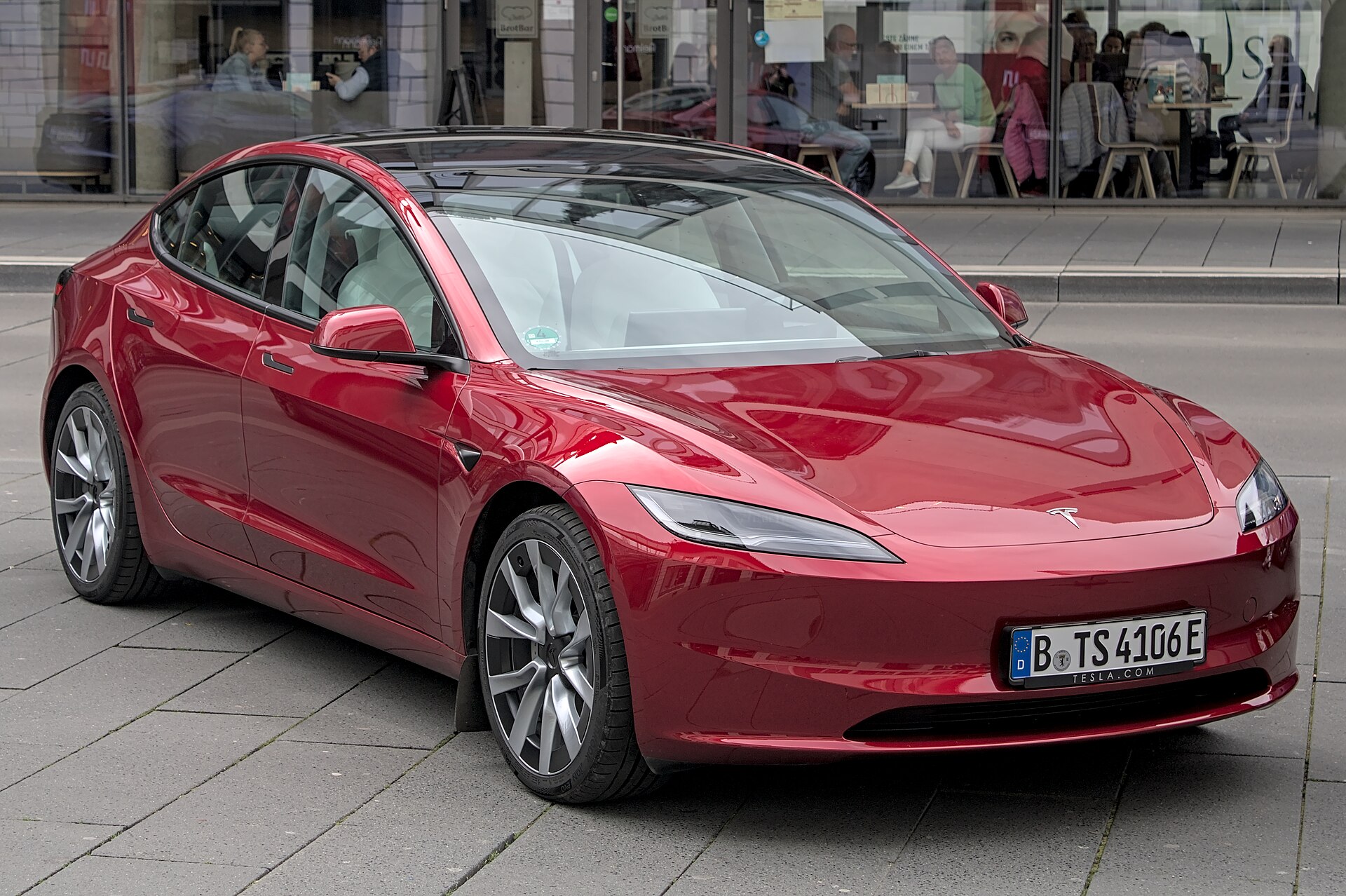
All three cars are excellent, but they now compete on shifted ground. The Camry is a genuinely different car than it was two years ago — for 2026 it is hybrid-only across every trim, with no pure-gas engine offered. The Accord still sells both a turbocharged gas engine and a strong hybrid. The Model 3, refreshed in its “Highland” form, is quieter, better-riding, and more efficient than the original.
The pricing landscape flipped in late 2025. With the federal $7,500 credit gone and no replacement on the books, the Model 3’s effective price jumped overnight — that is the single most important fact for any 2026 shopper, and we break down the fallout in our guide to Tesla costs now that the federal credit is gone. At the same time, with the national average for regular gas sitting above $4 in August 2026 (a record for the month, per AAA), the fuel-cost argument for going electric is stronger than it was a year ago. Two forces, pulling in opposite directions.
Sticker Price: Where Each One Starts in 2026
Sticker price is where the Camry and Accord land their first punch. Both start several thousand dollars below the Model 3, and that gap is no longer softened by a tax credit. Prices below are approximate base MSRPs as of August 2026 and exclude destination and fees; always confirm current pricing on the manufacturer’s site (for example, Tesla’s Model 3 page) before you order.
| Model (base trim) | Approx. base MSRP | Powertrain | Notes |
|---|---|---|---|
| Tesla Model 3 Standard RWD | $36,990 | Electric | + $1,390 destination + $250 order fee; no federal credit in 2026 |
| Toyota Camry LE | ~$29,100 | Hybrid (FWD) | 2026 Camry is hybrid-only; AWD adds ~$1,525 |
| Honda Accord LX | ~$28,400 | Gas turbo | Hybrid trims start around $33,800 |
| Tesla Model 3 Premium RWD | $42,490 | Electric | Longer range, premium audio, more range |
The takeaway: a base Model 3 lands roughly $8,000 above a base Camry or Accord once you add Tesla’s destination and order fees. Compare it against a similarly-equipped hybrid — a $33,000–$35,000 Accord Sport Hybrid or a mid-trim Camry — and the gap narrows to about $3,000–$5,000. That smaller gap is the fair fight, and it is the number that fuel and maintenance savings have to overcome.
Fuel vs. Charging: The Cost That Actually Moves the Needle
This is where the Model 3 fights back, but with one enormous asterisk: your savings depend entirely on where you charge. The math below assumes 15,000 miles a year, gas at $4.10/gallon, home electricity at the U.S. residential average of about $0.18/kWh, and Supercharging at roughly $0.40/kWh (rates vary by station and time of day — see our Supercharger cost breakdown).
| Vehicle & energy source | Efficiency | Est. annual fuel/energy cost |
|---|---|---|
| Model 3 — home charging | ~25 kWh/100 mi | ~$675 |
| Model 3 — mostly Superchargers | ~25 kWh/100 mi | ~$1,500 |
| Camry Hybrid | ~48 mpg combined | ~$1,280 |
| Accord Hybrid | ~46 mpg combined | ~$1,340 |
| Accord LX (gas) | ~32 mpg combined | ~$1,920 |
The honest conclusion most reviews skip: if you charge the Model 3 at home overnight, it costs roughly half what a Camry or Accord Hybrid burns in gas — about $600 saved per year, and closer to $1,250 saved versus a gas-only sedan. But if you rely on public Superchargers, the Model 3 can cost more to “fuel” than a Camry Hybrid. The EV’s biggest financial advantage evaporates without a home outlet. Before you buy a Model 3, be brutally honest about whether you can charge where you park. You can compare Tesla’s efficiency figures yourself on fueleconomy.gov, and residential rates on the U.S. EIA.
Five-Year Ownership: Maintenance, Insurance, and Resale
Sticker and fuel are only two lines on the ledger. Three more matter over five years:
Maintenance favors the Model 3. There are no oil changes, no timing belts, no exhaust or transmission service, and regenerative braking means brake pads can last well beyond 100,000 miles. Tesla’s recommended service is mostly cabin filters, wiper blades, tire rotations, and brake fluid checks. That said, Camry and Accord hybrids are famously cheap and reliable to maintain too — this is an edge for Tesla, not a knockout.
Insurance usually favors the Toyota and Honda. Teslas often cost more to insure because of higher repair costs and parts pricing; Camry and Accord are among the cheapest mainstream sedans to cover. Get quotes for all three on your own ZIP code before deciding — the difference can be several hundred dollars a year.
Resale value is the Model 3’s weak spot in 2026. Repeated Tesla price cuts over the past two years have dragged used values down, while the Camry and Accord remain resale champions that hold their money better than almost anything on the road. If you trade cars every three or four years, that depreciation gap can erase much of the fuel savings. If you keep a car eight to ten years, it matters far less. One bright spot that helps all three: the federal car-loan interest deduction (2025–2028) applies to qualifying U.S.-assembled new vehicles, and the Model 3, Camry, and Accord are all built in the United States — so none has an edge there.
Driving, Tech, and Daily Living
Numbers aside, these cars feel completely different to live with.
The Model 3 is the tech and performance pick. Even the base rear-wheel-drive car is quick, and it drives with an instant, quiet smoothness gas sedans can’t match. The interior is minimalist — nearly everything runs through the central touchscreen — and the car improves over time through over-the-air software updates. You get access to the Supercharger network (the best road-trip charging in North America), an optional Full Self-Driving (Supervised) subscription at about $99/month, and features like Sentry Mode and Dog Mode. The catch: there is no Apple CarPlay or Android Auto, and some drivers never warm to controlling everything through a screen.
The Camry and Accord are the low-friction picks. Both offer wireless Apple CarPlay and Android Auto, physical climate controls, and a hybrid drivetrain that simply never asks you to think about charging, range, or trip planning. You fill up in five minutes anywhere in the country and go. The Accord is the driver’s choice of the two, with a roomy cabin and a composed chassis; the Camry now offers available all-wheel drive and class-leading hybrid efficiency. Neither will thrill you off the line the way a Tesla does, but neither will ever leave you hunting for a working charger in an unfamiliar town.
Who Should Buy Which
Here is the decision boiled down to the questions that actually decide it:
Buy the Tesla Model 3 if you can charge at home, you drive enough miles for the fuel savings to compound, you want the tech, the acceleration, and the Supercharger network, and you plan to keep the car long enough to ride out its steeper depreciation. New Model 3, Model Y, and Cybertruck orders placed through a referral link currently include 3 months of free FSD (Supervised) — if you have decided on the Tesla, ordering through our Tesla referral link is the easiest way to claim that perk. For a full walkthrough of trims, range, and options, see our Model 3 USA buying guide.
Buy the Camry or Accord Hybrid if you can’t reliably charge at home, you want the lowest upfront price and the best resale value, you value CarPlay and physical buttons, or you simply want a car that road-trips anywhere with zero planning. For most apartment and condo dwellers without a dedicated plug, a hybrid sedan is still the smarter money in 2026.
If You Choose the Model 3: A Few First-Week Essentials
One practical note that surprises new EV owners: unlike the Camry and Accord, the Model 3 ships without a spare tire and without a traditional maintenance routine, so a small kit of the right gear goes a long way. A compact portable tire inflator (expect roughly $30–$50) lives in the frunk and handles the low-pressure warnings that are the most common roadside hiccup on a spare-less car — arguably the single most useful thing to buy on day one.
A few other low-cost items new Model 3 owners tend to add: a fast, low-profile USB drive for Sentry Mode and dashcam footage (around $20–$30) that you can plug in and forget; a matte screen protector for the big center display, which cuts glare and fingerprints; and a center-console organizer sized for the Highland interior to tame the deep, open storage bin. None of it is essential, but each solves a small annoyance that shows up in the first month. Prices shift, so check current listings.
Frequently Asked Questions
Is the Model 3 still worth buying without the $7,500 federal credit?
It can be, but the math is tighter than it was. Without the credit, the Model 3 costs roughly $8,000 more than a base Camry or Accord up front. If you charge at home and keep the car many years, lower fuel and maintenance costs can close that gap — but you should run your own numbers rather than assume the EV automatically wins.
Which is cheaper to run day to day, a Model 3 or a Camry Hybrid?
If you charge the Model 3 at home, it is clearly cheaper — roughly half the annual energy cost of the Camry Hybrid. If you depend on public Superchargers, the two are about even, and the Tesla can even cost more. Home charging is the deciding factor.
Does the Tesla Model 3 have Apple CarPlay or Android Auto?
No. The Model 3 uses Tesla’s own operating system with built-in navigation, streaming, and app support, but it does not support Apple CarPlay or Android Auto. Both the Camry and Accord offer wireless CarPlay and Android Auto.
Which holds its value better?
The Camry and Accord. Both are long-standing resale leaders, while Tesla resale values have softened after repeated price cuts. If you trade vehicles every few years, this favors the Toyota or Honda; if you keep cars a decade, it matters much less.
Can the Model 3 handle road trips as easily as a gas sedan?
Almost, thanks to Tesla’s Supercharger network and built-in trip planner, but not quite. You’ll stop for 15–30 minutes to charge on longer drives instead of five minutes for gas, and you need to plan around chargers in rural areas. A hybrid sedan remains the more foolproof long-distance road-tripper.
Do I have to pay for Full Self-Driving?
No. FSD (Supervised) is an optional subscription of about $99/month; the car drives fine without it using standard Autopilot features. New vehicles include a short trial, and ordering through a Tesla referral link currently adds 3 months of FSD (Supervised) at no cost.
The Bottom Line
- Lowest upfront cost and best resale: Toyota Camry or Honda Accord — both start roughly $8,000 below the Model 3 with no tax credit to close the gap.
- Lowest running cost — but only with home charging: Tesla Model 3, at about half a hybrid’s fuel cost; without a home plug, that advantage disappears.
- Best tech, performance, and software: Model 3, by a wide margin.
- Most hassle-free ownership: Camry or Accord Hybrid — CarPlay, five-minute fill-ups, and no charging logistics.
- Decide on this question first: can you charge where you park? If yes, seriously consider the Model 3. If no, a hybrid sedan is likely the smarter 2026 buy.
Information is current as of August 2026 and reflects U.S. pricing, gas prices, and policy; figures change frequently, so confirm current MSRP, incentives, and rates before purchasing. This article is general information, not financial advice. Some links are affiliate or referral links — see our disclosure page. More U.S. guides are in our US Tesla section. Image credit: Alexander Migl (Alexander-93), CC BY-SA 4.0, via Wikimedia Commons.

About the author: Lifei
Lifei is a Tesla owner based in Canada, writing practical, fact-checked Tesla guides for US and Canadian drivers — buying, ownership, insurance, charging, and TSLA investing, all from first-hand experience.
