
Tesla Model Y vs Toyota RAV4 Hybrid in Canada (2026): 5-Year Cost of Ownership, Rebates and Which One Really Saves You Money
Tesla Model Y vs Toyota RAV4 Hybrid in Canada (2026): 5-Year Cost of Ownership, Rebates and Which One Really Saves You Money

Walk into almost any Canadian driveway conversation about a new family SUV in 2026 and it comes down to the same two names: the Tesla Model Y and the Toyota RAV4 Hybrid. The RAV4 is built in Ontario, went hybrid-only for 2026, and sells so fast that dealers count inventory in days. The Model Y is Canada’s best-selling EV, arrives from Berlin with a $5,000 federal rebate attached to the base trim, and costs a fraction of the RAV4 to fuel. The sticker prices are closer than most people think, but the five-year math is not obvious, so we built it out line by line for a typical Ontario buyer and then showed how the answer shifts in Quebec, BC and Alberta.
Disclosure: some links are affiliate/referral links. If you order or buy through them we may earn a small commission or credit at no extra cost to you. See our disclosure page.
📋 Contents
- The Short Answer
- 2026 Pricing in Canada: Sticker, Fees and Rebates
- Fuel vs Electricity: The Yearly Bill by Province
- Maintenance, Tires, Warranty and Winter
- Insurance and Depreciation: Where the Tesla Gives It Back
- The Five-Year Total in Ontario
- Beyond the Spreadsheet: What You Actually Get
- Who Should Buy Which
- Frequently Asked Questions
- Key Takeaways
The Short Answer
On a straight five-year spreadsheet at an average Canadian mileage of 20,000 km a year, a base RAV4 Hybrid LE comes out a few thousand dollars cheaper than a Model Y RWD in Ontario. The Tesla’s fuel savings are real, roughly $1,500 a year at off-peak home charging, but a higher purchase price, higher insurance premiums and steeper depreciation eat most of that back inside five years. The picture flips for three kinds of buyers: anyone driving 30,000 km a year or more, Quebec residents who stack the $2,000 provincial rebate on cheap Hydro-Québec power, and anyone planning to keep the vehicle eight to ten years, when the Tesla’s near-zero maintenance and fuel bill pull decisively ahead. If you want the most performance, tech and cargo space per dollar, the Model Y wins on day one. If you want the lowest predictable cost and the strongest resale in a five-year cycle, the RAV4 does. The sections below show the numbers behind each of those statements so you can plug in your own province and driving habits.
2026 Pricing in Canada: Sticker, Fees and Rebates
Toyota Canada priced the all-new sixth-generation 2026 RAV4 from $37,500 for the LE AWD hybrid, rising through the XLE at $41,300, XLE Premium at $43,800, Woodland at $47,000 and XSE at $50,900 to the Limited at $52,000. Every 2026 RAV4 sold in Canada is a hybrid with all-wheel drive standard and 236 net system horsepower, and every one is assembled at Toyota’s Cambridge and Woodstock plants in Ontario. Toyota’s own “including fees” figures, which fold in freight, PDI and the air-conditioning levy, run from $41,158 for the LE to $55,658 for the Limited. The plug-in hybrid RAV4 is a separate, pricier line and is not the subject of this comparison.
Tesla Canada lists the Model Y RWD at $49,990, the Premium AWD at $64,990 and the Performance at $74,990. Freight and PDI is $2,500, the order fee is $250, plus the $100 air-conditioning tax and a provincial tire levy. Only the RWD sits under the $50,000 transaction cap of the federal Electric Vehicle Affordability Program, and because it is built in Germany, a free-trade partner, it qualifies for the full $5,000 point-of-sale incentive. Shanghai-built Model 3s do not qualify, and neither does any Model Y above the base trim. Adding the $1,300 tow package to a RWD pushes it over the cap and forfeits the rebate, a trap we cover in our Model Y Canada guide.
Here is what each vehicle costs to put on the road in Ontario, where 13% HST applies to the full price before the federal rebate is subtracted. Dealer administration fees on the Toyota side vary and are not included.
| Ontario, out the door | RAV4 Hybrid LE AWD | RAV4 Hybrid XLE AWD | Model Y RWD | Model Y Premium AWD |
|---|---|---|---|---|
| MSRP | $37,500 | $41,300 | $49,990 | $64,990 |
| Freight, PDI, A/C and fees | about $3,660 | about $3,660 | about $2,880 | about $2,880 |
| HST 13% | about $5,350 | about $5,840 | about $6,870 | about $8,820 |
| Federal EVAP rebate | none | none | -$5,000 | not eligible |
| Total | about $46,500 | about $50,800 | about $54,700 | about $76,700 |
So the real gap between the two base models is about $8,200 in Ontario, not the $12,500 the MSRPs suggest, and it shrinks to about $3,900 if you would have stepped up to the RAV4 XLE anyway. In Quebec the Model Y RWD also earns the $2,000 Roulez vert rebate for 2026, provided the vehicle is registered by December 31, 2026, so the gap there is closer to $6,000. Quebec buyers should note that the Roulez vert program ends completely on January 1, 2027. If you are ordering a Model Y through Tesla’s referral link, you also get three months of Full Self-Driving (Supervised) on top of the standard 30-day trial, which is worth roughly $300 at the $99-a-month subscription rate.
Fuel vs Electricity: The Yearly Bill by Province
Natural Resources Canada rates the 2026 RAV4 Hybrid LE at 5.1 L/100 km city, 5.9 highway and 5.4 combined, which is excellent for an AWD crossover. The XLE, XSE and Limited are rated at 5.6 combined and the Woodland at 6.0. Real-world consumption in a Canadian winter typically lands closer to 6.0 to 6.5 L/100 km because a cold hybrid runs its gas engine more to make cabin heat. At 20,000 km a year and the September 2026 national average pump price of roughly $1.90 a litre, the LE burns about 1,080 litres and $2,050 in gas per year at its rated figure, or around $2,300 in mixed real-world driving. You can check any trim’s official rating in NRCan’s 2026 Fuel Consumption Guide.
The Model Y RWD uses an LFP battery and is rated for 463 km on the Canadian cycle. Counting charging losses and a realistic share of cold-weather driving, budget about 19 kWh per 100 km from the wall, or 3,800 kWh a year. What that costs depends almost entirely on where you plug in. Ontario’s Ultra-Low Overnight plan, priced by the Ontario Energy Board at 3.9 cents per kWh between 11 p.m. and 7 a.m., is the cheapest legal way to fuel a car in the province; standard off-peak power is 9.8 cents. Both figures exclude delivery charges and HST, which roughly double the all-in cost. Hydro-Québec’s residential rate works out to about 8 cents all-in, BC Hydro to around 12 to 13 cents blended, and Alberta’s deregulated market to more than 20 cents once distribution and transmission are added.
| Annual energy cost at 20,000 km | Assumed price | Model Y RWD (3,800 kWh) | RAV4 Hybrid LE (gas) | Tesla saves |
|---|---|---|---|---|
| Ontario, Ultra-Low Overnight | about 8 cents/kWh all-in | about $300 | about $2,050 | about $1,750 |
| Ontario, standard off-peak | about 15 cents/kWh all-in | about $570 | about $2,050 | about $1,480 |
| Quebec, Hydro-Québec | about 8.3 cents/kWh all-in | about $315 | about $2,050 | about $1,735 |
| British Columbia, BC Hydro | about 12.5 cents/kWh all-in | about $475 | about $2,050 | about $1,575 |
| Alberta, blended residential | about 23 cents/kWh all-in | about $875 | about $2,050 | about $1,175 |
| 100% Supercharging, no home charger | about 45 cents/kWh | about $1,710 | about $2,050 | about $340 |
Two lessons jump out. First, the Model Y only delivers its full advantage if you can charge at home, so a condo owner without a plug should treat the last row as their reality and lean toward the RAV4. Second, the annual saving of roughly $1,200 to $1,750 is meaningful but it is not the $3,000-plus that a gas-only crossover would give up, because the RAV4’s hybrid system already cuts fuel use nearly in half compared to the old four-cylinder. A Level 2 home charger installation runs about $1,500 to $3,000 in most Canadian cities including the Tesla Wall Connector, and some utilities rebate part of it; see our home charger installation guide for the details and our cost-to-charge breakdown for public charging rates.
Maintenance, Tires, Warranty and Winter
Toyota Canada’s schedule calls for a service visit every 8,000 km or six months, alternating between an inspection and an oil change, so a 20,000 km driver sees the dealer two to three times a year. Expect around $400 to $600 a year at a dealership over the first five years, plus brake work late in the period. Toyota’s Canadian warranty is 36 months or 60,000 km basic, 60 months or 100,000 km powertrain, with hybrid components covered longer and the hybrid battery covered for ten years or 240,000 km on recent models; confirm the exact terms for your model year on Toyota Canada’s warranty page.
Tesla has no scheduled oil, spark plug or transmission service. The Canadian maintenance list is a cabin air filter every two years, a brake fluid check every four, and tire rotations, so five years of routine service typically costs under $1,000. The offset is tires: the Model Y is heavier and delivers instant torque, and most Canadian owners replace a set roughly every 45,000 to 60,000 km, one set sooner than a RAV4 driver. Budget an extra $1,200 to $1,600 for that over five years. Both vehicles need dedicated winter tires, mandatory in Quebec and strongly advised everywhere else, so that cost is a wash. Tesla’s Canadian warranty is four years or 80,000 km on the vehicle and eight years or 160,000 km on the RWD’s battery and drive unit (192,000 km on AWD trims) with a 70% capacity guarantee, per Tesla’s vehicle warranty page. Net over five years, maintenance and tires come out roughly even, at $2,000 to $2,800 for either vehicle.
Winter is where the ownership experience differs most. The Model Y RWD’s heat pump handles cold well, but at -20°C you should plan on 30 to 40% less range, which turns 463 km into a real 280 to 320 km. That is plenty for commuting and enough for Toronto to Ottawa with one Supercharger stop. The RAV4 simply loses a litre or so per 100 km. Read our Tesla winter driving guide for preconditioning and charging tactics, and budget for fitted all-weather floor liners in either vehicle, since slush and road salt destroy carpet. For the Model Y, JOWUA’s 2025+ all-weather floor liner combo fits the Standard, Premium and Performance trims and ships to Canada with duties included; use code TSLNA for 5% off.
Insurance and Depreciation: Where the Tesla Gives It Back
Insurance is the quiet cost that most spreadsheets skip. Sample 2026 quotes compiled by Canadian EV sites for an Ontario driver put the Model Y around $2,200 to $2,500 a year versus $1,700 to $1,850 for a RAV4, a gap of about $400 to $700. Insurers price the Tesla higher because of its purchase price, its aluminum and camera-laden body, and a much smaller network of certified repair shops. Over five years that is roughly $2,000 to $3,500 against the Tesla. Our Tesla insurance guide for Canada explains how to trim it, including Quebec’s public plan and BC’s ICBC rules.
Depreciation is the bigger swing. The RAV4 Hybrid has been one of the best value-holders in the Canadian market for years, helped by tight supply, and a base 2026 model is likely to retain roughly two-thirds of its MSRP after five years and 100,000 km, or about $25,000. The Model Y’s resale history is messier: Tesla’s own price cuts in 2023 and 2024 hammered used values, and a realistic assumption for a 2026 RWD is that it holds about half its MSRP, again around $25,000. Two vehicles ending at the same resale value but starting $8,000 apart means the Tesla owner absorbs about $8,000 more in depreciation. The Berlin RWD’s LFP battery, which tolerates daily 100% charging, should help it age better than earlier Model Ys, but nobody can promise a used-car price five years out.
The Five-Year Total in Ontario
Putting it together for an Ontario buyer driving 20,000 km a year with home charging on the standard off-peak rate:
| Five years, 100,000 km, Ontario | Model Y RWD | RAV4 Hybrid LE AWD |
|---|---|---|
| Purchase, taxes and fees, after rebate | $54,700 | $46,500 |
| Level 2 home charger installed | $2,000 | $0 |
| Energy or fuel | $2,850 | $10,250 |
| Maintenance and extra tires | $2,400 | $2,600 |
| Insurance | $11,750 | $9,000 |
| Resale value at year five | -$25,000 | -$25,000 |
| Net five-year cost | about $48,700 | about $43,350 |
That is a RAV4 advantage of roughly $5,300 over five years, or about $90 a month. Now watch how quickly it moves. Switch the Tesla to Ontario’s Ultra-Low Overnight rate and the gap drops to about $4,000. Drive 30,000 km a year and the extra fuel savings close it to about $1,600. Assume the Model Y holds 55% of its value instead of 50% and the gap is cut roughly in half. Move the whole calculation to Quebec, with the $2,000 provincial rebate, 8-cent power and lower Tesla insurance premiums under the public plan, and the two vehicles finish within about $1,500 to $2,000 of each other. Move it to Alberta, with expensive electricity and no provincial rebate, and the RAV4 wins by $6,000 or more. Stretch the horizon to ten years and the Tesla’s $1,500-a-year energy edge plus its lighter maintenance schedule overtake the depreciation hit in almost every province.
A few provincial fees also matter. Ontario, BC and Quebec charge nothing extra to register an EV in 2026, while Manitoba and Saskatchewan collect $150 a year and Nova Scotia begins a $500 levy every two years on October 1, 2026. Quebec has announced an annual EV contribution starting in 2027. None of these tilt the math by more than a few hundred dollars over five years, but they are real.
Beyond the Spreadsheet: What You Actually Get
Cost is only half the decision. The Model Y RWD is quicker off the line than any RAV4 short of the plug-in, quieter, and carries more: about 2,100 litres of cargo with the rear seats folded plus a 117-litre frunk, against the RAV4’s 1,994 litres. It has the larger 15.4-inch centre screen, over-the-air updates that add features for years, Sentry Mode, a built-in dashcam, Dog Mode and Camp Mode, and access to the Supercharger network, which in 2026 blankets the Trans-Canada from Victoria to Halifax. New Teslas no longer include Autosteer; you get adaptive cruise, and Full Self-Driving (Supervised) is a $99-a-month subscription, with three months free when you order through a Tesla referral link.
The RAV4 answers with a conventional dashboard and physical climate controls, Toyota Safety Sense as standard, a 1,750-pound towing rating on the hybrid, 412 certified collision repair shops in Ontario versus a few dozen for Tesla, and the peace of mind of a dealer in every mid-sized town. It also has no range anxiety in a January cold snap and no dependence on a home charger. What it lacks is any path to cheaper fuel, and its infotainment will look the same in 2031 as it does today.
Availability cuts both ways in the fall of 2026. Toyota is still ramping the new RAV4 and dealers report vehicles selling within days of arrival, so expect a wait of weeks to months and little room to negotiate. Tesla’s Canadian Model Y allocation from Berlin is largely spoken for this year too, with new orders quoted for December 2026 to January 2027 delivery; if yours lands in 2027, confirm the federal rebate amount in effect at delivery, since the program is first-come, first-served and scheduled to step down over time. You can check the current status on Transport Canada’s zero-emission vehicle page before you order.
One more practical note for rural buyers who are weighing the Tesla: the car’s map, streaming and remote features lean on a data connection, and if your home is beyond reliable cellular coverage, many Canadian owners pair the car with a Starlink dish at home or a Starlink Mini for cottage and camping trips. It is not a requirement, but it removes the one real-world connectivity headache we hear about from owners outside the cities.
Who Should Buy Which
Buy the Model Y RWD if you can charge at home, drive more than 20,000 km a year, live in Quebec or BC, or plan to keep the car beyond five years. Buy it as well if you simply want the faster, roomier, more modern vehicle and are comfortable that its resale value is less predictable; the fuel savings will cover most of the price premium and you get a lot more car for the money. Order in 2026 to lock in the $5,000 federal rebate and, in Quebec, the extra $2,000, and check our Canada Tesla section for province-specific guides.
Buy the RAV4 Hybrid LE if you live in a condo or rent without charging access, drive fewer than 15,000 km a year, live in Alberta or another high-electricity-price province, or plan to trade in within three to five years. It is the lower-risk financial choice in a short ownership cycle and its hybrid system already captures most of the fuel savings that made EVs attractive in the first place. Either way, the difference over five years is a few thousand dollars, not tens of thousands, so let charging access and how long you keep cars decide it rather than the sticker.
Frequently Asked Questions
Is a Tesla Model Y cheaper than a RAV4 Hybrid in Canada?
Not in the first five years for the average driver. In Ontario the base RAV4 Hybrid LE comes out roughly $5,300 cheaper over five years and 100,000 km once purchase price, fuel, insurance, maintenance and resale are included. The Model Y pulls ahead for high-mileage drivers, Quebec buyers and anyone keeping the vehicle eight years or more.
How much does the Model Y RWD cost in Canada after the rebate?
The 2026 Model Y RWD lists at $49,990 and qualifies for the $5,000 federal Electric Vehicle Affordability Program incentive, giving an effective price of $44,990 before freight, fees and provincial sales tax. Out the door in Ontario it is about $54,700. Quebec buyers can subtract a further $2,000 through Roulez vert until the end of 2026.
Does the 2026 RAV4 Hybrid qualify for any EV rebate in Canada?
No. The federal program covers battery-electric and plug-in hybrid vehicles only. The standard RAV4 Hybrid is not a plug-in, so it receives no federal or provincial incentive. The separate RAV4 Plug-in Hybrid may qualify depending on its price and provincial rules.
How much does it cost to charge a Model Y at home in Ontario?
At 20,000 km a year and about 19 kWh per 100 km from the wall, a Model Y uses roughly 3,800 kWh annually. On Ontario’s Ultra-Low Overnight plan that is about $300 a year all-in; on the standard off-peak rate it is about $570. A comparable RAV4 Hybrid burns about $2,050 of gasoline a year at $1.90 a litre.
Which holds its value better, the Model Y or the RAV4 Hybrid?
The RAV4 Hybrid. It typically retains about two-thirds of its MSRP after five years, while a realistic assumption for the Model Y is about half. That difference in depreciation is the main reason the Tesla’s fuel savings do not translate into a lower five-year cost.
Is the Model Y good in Canadian winters?
Yes, with planning. The heat pump and preconditioning work well, but expect 30 to 40% less range at -20°C, so a 463 km RWD delivers roughly 280 to 320 km in deep cold. Winter tires are essential, and the LFP battery in the RWD tolerates charging to 100% daily, which helps on cold mornings.
Do I get free FSD if I order a Model Y in Canada through a referral link?
Yes. In 2026 a new Model Y ordered through a valid referral link comes with three months of Full Self-Driving (Supervised), stacked on top of the 30-day trial every new Tesla receives. That is worth about $300 at the current $99-a-month subscription price.
Key Takeaways
- Out the door in Ontario, the Model Y RWD costs about $54,700 after the $5,000 federal rebate versus about $46,500 for a RAV4 Hybrid LE, a gap of roughly $8,200.
- The Tesla saves $1,200 to $1,750 a year on energy with home charging, but almost nothing if you rely on Superchargers.
- Higher insurance and steeper depreciation hand most of that back; over five years the RAV4 finishes about $5,300 ahead for an average Ontario driver.
- Quebec buyers, high-mileage drivers and long-term owners flip the result in the Model Y’s favour; Alberta buyers and condo dwellers should lean RAV4.
- Order a Model Y in 2026 to secure the federal rebate and, in Quebec, the $2,000 Roulez vert credit before it ends.
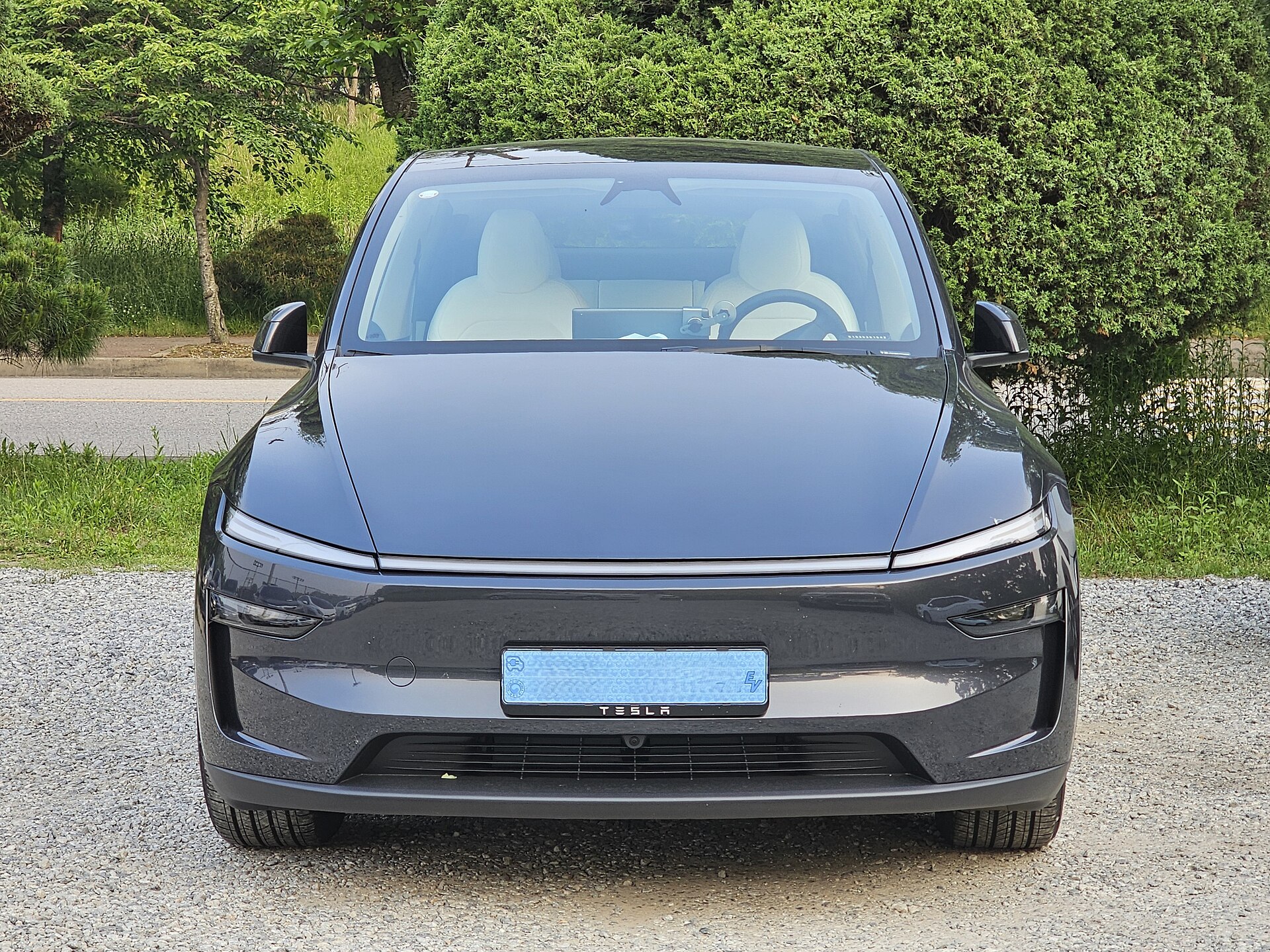
Prices, rates and rebates verified September 2026 and subject to change; fuel and electricity costs are estimates based on NRCan ratings, Ontario Energy Board rates and posted provincial averages, and your results will vary with driving style, climate and utility. Insurance and resale figures are illustrative assumptions, not quotes. This article contains referral and affiliate links; see our disclosure page. Image credit: “Tesla Model Y Juniper Stealth Grey (1)” by Damian B Oh, CC BY-SA 4.0, via Wikimedia Commons.

About the author: Lifei Zhou
Lifei is a Tesla owner based in Canada, writing practical, fact-checked Tesla guides for US and Canadian drivers — buying, ownership, insurance, charging, and TSLA investing, all from first-hand experience.
