
Tesla Summer Road Trip Guide 2026: Heat, Range, Charging & Camping
Tesla Summer Road Trip Guide 2026: Heat, Range, Charging & Camping

In one sentence
How summer heat affects Tesla range, plus long-trip charging strategy, Cabin Overheat Protection, Dog/Camp Mode, gear and road-trip planning for 2026.
Every June and July, the same questions start flooding owner groups and my inbox: “My range tanks in winter — does it do the same thing in summer?” “I parked in full sun all morning and came back to a steering wheel too hot to hold; is the heat cooking my battery?” “I’m planning a 1,000-km road trip — are there enough Superchargers, and do I need to map it out in advance?” If you’re plotting a spontaneous summer drive this year, or you just want to know how to treat your car right when it’s blistering out, this guide is for you.
I’ve driven a Tesla across North America for several summers now — from the inland deserts of California to the Canadian Rockies, long hauls and short hops alike. The verdict: running an EV in summer is actually far less fussy than winter. Range loss isn’t dramatic, and the battery is tougher than you think — but only if you understand a handful of key points. At what temperature does range start to drop noticeably, which mode to use against the sun, how full to charge for the best value, and what to prep before a long trip: this 2026 guide covers it all, and it works for owners on both sides of the US–Canada border.
Disclosure: some links in this article are affiliate/referral links. If you buy or place an order through them, we may earn a small commission at no extra cost to you, and it doesn’t affect our pricing or our independence. This is general information, not buying or financial advice. See our disclosure page.
📋 Contents
- How much range does the heat really steal? Get the numbers straight first
- Baked all morning, hot to the touch — how to use Cabin Overheat Protection
- Summer charging done right: when to charge, how full, and will the Supercharger slow down?
- Planning a long summer road trip: run through this checklist
- How to drive for the best range and comfort on the road
- US vs. Canada: the regional differences in summer road-tripping
- Easy-to-overlook summer maintenance details
- Camping and overnighting in your Tesla
- Frequently Asked Questions
- The bottom line
How much range does the heat really steal? Get the numbers straight first
A lot of people carry around the idea that EVs are “afraid of the cold in winter and afraid of the heat in summer” — losing big chunks of range at both extremes. In reality the two aren’t even in the same league. Winter’s range killer is resistive heating: warming the cabin and warming the battery both burn electricity directly, and below-freezing days routinely cost 30–40% of range. Summer is a different story, because cooling is far cheaper than heating — air conditioning drags on range much less than cabin heat does.
US battery-data firm Recurrent, drawing on real-world data from nearly 30,000 electric vehicles, published numbers worth keeping in mind: at 90°F (about 32°C), EVs lose only about 5% of range on average — with the A/C running, you’d barely notice. It’s not until you hit genuine 100°F (about 37°C) scorchers that the average loss jumps to roughly 17–18%. In other words, on most summer days that small range hit is essentially negligible; what really eats range is the handful of extreme-heat days when the A/C runs at full tilt.
There’s an interesting wrinkle, too: cars with a heat pump can actually do slightly worse in extreme heat than those without. In Recurrent’s data, at 100°F, heat-pump cars retained about 85% of range while non-heat-pump cars held about 87%. The reason is that heat pumps are optimized for winter, so their advantage doesn’t show up in a summer cooling scenario. The gap is tiny, though — nothing to lose sleep over day to day; just good to know it exists.
So keep a rough mental yardstick: in the low 30s°C you’ll feel almost nothing; above 35°C with the A/C maxed, brace for a range hit in the low teens of percent; and if that day also involves climbing mountains, running highway speeds, or a fully loaded car, stack a bit more on top. Carry that yardstick in your head and you’ll plan long trips with confidence. The same logic that protects your range protects your pack over the long run — for the full picture on how heat and habits affect cell health, see our guide to Tesla battery degradation.
Baked all morning, hot to the touch — how to use Cabin Overheat Protection
The worst part of summer parking isn’t range — it’s that oven-blast moment you open the door. Tesla gives you a solid set of tools to fight it, but a lot of owners don’t grasp the differences between them, so let’s lay them out once and for all.
Cabin Overheat Protection is the “safety net” feature that’s on by default. When the cabin temperature exceeds the set threshold (the factory default is 40°C / about 104°F), the car automatically runs the fans or A/C to cool the cabin, for up to 12 hours or until the battery drops to 20%. You can also customize the trigger in the phone app to 90°F, 95°F, or 100°F. Its job is to keep the cabin from getting dangerously hot — not to make it comfortable the moment you climb in. So don’t expect it to leave the car cool to the touch; it’s there to keep heat from damaging the interior or harming whoever or whatever is inside.
Dog Mode is what you want if you’re leaving a pet (or anything heat-sensitive) in the car briefly. It holds the cabin at a comfortable temperature you set (say 22°C), and the center screen displays a big message telling passersby the owner will be right back, the climate is on, and the pet is safe — so a well-meaning stranger doesn’t smash a window. It’s far more proactive than Cabin Overheat Protection: the goal is comfort, not merely avoiding danger.
Camp Mode is designed for actually staying inside the car. The A/C keeps running, the USB ports and 12V outlet keep delivering power, and the screen stays on — ideal for a roadside nap, waiting on someone, or genuinely camping overnight in the wild. Fold the rear seats down, lay out a mattress, switch on Camp Mode, and sleeping in the car on a summer night is entirely doable.
The practical playbook is simple: for everyday parking, the default Cabin Overheat Protection is enough; if you’re leaving a pet or child briefly, use Dog Mode; if you want to lie down on a long trip or camp overnight, use Camp Mode. Don’t mix them up — each owns its own scenario. And whenever you can park in shade or a garage instead of toughing it out under full sun, do it. That’s the single most effective move for both saving energy and protecting the car, no exceptions. Tesla’s official Cabin Overheat Protection support page spells out the exact thresholds and behavior for your software version.
Summer charging done right: when to charge, how full, and will the Supercharger slow down?
Summer charging has a few quirks that differ from winter. Understand them and you’ll save money and protect the battery.
First, will the Supercharger slow down? What lithium batteries hate is “hot and fast charging” at once — plug into a Supercharger right after a highway sprint, when the pack itself is already hot, and the car will proactively cut power to protect the cells, so charging actually runs slower. So on a summer long haul, if the battery is already hot on arrival, let the car sit a minute or two, or better yet, set the Supercharger as your destination in the navigation. Tesla automatically preconditions the pack to the right temperature on the way to a Supercharger, so it’s in the ideal state when you arrive and charges faster. This is one of Tesla’s real conveniences over many other brands — navigate to a Supercharger and it preconditions automatically, no manual steps required.
Next, how full to charge. For everyday charging at home, lithium iron phosphate (LFP) packs can go to 100%, while nickel-based (NCA/NCM) packs are best charged to around 80% day to day and topped up to full only when you need the range. In summer heat, sitting at full charge for long stretches is harder on the battery, so if the car will bake in full sun all day, don’t leave it sitting at 100% — leaving some headroom is the safer bet. One upside of LFP is that it’s inherently more heat-tolerant, with less degradation at high temperatures than nickel chemistries — which is exactly why entry-level trims running LFP are actually lower-maintenance in hot climates.
Timing matters too. On summer days the grid is heavily loaded, and in many regions time-of-use pricing peaks from evening into the night, with the cheap off-peak window late at night and early morning. Set home charging to start automatically in the small hours: it’s cheaper, and it shifts the load away from the hottest part of the day, easing strain on the pack. For exactly how much you’ll pay per kWh and whether a Supercharger membership pays off, see our full breakdown of North American Supercharger costs before you set out, so you can budget the trip properly. If you don’t yet have Level 2 charging at home, our guide to Tesla home charger installation walks through getting set up for cheap overnight charging.
One golden rule for long trips: at each Supercharger, charge to 80% and go — don’t wait around for that last 20%. Past 80%, lithium charging speed falls off a cliff, and waiting an extra 15–20 minutes for a sliver of range is a poor trade. The right rhythm for a long haul is “small and frequent — charge to 80% and roll,” and you’ll actually arrive sooner overall.
Planning a long summer road trip: run through this checklist
Summer is peak road-trip season in North America, from the Pacific Coast Highway to the Rockies, and running an EV long-distance is genuinely easy now. But ten minutes of prep before you leave makes the whole trip smoother.
- Plan your route and charging stops. The car’s built-in navigation automatically maps Superchargers along the way and estimates your arrival state of charge — already good enough for most trips. For finer control (factoring in weather, elevation, speed, and live queue times), use a third-party tool like A Better Routeplanner (ABRP): enter your model and destination and it returns a more detailed charging plan.
- Check tire pressure. Summer pavement runs hot and pressure rises with temperature, but still verify against the standard value on the door jamb before you go — underinflated tires waste energy and aren’t safe.
- Charge full to depart, but don’t sit at 100% under the sun. Charging to full at home early on departure day, then hitting the road while the pack is still cool, is the ideal.
- Pack sun protection and water. Sunscreen, sunglasses, and plenty of water. A Supercharger stop runs 15–30 minutes — perfect for stepping out to stretch, rehydrate, and use the restroom.
- Keep a charge buffer. A/C, climbing, and highway speeds all draw more than usual in summer, so build in a 10–15% margin when planning and don’t run right to the ragged edge of the battery — especially in regions where Superchargers are sparse.
On that note: North America’s Supercharger network is now quite mature — from Prince George in BC down to Mexico, the main corridors are no worry. But some sparsely populated stretches of the interior — rural Kansas, the Dakotas, northern Nevada, big swaths of Montana and Idaho — really are thin on Superchargers. If your route crosses these areas, plan every leg in advance and don’t take it for granted. To use a tool like PlugShare to scout chargers and read recent owner check-ins along a remote route is well worth the few minutes it takes.
How to drive for the best range and comfort on the road
Once you’re actually rolling, a few small habits noticeably improve both your range and your comfort.
First is speed. This one beats everything — an EV’s energy consumption is extremely sensitive to speed, and past 70 mph (about 113 km/h) aerodynamic drag climbs sharply and consumption rises with it. If you want to save energy and shave a charging stop off a long trip, holding your cruising speed between 65 and 70 mph is more effective than any “efficiency trick.”
Second, don’t set the A/C wildly colder than outside. Set the cabin somewhat cooler than the exterior, but not dramatically so (if it’s 35°C out, 24°C inside is plenty comfortable — no need to dial it to 18°C): a smaller cooling load is easier on range. Before driving, if the car is still plugged in, use the app to precondition (precool) the cabin — that runs off grid power rather than the battery, so you climb into a cool car without spending range.
Third, lean on one-pedal driving and regenerative braking. Summer mountain routes have plenty of descents, and lifting off the accelerator lets regen recover a meaningful amount of energy while sparing your brakes. On long downhill stretches, letting regen “scoop up” electricity is one of the unique joys of an EV.
If your car has FSD (Supervised), long highway stretches are exactly where it shines — staring at empty interstate for hours is where fatigue sets in fastest, so handing cruising, lane changes, and following over to the system saves a lot of mental energy. And if you’re planning to buy, ordering through an owner referral link typically gets you 3 months of free FSD (Supervised) — worth about $297 at the $99/month subscription price — which road-trippers in particular will put to good use.
US vs. Canada: the regional differences in summer road-tripping
Even in the same season, “hot” means something different on either side of the border, and your road-trip strategy has to adjust accordingly.
The US South and West are where an EV is truly tested. Arizona, Nevada, inland California, Texas — summer days above 40°C are routine. These places call for everything covered above: park in shade whenever you can, keep Cabin Overheat Protection on, give the battery a buffer before Supercharging, and keep extra range margin on long hauls. The upside is that these regions have dense Supercharger coverage and abundant sun, so households pairing a Powerwall with solar can run summer electricity bills close to nothing.
Canada is far milder across most regions in summer — Ontario and coastal BC sit comfortably in the 20s°C, with range loss small enough to ignore. Canada’s challenge is distance: head into the Rockies, out to the Atlantic provinces, or across provinces, and the longer the route, the wider the Supercharger spacing. The homework for Canadian owners before a long trip is charging-stop planning rather than heat management. Note, too, that Canadian mountain areas swing widely between day and night temperatures in summer and have strong UV, so pack both sun protection and a warm layer for the evening.
Whichever country you’re in, one thing holds: summer is a great time to learn your car’s “personality.” Watch the energy-consumption curve on the screen, run a trip or two, and you’ll get a feel for exactly how far it goes on your usual routes at your usual speeds — after which you’ll plan long trips from experience, calm and unhurried.
Easy-to-overlook summer maintenance details
Beyond battery and range, summer brings a few things worth tending to in passing.
Tires come first. Heat raises tire pressure and speeds up rubber aging, so check pressure regularly and look for tread wear and bulges — especially before a long trip. A compact onboard inflator is genuinely useful: top up any time pressure runs low. This AstroAI portable tire inflator (US) / Canada equivalent is small enough to tuck into a door pocket — a reassuring little insurance policy on the road.
Glass is second. Summer brings sudden showers and plenty of bugs, and the windshield smears easily. Lay down a coat of a glass water-repellent like Rain-X on the windshield (US) / Canada equivalent ahead of time, and in the rain the beads slide right off — far better visibility at highway speed, and you’ll barely touch the wipers.
Sun protection is third. If you have no garage and can only park out in the open, a folding windshield sunshade brings cabin temperature down noticeably — especially on the glass-roof models. This BASENOR folding sunshade (US) / Canada equivalent is cut specifically to the Tesla windshield and folds down to a small bundle that slips easily into the trunk.
Interior is last. Light interiors don’t get as hot but show dirt; dark interiors are easy to clean but bake hot to the touch in full sun. Pulling the sunshade and running Cabin Overheat Protection keeps the wheel and seats from getting too hot to touch. These are small things, but in summer you use the car every day, and comfort lives in exactly these details.
Camping and overnighting in your Tesla
One of the quiet pleasures of summer EV ownership is that the car doubles as a basecamp. With Camp Mode running, the climate stays on all night, power keeps flowing to your devices, and the rear bed-out is genuinely comfortable. The key questions are how much it drains the battery and how to set up — both easy to handle.
An overnight in Camp Mode typically uses somewhere from a few percent to the low teens of battery, depending on outside temperature and your set point. Start the night well-charged and you’ll have plenty left for morning. To be safe, plan to camp near a Supercharger or at a campground with charging, so you wake up with options rather than range anxiety. Pre-cool the cabin while still plugged in, fold the rear flat, inflate a mattress sized to the car, and you’ve got a quiet, climate-controlled bedroom under the glass roof. For the full setup — legal overnight spots, gear, and real per-night battery numbers — see our dedicated Tesla Camp Mode guide.
A few practical notes: park as level as you can for comfortable sleep; crack a window slightly if you prefer fresh air (the climate compensates fine); and keep your phone notifications on so the car can alert you to a low battery or a fault. Tesla’s official range and energy support resources are a useful reference if you want to dig into consumption figures before a multi-night trip. Done right, a Tesla turns a summer road trip into a string of comfortable, low-cost nights under the stars.
Frequently Asked Questions
Will summer heat damage my Tesla’s battery?
Not under normal use. Tesla has an active battery thermal management system that cools and protects the pack in the heat. Long-term, repeated exposure to extreme heat (year-round 40°C-plus, say) does accelerate degradation, but everyday parking and the occasional bake in the sun are well within the design envelope. If you want to be careful, park in shade when you can and don’t leave the car sitting at full charge in blazing sun for long stretches — that’s enough.
How much range does the A/C really cost in summer? Is it worth skimping to save energy?
It isn’t. Real-world data shows that around 32°C with the A/C on you lose only about 5% of range, and it’s only at 37°C extreme heat that the loss climbs to 17–18%. The A/C’s impact on range is far smaller than winter cabin heat’s, so suffering in the heat to save a sliver of range — and risking heat illness — is a bad trade. Run the A/C freely; comfort and safety matter more.
On a long trip, should I Supercharge to 100% every time?
No. Past 80%, lithium charging speed drops sharply, and waiting an extra 15–20 minutes for the last 20% is a poor trade. The optimal long-trip rhythm is “charge to about 80% and go — small and frequent,” which actually gets you there faster overall. Only when the next leg has no Supercharger and demands the full range is waiting for a full charge worth it.
Will Camp Mode drain the battery overnight?
Not a full battery overnight. Camp Mode keeps the climate and power on and uses roughly a few percent to the low teens of charge over a night, depending on outside temperature and your set point. Charge up before you camp and a night’s sleep is easily covered. To be safe, overnight near a Supercharger or a campground with charging.
Is it safe to leave my dog in the car on a road trip?
For short periods, with Dog Mode on, it’s relatively safe — it holds your set temperature and displays a message to reassure passersby. But don’t leave a pet alone in the car for long, and confirm the battery is well-charged and that your phone will receive alerts about low battery or a fault. When you can, take your pet with you — the electronics are an aid, not a fail-safe.
The bottom line
Running an EV in summer really isn’t mysterious. Remember a few numbers and moves: in the low 30s°C you’ll lose almost nothing; above 37°C, plan for a low-teens-percent hit; park in shade when you can and use Cabin Overheat Protection plus Dog/Camp Mode for the right scenarios; charge by “to 80% and go, avoiding heat and peak hours”; and before a long trip, run through route, tire pressure, and charge buffer. Make these habits and whether it’s a city commute or a cross-state road trip, you’ll drive efficiently and comfortably all summer. Safe travels and enjoy the road. If a Tesla is in your future, you’re welcome to order through our owner referral link for 3 months of free FSD (Supervised) — a small perk for you and a bit of support for keeping this site updated. While you’re planning, owners up north may also want to review our guide to Tesla insurance in Canada before the keys change hands.
Information currency: range figures in this article come from Recurrent Auto (real-world data on nearly 30,000 EVs) and high-heat range testing from U.S. News and AAA; the mechanics of Cabin Overheat Protection, Dog Mode, and Camp Mode reference Tesla’s official support pages and public technical documentation; Supercharger-network and charging-strategy details reference publicly available route-planning resources, compiled in July 2026. Exact features, thresholds, and electricity rates vary — defer to your vehicle’s software version, Tesla’s official pages, and your local utility.
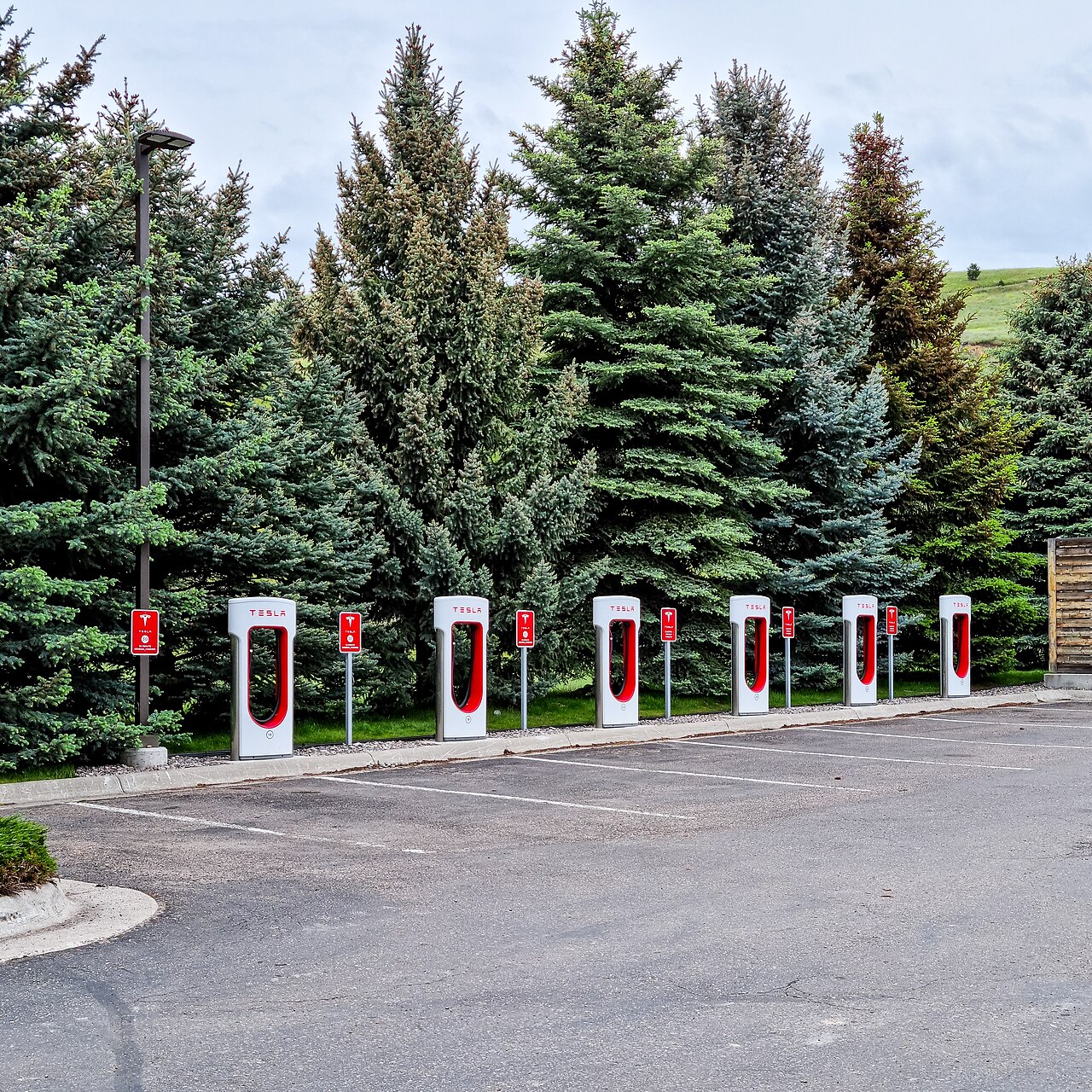
Image credit: in-text photo “Missoula Tesla Supercharger” by Dietmar Rabich, Wikimedia Commons, CC BY-SA 4.0.
Disclaimer: this article is for reference only and is not buying, vehicle, or investment advice. Some links are referral/affiliate links; if you buy or place an order through them we may earn a small commission at no extra cost to you. See our disclosure page. If this helped and you happen to be buying, you’re welcome to use our Tesla owner referral link — a small benefit for both of us and a bit of support for keeping this site running.

About the author: Lifei Zhou
Model Y owner since 2022Ontario STO registered apprentice · 310SWorks on Porsche, Mercedes, BMW, Audi weeklyHundreds of readers referred (est.)
Lifei is a Tesla owner based in Canada, writing practical, fact-checked Tesla guides for US and Canadian drivers — buying, ownership, insurance, charging, and TSLA investing, all from first-hand experience.