
How Long Do Tesla Batteries Last? Degradation, Health & Warranty (2026)
How Long Do Tesla Batteries Last? Degradation, Health & Warranty (2026)

In one sentence
How durable is a Tesla battery in 2026? Real degradation data, the 8-year/70% warranty, NCA vs LFP charging, heat & cold effects, and how to check battery health.
Before buying a Tesla, almost everyone pauses on the same question: how long will this battery actually last? Drive it three, five years and won’t the range collapse, leaving you with a five-figure replacement bill? Gas cars run fine for a decade and a half — are EV batteries really that fragile? It’s one of the most-asked questions among prospective owners, and for many it’s the last bit of hesitation standing between them and an order.
The good news is that after years of large-scale, real-world data, Tesla battery durability is no longer guesswork — it’s documented. The short version: the vast majority of owners reach the day they sell the car with the battery still in fine shape, and range loss is far gentler than the rumours suggest. But there’s a catch — you have to understand the battery’s habits. Two identical cars, one charged well and one charged carelessly, can show a real range gap five years later.
This article skips the mythology and covers what North American buyers care about: how durable the battery really is, what the degradation curve looks like, how far the warranty goes, how to charge an NCA/NMC versus an LFP pack, what heat and cold do, whether fast charging hurts, how to check battery health yourself, and what to do in the rare case degradation runs too fast.
Disclosure: some links in this article are affiliate/referral links. If you place an order through them, we may earn a small commission at no extra cost to you. All analysis is based on public data and real owner experience, with no paid placement. This is general information, not purchase or repair advice — Tesla’s official terms govern any warranty claim. See our disclosure page.
📋 Contents
- The bottom line first: how durable is a Tesla battery?
- The real degradation curve: fast, then slow — don’t panic in year one
- Battery warranty: 8 years, the mileage caps, and the 70% promise
- The key habit: NCA/NMC or LFP — what percentage should you charge to?
- What North America’s heat and deep cold mean for the battery
- Will daily Supercharging wear the battery out?
- How to check battery health yourself: three methods
- Degrading too fast, or below 70% — what then?
- Buying a used Tesla: how to evaluate the battery
- Want your battery to last longer? Keep this habit checklist
- Frequently Asked Questions
- Final thoughts
The bottom line first: how durable is a Tesla battery?
Start with the numbers. In its 2026 Impact Report, Tesla published the degradation curve for its own fleet: long-range Model 3 and Model Y packs lose, on average, only about 15% of capacity by 200,000 miles (roughly 320,000 km). In other words, after a full 200,000 miles, a pack that started with 100 kWh of usable energy still holds around 85 kWh. Keep in mind that the overwhelming majority of household cars never reach 200,000 miles in their entire lives.
Large independent datasets line up with that. Several organizations that specifically track EV battery health report that, under typical use, Model 3/Y cars still retain about 90% to 94% of original capacity after four to five years. That means a car rated at 330 miles of range new will still cover a little over 300 miles in everyday driving five years on — no problem at all for the commuting and weekend trips most people do.
Behind this is the basic physics of lithium batteries: they don’t age at a steady rate. Loss is relatively noticeable early on, then flattens out, and finally settles into an almost horizontal long tail. Once you understand that curve, you won’t be alarmed by the range fluctuations of your first year.
The real degradation curve: fast, then slow — don’t panic in year one
Plenty of new owners get nervous shortly after delivery: how did my full-charge range drop from a rated 330 to 315 — is something wrong with the battery? In fact this is normal, and nearly every EV behaves this way.
Lithium-battery degradation breaks roughly into three phases:
- The first 6 to 18 months — this is the fastest-loss phase, and many owners see displayed range drop 5% to 10%. It’s mostly the early stabilization of the cells’ active materials — a sort of factory “break-in” — and does not mean the battery is failing.
- Years 2 to 5 — the curve flattens markedly, losing only about 1% to 2% of capacity per year. This is the battery’s stable golden period, and you’ll barely notice change day to day.
- After 5 years — loss slows further; the long tail can drop less than 1% a year, and many older cars still hold above 80% at 150,000 or 200,000 miles.
One more thing to separate out: changes in displayed range aren’t all real degradation. Tesla calculates displayed miles from a fixed energy-consumption factor, and the battery management system’s (BMS) estimate of remaining capacity carries some error of its own — especially if you only ever charge to a narrow band and rarely fill up, the estimate can “drift.” Sometimes a single full charge-and-discharge calibration will actually bring some displayed range back. So don’t fixate on a few miles bouncing around on the dash; watch the long-term trend.
Battery warranty: 8 years, the mileage caps, and the 70% promise
This is the most reassuring part. Every Tesla sold in North America carries an 8-year warranty on the battery and drive unit, with a written promise: within the warranty period, the pack will retain at least 70% of its original capacity; fall below that under normal use and Tesla will repair or replace it. The mileage cap varies by model, summarized below.
| Model | Battery & drive unit warranty | Capacity floor |
|---|---|---|
| Model 3 Standard / RWD | 8 years or 100,000 miles (~160,000 km) | ≥70% |
| Model 3 Long Range / Performance | 8 years or 120,000 miles (~193,000 km) | ≥70% |
| Model Y Standard / RWD | 8 years or 100,000 miles | ≥70% |
| Model Y Long Range / Performance | 8 years or 120,000 miles | ≥70% |
| Model S / Model X | 8 years or 150,000 miles (~240,000 km) | ≥70% |
| Cybertruck | 8 years or 150,000 miles | ≥70% |
“8 years or X miles, whichever comes first” — commit that to memory. If you own a Long Range Model Y and rack up 120,000 miles in six years, the warranty ends there; conversely, if neither the years nor the miles are up but the pack drops below 70%, you can make a claim. (Two notes on the table: Tesla’s current lineup sells the higher trims as “Premium” rather than “Long Range,” but the 120,000-mile cap carries over; and while Model S and Model X ended production in early 2026, the warranty on existing cars is unchanged, with Tesla committing to parts and service support for roughly a decade.)
Worth noting: in practice the 70% line is very hard to trip. As mentioned, average loss at 200,000 miles is only 15% — nowhere near the 30% degradation threshold. So this floor is mostly a peace-of-mind backstop; the people who actually claim on it are the rare exceptions (usually early-batch cars or individual faults). If you plan to buy new and hold long-term, this warranty paired with three months of free FSD (Supervised) is a perk many veteran owners suggest newcomers use — right now, ordering through an owner referral link gets you those three months, worth about $297 at the $99/month subscription price.
Separately, from 2026 Tesla has begun offering an Extended Service Agreement (ESA) for the battery and drive unit on some Model 3/Y cars — priced around $2,000 in the US — for owners who plan to keep the car past the factory warranty. Whether it’s worth buying depends on your holding period, so run the math against how long you intend to keep the car.
The key habit: NCA/NMC or LFP — what percentage should you charge to?
This is the single most important thing for battery longevity, and also the one newcomers most often get wrong. Tesla now uses two broad battery chemistries with completely different charging strategies. First figure out which one your car has: open the charging settings and look at the charge-limit slider. If it’s split into “Daily” and “Trip” zones, you have an NCA/NMC pack; if there’s no such marking and you can drag it straight to 100%, it’s most likely LFP.
- NCA/NMC (nickel-based, mostly Long Range/Premium and Performance trims) — set your daily limit to around 80%, and only top up to 100% the night before a long trip. These cells age faster when kept permanently full or permanently low, so keeping your daily range in the 20% to 80% band is the widely accepted way to protect them.
- LFP (lithium iron phosphate, mostly Standard / RWD trims) — the opposite: Tesla recommends charging to a full 100% at least once a week. LFP voltage is very flat between 20% and 80%, which makes it hard for the BMS to judge true state of charge, so periodic full charges let the system recalibrate — otherwise the displayed range grows steadily less accurate. Daily full charges don’t really harm this chemistry.
A one-line memory aid: NCA/NMC “eats to 80% full,” LFP “eats one full meal a week.” Get it backwards — charging an NCA/NMC pack to 100% every day — and over time you really will see somewhat faster degradation.
Beyond the upper limit, two small habits are worth building: first, try not to leave the pack sitting at a very low charge for long (say parked overnight at 5%); second, when storing the car long-term, leaving it around 50% is ideal. For everyday commuting you don’t need to be fussy — Tesla’s BMS is already quite smart, and following the broad principles above is plenty.
What North America’s heat and deep cold mean for the battery
North America spans a huge range of climates, from Arizona’s brutal summers to −30°C or −40°C on the Canadian prairies, so temperature deserves its own section.
Heat first. High temperature is the real “invisible killer” of lithium batteries — more worth guarding against than fast charging. Prolonged exposure to hot conditions, especially baking in the sun at a full state of charge, accelerates the cells’ chemical aging. Owners in Phoenix, Las Vegas, Texas, or Florida should park in shade or a garage in summer and avoid leaving a fully charged car baking in direct sun all day. The good news is Tesla’s active liquid cooling helps manage pack temperature, so there’s no need to obsess — just do what’s reasonable.
Now cold. Cold mainly affects your “available range right now,” not “permanent battery health.” Winter range shrinkage and slower charging happen because low temperature reduces cell activity and slows chemical reactions — it’s temporary, and range returns when the weather warms; it isn’t real degradation. Owners in Canada and the northern US can make good use of battery preconditioning in winter: warm the pack from the app before you set off to recover some range and get faster fast-charging. Notably, frequent cold itself does not significantly accelerate the battery’s long-term aging, so northern owners shouldn’t worry about battery lifespan just because winter range takes a hit. If you’re weighing a home charger to make cold-morning departures easier, our home charger installation guide walks through the options.
Will daily Supercharging wear the battery out?
This is another exaggerated worry. Many people hear “fast charging hurts the battery” and avoid Superchargers, sacrificing convenience for nothing. The reality is that Tesla batteries tolerate fast charging quite well.
Multiple studies of Tesla fleets have found that cars that Supercharge frequently show only a small difference in long-term degradation compared with cars charged mainly slowly at home — far less dramatic than conventional wisdom claims. That’s thanks to Tesla’s mature thermal management and charging-curve control, which automatically keeps power within a safe range during a Supercharge.
Of course, “small impact” isn’t “no impact.” If you can, the ideal mix is to charge slowly at home day to day and reach for Superchargers on long trips and in a pinch. That’s both cheaper and gentlest on the battery — home charging usually costs noticeably less than Supercharging. If you have a garage or driveway, the official Tesla Wall Connector is the set-and-forget option most owners end up with. But if you live in an apartment and can’t install a home charger, daily Supercharging is perfectly fine; don’t lose sleep over it.
How to check battery health yourself: three methods
You don’t need a service visit — you can gauge battery health at home. From simplest to most precise, there are three levels:
- Method 1: full-charge range comparison. Charge to 100% (NCA/NMC owners can fill up once temporarily for a test), note the displayed full-charge miles, and compare against your car’s original rated range when new. For example, if a new car was rated 330 miles and now shows 305 at full charge, that’s roughly 7.5% loss. Note this is affected by temperature and BMS estimation, so test several times and look at the average.
- Method 2: let the BMS recalibrate. If you only ever charge to 70% or 80%, the displayed range may be underestimated. Run a “deep cycle” — let the charge drop below 20%, then charge it all the way to 100% and let it sit a while — to help the BMS recalibrate; displayed range often becomes more accurate afterward. LFP cars should do this weekly anyway.
- Method 3: read the real data with a third-party app. Apps like TeslaFi, Teslascope, and Stats can read the pack’s true usable capacity and a health score, which is more precise than displayed miles. If you’re buying used or are especially concerned about battery state, a few dollars for a month’s subscription to check it is well worth it.
The yardstick is simple: if your car is three to five years old with around 10% loss, that’s perfectly normal — quietly celebrate; if a one- or two-year-old car has already lost more than 15%, it’s worth booking a service-center check.
Degrading too fast, or below 70% — what then?
In the rare event that your battery drops below 70% capacity within warranty, the process is actually straightforward.
Step one, run several tests using the methods above and save data screenshots. Step two, book a service center in the Tesla app and explain the situation. The service center will read the pack’s true health data with official tools — note that they go by the backend data, not the number on your dash. Step three, if it’s confirmed to be a material or workmanship defect, capacity is genuinely below the floor, and use has been normal, Tesla will repair or replace it free of charge, labor included.
And if the car is out of warranty when the battery fails — how much does a replacement cost? This is the number people fear most. Honestly: replacing a high-voltage pack is typically a five-figure job, easily exceeding $10,000 for the pack itself and more with labor. It sounds frightening, but remember two things: first, the odds of a pack dropping below the usable threshold after warranty are very low, and most people never face it; second, when a real problem does occur, it’s often possible to replace only the faulty module rather than the whole pack, or go through a third-party repair, at much lower cost. For the vast majority of owners, this is a “good to know it exists, but you’ll almost certainly never need it” edge case. If a crash rather than age damages the pack, that’s an insurance matter rather than a warranty one — our Tesla insurance guide for Canada covers how battery-damage claims work.
Buying a used Tesla: how to evaluate the battery
If you’re looking at a used car, the battery is the number-one thing to check, since it makes up the bulk of the vehicle’s value. A few practical tips:
First, look at mileage and model year to estimate remaining warranty. The 8-year warranty follows the car, not the owner, so the remaining years and miles carry over to the new buyer — a real, concrete protection for used shoppers. Second, do a full-charge test on the spot or before purchase, compare against the original rated range for that model, and work out the loss percentage; anything over 15% deserves caution. Third, if you can, read true health once with a third-party app. Fourth, prioritize Tesla certified pre-owned (CPO) cars or ones still under factory warranty. For a more systematic inspection checklist, see our used Tesla buying guide, which covers verifying battery health and warranty transfer.
Worth adding: precisely because Tesla batteries are durable and degrade gently, the packs in three- to five-year-old used Teslas are usually still quite healthy — one reason their resale values hold up relatively well. That said, if your budget allows and you want a full new-car warranty plus those three months of free FSD, simply buying new (you can order through an owner referral link) is the hassle-free route. Weigh new versus used against your own wallet and needs. For more on the new lineup, browse our US Tesla section.
Want your battery to last longer? Keep this habit checklist
After all the theory, it comes down to a handful of dead-simple daily habits. You don’t have to nail every one — pick the convenient ones and stick with them, and five years from now your battery will very likely be in better shape than your neighbor’s:
- Set the right charge limit — NCA/NMC around 80% daily, top up to full before long trips; LFP to 100% once a week for calibration. This is the most important one; get it right and you’ve won most of the battle.
- Don’t let the battery “go hungry” — try not to leave charge below 10% for long, and never park at a very low state of charge for several days. Topping up around 20% is a good rhythm.
- Store at half charge — for a business trip or a month or two away, leave the charge around 50% and park in the shade; don’t store it full or empty.
- Hide from summer sun — heat does the most real damage. Park in a garage if you can, find shade if you can’t, and avoid long sun-baking at full charge.
- Precondition in winter — warm the battery from the app before setting off; you’ll recover some range and get faster fast-charging, which is gentler on the pack.
- Home charging first, Superchargers second — if you can, charge slowly at home day to day and use Superchargers freely for trips and emergencies; don’t avoid fast charging out of fear.
- Don’t chase a full charge every morning — unless you’re really driving far that day, there’s no need to top to 100% daily; charging as needed is both simpler and kinder to the battery.
None of these habits costs money or effort — they’re mostly a shift in mindset. Tesla’s battery management system already handles most of the technical work; your job is just not to fight it. Make these few points muscle memory and you can cross “battery health” off your worry list. Caring for a battery is no different from caring for the rest of the car: regular, gentle, no extremes, and things last. The same mindset applies to tires, brakes, and other wear items.
Frequently Asked Questions
How many years does a Tesla battery typically last?
From a degradation standpoint, a Tesla battery’s design life far exceeds the lifespan of a typical household car. Official fleet data shows average loss of only about 15% at 200,000 miles, and many cars still hold above 80% at 150,000 to 200,000 miles. In time terms, well over a decade of normal use is no problem; most people will replace the car long before the battery is “done.”
Will charging to 100% every day hurt the battery?
It depends on the chemistry. NCA/NMC batteries (Long Range / Performance trims, with Daily/Trip markings on the charge slider) shouldn’t be filled daily — keeping the limit around 80% protects them, with a top-up to 100% before long trips. LFP batteries (Standard / RWD trims) are the opposite: Tesla recommends a full charge at least weekly for calibration, and daily full charges are fine. Figure out which you have before deciding.
My winter range dropped a lot — is the battery failing?
No. Low temperature temporarily reduces cell activity, cutting available range and slowing charging; it’s a physical property that reverses when it warms up — a temporary effect, not permanent degradation. Preconditioning the battery from the app before departure helps. Frequent cold itself doesn’t significantly accelerate long-term aging, so northern owners needn’t worry about it.
If the battery fails out of warranty, how much is a replacement?
A full high-voltage pack replacement is typically a five-figure cost, often above $10,000 plus labor. But it’s a low-probability event — the share of packs that truly fail after warranty is small, and in many cases you can replace just the faulty module or choose a third-party repair, for considerably less. Most owners need not worry excessively.
Final thoughts
To wrap up the key points: Tesla batteries are far more durable than rumour suggests, losing only about 15% on average at 200,000 miles, with an 8-year warranty backstopping 70%; degradation is fast then slow, and a small drop in year one is normal; charging NCA/NMC to 80% daily and LFP to full once a week is the core of battery care; heat is more worth guarding against than fast charging, while deep cold only affects current range and not lifespan; and daily Supercharging isn’t as scary as people think. In short, use it sensibly and you can largely stop worrying about the battery — put your energy into enjoying the drive instead.
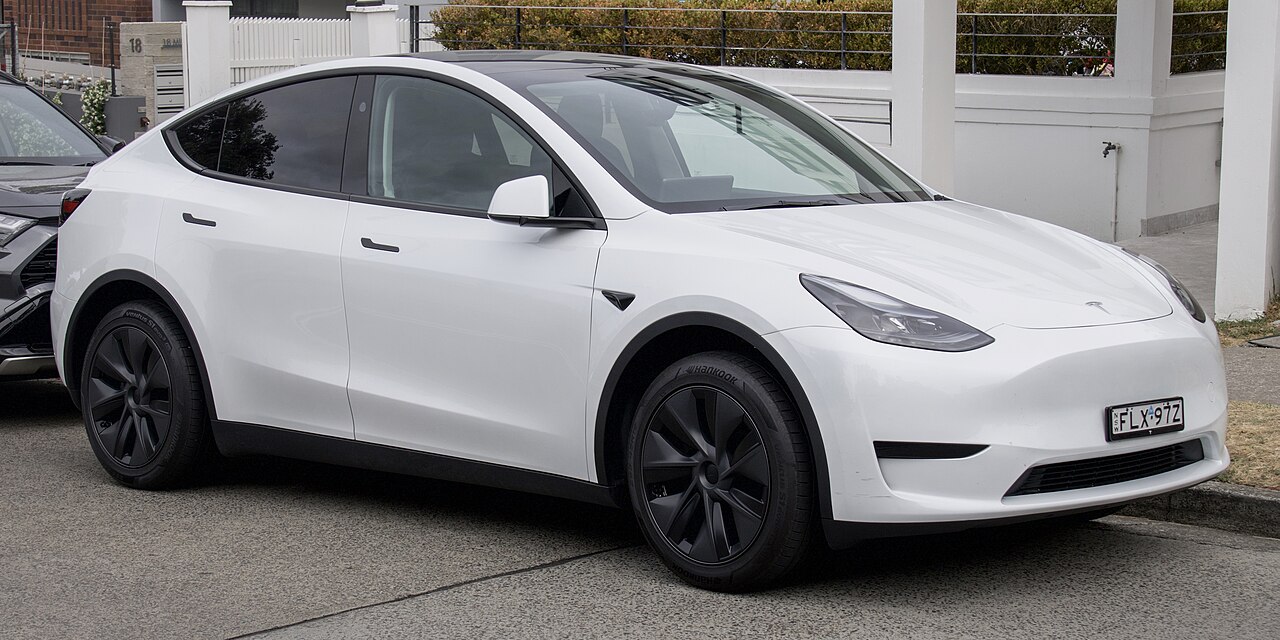
Information currency: the degradation and warranty figures in this article draw on Tesla’s 2026 Impact Report, the official vehicle warranty pages, and public statistics from several independent EV data organizations such as Recurrent, compiled and last reviewed in late July 2026. Cross-reference the official Tesla vehicle warranty page for current terms, and see GreenCars for broader EV context. Specific warranty terms, mileage caps, and extended-warranty pricing can change with model year and region — Tesla’s official site and your purchase contract govern before any order or claim. This is general information, not purchase, repair, or legal advice; battery warranty and claims are determined by Tesla. Image credit: “2024 Tesla Model Y RWD front” by LuvsMG481, via Wikimedia Commons, licensed CC BY-SA 4.0.

About the author: Lifei Zhou
Model Y owner since 2022Ontario STO registered apprentice · 310SWorks on Porsche, Mercedes, BMW, Audi weeklyHundreds of readers referred (est.)
Lifei is a Tesla owner based in Canada, writing practical, fact-checked Tesla guides for US and Canadian drivers — buying, ownership, insurance, charging, and TSLA investing, all from first-hand experience.