
Tesla Tire Guide 2026: When to Replace, Rotation, Costs & Best Replacement Tires
Tesla Tire Guide 2026: When to Replace, Rotation, Costs & Best Replacement Tires

In one sentence
How long Tesla tires last, when to rotate and replace them, 2026 costs by model, and the best replacement tires for US and Canadian drivers.
Ask any Tesla owner what surprised them most about the cost of ownership, and a lot of them will say the same thing: tires. There’s no oil to change and the brakes barely wear, but those quiet, low-rolling-resistance tires can vanish faster than you’d expect — sometimes in under 25,000 miles. If you’re staring at a wear bar and a $1,500 quote, this guide walks you through exactly when to rotate, when to replace, what fits your car, what it should cost in 2026, and which replacement tires are actually worth buying across the US and Canada.
Disclosure: some links are affiliate/referral links, and we may earn a commission at no extra cost to you. See our disclosure page.
📋 Contents
- Why Tesla Tires Wear Faster Than Gas Cars
- How Often Should You Rotate and Replace Tesla Tires?
- Tesla Tire Sizes by Model (2026)
- What Tesla Tires Cost in 2026
- Best Replacement Tires for Your Tesla (2026)
- OEM Foam Tires vs. Aftermarket: The Range and Noise Tradeoff
- How to Make Your Tesla Tires Last Longer
- Winter Tires: Worth It in Canada and the Snow Belt
- Still Shopping for the Tesla Itself?
- Frequently Asked Questions
- The Bottom Line
Why Tesla Tires Wear Faster Than Gas Cars
It isn’t your imagination and it isn’t a defect. Three things about an electric car conspire to chew through rubber faster than a comparable gas vehicle:
- Weight. A Model Y weighs around 4,400 lb — several hundred pounds more than a similar-size gas SUV, thanks to the battery pack. More load on each contact patch means more wear.
- Instant torque. Electric motors deliver full torque from a standstill. Every enthusiastic launch scrubs a little tread off the rears, and Teslas make it very easy to launch enthusiastically.
- Soft, efficiency-focused compounds. Factory tires use low-rolling-resistance rubber to protect your range. That soft compound is quieter and more efficient, but it simply doesn’t last as long as a harder touring tire.
Independent shops and Consumer Reports testing estimate EVs wear tires roughly 20% faster than gas cars on average. The upside: it’s normal, it’s predictable, and with the right habits (covered below) you can claw a lot of that mileage back.
How Often Should You Rotate and Replace Tesla Tires?
Tesla’s official maintenance schedule is refreshingly simple. There are really only three numbers to remember:
| Service | Tesla’s Recommendation | Why It Matters |
|---|---|---|
| Rotate tires | Every 6,250 miles (10,000 km), or when tread depth differs by 2/32″ (1.5 mm) or more | Evens out front-vs-rear wear; skipping it is the #1 reason owners replace tires early |
| Replace by age | Every 6 years regardless of tread | Rubber hardens and cracks with age even on a low-mileage car |
| Replace by tread | At 4/32″ for winter/wet safety; legal minimum is 2/32″ | Wet-weather grip falls off a cliff below 4/32″ |
That rotation number is the one that pays for itself. On a rear-wheel-drive Tesla, the rear tires do the accelerating; on dual-motor cars the wear is more even but never perfectly so. Rotating every 6,250 miles keeps all four tires aging together, which means you replace them as a set once instead of buying two at a time twice as often. A tread-depth gauge costs a few dollars on Amazon US (Amazon CA) and takes the guesswork out of the 2/32″ rule.
Tesla Tire Sizes by Model (2026)
Before you shop, you need to know your exact size. The safest source is the sticker on your driver’s-side door jamb — but here are the common factory fitments across the current lineup. Note that Tesla also stamps many OEM tires with a T0 or T1 marking, which indicates a Tesla-specific spec (usually with acoustic foam inside).
| Model / Wheel | Common Tire Size | Notes |
|---|---|---|
| Model 3 – 18″ Aero | 235/45R18 | Best range; longest tire life of the lineup |
| Model 3 – 19″ Sport | 235/40R19 | Sharper look, slightly less range and tread life |
| Model 3 Performance – 20″ | 235/35R20 | Summer-biased; wears fastest |
| Model Y – 19″ Gemini | 255/45R19 | The value pick; best mileage on the Y |
| Model Y – 20″ Induction/Helix | 255/40R20 | Often has acoustic foam; pricier to replace |
| Model Y Performance – 21″ | 255/35R21 | Shortest life; budget for replacement sooner |
| Model S / Model X | Staggered (wider rear); 19″–22″ | Rear tires differ from front — cannot cross-rotate |
Two practical takeaways: smaller wheels almost always mean cheaper tires, more range, and longer life; and if your Model S/X runs a staggered setup, you can only rotate side-to-side, not front-to-back, so plan on two-at-a-time replacements.
What Tesla Tires Cost in 2026
Here’s the number people actually want. Prices below are ballpark figures for a full set of four, installed, in 2026 US dollars — expect the high end (or a bit more) at a Tesla Service Center and the low end at an independent tire shop like Discount Tire or Costco.
| Vehicle | Set of 4, Installed | Typical Lifespan |
|---|---|---|
| Model 3 (18″–19″) | $800 – $1,500 | 25,000 – 40,000 mi |
| Model Y (19″–20″) | $1,500 – $2,000 | ~30,000 mi (base) |
| Model Y / 3 Performance | $1,900 – $2,500 | ~15,000 mi |
| Rotation (per visit) | $40 – $120 | Often free with tire purchase |
| Wheel alignment | ~$150 – $275 | Worth it with new tires |
That Performance figure is the sting: a Model Y Performance can need tires roughly every 15,000 miles, so heavy-footed owners sometimes spend more on tires per year than on electricity. One more budget note: no Tesla comes with a spare tire, so a puncture on the highway means a tow unless you carry a fix. I keep a cordless JOWUA 100W air compressor in the car (code TSLNA takes 5% off). A nail usually means a slow leak, so topping the tire up will normally get you home or to a tire shop. I do not recommend sealant kits: many Tesla tires have acoustic foam inside, and sealant can ruin it. The gear I have used myself is on the owner-tested page. If you’re weighing a used Tesla partly on running costs, our used Tesla buying guide covers how to inspect tread and factor a fresh set into your offer.
Best Replacement Tires for Your Tesla (2026)
When your OEM tires are done, you don’t have to buy the exact same tire — and often you shouldn’t. The factory tire is optimized for range and showroom quiet, not value. Here are the replacements owners and testers consistently rate highest, matched to how you actually drive:
| Tire | Best For | Trade-off |
|---|---|---|
| Michelin CrossClimate 2 | All-weather do-it-all with light-snow rating | A little range loss vs. OEM; limited large sizes |
| Michelin Pilot Sport EV | Performance owners who want grip + quiet | Summer tire; not for winter |
| Pirelli Scorpion AS Plus 3 | Model Y owners wanting the quietest cabin | Not a dedicated snow tire |
| Hankook iON evo AS | EV-specific value; strong real-world mileage | Newer tread pattern, thinner track record |
| Continental ProContact RX | Closest OEM-style replacement (foam option) | Range/quiet, not longevity, is its priority |
For most North American drivers who see real winters, the Michelin CrossClimate 2 is the single easiest recommendation — it’s a genuine all-weather tire with the mountain-snowflake rating, it’s quiet, and it lasts. If you never see snow, an EV-tuned summer or grand-touring tire will give you back a little range and a lot of grip. Just remember the tradeoff: switching from a slippery low-rolling-resistance OEM tire to a grippier all-season can cost roughly 5–10% of your range, one of the biggest efficiency variables the US Department of Energy flags for any vehicle.
OEM Foam Tires vs. Aftermarket: The Range and Noise Tradeoff
Those Tesla-spec T0/T1 tires with acoustic foam bonded inside the casing genuinely do make the cabin quieter, and they’re matched to the car’s efficiency targets. They also cost $50–$100 more per tire and rarely last as long as a good touring tire. Here’s how to decide:
- Keep OEM-style (foam) if: a silent cabin and squeezing out maximum range matter more to you than the price, or you lease and just want factory behavior.
- Go aftermarket if: you’d rather pay less, last longer, and don’t mind a barely-perceptible increase in road noise. Most owners who switch never look back.
Whatever you choose, keep all four tires the same make and model. Mixing tires — especially on a dual-motor car — can confuse the traction and stability systems and cause uneven wear.
How to Make Your Tesla Tires Last Longer
The gap between an owner who gets 20,000 miles and one who gets 40,000 out of the same tire is mostly habits, not luck. The high-impact moves:
- Rotate on schedule. Every 6,250 miles, no exceptions. This is the single biggest lever.
- Check pressure monthly. Underinflation is the fastest way to kill a tire and range at the same time, and NHTSA ties it directly to tire safety and blowouts. Use the door-jamb spec (typically 42 psi cold on many Teslas — confirm yours) and double-check it with an AstroAI digital tire pressure gauge — the in-car TPMS readout lags after temperature swings. A compact cordless tire inflator (Amazon CA) lives nicely in the frunk.
- Ease off Chill-mode launches. You don’t have to drive like a monk, but the drag-strip launches are what shred rear tires. Consider setting acceleration to “Chill” for daily driving.
- Get an alignment with new tires. A Tesla knocked out of alignment by a pothole will feather a fresh set in a few thousand miles.
- Watch the edges. Inner-edge wear you can’t see from standing is common on Teslas — that’s what the 6,250-mile rotation inspection catches.
For the full picture on what else does (and doesn’t) need attention, see our Tesla maintenance and service guide.
Winter Tires: Worth It in Canada and the Snow Belt
If you live anywhere with real winter — most of Canada, the northern US, the mountains — a dedicated set of winter tires on a second set of wheels is the best safety upgrade you can make to a Tesla, full stop. The instant torque that eats tires also makes an EV surprisingly easy to spin on ice with all-seasons. In Quebec, winter tires are legally mandatory from December 1 to March 15.
A dedicated winter set also protects your expensive summer or all-season tires from salt and cold-cracking, so the tires effectively pay for themselves by doubling the life of both sets. Popular EV-friendly winter choices include the Michelin X-Ice Snow, Nokian Hakkapeliitta R5 EV, and Bridgestone Blizzak. We go deeper on cold-weather range and setup in the Tesla winter driving guide, and you can browse more owner upgrades in our new-owner accessories guide.
Still Shopping for the Tesla Itself?
If you’re reading this before you’ve bought — smart move to know the running costs up front. When you do order, placing your order through a Tesla referral link currently gets you 3 months of free Full Self-Driving (Supervised), which is a nice cushion while you budget for things like eventual tires. It costs you nothing extra, and choosing a smaller wheel option at order time is the easiest way to guarantee cheaper, longer-lasting tires for years. If you’d rather not enter a code manually, our referral code guide walks through exactly how it works, and you can browse more US ownership tips in our US Tesla section.
Frequently Asked Questions
How long do Tesla tires last?
Most factory Tesla tires last between 20,000 and 40,000 miles. A base Model Y averages around 30,000 miles, while a Model Y or Model 3 Performance may need new tires closer to every 15,000 miles because of the softer, grippier rubber and higher power. Diligent rotation and gentle launches push you toward the top of that range.
How often should I rotate my Tesla tires?
Tesla recommends rotating every 6,250 miles (10,000 km), or sooner if the tread depth between any two tires differs by 2/32″ (1.5 mm) or more. It’s the cheapest way to extend tire life and is the most-skipped item on the maintenance list.
Can I use any tire on a Tesla, or does it have to be an EV tire?
You can fit any correctly-sized tire with a suitable load rating, but EV-specific tires (or the Tesla-marked T0/T1 versions) are engineered for the extra weight, low rolling resistance, and quiet you want in an EV. A cheap non-EV tire may wear quickly, cost you range, and make the cabin noticeably louder.
Why do Tesla tires wear out so fast?
Three reasons: EVs are heavy, electric motors deliver instant torque that scrubs the tires on every acceleration, and factory tires use soft low-rolling-resistance compounds tuned for range rather than longevity. Together they wear roughly 20% faster than a comparable gas car’s tires.
Do I need an alignment when I replace my Tesla tires?
It’s strongly recommended. Teslas are heavy and sensitive to pothole impacts, and even mild misalignment will feather a brand-new set within a few thousand miles. An alignment (roughly $150–$275) is cheap insurance on a $1,500+ tire purchase.
Are winter tires necessary for a Tesla in Canada?
In Quebec they’re legally required from December 1 to March 15, and everywhere else with real snow they’re the best safety upgrade you can make. Dedicated winter tires dramatically improve traction on ice and snow and protect your summer/all-season set from salt, effectively extending the life of both.
The Bottom Line
- Rotate every 6,250 miles — it’s the single biggest factor in how long your tires last.
- Budget realistically: ~$800–$1,500 for a Model 3 set and ~$1,500–$2,000 for a Model Y, plus alignment.
- Performance trims are pricey to keep shod — sometimes every 15,000 miles.
- Best all-round replacement: Michelin CrossClimate 2 for four-season drivers; an EV summer tire if you never see snow.
- Smaller wheels = cheaper tires, more range, longer life. Choose accordingly at order time.
- Winter drivers: a dedicated snow set pays for itself and is a genuine safety upgrade.
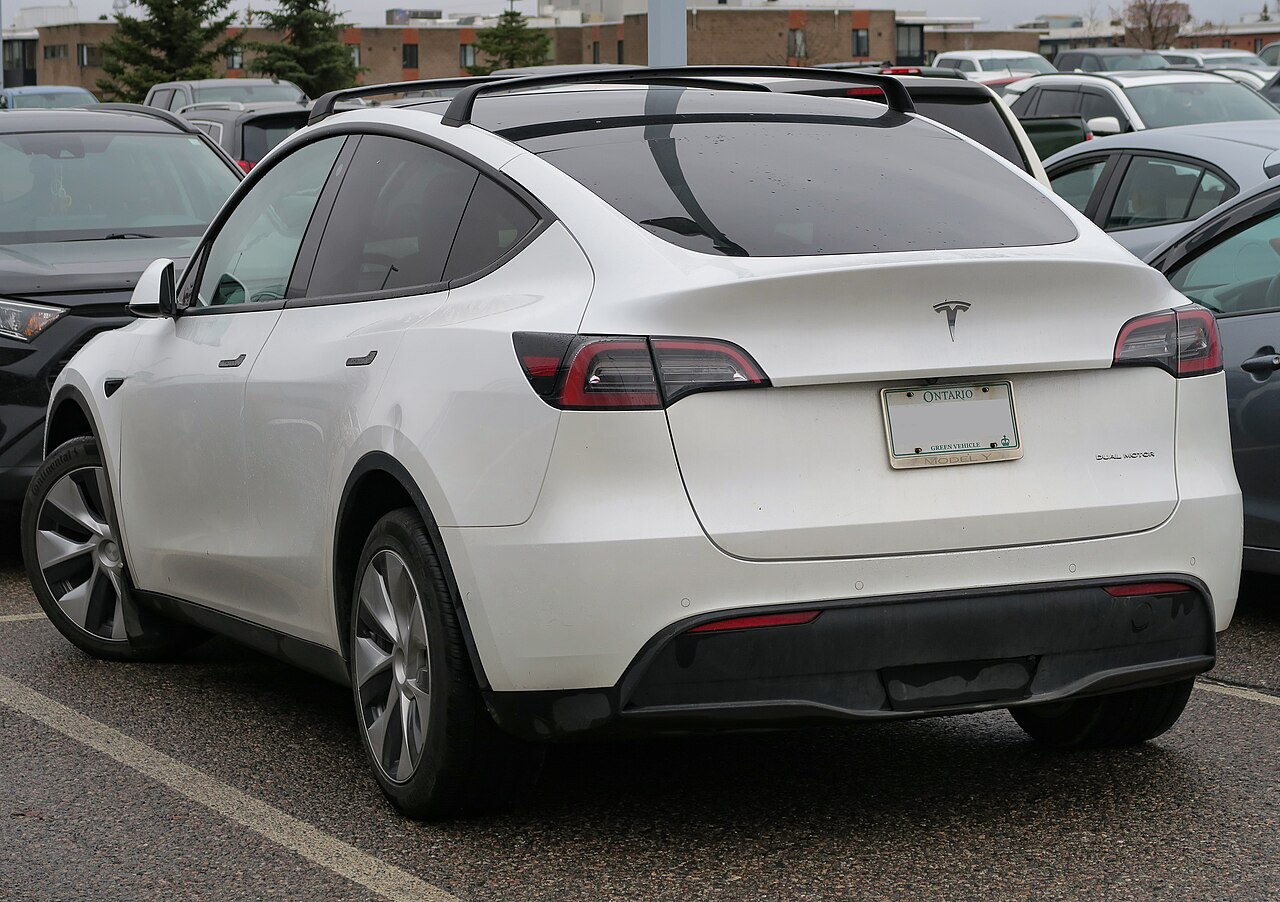
Information is current as of late July 2026 and reflects general US and Canadian pricing; tire prices, sizes, and Tesla’s maintenance recommendations vary by region, trim, and model year — always confirm the exact size on your door-jamb sticker and prices with a local tire retailer. This article is for general informational purposes only and is not professional maintenance advice. Some links are affiliate/referral links; see our disclosure page. Image credit: Tesla Model Y by Elise240SX, licensed CC BY-SA 4.0, via Wikimedia Commons.

About the author: Lifei Zhou
Model Y owner since 2022Ontario STO registered apprentice · 310SWorks on Porsche, Mercedes, BMW, Audi weeklyHundreds of readers referred (est.)
Lifei is a Tesla owner based in Canada, writing practical, fact-checked Tesla guides for US and Canadian drivers — buying, ownership, insurance, charging, and TSLA investing, all from first-hand experience.