
Tesla Model S & Model X (2026): Discontinued — Last New Cars & Service
Tesla Model S & Model X (2026): Discontinued — Last New Cars & Service

In one sentence
Tesla ends Model S and Model X production June 30, 2026. Here's the last-inventory window, why prices went up, owner service guarantees, resale, and who should buy.
If you’ve been following Tesla over the past couple of years, you’ve probably heard the whispers: the Model S — the car that dragged Tesla out of “niche toy” territory and into the mainstream back in 2012 — and the Model X, which stunned showrooms with its Falcon Wing doors in 2015, are officially bowing out. This isn’t a rumour or some blogger’s hunch. Elon Musk confirmed it himself on the late-January 2026 earnings call: both flagship cars would end production in the second quarter. Per Tesla’s own statements on social media, by June 30, 2026, the Model S and Model X are officially struck from the lineup.
In other words, by the time you’re reading this, the window to buy a brand-new, factory-fresh Model S or Model X may be down to its last few hundred inventory cars. For shoppers and owners across North America, this matters on several levels: whether anyone still chasing one has a real shot and whether it’s worth the scramble; whether existing S/X owners will see their service and resale value take a hit; and the bigger question — what is Tesla actually trying to do by axing its two most prestigious cars? This guide lays out the facts as clearly as I can verify them, current as of 2026, and then offers a take.
Disclosure: some links in this article are affiliate/referral links. If you place an order or get a quote through them, we may earn a referral reward at no extra cost to you — which is part of what keeps this site running. This is information sharing, not purchase or investment advice. See our disclosure page.
📋 Contents
- The timeline: when production ends, and what “discontinued” really means
- Why these two cars? Musk’s “dignified retirement” and the Optimus bet
- 14 years that changed everything
- The numbers don’t lie: why the S/X stopped selling
- The reverse move: prices went up, not down — final inventory cars cost $15,000 more
- The “Signature Series”: 350 cars, invitation-only, the rarest of the rare
- Can you still buy one in North America? How to grab the deal
- Already an S/X owner? Will support dry up?
- What’s left to buy from Tesla in North America?
- Good or bad for Tesla? An investment-angle aside
- Frequently Asked Questions
- Summary: turn this into your action plan
The timeline: when production ends, and what “discontinued” really means
A lot of people hear “discontinued” and panic. It helps to separate out a few dates so you don’t scare yourself.
- January 28, 2026 — Musk announces, on the Q4 2025 earnings call, that the Model S and Model X will end production in Q2 2026.
- April 2026 — Tesla closes custom orders for both cars. You can no longer “build your own” on the website; the only cars left to buy are the ones already manufactured.
- Late May 2026 — the last Model S and Model X roll off the line at the Fremont, California factory, and the line begins preparing for its next purpose.
- June 30, 2026 — Tesla’s stated “official end of production” date, when both cars exit the active lineup entirely.
So “discontinued” means new-car production stops — it does not mean your car can’t be driven or serviced tomorrow. More on that below. The key number to hold onto: counting from 2012, the Model S ran for 14 years; the Model X, from its 2015 production start, ran 11. Together, the two delivered roughly 740,000 units worldwide. For an automaker to retire its earliest and most iconic products at the same time is a genuinely rare move.

Why these two cars? Musk’s “dignified retirement” and the Optimus bet
Musk’s official reason is “autonomy.” On the call, he said it was time to let the Model S and X programs “retire with dignity,” because the company is “heading toward a future centred on self-driving.”
On its face that’s a bit of a stretch — the S, X, 3, and Y all share the same FSD system, and discontinuing the S/X doesn’t make autonomy any stronger. The real logic is inside the factory: that roughly 100,000-units-per-year S/X line at Fremont is being converted to build the Optimus humanoid robot. Tesla’s stated ambition is enormous, aiming eventually for an annual run rate of one million Optimus units there.
Put it in the larger context and it makes sense. For two years now, Musk has repeatedly insisted Tesla should no longer be seen as a “car company” but as a “physical AI” company, with its centre of gravity in autonomy, Robotaxi, and robots. A low-volume, high-complexity flagship line like the S/X — contributing an ever-shrinking slice of profit — was a natural first sacrifice in that reshuffle. If you want to understand the financial side of the company’s pivot, our US Model Y buying guide covers the volume models that now carry the business.
14 years that changed everything
Before talking about why they’re gone, it’s worth remembering who they were. When the Model S started deliveries in 2012, the EV market was mostly short-range, range-anxious commuter cars with compromised styling. The Model S was the first to make people realize an EV could go hundreds of kilometres on a charge, out-accelerate a lot of gas performance cars, and still look like a proper luxury sedan. It swept a pile of car-of-the-year awards that year, and pushed Tesla — a startup that had been weeks from collapse more than once — onto the mainstream stage.
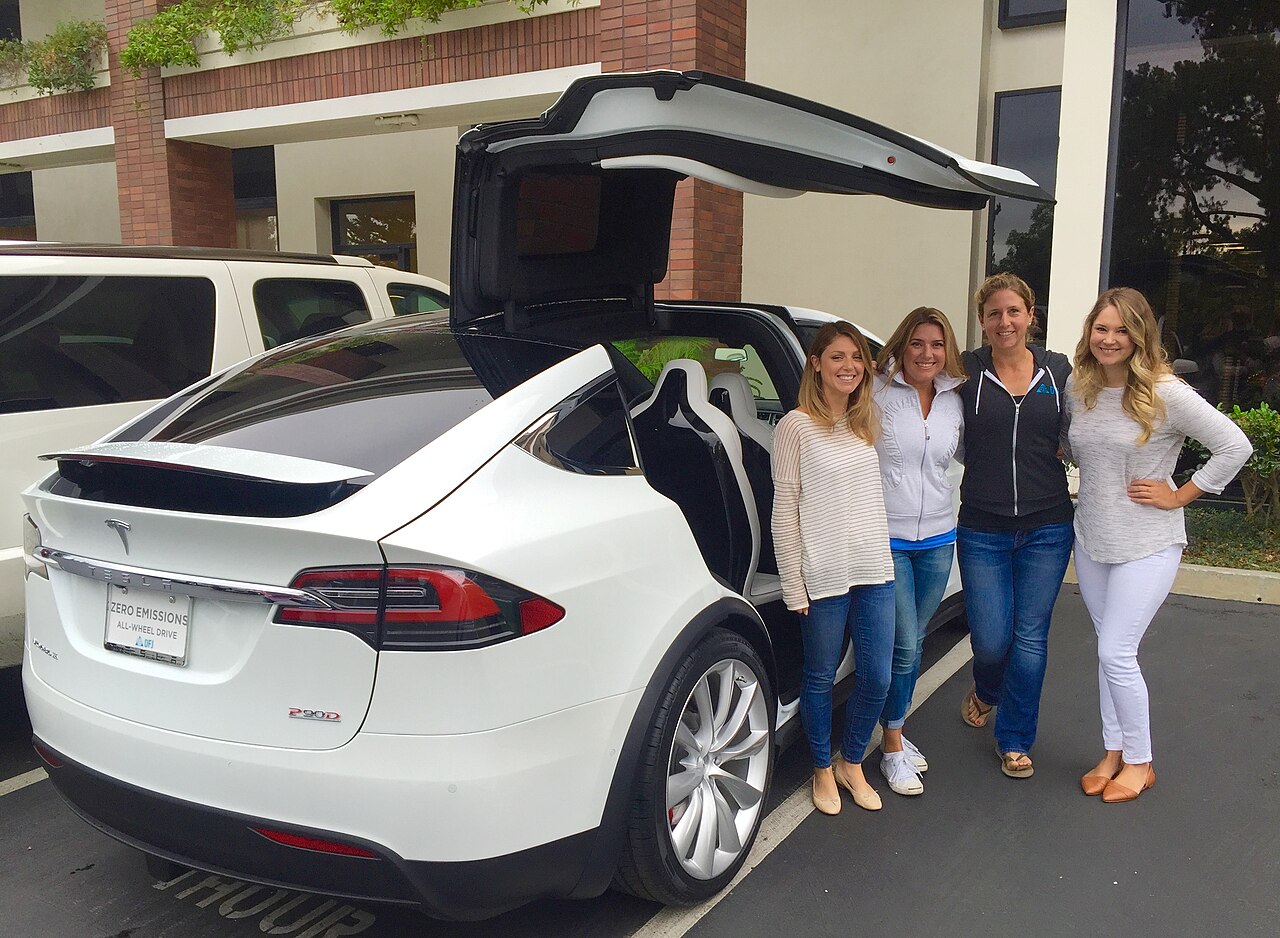
The 2015 Model X was the showpiece. Open those Falcon Wing doors in a parking lot and heads turned; to this day they remain many people’s first mental image of an electric SUV. The later Plaid variant stacked tri-motor power, four-figure horsepower, and sub-two-second 0–100 km/h figures into a production car, holding court for years in “fastest production four-door” conversations.
Without the brand altitude and engineering proof the S and X established, there would have been no high-volume 3 and Y to follow. They were Tesla’s trailblazers — mission accomplished, time to hand off the baton. Seen that way, the discontinuation isn’t all bad news; it’s the natural close of a role.
The numbers don’t lie: why the S/X stopped selling
“Dignified retirement” sounds nice, but the more grounded reason is simpler: these two genuinely stopped selling.
Tesla’s financials bucket the S, X, Cybertruck, and Semi together under “Other Models.” For all of 2025, that bucket delivered only about 50,000-plus units worldwide, while the Model 3 and Model Y combined for around 1.6 million. Strip out the Cybertruck and Semi, and outside estimates put the S and X together at roughly 30,000 units globally for 2025 — against a 100,000-per-year line, that’s running in a state of semi-starvation.
The trend is more telling than the absolute numbers. S/X sales have slid for several years running, with some years down more than 30% year over year. The reasons aren’t hard to see: priced in the US$110,000–130,000 range, they sat far above the Model 3/Y, which kept getting better at a third to half the price. The so-called June 2025 “refresh” only added a new paint colour, a bumper camera, and ambient lighting — panned by plenty of outlets as half-hearted — while quietly raising the price by US$5,000. A 14-year-old platform whose hardware can’t keep pace naturally sees its sales runway narrow.
There’s also the unavoidable factor of tariffs and the supply chain. The S/X are built entirely at Fremont in the US, where parts costs already run high; layer on the past two years of North American tariff volatility on imported components, and per-car margins get squeezed further. For a company increasingly focused on overall gross margin, keeping a line running below one-third utilization — and at thin margins — carries a steep opportunity cost. Converting that capacity to what Musk calls “the next growth engine,” Optimus, pencils out better on paper.
The reverse move: prices went up, not down — final inventory cars cost $15,000 more
Normal automakers clear out inventory with discounts. Tesla did the opposite. After announcing the discontinuation and closing custom orders, it raised the base price on the remaining inventory Model S/X cars by roughly US$15,000. Yes — the closer to extinction, the more expensive.
The logic is scarcity. With only a few hundred cars left worldwide, Tesla simply treated them as quasi-collectibles. And to make the price feel justified, each remaining inventory car was loaded with features and perks, broadly including:
| Included perk | What it means for you |
|---|---|
| FSD (Supervised) | Bundled in as standard; bought on its own this option is worth several thousand dollars |
| Lifetime free Supercharging | An early-era perk Tesla later cancelled, now back on these final cars — genuinely valuable |
| Lifetime Premium Connectivity | Satellite maps, live traffic, Sentry Mode streaming and more, all included |
| Four years of premium service & connectivity | Takes the early-ownership service worries off the table as well |
So the “$15,000 more” you see isn’t a pure price hike — it’s a bundle of things you’d normally pay extra for. For someone who genuinely wants an S/X, the math isn’t necessarily a loss; for someone who just wants a daily commuter, it’s clearly not worth it. The exact configuration and final price of each car are whatever Tesla’s inventory page shows, and the perks attached can differ slightly between cars listed at different times.
The “Signature Series”: 350 cars, invitation-only, the rarest of the rare
If ordinary inventory cars are “the last ones,” the Signature Series Tesla prepared as a farewell is the rarest of the rare. It’s a limited run of 350 cars — roughly 250 Model S and 100 Model X (six-seat only). Most distinctively, it’s invitation-only: Tesla emails select customers an invitation to buy, and if you didn’t get one, money won’t help.
The spec is maxed out for ceremony: an exclusive Garnet Red paint, gold Tesla and Plaid badging, white Alcantara interior, a numbered dash plaque (e.g. 1/250, 1/100), the Yoke steering wheel, carbon-ceramic brakes with gold calipers, and more. The pricing is suitably dramatic — the Model X Signature around US$159,000, the Model S Signature estimated near US$155,000, roughly US$30,000 above an ordinary inventory car. Tesla reportedly held a “sunset” commemoration event in May to give these two long-serving cars a dignified send-off.
Honestly, this isn’t really buying a car anymore — it’s buying a collectible from Tesla’s brand history. Most people will never get near one, but it does draw a rather elegant line under the Model S and Model X era.
Can you still buy one in North America? How to grab the deal
Whether you can get one comes down to how fast you move. As of just before the cutoff, only about 600 inventory cars remained worldwide (roughly 295 Model S and 301 Model X), the vast majority of them in the US market. Canadian inventory is very scattered, and harder to find the longer you wait. Put plainly: buyers in the US have relatively more chances; buyers in Canada who insist on a brand-new factory car should be ready to arrange cross-province transport — or to not find one at all — and the closer to the end of June, the worse the odds.
If you really want to snag one, a few pointers:
- Watch the inventory page closely. Go straight to Tesla’s Model S (and Model X) inventory listings and filter for what you want. Stock moves in real time; a good car can be ordered out from under you overnight if you hesitate.
- Do the perk math. The lifetime Supercharging, FSD, and lifetime Premium Connectivity above are real money. Factor them in, then compare against equivalent cars on the used market, and you’ll know where you stand.
- Don’t skip the delivery inspection. Inventory cars have often sat for a while, so check the paint, tires, and battery state carefully at handover. Our Tesla delivery inspection checklist walks you through it.
- Used is a valid route too. If you can’t grab new inventory, a clean used S/X is an option — especially if you want that “heritage plus performance” combo. How to pick one, inspect it, and read the warranty is all in our used Tesla buying guide.
One money-saving aside: whether you end up with an S/X inventory car or pivot to a Model 3/Y, ordering through an existing owner’s referral link typically gets you 3 months of free FSD (Supervised). At the US$99/month subscription rate, that’s worth roughly $297 — worth a click before you order. The exact promotion is whatever Tesla’s official page shows at the time.
Already an S/X owner? Will support dry up?
This is what current owners care about most. The good news: discontinued does not mean cut off. Tesla has explicitly stated that existing Model S/X owners will keep receiving service, parts, and software updates.
Breaking it down by dimension:
- Warranty unchanged. The basic vehicle warranty is still 4 years or 50,000 miles (whichever comes first); the battery and drive-unit warranty is 8 years or 150,000 miles. These terms don’t change because of the discontinuation.
- Software updates continue. Tesla has historically supported older cars with OTA updates for a long time — commonly 8 to 10 years or more. The S/X run a system shared with current models, so there’s no near-term worry about being “software-abandoned.”
- Parts and service centres. North America’s service-centre network still covers the S/X, and common wear parts won’t dry up overnight. The thing to keep an eye on, years out, is stock of certain specific legacy parts — but that’s a relatively long-term concern.
The other question owners ask: will the discontinuation help resale value? Two sides to this. Short-term, the “last of its kind” label may genuinely make clean, high-spec S/X cars (especially Plaid) more sought-after on the used market, slowing depreciation or even firming up slightly. Long-term, though, an EV’s resale core is still battery health and whether the software keeps up; the sentimental premium has limits. Don’t expect to get rich off it — normal use and proper maintenance are what really hold value. A practical tip: if your S/X is in great shape and is a Plaid or high trim, there’s no rush to sell short-term; let the “collectible” idea ferment a bit and used listing prices may hold better. But if the car is average with high mileage, don’t gamble on nostalgia — sell sooner rather than later.
What’s left to buy from Tesla in North America?
Once the S/X are gone, Tesla’s North American lineup is down to three core cars — Model 3, Model Y, and Cybertruck — plus the truck and the future Robotaxi. For most families, this barely matters, since the 3 and Y were always the ones carrying sales.
- For family use and value, the Model Y is almost the default answer — space, range, and the charging network are all more than enough. Our US Model Y guide covers trim selection, pricing, and rebates.
- For a sedan with sharper handling, the Model 3 remains hard to ignore at its price, the Performance trim especially — its acceleration and chassis feel still punch hard in the US$25,000–45,000 bracket.
- For personality and hauling, the Cybertruck has taken over the “conversation piece” role; whether it’s worth it and where the catches are deserve their own research before buying.
Bottom line: retiring the Model S/X is more a loss of heritage and prestige than of everyday choice. If you were already torn between the 3 and Y, this discontinuation barely concerns you — and you can still use an owner referral link to grab the FSD trial when you order.
Good or bad for Tesla? An investment-angle aside
Set aside the sentiment, and looking at this as a business decision is genuinely interesting.
Supporters will say: cutting the low-volume, low-margin S/X to free up precious Fremont capacity for Optimus is textbook focus, betting scarce resources on what Musk views as the next trillion-dollar market. If robots and Robotaxi truly come good, this step will look visionary in hindsight.
Skeptics will ask: when an automaker can’t even keep its own flagships alive, doesn’t that hint that the gas-to-EV tailwind has peaked and the core car business is running out of growth? And Optimus’s million-units-a-year target lives mostly in the realm of vision for now — whether it lands, and when it earns money, are huge question marks. Whether trading certain (if modest) cash flow for an uncertain future is boldness or recklessness is in the eye of the beholder.
For anyone holding or weighing TSLA, the Model S/X discontinuation itself has little direct impact on the financials (their revenue share was already negligible). What actually matters is the pace of progress on Optimus and Robotaxi. To be clear once more: the above is information, not investment advice — markets carry risk, so make your own call.
Frequently Asked Questions
When exactly do the Model S and Model X stop being made?
Musk announced on January 28, 2026 that both cars would end production in Q2 2026. Custom orders closed in April, the last cars rolled off the Fremont line in late May, and Tesla’s stated “official end of production” date is June 30, 2026. After that, only remaining inventory cars are available.
Can I still buy a brand-new Model S/X?
Yes, but only inventory cars, in very limited numbers (roughly 600 worldwide before the cutoff, the vast majority in the US). You’ll need to filter Tesla’s inventory page directly and order quickly when you see one. These cars typically come standard with FSD, lifetime Supercharging, and lifetime Premium Connectivity, but the base price is about US$15,000 higher than before.
I already own an S/X — can I still service and upgrade it after discontinuation?
Yes. Tesla has explicitly committed to continued service, parts, and software updates for existing owners. The 4-year/50,000-mile basic warranty and 8-year/150,000-mile battery and drive-unit warranty terms are unchanged, and OTA software updates usually continue for 8 to 10 years or more.
Will the discontinuation make my S/X hold value better?
Short-term, there may be a small “last of its kind” bump, and clean, high-spec Plaid cars may be more sought-after used. But long-term resale still hinges on battery health and software support; the nostalgia premium is limited, so don’t over-count on it.
Does discontinuing the S/X mean Tesla is in trouble?
Not a conclusion you can jump to. S/X sales share was already very low, and cutting them is more about freeing Fremont capacity for the Optimus robot — a strategic trade-off, not a survival crisis. What really decides Tesla’s outlook is whether autonomy, Robotaxi, and robotics deliver.
Summary: turn this into your action plan
- Want one badly: if the budget’s there and you love the heritage, move fast on the last inventory cars and do the math on those lifetime perks — order through an owner referral link for 3 months of free FSD (Supervised).
- Just want a good EV: a Model 3/Y is more than enough — don’t pay a collectible premium for “last of its kind.”
- Already an owner: drive your car with confidence; support isn’t going away.
- Accessories: if you’re kitting out a new S/X, you can grab the basics in one go on Amazon US or Amazon Canada.
From the 2012 Model S to today, this car genuinely proved an EV could be fast, good, and prestigious all at once, and pulled Tesla back from the brink of bankruptcy to a trillion-dollar valuation. The Model X’s Falcon Wing doors became countless people’s first image of an electric car. Their retirement marks the end of a Tesla era — and a clear signal that Musk is betting the company wholesale on AI and robotics. Whether you’re racing for the last inventory car or just here to watch the spectacle, the Model S and Model X have earned a “thank you, well done.” One era closes, while Tesla’s far bigger gamble on AI and robots is only just beginning.
If you’re cross-shopping with insurance in mind, our Canada Tesla insurance guide is a useful companion read before you sign anything.
Information currency: facts in this article are compiled from public reporting by outlets including CNBC, Electrek, InsideEVs, Axios, and Carscoops, along with Tesla’s official social media, current as of 2026. For authoritative figures, see Tesla’s official Model S and Model X pages and the IIHS safety ratings. Prices, inventory, perks, and promotions can change at any time — the latest on Tesla’s official pages governs before you buy. Image credit: lead Tesla Model S photo by Dllu, Wikimedia Commons, licensed CC BY-SA 4.0; Tesla Model X photo by Steve Jurvetson, Wikimedia Commons, licensed CC BY 2.0. This is information sharing and personal opinion, not purchase, tax, or investment advice; stock and investment content carries risk — judge independently or consult a licensed professional. Some links are affiliate/referral links; use is entirely voluntary and doesn’t affect your price. See our disclosure page.

About the author: Lifei Zhou
Model Y owner since 2022Ontario STO registered apprentice · 310SWorks on Porsche, Mercedes, BMW, Audi weeklyHundreds of readers referred (est.)
Lifei is a Tesla owner based in Canada, writing practical, fact-checked Tesla guides for US and Canadian drivers — buying, ownership, insurance, charging, and TSLA investing, all from first-hand experience.