
Do Teslas Hold Their Value? Tesla Resale Value & Depreciation Guide 2026 (US & Canada)
Do Teslas Hold Their Value? Tesla Resale Value & Depreciation Guide 2026 (US & Canada)

If you are buying a Tesla in 2026, one question matters almost as much as the sticker price: what will it be worth when you sell it? Depreciation is the single biggest cost of car ownership — bigger than fuel, insurance, or maintenance — and for years Teslas had a reputation for holding value unusually well. That story got complicated when Tesla started slashing new-car prices, and it flipped again when the federal EV tax credit disappeared in late 2025. This guide breaks down exactly how much Teslas depreciate today, which models hold value best, and how to buy and sell so depreciation works for you instead of against you.
Disclosure: some links are affiliate/referral links. If you buy or order through them we may earn a commission or referral credit at no extra cost to you. See our disclosure page.
📋 Contents
- How Much Do Teslas Actually Depreciate?
- The 2026 Plot Twist: Used Teslas Are Holding Value Again
- Tesla Resale Value by Model (5-Year Outlook)
- What Drives Tesla Depreciation Up or Down
- Best Time to Buy or Sell a Tesla for Value
- Tesla Resale Value in Canada
- How to Protect Your Tesla’s Resale Value
- How Tesla Depreciation Compares to Gas Cars and Rival EVs
- Frequently Asked Questions
- The Bottom Line
How Much Do Teslas Actually Depreciate?
Depreciation is front-loaded on almost every car, and Teslas are no exception. The biggest drop happens the moment you drive off the lot and over the first year, then the curve flattens. Based on 2026 market data from iSeeCars, which tracks millions of used-car transactions, here is roughly how a Tesla loses value over time:
- Year 1: a 15–20% drop is typical for most trims.
- Years 2–3: another 30–35% of the original price evaporates — this is the steepest part of the curve.
- Year 5: the average Tesla has shed roughly 55–58% of its MSRP, leaving about 42–45 cents on the original dollar.
- Years 7–10: depreciation slows sharply; a 10-year-old Tesla often retains around 20% of its original value.
Those numbers sound steep, but context matters. iSeeCars pegs the five-year depreciation for all vehicles at about 41.5% and for all SUVs around 44.9%. Teslas depreciate faster than the market average today, largely because of aggressive new-car price cuts over the past few years — but as you will see below, the 2026 used market is quietly rewriting that narrative.
The 2026 Plot Twist: Used Teslas Are Holding Value Again
For most of 2023 and 2024, used Tesla prices were in free fall as Elon Musk repeatedly cut new-car MSRPs, dragging the whole used market down with them. That trend reversed in early 2026. When the federal Clean Vehicle Credit — the $7,500 new-EV and $4,000 used-EV incentives — expired on September 30, 2025, something unexpected happened: used Teslas got more expensive while the rest of the used-EV market fell.
According to Electrek, citing iSeeCars data, the average used Tesla climbed about 4.3% between September 2025 and January 2026 (roughly $30,040 to $31,329), while every other used EV except the low-volume Porsche Taycan dropped around 3.6% over the same window. Buyers who lost access to the $4,000 used-EV credit shifted toward the vehicle with the best software, the biggest fast-charging network, and the simplest ownership experience — and that vehicle is a Tesla. The takeaway for 2026: Tesla’s resale floor is firmer than the raw depreciation percentages suggest, especially compared with rival EVs.
Tesla Resale Value by Model (5-Year Outlook)
Not all Teslas depreciate equally. Smaller, cheaper, higher-volume models tend to hold their percentage value better than the pricey flagships. Here is how the current lineup compares over a five-year horizon, using 2026 market estimates. Figures are approximate and vary by trim, mileage, region, and condition.
| Model | ~5-Year Depreciation | ~Value Retained | Resale Notes |
|---|---|---|---|
| Model 3 | ~55–60% | ~40–45% | Best-holding Tesla; strong demand as an affordable used EV. |
| Model Y | ~58% | ~42% | Huge buyer pool keeps demand high despite the percentage drop. |
| Cybertruck | ~50–58% | ~42–50% | Early scarcity propped up values; softening as supply grows. |
| Model S | ~65–70% | ~30–35% | Flagship depreciation is brutal; great value used, poor value new. |
| Model X | ~65–72% | ~28–35% | Steepest dollar losses; complex falcon doors weigh on demand. |
The pattern is clear: the Model 3 and Model Y are your safest bets for resale value, while the Model S and Model X hemorrhage value in dollar terms (which is exactly why a lightly used S or X can be a screaming bargain). One 2026 wrinkle: Tesla discontinued the Model S and Model X in early 2026, and new inventory has essentially sold out — the used market is now the only way to get one, which should gradually put a floor under values for clean, low-mileage examples. If protecting resale value is a priority, our Model Y USA buying guide walks through which trims and options the used market rewards.
What Drives Tesla Depreciation Up or Down
Understanding the levers helps you buy smart and sell high. These are the biggest factors in 2026:
- New-car price changes. This is the number one wildcard. Every time Tesla cuts a new Model Y’s price, every used Model Y is instantly worth less. Watch Tesla’s pricing before you buy.
- Battery health. Range and battery condition are front-of-mind for used-EV buyers. A pack that has degraded significantly scares off shoppers — though real-world data is reassuring, as we cover in our Tesla battery degradation guide.
- Federal and provincial incentives. Incentives on new EVs suppress used values; when they vanish (as the U.S. credit did in late 2025), used values firm up.
- Full Self-Driving. A paid FSD license does not transfer when the car changes hands, and Tesla’s FSD transfer program (which briefly let owners move a license to their next Tesla) ended on March 31, 2026 — so FSD rarely returns its cost at resale.
- Mileage, color, and condition. White and black exteriors sell fastest; unusual wraps and heavy mileage hurt. Access to Superchargers keeps Teslas desirable, and low Supercharging costs are part of the resale appeal.
Best Time to Buy or Sell a Tesla for Value
Depreciation is a curve you can time. A few practical rules:
- To minimize your own depreciation loss, buy used at 2–3 years old. The first owner has already eaten the steepest 45–55% of the drop, and the value trajectory is flattening. Our used Tesla buying guide covers exactly what to inspect.
- If you buy new, keep it 5+ years. Selling in years 2–3 crystallizes the worst of the curve. Holding past year 5 means you ride the flat part where annual losses shrink to 5–7%.
- Sell before a rumored price cut, not after. If Tesla telegraphs a cheaper new model or a price reduction, list your car first — used values react within weeks.
- Order new through a referral to add value on day one. When you buy a new Tesla with a Tesla referral link, you currently get 3 months of free Full Self-Driving (Supervised) — a perk that improves your ownership experience without adding to your purchase price.
Tesla Resale Value in Canada
Canadian resale dynamics mirror the U.S. in percentage terms, but a few things differ. Canada never offered a used-EV federal credit, so the September 2025 U.S. credit expiry had a smaller direct effect north of the border. The old federal iZEV program for new EVs was paused in early 2025 (Teslas had already been excluded) — that’s history now, since its successor, the federal EVAP rebate, offers up to $5,000 on qualifying new EVs priced under $50,000; among Teslas, only the Berlin-built Model Y RWD qualifies. New-car incentives like that put some downward pressure on used values, but the effect is narrow. Provincially, Quebec’s Roulez vert rebate (which ends for good after 2026) still shapes demand regionally.
In practical terms, Canadian sellers benefit from a smaller used-EV supply and cold-weather buyers who value Tesla’s efficient heat pump and Supercharger access. Expect a well-kept Model 3 or Model Y to retain value slightly better in CAD terms than the raw U.S. percentages imply, particularly in provinces with active EV adoption. If you are shopping across the border, browse our Canada Tesla guides for province-specific tax and rebate details.
How to Protect Your Tesla’s Resale Value
You cannot control Tesla’s pricing, but you can control the condition of your car — and condition is worth thousands at resale. A few high-ROI moves:
- Protect the paint and interior. Tesla’s white seats and screens show wear fast. A set of all-weather floor mats and a screen protector cost little and keep the cabin looking new — browse options on Amazon US or Amazon CA.
- Keep tires and alignment in check. Fresh, matching tires make a used Tesla look cared-for and pass inspection cleanly. Shop replacement tires when yours wear down.
- Save your service records and keep the battery healthy. Avoid habitually charging to 100% and document any service. A clean history reassures buyers.
- Consider paint protection film on high-impact areas if you plan to sell within a few years — a scratch-free front end photographs and sells better.
When it is time to upgrade, ordering your next Tesla through a referral link again nets 3 months of free FSD (Supervised), softening the blow of trading in.
How Tesla Depreciation Compares to Gas Cars and Rival EVs
Depreciation percentages only mean something in context. Here is how a five-year-old Tesla stacks up against the broader market in 2026, and why the comparison is less damning than the headline numbers suggest.
- Versus the average car: the typical vehicle loses about 41–42% over five years, so a Tesla’s ~55–58% looks worse on paper. But average-car math includes trucks and body-on-frame SUVs that hold value abnormally well because of constrained supply — not a fair apples-to-apples fight for a tech-forward EV.
- Versus other EVs: this is where Tesla shines. Most non-Tesla EVs have depreciated faster than Teslas, and in early 2026 the gap widened further as used Tesla prices rose while rival EV prices fell. A Tesla is, for now, the most liquid used EV on the market — it sells quickly and predictably.
- Versus luxury sedans: the Model S actually depreciates in line with, or slightly better than, comparable German luxury sedans, which are notorious value-losers. The difference is that a used Model S still drives like a current car thanks to over-the-air software updates.
- Total cost of ownership: depreciation is only one line item. Teslas claw back some of that gap with lower fuel and maintenance costs, so the real five-year cost to own is closer to rivals than depreciation alone implies. Compare running costs against the fuel-savings estimates on fueleconomy.gov before you judge a Tesla by its resale percentage.
The practical conclusion: if you compare a Tesla only to a Toyota, the depreciation stings. Compare it to the EVs it actually competes with, and Tesla is the value leader — a gap the end of federal incentives has only reinforced.
Frequently Asked Questions
Do Teslas hold their value better than other EVs?
In percentage terms, Teslas have depreciated faster than the overall car market in recent years, mostly due to new-car price cuts. But in 2026, used Teslas are actually appreciating relative to other EVs — after the federal tax credit ended, used Tesla prices rose about 4.3% while most other used EVs fell. So Teslas hold value better than rival EVs today, if not better than the average gas car.
Which Tesla has the best resale value?
The Model 3 typically holds the highest percentage of its value, followed closely by the Model Y and Cybertruck. The Model S and Model X depreciate the most in dollar terms, which makes them excellent used buys but poor value when bought new.
How much is a 5-year-old Tesla worth?
A five-year-old Model 3 or Model Y typically retains around 40–45% of its original MSRP, so a car that cost $45,000–$50,000 new often sells for roughly $18,000–$23,000 depending on mileage, trim, and condition.
Does Full Self-Driving increase resale value?
Not meaningfully. A paid FSD license does not transfer to the next owner, and Tesla’s FSD transfer program ended on March 31, 2026, so it rarely returns its several-thousand-dollar cost at resale. Note that Tesla also stopped selling FSD outright in February 2026 — it’s now a $99/month subscription, which sidesteps the resale question entirely.
Is now a good time to buy a used Tesla?
Yes, if you buy a 2–3 year old Model 3 or Model Y, you skip the steepest depreciation while still getting modern range and software. Just note that used Tesla prices firmed up in 2026, so bargains are less extreme than they were in 2024.
The Bottom Line
- Teslas depreciate roughly 55–58% over five years — steeper than the average car, but the 2026 used market is firming up.
- After the U.S. federal EV credit ended in September 2025, used Teslas rose ~4.3% while rival used EVs dropped.
- The Model 3 and Model Y hold value best; the Model S and Model X lose the most in dollars.
- Buy used at 2–3 years old to dodge the worst depreciation, or buy new and keep it 5+ years.
- Protect paint, battery, tires, and service records to preserve every dollar of resale value.
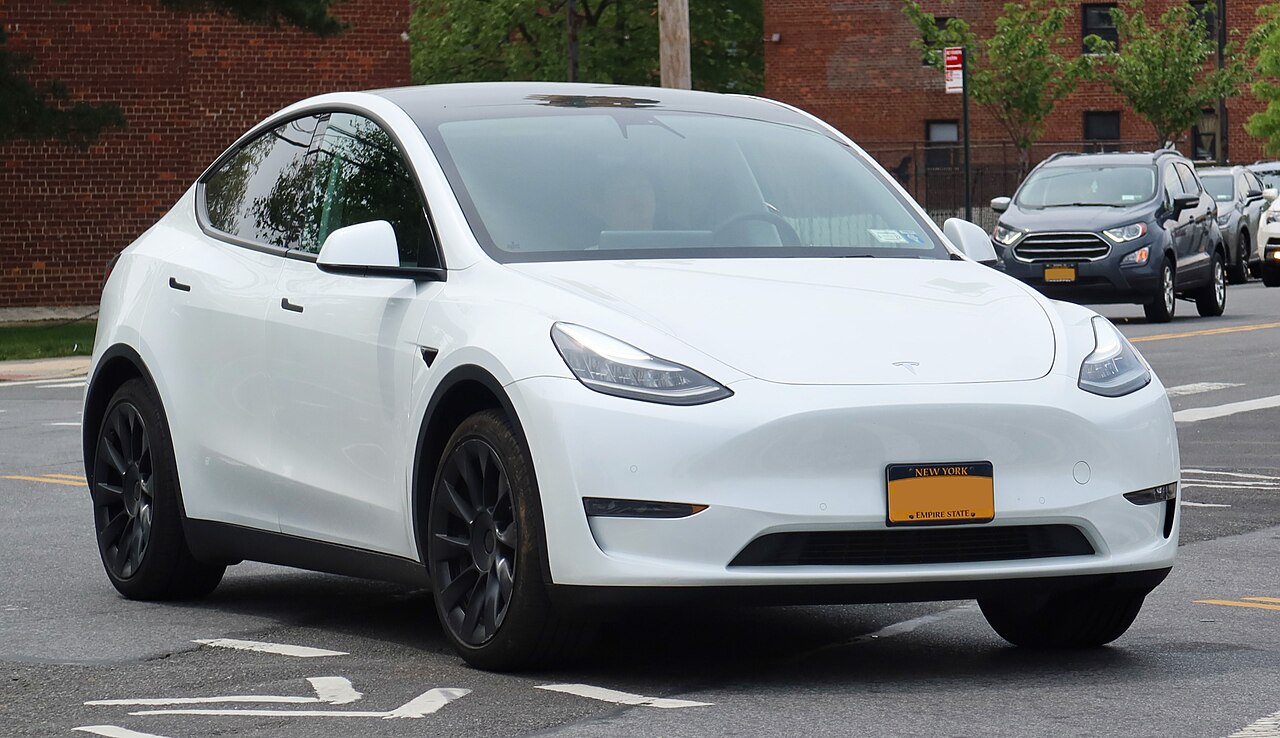
Information current as of July 2026. Prices, incentives, and resale figures change frequently and vary by trim, mileage, region, and market conditions — verify current numbers with Tesla and independent valuation sources before buying or selling. This article is general information, not financial advice. Image credit: 2020 Tesla Model Y by Kevauto, CC BY-SA 4.0, via Wikimedia Commons.

About the author: Lifei Zhou
Lifei is a Tesla owner based in Canada, writing practical, fact-checked Tesla guides for US and Canadian drivers — buying, ownership, insurance, charging, and TSLA investing, all from first-hand experience.
