
Arizona Tesla Buying Guide 2026: Phoenix Taxes, Registration & Desert Heat
Arizona Tesla Buying Guide 2026: Phoenix Taxes, Registration & Desert Heat

In one sentence
What a Tesla really costs to buy and register in Arizona in 2026: Phoenix TPT sales tax, Vehicle License Tax, utility charger rebates, used-car savings and desert-heat battery tips.
Arizona is one of the best places in America to own a Tesla: cheap-ish electricity in the shoulder seasons, endless sunshine for home solar, and a dense Supercharger network stretching from Flagstaff down to Nogales. But buying a Tesla in the Grand Canyon State in 2026 looks very different than it did two years ago. The $7,500 federal tax credit is gone, Arizona’s old ultra-low “alternative fuel” registration deal has expired for new cars, and 115°F summers put real pressure on your battery and range. This guide breaks down exactly what a Tesla costs to buy and register in Phoenix, Scottsdale, Tucson and beyond — and how to keep it happy through the desert heat.
Disclosure: some links are affiliate/referral links, meaning we may earn a commission at no extra cost to you. See our disclosure page.
📋 Contents
- Is 2026 a good time to buy a Tesla in Arizona?
- Arizona sales tax (TPT) on a Tesla: what you’ll actually pay
- Vehicle License Tax (VLT) and registration: the cost people forget
- What Arizona incentives still exist in 2026
- Buying new vs. used in Arizona
- Charging your Tesla in the Arizona heat
- Summer heat and battery care: the Arizona-specific part
- Where to buy and take delivery
- Frequently Asked Questions
- The bottom line
Is 2026 a good time to buy a Tesla in Arizona?
The honest answer: prices are the real story, not incentives. The federal Clean Vehicle Credit — the $7,500 you may have heard friends talk about — is no longer available for any Tesla purchased after September 30, 2025. According to the IRS, the New, Used and Commercial clean-vehicle credits do not apply to vehicles acquired after that date, and Tesla long ago passed the sales cap that might have extended eligibility. So in 2026, Arizona buyers pay Tesla’s sticker price with no federal rebate baked in.
The good news is that Tesla has responded with lower base prices, frequent inventory discounts on in-stock cars, and unusually cheap promotional financing — as of July 2026 there are 0% and 0.99% APR offers on most Model Y trims (terms change monthly; check tesla.com). Arizona has no gas-guzzling weather to worry about either — range anxiety is minimal on Interstate 10 or the 17. If you order a new car, using a Tesla referral link currently gets you 3 months of free Full Self-Driving (Supervised), which is a genuine perk worth a few hundred dollars if you were going to try FSD anyway.
Arizona sales tax (TPT) on a Tesla: what you’ll actually pay
Arizona doesn’t call it “sales tax” — it’s the Transaction Privilege Tax (TPT), but for a car buyer it works the same way. The state rate is 5.6%, and then your county and city add their own slices on top. For a dealer sale (which is what buying from Tesla is), the combined rate that applies depends on the jurisdiction where the sale is sourced. Across the Phoenix and Tucson metros that lands somewhere around 8%. On a $45,000 Model Y, that’s roughly $3,600 in tax — the single biggest add-on to your out-the-door price.
| Metro area | Approx. combined rate | Tax on a $45,000 Tesla |
|---|---|---|
| Phoenix (Maricopa) | ~8.6% | ~$3,870 |
| Scottsdale | ~8.05% | ~$3,620 |
| Mesa / Tempe | ~8.1–8.3% | ~$3,650–$3,735 |
| Chandler / Gilbert | ~7.8–8.0% | ~$3,510–$3,600 |
| Tucson (Pima) | ~8.7% | ~$3,915 |
Rates are illustrative and change; confirm your exact rate with the Arizona Department of Revenue before you sign.
One Arizona quirk worth knowing: the state does not charge sales tax on private-party used-car sales. If you buy a used Tesla from a private individual in Arizona (not a dealer), you owe title, registration and VLT fees — but no state or city sales tax. On a $30,000 used Model 3 that can save you well over $2,000 versus buying the same car from a dealer. More on the used route below.
Vehicle License Tax (VLT) and registration: the cost people forget
Arizona’s yearly registration bill is dominated by the Vehicle License Tax, which is based on your car’s value rather than a flat fee. For the first year, the assessed value is 60% of the base MSRP, and the rate is $2.80 per $100 of that assessed value for a new car. Each following year the assessed value drops 16.25%, so your VLT shrinks as the car ages.
| Tesla base MSRP | Year 1 assessed value (60%) | Approx. Year 1 VLT |
|---|---|---|
| $42,000 (Model 3) | $25,200 | ~$706 |
| $46,000 (Model Y) | $27,600 | ~$773 |
| $79,990 (Cybertruck Premium AWD) | $48,000 | ~$1,344 |
On top of the VLT you’ll pay a small flat state registration fee (around $8) plus an air-quality fee in the Phoenix and Tucson areas. Here’s the important 2026 update: Arizona used to offer a dramatically reduced “alternative fuel” VLT rate for EVs, but per the Arizona Department of Transportation (ADOT), that grandfathered rate only applies to vehicles registered before January 1, 2023. Any Tesla you buy new in 2026 pays the standard VLT above — there’s no special EV discount anymore.
What Arizona incentives still exist in 2026
With the federal credit and the old VLT break both gone, the remaining perks are smaller and mostly come from your electric utility. They still add up if you charge at home:
- SRP (Salt River Project): around a $250 rebate toward a qualifying Level 2 home charger, plus bill credits for joining its EV community and time-of-use plans.
- TEP (Tucson Electric Power): a residential rebate of up to $500 for installing a Level 2 or DC fast charger.
- APS (Arizona Public Service): a smart-charging program with an enrollment credit and a small monthly incentive for charging during off-peak hours, alongside EV-friendly time-of-use rates.
- Emissions testing: battery-electric Teslas are exempt from Arizona’s periodic emissions tests required of gas cars in the Phoenix and Tucson areas — a modest but recurring convenience.
One perk that has ended: the special single-occupant HOV-lane access for alternative-fuel (blue “cloud” plate) vehicles expired on September 20, 2025, so don’t count on solo carpool-lane driving as a Tesla benefit anymore. Always confirm current program details directly with your utility, since rebate budgets and terms change through the year.
Buying new vs. used in Arizona
Because Arizona skips sales tax on private-party sales, the math between new and used tilts further toward used than in most states. A three-year-old Model 3 bought privately for $28,000 could cost you thousands less than the same car from a dealer once you factor in the ~8% TPT you’d avoid. The trade-off is the usual used-car risk: you inherit whatever’s left of the warranty, and you should always check battery health and Supercharging history first.
If you go used, read our full used Tesla buying guide for what to inspect, and consider budgeting for a few essentials the previous owner may have taken with them — a spare charging adapter, floor mats, and a good folding windshield sunshade, which is close to mandatory in Phoenix. If you’re buying new instead, ordering through a Tesla referral link to grab the free FSD trial is the easiest money you’ll save.
Charging your Tesla in the Arizona heat
Arizona is a home-charging paradise: garages are common, electricity is reasonably priced off-peak, and many households already have 240V service. Installing a Tesla Wall Connector or a NEMA 14-50 outlet typically runs $500–$1,500 depending on your panel and garage layout — and remember that TEP and SRP will refund part of it. Our home charger installation guide walks through the wiring, permits and costs step by step.
For road trips, the Supercharger network across Arizona is dense along I-10, I-17 and I-40, with fast V3 and V4 stalls in Phoenix, Scottsdale, Tucson, Flagstaff and the outskirts headed toward California and New Mexico. Pricing fluctuates by time of day; our Supercharger cost breakdown explains peak vs. off-peak rates and how the membership plan pays off if you road-trip often. To keep home charging cheap, shift as much of it as possible into your utility’s off-peak overnight window using the Tesla app’s scheduled charging.
Summer heat and battery care: the Arizona-specific part
Nothing tests an EV like a Phoenix July. Sustained 110–118°F days affect both your range and your battery, so a few habits matter more here than almost anywhere in North America:
- Expect a summer range dip. Blasting the A/C and running Cabin Overheat Protection can shave real miles off your rated range. It’s normal — plan road trips with a little extra buffer, exactly as our Tesla summer road-trip guide lays out.
- Park in shade or a garage when you can. Heat is the enemy of long-term battery health. Covered parking plus a BASENOR folding sunshade keeps the cabin (and the pack) cooler.
- Precondition before you drive. Cool the cabin from the app while still plugged in, so the energy comes from the wall instead of your battery.
- Keep the pack in the 20–80% band for daily use. Avoid leaving the car at a very high state of charge baking in the sun for days.
- Use Cabin Overheat Protection to keep interior temperatures from cooking your electronics, phone and pets on errands.
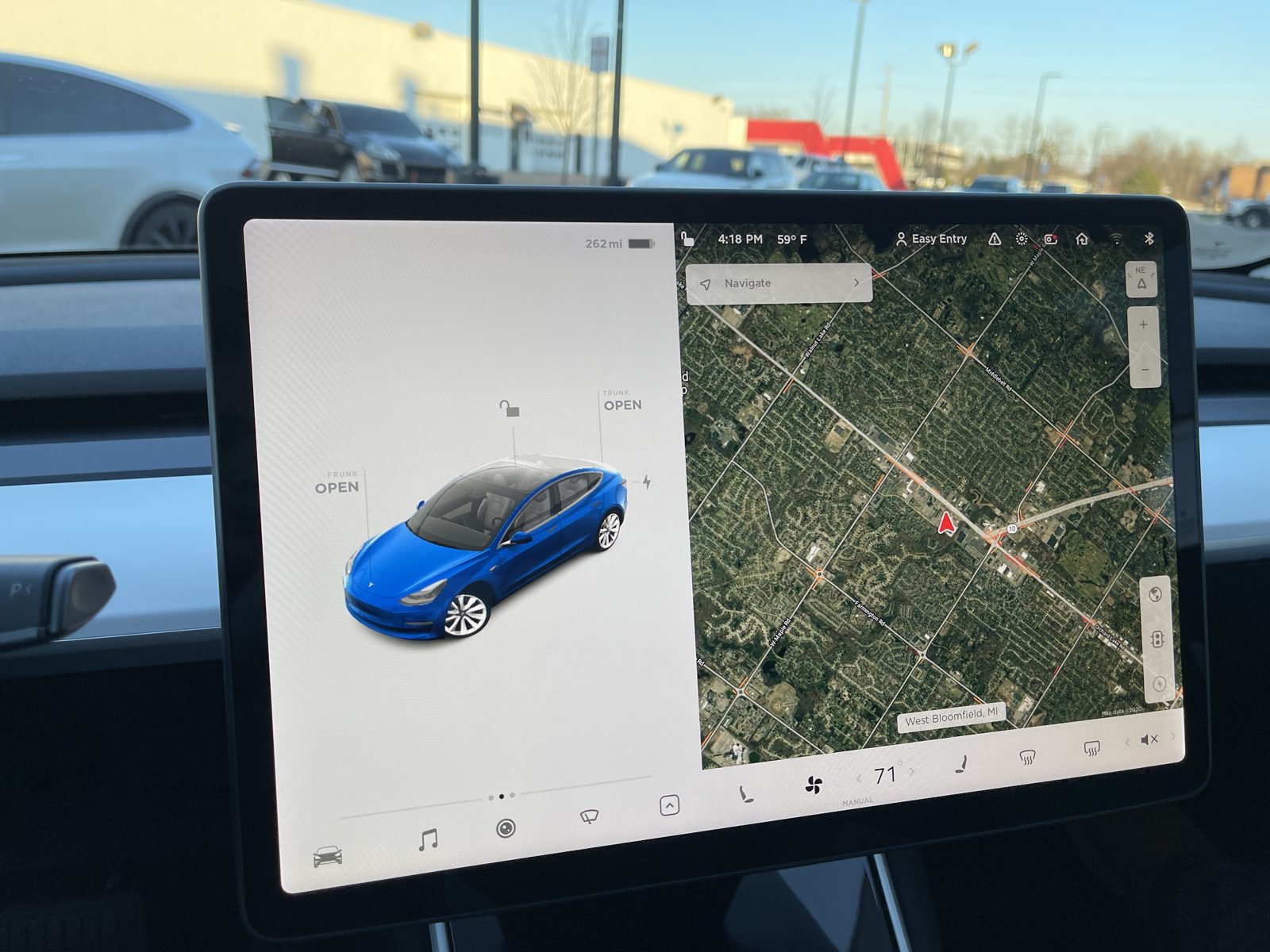
- Tame the touchscreen glare. Desert sun turns the center screen into a mirror of fingerprints; a Spigen matte tempered-glass screen protector cuts the glare and keeps smudges off the one interface you use for everything.
The U.S. Department of Energy notes that extreme ambient temperatures reduce EV efficiency in both directions — heat included — so treat summer range figures as best-case, not guaranteed.
Where to buy and take delivery
Tesla operates sales and delivery locations in the Phoenix metro (including Scottsdale and Tempe) and in Tucson, plus service centers and mobile service across the state. Unlike some states, Arizona allows Tesla’s direct-sales model, so you can order online and pick up locally without a franchise dealer in the middle. If you’re weighing which model fits the desert lifestyle, our US Tesla guides compare trims, range and pricing across the lineup. When your delivery day arrives, don’t skip a careful walk-around — heat and long transport can leave paint and panel-gap issues you’ll want documented before you sign.
Frequently Asked Questions
Do I still get the $7,500 federal tax credit on a Tesla in Arizona?
No. The federal Clean Vehicle Credit ended for vehicles acquired after September 30, 2025, and Tesla is not eligible for any extension in 2026. Arizona buyers pay full price with no federal rebate.
Does Arizona have its own EV purchase rebate?
No. Arizona does not offer a state cash rebate for buying an EV. The incentives that remain are mostly utility charger rebates (SRP, TEP, APS) and the emissions-test exemption for battery-electric vehicles.
How much is registration for a Tesla in Arizona?
It’s driven by the Vehicle License Tax, calculated at $2.80 per $100 of 60% of your car’s MSRP in year one. Expect roughly $700–$800 in year-one VLT for a Model 3 or Model Y, plus small flat registration and air-quality fees. It decreases each year as the car depreciates.
Is it cheaper to buy a used Tesla from a private seller in Arizona?
Often, yes. Arizona charges no state or city sales tax on private-party vehicle sales, so buying privately can save you roughly 8% of the purchase price versus a dealer. You still pay title, registration and VLT fees.
Can Teslas use the HOV lane solo in Arizona in 2026?
No longer. The alternative-fuel plate that allowed single-occupant HOV access expired on September 20, 2025. Teslas now follow the same carpool-lane rules as any other vehicle.
How much range will I lose in the Arizona summer?
Heavy A/C use and extreme heat can reduce real-world range noticeably compared with the rated figure. Preconditioning while plugged in, parking in shade and shifting charging to off-peak hours all help you manage it.
The bottom line
- No $7,500 federal credit and no state EV rebate in 2026 — budget for Tesla’s full price plus ~8% Arizona TPT.
- Vehicle License Tax runs roughly $700–$800 in year one for a Model 3 or Model Y and falls each year; the old EV VLT discount is gone for new cars.
- Real savings hide in the details: no sales tax on private-party used purchases, plus utility charger rebates from SRP, TEP and APS.
- Home charging is cheap and easy; the Supercharger network is dense on I-10, I-17 and I-40.
- Manage the desert heat — precondition on shore power, park in shade, and expect a summer range dip.
- Ordering new? A referral link adds 3 months of free FSD (Supervised).
Information is current as of July 2026 and may change; tax rates, VLT formulas and utility rebate programs vary by jurisdiction and are updated throughout the year — always confirm with the Arizona Department of Revenue, ADOT and your utility before purchasing. This article is for general information only and is not tax or financial advice. Some links are affiliate/referral links; see our disclosure page. Image credit: Tesla Model 3 touchscreen photo by SirAsdof, licensed under CC BY-SA 4.0, via Wikimedia Commons.

About the author: Lifei Zhou
Model Y owner since 2022Ontario STO registered apprentice · 310SWorks on Porsche, Mercedes, BMW, Audi weeklyHundreds of readers referred (est.)
Lifei is a Tesla owner based in Canada, writing practical, fact-checked Tesla guides for US and Canadian drivers — buying, ownership, insurance, charging, and TSLA investing, all from first-hand experience.