
Electric vehicles and towing used to feel like a contradiction — big batteries, boxy trailers, and a range gauge that empties in a hurry. But in 2026, more Tesla owners than ever are hitching up boat trailers, teardrop campers, utility haulers and dirt-bike carriers. The good news: most Teslas can tow, and the newest ones tow surprisingly well. The catch: which model you own, how you set it up, and how fast you drive make an enormous difference to how far you’ll get between charges. This guide walks through exactly which Teslas are rated to tow, how much they can pull, what the tow package costs, how much range you’ll realistically lose, and how to do it safely across the US and Canada.
Disclosure: some links are affiliate/referral links. If you buy or order through them we may earn a commission at no extra cost to you. See our disclosure page.
📋 Contents
- Which Teslas Can Tow (and Which Can’t)
- Tesla Towing Capacity by Model (2026)
- What the Tow Package Includes and What It Costs
- How Much Range You Lose When Towing
- How to Actually Tow With a Tesla: Trailer Mode and Setup
- Accessories and Gear That Make Towing Easier
- Trailers, Boats and Campers: What’s Realistic
- Frequently Asked Questions
- The Bottom Line
Which Teslas Can Tow (and Which Can’t)
Not every Tesla is built to pull a trailer. Towing capability comes down to whether a factory-approved tow package exists for your model — you should never bolt an aftermarket hitch onto an unrated car and load it up, because the vehicle’s structure, cooling and stability control weren’t validated for it.
Here’s where each model stands in 2026 for North America:
- Model Y — Yes. The most popular tow-capable Tesla. On the current 2026 lineup the factory tow package is offered on the Premium trims and is rated at 2,000 lb; earlier pre-refresh Model Ys carried a 3,500 lb rating.
- Model X — Yes, but it’s now a used-market choice: Tesla discontinued the Model S and Model X in early 2026 and inventory is essentially gone. The X was the heavy-lifter of the car lineup, rated to 5,000 lb.
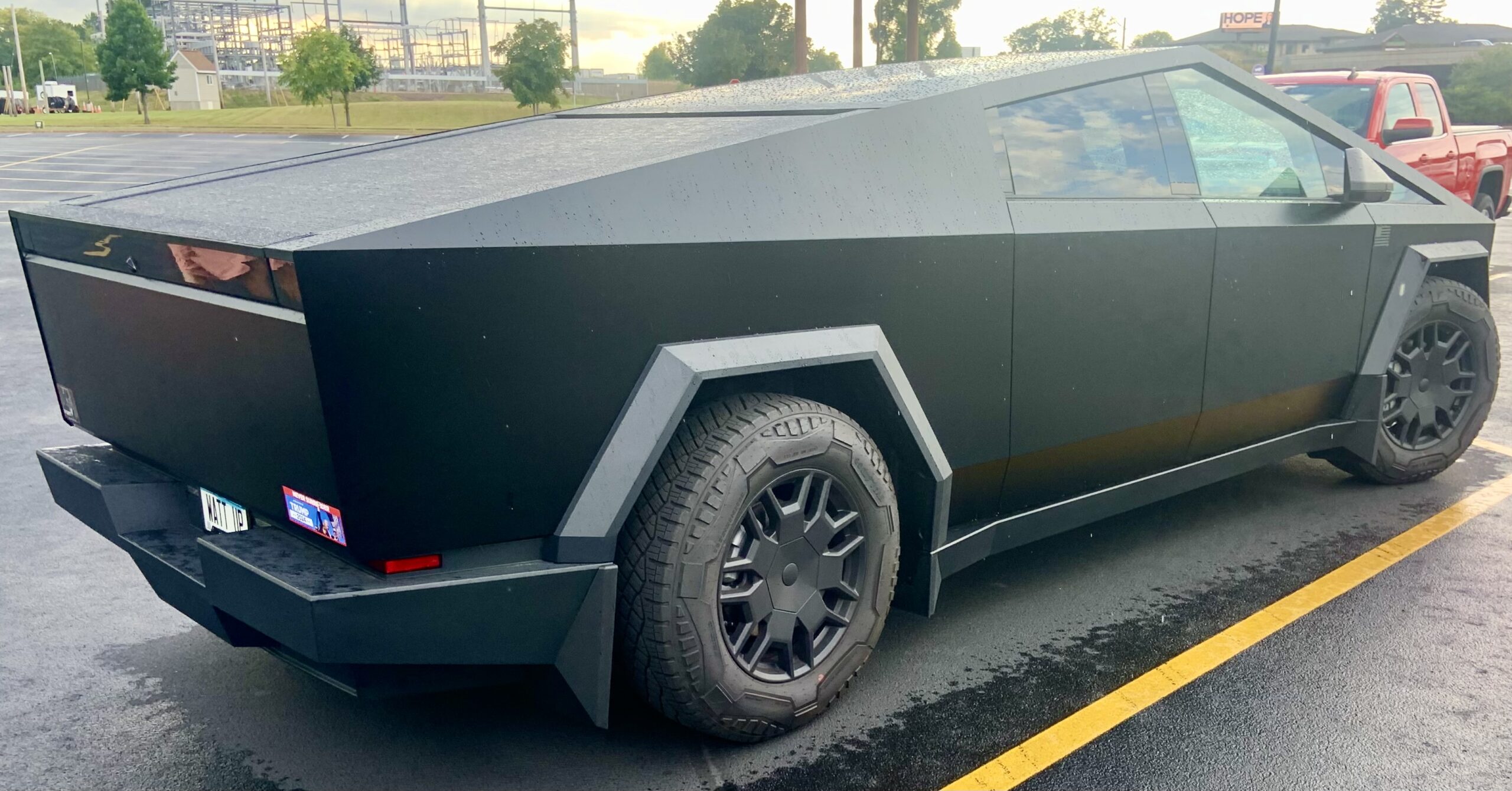
- Cybertruck — Yes, and by a wide margin. This is a full-size truck with truck-grade towing numbers.
- Model 3 — No official tow rating in the US or Canada. Some overseas markets (Europe, Australia) approve a hitch, but North American Model 3 is not rated to tow.
- Model S — No factory tow package or rating in North America.
If towing matters to you and you’re still choosing a car, that narrows the field to the Model Y, Model X or Cybertruck. If you’re weighing a new order, ordering through a Tesla referral link currently adds 3 months of free Full Self-Driving (Supervised) — worth grabbing before you place the order.
Tesla Towing Capacity by Model (2026)
Maximum towing capacity assumes the factory tow package is installed and the vehicle is otherwise within its weight limits. Note that wheel size can change the rating — larger wheels on the Model X, for example, lower the maximum.
| Model | Max Towing Capacity | Hitch / Connector | Notes |
|---|---|---|---|
| Model Y | 2,000 lb (907 kg) current / 3,500 lb (1,588 kg) legacy | 2″ receiver, 7-pin | 2026 tow package offered on Premium trims; pre-refresh cars were rated 3,500 lb |
| Model X (20″ wheels) | 5,000 lb (2,268 kg) | 2″ receiver, 7-pin | Drops to 3,500 lb with 22″ wheels; discontinued in 2026 — used market only |
| Cybertruck | Up to 11,000 lb (4,990 kg) | 2″ receiver, integrated brake controller | AWD (dual-motor) rated 7,500 lb; tri-motor Cyberbeast 11,000 lb |
| Model 3 | Not rated (North America) | — | No US/Canada tow package offered |
| Model S | Not rated | — | No factory tow option |
Two numbers matter beyond the headline capacity: tongue weight (the downward load on the hitch ball) and Gross Combined Weight Rating (the total of the vehicle plus trailer). On the Model Y, hitch-mounted accessory carriers are capped at roughly 160 lb of vertical load and trailer tongue-weight limits are similarly modest, so a heavy trailer nose can put you over the limit even if the trailer’s total weight is legal. Always check your owner’s manual for the exact figures for your build. For a full breakdown of the trucks and SUVs themselves, see our Cybertruck buying guide and Model Y USA guide.
What the Tow Package Includes and What It Costs
On the Model Y, towing isn’t standard — it’s a factory option you add at order time (or, in some cases, retrofit), and on the current lineup it’s offered on the Premium trims. Tesla’s Model Y Tow Package runs about US$1,300 and includes a high-strength steel tow bar with a 2-inch hitch receiver and the North American 7-pin standard connector. It also unlocks the software side: Trailer Mode, trailer-aware range estimates, and adjustments to stability control and parking sensors so the car knows something is hanging off the back.
A few things to know before you check the box:
- Order it up front if you can. Factory installation is cleaner and cheaper than retrofitting later, and it guarantees the software features come enabled.
- The Cybertruck comes tow-ready. Its receiver and integrated trailer brake controller are built in, no separate package required.
- Aftermarket “invisible” hitches exist for the Model 3 and Model Y (brands like Torklift EcoHitch), but on the Model 3 these are typically rated only for bike racks and light cargo carriers — not for pulling a trailer, since the car has no towing rating.
If you’re budgeting a full purchase, the tow package is one line item among several optional extras — and there’s a Canada-specific trap: adding the $1,300 tow package to a Model Y RWD pushes the price past the federal iZEV rebate’s $50,000 cap, costing you the entire $5,000 rebate. Our Model Y Canada guide breaks down trims, taxes and add-ons for Canadian buyers.
How Much Range You Lose When Towing
This is the single biggest surprise for new EV towers: your range doesn’t drop a little, it drops a lot. Expect to lose roughly 30–50% of your normal range with a modest trailer, and even more with a tall, boxy load. The reason is aerodynamics as much as weight — at 65–75 mph a big camper acts like a parachute, and drag, not mass, becomes the dominant range killer on flat ground.
| Scenario | Typical Range vs. Normal | What It Feels Like |
|---|---|---|
| Small utility / bike trailer | ~25–35% loss | Manageable; plan one extra stop on a road trip |
| Mid-size boat / teardrop camper | ~35–50% loss | Charge stops roughly every 120–150 mi |
| Large travel trailer (tall/boxy) | ~50–60%+ loss | Cybertruck near max load: ~110–140 mi real-world |
Two practical consequences. First, slow down — dropping from 75 to 60 mph can claw back a meaningful chunk of range. Second, plan for pull-through charging: many Supercharger stalls are tight, and unhitching a trailer at every stop is miserable. Newer and larger Supercharger sites increasingly offer trailer-friendly access, but check ahead. For the charging-cost side of the equation, see our Supercharger cost guide, and if you tow in the cold, layer that against the losses in our winter driving guide — winter plus towing can stack into a 60%+ hit.
How to Actually Tow With a Tesla: Trailer Mode and Setup
Once you’re hitched, the car does a lot of the work — if you set it up right. Here’s the routine most experienced Tesla towers follow:
- Turn on Trailer Mode. On tow-equipped cars it activates automatically when a trailer’s lights are connected, or you can enable it manually. It recalibrates the parking sensors and stability systems and disables features that don’t play nice with a trailer. Tesla warns against exiting Trailer Mode while actually towing, as it can affect stability.
- Set ride height to Low (on air-suspension models) so the hitch sits level with the trailer and the whole rig stays planted.
- Configure trailer brakes. On the Cybertruck, the integrated trailer brake controller lives under Controls > Towing & Hauling, where you set the brake gain. Tesla recommends keeping trailer brakes enabled — without them, stopping distances grow significantly.
- Expect different regen. The car reduces regenerative braking while towing to keep the trailer stable, so you’ll lean on the friction brakes more than usual. Leave extra following distance.
- Make wider turns. Sounds obvious, but the trailer tracks inside your line — give curbs, signs and pump islands a wide berth.
For the mechanics of hitching, chains, and safe loading generally, the NHTSA trailer safety resources are a solid, brand-agnostic reference, and Tesla’s own Towing a Trailer section spells out the model-specific limits.
Accessories and Gear That Make Towing Easier
A few inexpensive add-ons make the difference between a stressful tow and an easy one. None of these are Tesla-exclusive, so you can shop them broadly:
- Quality hitch adapter and ball mount sized to your trailer’s coupler and drop height.
- 7-pin to 4-pin/5-pin adapters if your trailer’s wiring doesn’t match the Tesla’s 7-pin connector.
- A locking hitch pin — cheap insurance against theft at trailheads and campgrounds.
- Weight-distribution or anti-sway hardware for taller trailers, which tames the parachute effect and improves stability at speed.
- A tire pressure gauge — under-inflated trailer tires are a leading cause of blowouts, and towing usually calls for topping up the car’s pressures too. I keep an AstroAI digital tire gauge in the console and check both car and trailer before every haul.
You can find most of these on Amazon US (hitch and ball mounts) and Amazon US (7-pin wiring adapters); Canadian owners can shop the same categories on Amazon CA. Buy to your trailer’s actual specs, not just to the Tesla’s maximum — matching drop height and tongue weight is what keeps the rig level.
Trailers, Boats and Campers: What’s Realistic
Matching a trailer to your Tesla is about staying comfortably under the limits, not flirting with them. A useful rule of thumb: plan to load to about 80% of your rated capacity to leave margin for gear, water and passengers.
- Model Y (2,000 lb current / 3,500 lb legacy): small utility trailers, jet-ski and single-bike/motorcycle trailers on current cars; legacy 3,500 lb cars can also handle lightweight teardrop campers and small aluminum fishing boats. Not a fit for full travel trailers.
- Model X (5,000 lb, discontinued — used market): mid-size boats, small-to-mid travel trailers and pop-ups, car-hauler duty for a light vehicle over short distances.
- Cybertruck (up to 11,000 lb): larger travel trailers, bigger boats, equipment and car trailers — genuine truck territory, just with truck-EV range math.
The honest takeaway: a Tesla is a great tow vehicle for short-to-medium hauls and weekend trips. For a 600-mile drag across the prairies with a big fifth-wheel, the frequent charge stops will test your patience. Know your route, know your charging, and size the trailer conservatively. If you’re picking a model largely for towing, our US Tesla guides hub compares the full lineup, and remember that ordering through a Tesla referral link throws in 3 months of free FSD (Supervised) on a new car.
Frequently Asked Questions
Can a Tesla Model 3 tow a trailer?
Not in the US or Canada. The Model 3 has no factory tow package and no North American towing rating. Aftermarket “invisible” hitches exist, but they’re rated for bike racks and light cargo carriers only — do not use them to pull a trailer.
How much range does a Tesla lose when towing?
Typically 30–50% with a modest trailer, and 60% or more with a large, tall one. Aerodynamic drag matters as much as weight, so a boxy camper hurts more than a low, heavy one. Slowing down from 75 to 60 mph recovers a meaningful amount of range.
Does the Model Y tow package cost extra?
Yes. It’s an optional factory add-on at roughly US$1,300 — offered on Premium trims in the current lineup and rated to 2,000 lb — including the steel tow bar, 2-inch receiver, 7-pin connector, and the software features like Trailer Mode. Order it with the car for the cleanest, cheapest installation. In Canada, remember it pushes a Model Y RWD past the $50,000 iZEV rebate cap.
What’s the highest-towing Tesla?
The Cybertruck — the tri-motor Cyberbeast is rated to 11,000 lb, and the dual-motor AWD to 7,500 lb. The now-discontinued Model X follows at 5,000 lb (with 20-inch wheels; used market only), and the current Model Y tow package is rated 2,000 lb (3,500 lb on legacy cars).
Do I need a trailer brake controller?
For heavier trailers with electric brakes, yes. The Cybertruck has one built in; on other trailers you’ll rely on the trailer’s own braking system properly connected through the 7-pin. Tesla recommends always keeping trailer brakes enabled to avoid longer stopping distances.
Can I use Superchargers while towing?
Yes, but stall layout can be tight. Many stalls require you to back in, which is awkward with a trailer, and you may need to unhitch. Newer, larger Supercharger sites increasingly offer pull-through or trailer-friendly access — plan your stops ahead of time.
The Bottom Line
- Tow-capable: Model Y (2,000 lb current / 3,500 lb legacy), Model X (5,000 lb, discontinued — used market), Cybertruck (7,500 lb AWD / 11,000 lb Cyberbeast). Model 3 and Model S are not rated to tow in North America.
- The tow package (~US$1,300 on Model Y Premium trims) adds the hitch, 7-pin connector and the all-important Trailer Mode software.
- Range drops hard — plan for a 30–50%+ loss, drive slower, and map trailer-friendly charging in advance.
- Set up right: Trailer Mode on, ride height low, trailer brakes enabled, wider turns, extra following distance.
- Size conservatively — load to about 80% of capacity and match the trailer to your model, not just to the maximum number.
Information current as of July 2026 and based on Tesla’s published North American specifications; towing capacities, pricing and features vary by model year, wheel size and market, and can change without notice — always confirm the exact figures in your vehicle’s owner’s manual before towing. This article is general information, not professional or safety advice. Some links are affiliate or referral links; see our disclosure page. Image credit: Cybertruck photo by Wikideas1, released under CC0 1.0 (Public Domain), via Wikimedia Commons.

About the author: Lifei
Lifei is a Tesla owner based in Canada, writing practical, fact-checked Tesla guides for US and Canadian drivers — buying, ownership, insurance, charging, and TSLA investing, all from first-hand experience.


Leave A Comment