
If you have been waiting for the “perfect” moment to buy a Tesla in the Seattle area, 2026 is a strange time to shop. Two of the biggest reasons Washington was an EV-buyer’s paradise — the state sales-tax exemption and the $7,500 federal credit — both disappeared in the second half of 2025. That does not mean a Tesla is a bad buy here. Washington still has some of the cheapest, cleanest electricity in North America, no state income tax, and a dense Supercharger network across the I-5 corridor. But the math has changed, and dealerships and referral posts online are still quoting old numbers. This guide walks through the real out-the-door cost of a Tesla in Seattle and across Washington State in 2026, what incentives actually survived, and how to charge for pennies once the car is in your driveway.
Disclosure: some links are affiliate/referral links. If you order a Tesla or buy an accessory through them, we may earn a commission or referral perk at no extra cost to you. See our disclosure page.
📋 Contents
- The big change: Washington’s EV tax break is gone
- What a Tesla actually costs in Seattle in 2026
- Which incentives actually survived into 2026
- Charging in Washington: the cheapest part of ownership
- Where to buy, deliver, and service near Seattle
- Model 3 vs Model Y: which fits the Pacific Northwest?
- How to actually save money now that the discounts are gone
- Frequently Asked Questions
- The bottom line for Seattle-area buyers
The big change: Washington’s EV tax break is gone
For years, Washington waived state and local sales tax on a chunk of an EV’s price, which could save buyers well over $3,000 on a Model 3 or Model Y. That program applied to vehicles delivered through July 31, 2025, and it was not renewed for battery-electric cars. As of 2026, a Tesla purchased in Washington is taxed exactly like a gas car.
On top of that, the federal Clean Vehicle Credit — the up-to-$7,500 point-of-sale discount — ended for vehicles acquired after September 30, 2025 under the 2025 tax law. Combined, a Seattle buyer who missed both deadlines is now paying roughly $9,000–$11,000 more than an identical buyer would have in early 2025. That is the single most important fact to internalize before you walk into a Tesla store: the era of stacked EV discounts in Washington is over.
| Incentive | Before | Washington in 2026 |
|---|---|---|
| State sales-tax exemption on EVs | Up to ~$3,000+ saved | Expired (ended July 31, 2025) |
| Federal $7,500 new-EV credit | $7,500 off at delivery | Expired (ended Sept 30, 2025) |
| Federal used-EV credit | Up to $4,000 | Expired (ended Sept 30, 2025) |
| Home charger tax credit (30C) | 30% up to $1,000 | Still available through June 30, 2026 |
| Utility charger rebates | Varies | Still available (Seattle City Light, PSE) |
What a Tesla actually costs in Seattle in 2026
Tesla’s 2026 US lineup starts lower than most people expect, thanks to the newer “Standard” and RWD trims. Here are the base MSRPs before options, and before the fees and taxes that Washington adds on top.
| Model (2026) | Starting MSRP | With destination & order fees | EPA range (approx.) |
|---|---|---|---|
| Model 3 RWD | $36,990 | ~$38,630 | ~360 mi |
| Model 3 Premium (Long Range) | ~$44,130 | ~$45,800 | ~360–390 mi |
| Model Y RWD | $39,990 | ~$41,630 | ~350 mi |
| Model Y Premium (Long Range) | ~$47,630 | ~$49,300 | ~320–360 mi |
| Cybertruck (RWD/AWD) | from ~$62,000 | varies | ~325–350 mi |
Now add Washington’s costs. In Seattle, the combined sales-tax rate applied to a vehicle purchase is roughly 10.3%–10.5% (the exact figure depends on your delivery address; the statewide motor-vehicle add-on also rose from 0.3% to 0.5% on January 1, 2026). Here is a realistic out-the-door estimate for a Model Y RWD delivered to a Seattle ZIP code:
| Line item | Estimated cost |
|---|---|
| Model Y RWD + destination/order fees | ~$41,630 |
| Sales & use tax (~10.4% in Seattle) | ~$4,330 |
| Annual EV registration fee ($150 + $75 electrification) | $225 |
| Standard tab, title & filing fees | ~$75–$150 |
| Approx. total out-the-door | ~$46,300 |
One more line to watch for high-end buyers: starting January 1, 2026, Washington adds an 8% surtax on the portion of a non-commercial vehicle’s price above $100,000 (rising to a $102,000 threshold on July 1, 2026). A loaded Cybertruck or a Model S/X can brush against that ceiling, so price it carefully. If you are cross-shopping the flagship sedans and SUVs, our Model S & Model X guide covers what is still orderable.
Which incentives actually survived into 2026
The purchase discounts are gone, but three real savings levers remain — and most Seattle-area buyers qualify for at least one.
1. Federal home-charger tax credit (Section 30C)
You can still claim 30% of the cost of a home EV charger and its installation, up to $1,000, under the federal Alternative Fuel Refueling Property Credit — but only if the equipment is placed in service by June 30, 2026. If you are installing a Tesla Wall Connector this year, do it before that deadline and keep every receipt. Our home charger installation guide breaks down realistic wiring costs.
2. Utility rebates (Seattle City Light & PSE)
Seattle City Light customers can get a residential Level 2 charger rebate covering up to 50% of equipment and installation, capped at $1,000. In the suburbs, Puget Sound Energy offers a $500 rebate for a qualifying Level 2 home charger. These stack with the federal 30C credit, so a well-timed install can knock $1,500–$2,000 off your charging setup.
3. Auto-loan interest deduction
The 2025 tax law created a temporary deduction of up to $10,000 per year in interest on qualifying new-vehicle loans (2025 through 2028), limited to vehicles with final assembly in the United States. Tesla’s Model 3, Model Y, and Cybertruck are all built in the US, so a financed Tesla can qualify — a genuine, if modest, offset to losing the $7,500 credit. Confirm your income eligibility with a tax professional.
Charging in Washington: the cheapest part of ownership
Here is the good news that never expires. Washington’s grid is dominated by hydropower, and residential electricity is among the cheapest in the country. Seattle City Light residential rates typically land around $0.11–$0.13 per kWh, well below the US average. Charging a Model Y from 20% to 80% at home — roughly 45 kWh — costs about $5–$6. That is the equivalent of paying well under $1 a gallon.
For road trips and top-ups, the Seattle metro has a dense Supercharger network, including sites in Ballard, Lynnwood (Fred Meyer), Bellevue, Tukwila, and Renton, plus a chain running the length of I-5 toward Portland and up to the Canadian border. Supercharging costs more than home charging — usually $0.30–$0.48 per kWh depending on time of day — but it is still cheaper per mile than gasoline. For a full breakdown, see our Supercharger cost guide and our cost-to-charge-a-Tesla comparison.
Do the math on your own commute at fueleconomy.gov, which lets you compare EV energy costs against gas cars in your area.
Where to buy, deliver, and service near Seattle
Washington is a direct-sale-friendly state, so you order a Tesla online and choose a pickup point — there is no franchised dealer haggling. The main touchpoints in the metro:
- Bellevue Square — retail showroom inside the mall, good for test-driving before you order.
- Lynnwood — combined store, delivery, and service center north of Seattle.
- Seattle (SoDo) — service center south of downtown.
- Bellevue & Renton — additional service coverage on the Eastside and south end.
Delivery-day tips matter more now that you are paying full price: inspect panel gaps, paint, and tire condition before you accept the car, and never sign until you have walked around it. Use our delivery inspection checklist so nothing slips past you. If you are choosing between the two volume sellers, our Model Y USA guide and Model 3 USA guide lay out trims and options in detail. For more regional guides, browse our US Tesla section.
Model 3 vs Model Y: which fits the Pacific Northwest?
For most Seattle-area households the decision comes down to two cars. The Model 3 is the cheapest way into a Tesla, more efficient, and a better fit for solo commuters and couples who mostly drive the city and the I-5/I-405 corridor. The Model Y costs a few thousand more but adds a hatchback, a higher seating position, and the cargo room that matters for ski trips to Snoqualmie, camping on the Olympic Peninsula, or a Costco run in the rain. In the wet, dark PNW winter, many buyers also value the optional dual-motor all-wheel drive for traction on hills and mountain passes. If you regularly haul gear or plan road trips to Whistler or Mount Rainier, the Model Y’s extra utility usually justifies the premium; if not, the Model 3 keeps more money in your pocket and sips less electricity.
How to actually save money now that the discounts are gone
With incentives thinner, the savings come from smarter buying rather than government checks:
- Order through a referral link. Ordering a new Model 3, Model Y, or Cybertruck through a Tesla referral link currently gets you 3 months of free Full Self-Driving (Supervised) — a perk worth roughly $297 that costs you nothing. It is the closest thing to a free discount still on the table.
- Shop existing inventory and demo cars. Tesla often prices in-stock and demo vehicles below custom orders, and you skip the wait.
- Buy used. A lightly used Model 3 or Model Y avoids the steepest depreciation and the full tax hit on a new car’s higher price. See our used Tesla buying guide.
- Time your home charger install. Stack the 30C federal credit with your utility rebate before the June 30, 2026 federal deadline.
- Skip pricey add-ons. Buy accessories like all-weather floor mats and a mobile charging adapter aftermarket instead of from Tesla, where they carry a markup.
You can confirm current federal rules on the IRS clean vehicle page, and verify Washington’s motor-vehicle tax details with the Washington Department of Revenue.
Frequently Asked Questions
Is there still an EV tax credit in Washington in 2026?
No purchase incentive remains for battery-electric cars. Washington’s state sales-tax exemption for EVs ended July 31, 2025, and the federal $7,500 credit ended September 30, 2025. What survives is the federal home-charger tax credit (through June 30, 2026), utility charger rebates from Seattle City Light and PSE, and the new-vehicle loan-interest deduction.
How much sales tax will I pay on a Tesla in Seattle?
Expect roughly 10.3%–10.5% combined on the full purchase price, depending on your exact delivery address. On a ~$41,600 Model Y RWD that is about $4,300 in tax. The statewide motor-vehicle portion rose slightly on January 1, 2026.
What is the annual EV registration fee in Washington?
All-electric vehicles pay a $225 annual fee — a $150 EV fee plus a $75 transportation-electrification fee — on top of standard tab charges. Beginning July 1, 2026, these EV fees increase by a 2% inflation adjustment each year.
Is it cheaper to charge a Tesla at home in Seattle than to buy gas?
Yes, dramatically. Seattle City Light residential power runs about $0.11–$0.13 per kWh, so a 20–80% home charge on a Model Y costs roughly $5–$6 — the equivalent of well under $1 per gallon of gasoline.
Does a Tesla qualify for the new auto-loan interest deduction?
It can. The 2025 law allows a deduction of up to $10,000 per year in interest on qualifying new-vehicle loans through 2028, limited to vehicles assembled in the US. Tesla builds the Model 3, Model Y, and Cybertruck domestically, so a financed example may qualify if you meet the income rules. Confirm with a tax professional.
Where do I pick up a Tesla near Seattle?
You order online and choose a delivery point. The main metro locations are the Bellevue Square showroom, the Lynnwood store and service center, and the Seattle SoDo service center, with additional Eastside and south-end service coverage.
The bottom line for Seattle-area buyers
- Washington’s EV sales-tax exemption and the federal $7,500 credit are both gone — budget for full price plus ~10.4% Seattle sales tax.
- A Model Y RWD lands around $46,000 out-the-door in Seattle once tax and fees are added.
- Real savings that remain: the 30C home-charger credit (through June 30, 2026), utility rebates, the loan-interest deduction, and a referral link for 3 months of free FSD.
- Charging is Washington’s superpower — cheap hydropower makes home charging cost pennies per mile.
- Order online, inspect carefully on delivery day, and consider inventory or used cars to soften the loss of incentives.
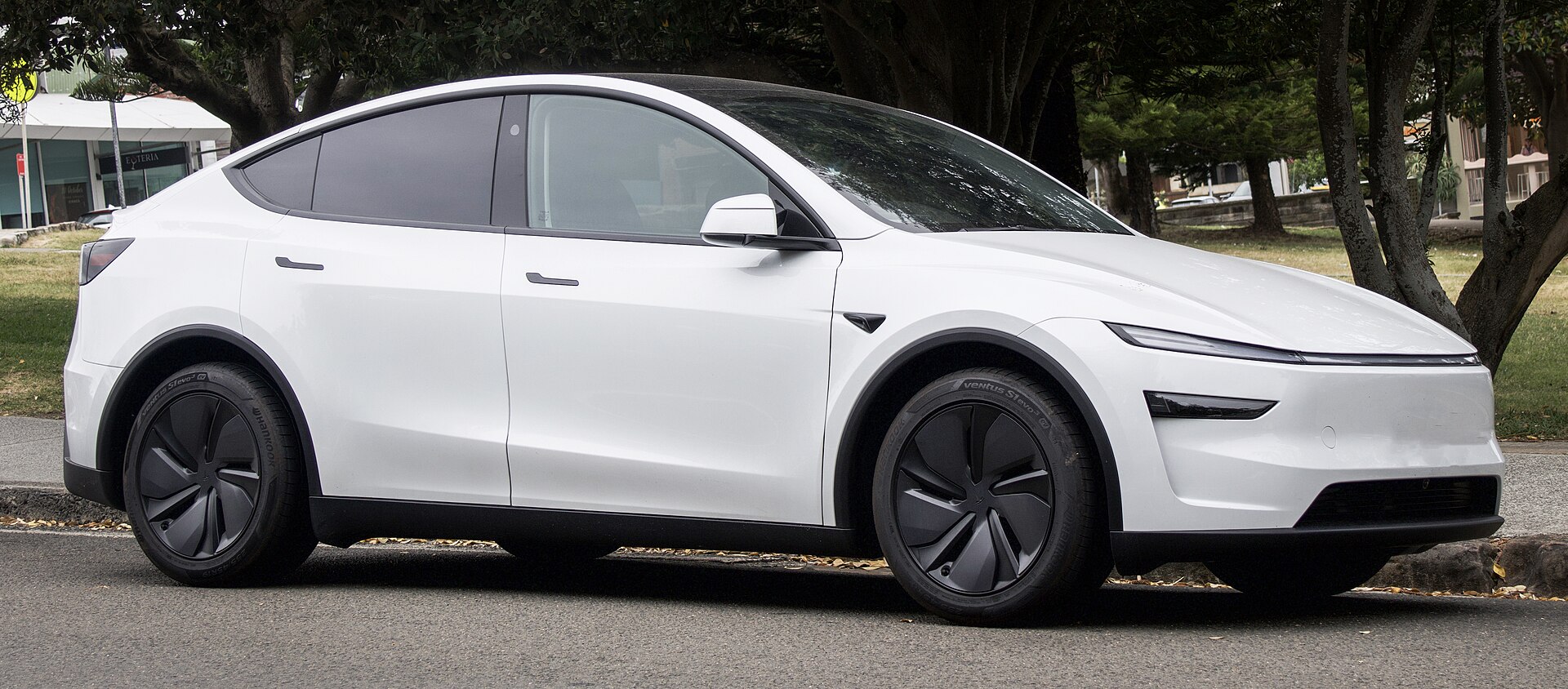
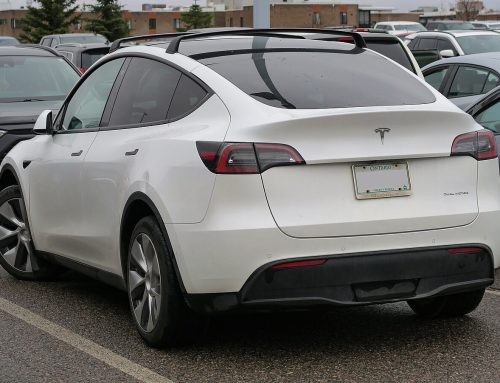
Information current as of July 2026. Prices, tax rates, and incentive deadlines change frequently — always confirm figures with Tesla, the Washington Department of Revenue, the IRS, and your local utility before purchase. This article is for general information only and is not tax or financial advice. Some links are affiliate or referral links; see our disclosure page. Image credit: “2025 Tesla Model Y RWD front” by User:LuvsMG481, licensed under CC BY-SA 4.0, via Wikimedia Commons.

About the author: Lifei
Lifei is a Tesla owner based in Canada, writing practical, fact-checked Tesla guides for US and Canadian drivers — buying, ownership, insurance, charging, and TSLA investing, all from first-hand experience.

Leave A Comment