
Buying and Owning a Tesla in Hawaii: 2026 Cost, Charging & Care Guide
Buying and Owning a Tesla in Hawaii: 2026 Cost, Charging & Care Guide

In one sentence
Hawaii has America's priciest gas AND priciest power. Does a Tesla still pay off in 2026? The real cost math, island charging map, fees and salt-air care.
Hawaii is the one place in America where the math for going electric feels genuinely strange. It has the most expensive gasoline in the country outside of California, and it also has the most expensive electricity in the country — by a wide margin. So the question every Oahu, Maui, Big Island, or Kauai driver eventually asks is fair: does a Tesla actually save money here, or does island living cancel the whole point? This 2026 guide answers that with real numbers, then walks through where you can actually charge across the islands, the fees and incentives that changed recently, and how to keep salt, sun, and sand from wrecking your car.
Disclosure: some links are affiliate/referral links, and we may earn a commission at no extra cost to you. See our disclosure page.
📋 Contents
- Why Hawaii Punishes Gasoline Drivers Hardest
- The Catch: Hawaii’s Electricity Is Also the Priciest in America
- Charge Smart: In Hawaii, Midday Beats Midnight
- Island-by-Island: Where You Can Actually Supercharge
- 2026 Incentives, Fees, and the Fine Print
- Buying or Ordering a Tesla in Hawaii
- Protecting a Tesla from Salt, Sun, and Sand
- Frequently Asked Questions
- The Bottom Line
Why Hawaii Punishes Gasoline Drivers Hardest
Everything on these islands arrives by ship, and fuel is no exception. Refined gasoline crosses the Pacific, competition among stations is thin, and the result shows up at the pump every single week. In August 2026, Hawaii’s statewide average sat around $5.45 per gallon — roughly $1.35 above the U.S. average of about $4.10, and second only to California among all states. Neighbor islands routinely run higher than Oahu.
Put a number on it. A typical gas SUV returning 25 mpg and driving 12,000 miles a year burns 480 gallons — about $2,600 a year in fuel at Hawaii prices, and that is before a single oil change. This is the backdrop against which any electric car, Tesla included, gets judged. You are not comparing an EV to cheap mainland gas; you are comparing it to some of the priciest fuel on Earth. That gap is exactly why Hawaii has one of the highest EV adoption rates in the nation despite its costs. For a broader breakdown of running costs, our Tesla cost-of-ownership vs. gas guide lays out the full picture.
The Catch: Hawaii’s Electricity Is Also the Priciest in America
Here is what stops many buyers cold. Because Hawaiian Electric still generates a large share of power by burning imported oil, residential rates are the highest in the United States — generally in the range of $0.43 to $0.53 per kWh in 2026, roughly two to three times the mainland average near $0.17. On the surface, that looks like it should erase the savings. It doesn’t. It just narrows them, and how you charge decides everything.
The table below shows the real cost of “fueling” a Model Y (assumed at about 3.5 miles per kWh, which is realistic in Hawaii’s warm, flat, low-speed driving) against a 25-mpg gas SUV, at 12,000 miles a year.
| How you fuel (Hawaii, 2026) | Effective rate | Cost per mile | ~12,000 mi / year |
|---|---|---|---|
| Gas SUV (25 mpg) | $5.45 / gal | ~$0.22 | ~$2,600 |
| Tesla, flat residential rate | ~$0.45 / kWh | ~$0.13 | ~$1,550 |
| Tesla, EV time-of-use (midday) | ~$0.25 / kWh | ~$0.07 | ~$850 |
| Tesla, own rooftop solar | ~$0.05–0.10 / kWh | ~$0.02 | ~$300 |
| Tesla, Supercharger only | ~$0.55 / kWh | ~$0.16 | ~$1,900 |
Illustrative estimates for 2026; efficiency, rates, and driving habits vary. Confirm current figures with your Hawaiian Electric tariff and local pump prices before you decide.
The takeaway is blunt: even on the worst-case flat residential rate, charging at home is meaningfully cheaper than gas here. Charge on the right time-of-use window or on your own solar, and the gap becomes enormous. Lean on Superchargers for daily driving, though, and Hawaii’s high commercial power prices claw much of the savings back. In Hawaii, the winning move is charging at home — and picking the right hours.
Charge Smart: In Hawaii, Midday Beats Midnight
On the mainland, the rule of thumb is “charge overnight.” Hawaii flips that script. Because the islands are saturated with rooftop solar, the grid has a glut of cheap, clean power in the middle of the day and a squeeze in the evening. Hawaiian Electric’s residential EV time-of-use schedule (ARD TOU R) reflects this directly in 2026: midday hours (roughly 9 a.m.–5 p.m.) are the cheapest window at about $0.25/kWh, overnight is higher near $0.49/kWh, and the 5 p.m.–9 p.m. evening peak is punishing at roughly $0.72/kWh.
That has real consequences for how you set up your Tesla:
- If you work from home or your car sits in the driveway during the day, schedule charging for midday and set a departure time in the Tesla app.
- Never let a scheduled charge run into the 5–9 p.m. peak. Use the app’s charge scheduling and the time-of-use charging tips in our home-charging guide to lock the window.
- If you have rooftop solar, aligning charging with your midday production is the single biggest lever in the whole equation — it turns “expensive island electricity” into nearly free miles.
Because the payoff from home charging is so large here, a proper Level 2 setup is worth it for almost every Hawaii owner. The Tesla Wall Connector delivers full-speed home charging so you can top up during that cheap midday window instead of crawling along on a wall outlet overnight. If you’re weighing panels, our take on whether home solar is worth it is especially relevant on islands where every grid kWh is expensive.
Island-by-Island: Where You Can Actually Supercharge
Hawaii’s Supercharger network is real but concentrated, and it is not evenly spread across the islands. Here is the 2026 lay of the land.
| Island | Supercharger sites (2026) | Notes |
|---|---|---|
| Oahu | Honolulu (Kahala Ave, ~12 stalls) & Aiea / Pearlridge (~6 stalls) | Up to 250 kW; the best-covered island |
| Maui | Wailea (~16 stalls) | Plan around the single hub |
| Big Island (Hawaii) | Kailua-Kona (~16) & Hilo (~24 stalls) | Two coasts covered; watch range over Saddle Rd |
| Kauai | No Supercharger yet | Rely on Level 2 (Tesla Destination + county chargers at Lihue Civic Center) |
A few practical rules follow from this map. On Oahu, daily life is easy and range anxiety is basically a non-issue — the island is small and Superchargers plus home charging cover you. On Maui and the Big Island, treat the Supercharger hub as your anchor and top up when you pass it rather than running the battery low far from town. On Kauai, plan to charge at home or at Level 2 destinations; there is no Supercharger as of 2026, though the island has been floated in Tesla’s expansion voting. Some Hawaii Supercharger stalls are open to non-Tesla EVs with the proper adapter, so expect occasional queues at peak tourist times. Because Supercharging is the most expensive way to power your car here, use it as a backstop, not a habit — see our Supercharger cost guide for how pricing works.
2026 Incentives, Fees, and the Fine Print
This is where a lot of older Hawaii advice is now wrong, so read carefully.
- No state purchase rebate. Hawaii does not offer a state tax credit or rebate for buying a new or used EV in 2026.
- Federal credit is gone. The $7,500 federal EV tax credit ended for vehicles delivered after September 30, 2025, so most 2026 Hawaii buyers get nothing federal either.
- HOV and free parking perks expired. The long-standing EV exemptions for HOV lanes and free public/metered parking lapsed on September 30, 2025, when the federal authorization behind them ran out. Single-occupant EVs no longer get a free pass.
- The road usage charge is here. Hawaii’s HiRUC program started for EVs on July 1, 2025. For now you can pay a flat $50 per year or a per-mile charge of $8 per 1,000 miles capped at $50 — whichever you choose. The per-mile system becomes mandatory on July 1, 2028, and the flat option goes away. Maui County adds a separate ~$100 annual EV registration surcharge.
- Charging rebates still exist. While there is no purchase incentive, programs like Hawai’i Energy (for workplace and multi-unit chargers) and KIUC on Kauai (a residential Level 2 credit) can offset charger installation for eligible sites.
Verify anything money-related before you sign. Good primary sources are the Hawai’i State Energy Office EV page, the Hawaii DOT road usage charge page, and Hawaiian Electric’s EV rates. For live pump prices, AAA’s Hawaii gas price tracker is the quickest check.
Buying or Ordering a Tesla in Hawaii
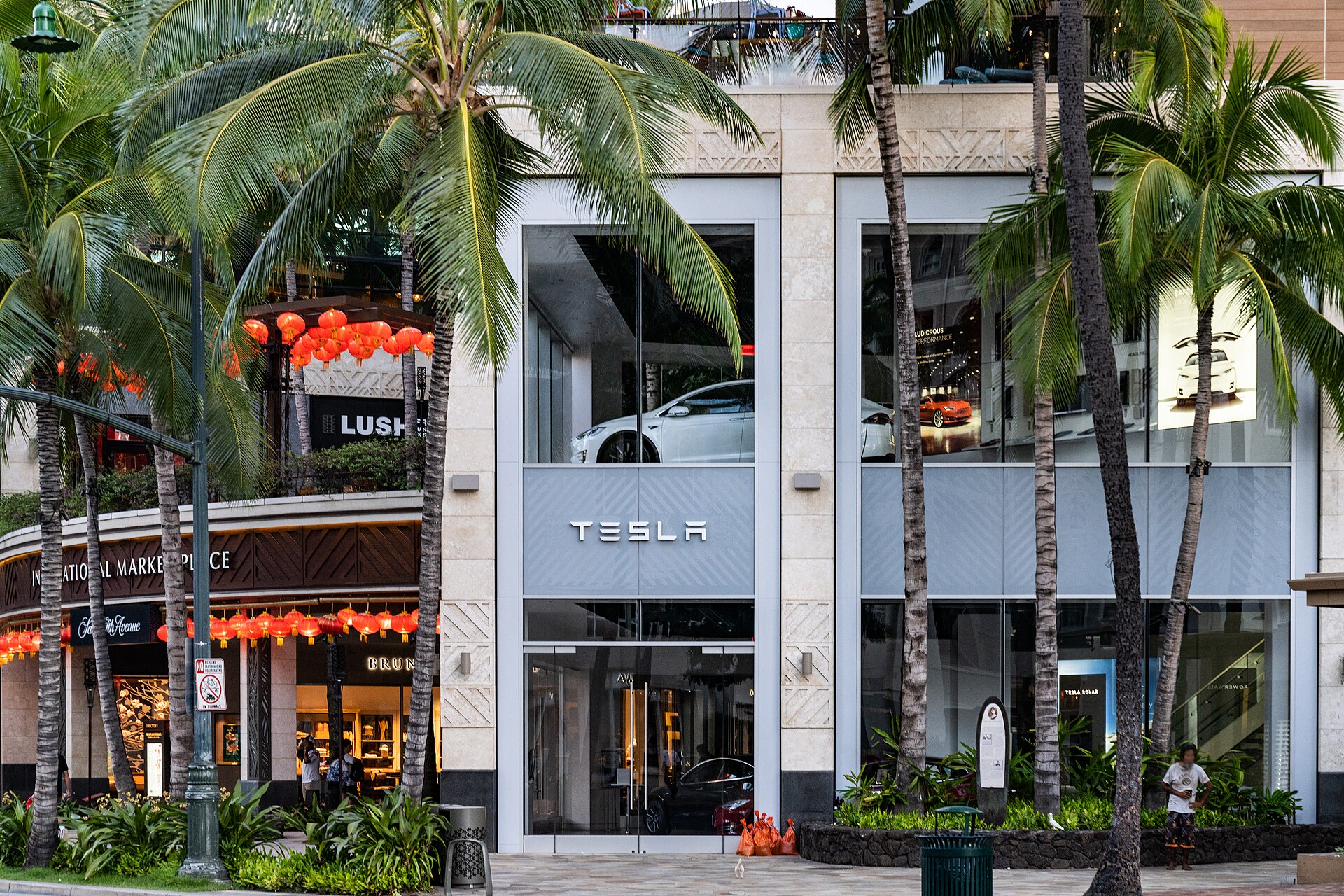
Tesla sells and services in Hawaii from its Honolulu location, and orders are placed online just like on the mainland. As of 2026 the entry points are the Model 3 (from about $36,990 before destination) and the Model Y (from about $39,990), with pricing set nationally; Model S and Model X have been discontinued and are effectively sold out of new inventory. Confirm delivery logistics for your island directly with Tesla, since neighbor-island buyers may face additional shipping steps, and lean on Mobile Service for routine work if you’re not on Oahu.
One concrete way to lower your cost: if you order a new Model 3, Model Y, or Cybertruck through a referral link, Tesla currently includes three months of free Full Self-Driving (Supervised) — a perk worth roughly $297 that generally doesn’t stack with the standard 30-day trial. You can order through our Tesla referral link to claim it; there’s no downside to using one at checkout. New buyers who want to understand the software they’re getting can start with our US Tesla guides.
Protecting a Tesla from Salt, Sun, and Sand
Hawaii’s climate is paradise for people and brutal for cars. Salt-laden trade winds, relentless UV, volcanic dust, and beach sand all go to work on paint, glass, and interiors far faster than mainland weather does. A little prevention goes a long way, and none of it is exotic.
The biggest threat is the combination of salt air and unfiltered UV, which dulls paint and bakes trim. A quick ceramic spray sealant like CarPro Reload lays down a hydrophobic layer that makes salt rinse off easily and shrugs off UV between proper details — a few minutes after a wash buys you months of protection. Speaking of washes, rinsing salt off regularly matters more here than almost anywhere, and a soft microfiber wash mitt keeps you from grinding grit into the finish. For owners who want the full armor treatment, our PPF and ceramic coating guide compares the longer-term options.
Inside, the sun is the enemy. Tesla’s big glass roof is beautiful and, parked in a Waikiki lot at noon, it turns the cabin into an oven. A folding windshield sunshade cuts soak-in heat, protects the dash, and saves the battery energy your car would otherwise spend cooling down. Pair it with all-weather floor mats to catch the sand that inevitably rides home from the beach, and your interior will still look new years from now.
Frequently Asked Questions
Is a Tesla actually cheaper to run than a gas car in Hawaii?
Yes, in almost every realistic scenario. Even charging at Hawaii’s high flat residential rate costs roughly $0.13 per mile versus about $0.22 for a 25-mpg gas SUV. Charge on the midday time-of-use window or your own rooftop solar and the cost drops to a few cents per mile. The only way an EV loses the cost race here is by relying entirely on Superchargers.
When is the cheapest time to charge in Hawaii?
Midday, roughly 9 a.m. to 5 p.m., on Hawaiian Electric’s EV time-of-use rate — the opposite of the mainland’s overnight advice. That window rides the islands’ abundant rooftop solar. Avoid the 5 p.m.–9 p.m. evening peak, which is the most expensive block of the day.
Are there still EV incentives or perks in Hawaii in 2026?
Not for buying the car. There is no state purchase rebate, the federal $7,500 credit ended September 30, 2025, and the HOV-lane and free-parking perks expired the same day. Charger-installation rebates through Hawai’i Energy and KIUC still exist for eligible sites, and ordering through a referral link adds three months of free FSD (Supervised).
Can I road-trip a Tesla across every Hawaiian island?
Not across islands — there are no bridges, so cars stay on their island (rental or shipping aside). Within Oahu, Maui, and the Big Island, Superchargers make day trips easy. Kauai has no Supercharger yet, so plan around Level 2 destination charging there.
What’s the EV road usage fee in Hawaii?
Under the HiRUC program you currently choose either a flat $50 per year or $8 per 1,000 miles (capped at $50). The per-mile method becomes mandatory on July 1, 2028. Maui County charges an extra ~$100 annual EV surcharge on top.
The Bottom Line
- Hawaii has America’s most expensive gasoline (~$5.45/gal in 2026) and its most expensive electricity (~$0.43–$0.53/kWh) — but a Tesla still comes out ahead when you charge at home.
- Charge midday on the EV time-of-use rate or on rooftop solar; avoid the 5–9 p.m. peak and lean on Superchargers only as a backstop.
- Superchargers cover Oahu, Maui, and the Big Island well; Kauai relies on Level 2 charging for now.
- For 2026 there’s no state or federal purchase incentive, HOV/parking perks have expired, and the HiRUC road fee (flat $50 or per-mile) applies — with a Maui County surcharge.
- Protect your investment from salt, sun, and sand with a ceramic spray, regular salt-rinse washes, and a windshield sunshade.
- Ordering a new Model 3 or Model Y through a Tesla referral link adds three months of free FSD (Supervised) at no cost to you.
Information current as of September 2026 and subject to change; prices, rates, incentives, and Supercharger locations vary — always confirm with Hawaiian Electric, Hawaii DOT, and Tesla before purchasing. This article is general information, not financial or tax advice. Some links are affiliate/referral links; see our disclosure page. Image credit: “Tesla Motors Store in Honolulu, Hawaii” by Tony Webster, licensed under CC BY 2.0, via Wikimedia Commons.

About the author: Lifei Zhou
Model Y owner since 2022Ontario STO registered apprentice · 310SWorks on Porsche, Mercedes, BMW, Audi weeklyHundreds of readers referred (est.)
Lifei is a Tesla owner based in Canada, writing practical, fact-checked Tesla guides for US and Canadian drivers — buying, ownership, insurance, charging, and TSLA investing, all from first-hand experience.