
Buying a Tesla in Minnesota 2026: Rebates, Taxes, Winter Range & Charging
Buying a Tesla in Minnesota 2026: Rebates, Taxes, Winter Range & Charging

Minnesota is quietly one of the best — and most demanding — places in the country to own a Tesla. The Twin Cities have a dense Supercharger network, some of the cheapest overnight electricity in the Midwest, and a genuinely committed EV community. But this is also a state where the mercury sits below 0°F for weeks at a time, road salt is everywhere, and lawmakers just rewrote the rules on what an electric car costs to register. If you’re shopping for a Model 3, Model Y, or Cybertruck in Minneapolis, St. Paul, Rochester, or Duluth, this 2026 guide walks through prices, the new value-based EV surcharge, utility rebates, real winter range, and the gear that actually earns its spot in your frunk.
Disclosure: some links are affiliate/referral links. If you buy through them we may earn a small commission at no extra cost to you, and ordering a Tesla through our referral link can get you 3 months of free Full Self-Driving (Supervised). See our disclosure page.
📋 Contents
- Is Minnesota a Good State to Own a Tesla?
- Tesla Prices in Minnesota (2026)
- Minnesota Taxes, Fees & the New 2026 EV Surcharge
- EV Rebates and Incentives in Minnesota (2026)
- Charging Your Tesla in the Twin Cities
- Surviving Minnesota Winters in a Tesla
- Insurance and Total Cost of Ownership
- Frequently Asked Questions
- The Bottom Line
Is Minnesota a Good State to Own a Tesla?
Short answer: yes, with an asterisk for winter. Minnesota consistently ranks among the top states for EV adoption per capita, and the reasons are practical. Xcel Energy — the dominant utility across the Twin Cities metro — offers one of the lowest off-peak overnight charging rates in the nation, so home charging is genuinely cheap. Tesla operates a thick web of Superchargers along I-35, I-94, and I-90, plus city stations in Minneapolis, St. Paul, Bloomington, Maple Grove, and Rochester. And because Minnesota gets a large and growing share of its grid from wind, an EV here is cleaner than the national average.
The asterisk is the climate. A Minnesota winter will shave a meaningful chunk off your range, road salt is brutal on wheels and undercarriage, and a dead 12V battery is more likely in a deep freeze. None of that is a dealbreaker — Norwegians drive EVs in worse — but it does mean you’ll want to buy with winter in mind. We’ll cover exactly how below.
Tesla Prices in Minnesota (2026)
Tesla uses nationwide pricing, so the sticker in Minnesota matches the sticker in Miami — what changes is tax and registration (next section). As of 2026, the U.S. lineup looks like this. Always confirm the live number on Tesla’s configurator before you order, because prices move.
| Model & trim | Starting price (USD) | EPA range |
|---|---|---|
| Model 3 Standard RWD | $36,990 | ~321 mi |
| Model 3 Premium AWD | $47,490 | ~363 mi |
| Model Y Standard RWD | $39,990 | ~321 mi |
| Model Y Premium AWD | $49,990 | ~327 mi |
| Model Y L (6-seat) | $61,990 | ~325 mi |
| Cybertruck AWD | $69,990 | ~325 mi |
Add a $1,390 destination fee and a $250 order fee to every configuration. For Minnesota’s cold, AWD is worth serious consideration — the dual-motor cars handle snow noticeably better and their heat pumps hold range further into the winter. Note that the Model S and Model X were discontinued in 2026, so new inventory is essentially gone; if you want one, you’re shopping Tesla’s used inventory. If you’re weighing which mainstream model fits your driveway and family, our Model Y vs Model 3 comparison breaks down the trade-offs.
Ready to configure? Ordering a new Model 3, Model Y, or Cybertruck through a Tesla referral link currently adds 3 months of free Full Self-Driving (Supervised) on top of the standard trial — a genuinely useful perk if you commute on I-35W or I-94.
Minnesota Taxes, Fees & the New 2026 EV Surcharge
This is where Minnesota gets specific — and where 2026 brought a real change. There are three costs to understand: sales tax, registration, and a brand-new EV surcharge.
Motor Vehicle Sales Tax (MVST) is 6.875% of the purchase price, calculated after any trade-in credit and paid when you title the car. On a $46,000 Model Y that’s roughly $3,163. Unlike some states, Minnesota does not layer big local option sales taxes on top of vehicle purchases the way it does on retail goods, so the MVST rate is what you plan around.
Registration tax in Minnesota is value-based rather than flat. It’s a $10 base fee plus 1.575% of the vehicle’s original MSRP, multiplied by an age depreciation factor that starts near 100% for a new car and steps down roughly 10 points a year until it bottoms out. Translation: a new Tesla’s first-year tabs run into the hundreds and shrink every year after. Metro-area counties (Hennepin, Ramsey, Dakota, Anoka, and the rest of the seven-county region) also tack on a $20 annual wheelage tax.
The EV surcharge changed on January 1, 2026. Minnesota scrapped its old flat fee and moved to a value-based surcharge: an all-electric vehicle now owes the greater of 0.5% of MSRP or a $150 minimum each year (the floor drops to $100 after June 30, 2027). For a $39,990 Model Y that’s about $200; for a $49,990 Premium AWD it’s about $250. It’s the state’s way of recovering the gas-tax revenue EVs don’t pay, and it’s worth budgeting for. Always confirm the exact figures on your renewal notice from Minnesota Driver and Vehicle Services.
| Cost | How it works (2026) | Example on a ~$46k Model Y |
|---|---|---|
| Sales tax (MVST) | 6.875% of price after trade-in | ~$3,163 once |
| Registration tax | $10 + 1.575% of MSRP × age factor | Several hundred, year one; falls yearly |
| EV surcharge | Greater of 0.5% MSRP or $150/yr | ~$230/yr |
| Wheelage tax (metro) | Flat county fee | $20/yr |
EV Rebates and Incentives in Minnesota (2026)
Here’s the honest picture: the big buy-side rebates are gone, but a few charging and financing angles remain.
The state EV rebate is closed. Minnesota’s rebate program — up to $2,500 for a new EV (price cap $55,000) and $600 for a used one — proved so popular that it ran through its funding and stopped accepting new applications. Unless the legislature refunds it, you can’t count on a state check. Check the official Minnesota Department of Revenue EV rebate page for the current status before you assume anything.
The federal $7,500 credit is also gone. The federal new-EV tax credit ended on September 30, 2025, so no Tesla qualifies for it in 2026 regardless of state. We cover what replaced it — and what didn’t — in our 2026 EV tax credit guide.
Utility rebates are the real money now. This is where Minnesota still delivers. Xcel Energy offers up to $500 toward a Level 2 home charger and wiring (up to $1,200 if you’re income-qualified), plus its Charging Perks managed-charging program that pays annual bill credits — roughly $70/year — for charging during off-peak windows. Some greater-Minnesota utilities are even more generous: Otter Tail Power, for example, offers up to $3,000 toward a new EV in its territory. Ask your specific utility what’s on the table before you buy your charger.
The car-loan interest deduction. If you finance, the 2025 federal tax law created a temporary above-the-line deduction (2025–2028) for interest on a loan for a new, U.S.-assembled vehicle — Teslas built in Fremont and Austin qualify. It phases out at higher incomes and caps at $10,000 of interest per year. It’s not a rebate, but for many buyers it’s worth a few hundred dollars a year at tax time. Talk to a tax professional about your situation. And since the federal purchase credit is gone, don’t overlook the one incentive that’s still fully yours to claim: ordering a new Model 3, Model Y, or Cybertruck through a referral link adds 3 months of free Full Self-Driving (Supervised) — real value that offsets some of what Washington took away.
Charging Your Tesla in the Twin Cities
Home charging is the whole game in Minnesota, and this is where the state shines. Xcel Energy’s residential EV plan bills off-peak overnight charging (roughly midnight to 6 a.m.) at about 3.8¢/kWh after your monthly allotment — one of the cheapest EV rates in the country. At that price, “filling up” a Model Y from 20% to 80% costs only a couple of dollars. Set your Tesla’s scheduled charging to start after midnight and you’ll rarely think about energy costs again.
To charge at that speed at home you’ll want a Level 2 setup. The Tesla Wall Connector (around $400–$550) delivers up to 44 miles of range per hour and pairs cleanly with the Xcel charger rebate above; if you’d rather understand the full install picture first — panel capacity, permits, electrician costs — read our home charger installation guide. Renters and condo dwellers aren’t shut out either; plenty of Twin Cities apartments now offer shared L2 stations.
On the road, Tesla’s Supercharger network covers Minnesota well: the I-35 corridor from the Iowa border up through the metro to Duluth, I-94 toward Fargo and toward Wisconsin, and metro stations that make road trips painless. Expect to pay roughly $0.30–$0.45/kWh at a Supercharger depending on time of day — more than home, but still cheaper than gas. Precondition the battery from the nav before you arrive (essential in winter) and you’ll hit peak charging speeds.
Surviving Minnesota Winters in a Tesla
This is the section Minnesotans actually came for. Cold weather is the single biggest factor in EV ownership up here, so let’s be specific.
How much range you’ll lose. Independent testing tells a consistent story. A 2026 AAA cold-weather study found EVs lose up to about 39% of range at 20°F when the cabin heater is running hard, while Recurrent’s real-world data across tens of thousands of vehicles shows a more typical ~20–25% loss around freezing. Tesla’s heat pump (standard on current cars) helps it hold range better than many rivals. The practical takeaway: plan for roughly a quarter to a third less range on the coldest days, charge to a higher limit before winter trips, and precondition while still plugged in so the heat comes from the wall, not the battery. (The federal fueleconomy.gov cold-weather page explains the underlying physics.) Our Tesla winter driving guide goes deeper on squeezing out every mile.
Winter tires are not optional here. The all-season tires Teslas ship with are marginal below freezing. A dedicated set of winter tires transforms how the car handles Minnesota snow and ice, and it protects your summer tires from salt and cold-cracking. Sizing and top picks are in our Tesla winter tires guide — budget for a second set of wheels so swaps are quick.
The Minnesota winter kit. A few inexpensive items make deep-winter ownership genuinely painless. Because Teslas have a glass roof and get buried like any other car, an extendable snow brush and ice scraper (around $20–$30) is the one tool you’ll reach for every single morning from December through March. Road salt and slush destroy carpet, so a set of all-weather rubber floor mats pays for itself in resale value alone. Cold snaps are also the classic trigger for a dead 12V battery — the failure that leaves you locked out and unable to open the frunk normally — so a compact lithium jump starter is cheap insurance worth keeping in the trunk. Finally, cold air drops tire pressure and triggers those low-pressure warnings; a small portable tire inflator lets you top off in the garage instead of hunting for an air pump at 10°F. Prices shown are typical ranges and change often.
Everyday winter habits. Use the app to preheat the cabin and defrost while the car is still plugged in. Turn on seat heaters (they sip power) instead of blasting cabin heat. Keep the charge above 20% so battery-warming logic has energy to work with. And rinse the underbody at a touchless car wash after big salt events to fight corrosion.
Insurance and Total Cost of Ownership
Minnesota is a no-fault insurance state, and Tesla premiums here sit around the national middle — higher than a base sedan because of repair costs, lower than in litigious or catastrophe-prone states. Minnesota is also one of the states where Tesla Insurance is available, so it’s worth getting a Tesla quote alongside your regular carrier; drivers with strong Safety Scores sometimes come out ahead. Beyond insurance, the ownership math favors the EV: cheap off-peak home electricity, no oil changes, and minimal scheduled maintenance mean your running costs are low even after you factor in the winter range hit and the annual EV surcharge.
Frequently Asked Questions
Does Minnesota have an EV rebate in 2026?
The state’s rebate program (up to $2,500 new / $600 used) ran out of funding and is no longer accepting applications. Unless the legislature refunds it, there’s no active state purchase rebate. Utility rebates from Xcel Energy and others are still available for home chargers and, in some territories, the vehicle itself. Confirm current status on the Minnesota Department of Revenue site before buying.
What is Minnesota’s new EV surcharge?
As of January 1, 2026, all-electric vehicles owe an annual surcharge equal to the greater of 0.5% of the vehicle’s MSRP or $150 (the floor drops to $100 after June 30, 2027). On a typical $40,000–$50,000 Tesla that’s roughly $200–$250 per year, collected with your registration.
How much range will my Tesla lose in a Minnesota winter?
Plan for roughly 20–35% less range on cold days, depending on temperature and how hard you run the heat. Preconditioning while plugged in, using seat heaters, and keeping a healthy charge level all reduce the hit. Tesla’s heat pump helps it fare better than many EVs without one.
Is home charging cheap in the Twin Cities?
Yes. Xcel Energy’s off-peak overnight rate is around 3.8¢/kWh, among the lowest EV rates in the U.S. Scheduling your Tesla to charge after midnight makes home charging cost just a couple of dollars for a typical top-up.
Do I still get a federal tax credit on a Tesla in Minnesota?
No. The federal $7,500 new-EV tax credit ended September 30, 2025, and no Tesla qualifies in 2026. If you finance, the separate car-loan interest deduction (2025–2028, U.S.-assembled vehicles) may apply — ask a tax professional.
Do I really need winter tires for a Tesla in Minnesota?
Strongly recommended. Factory all-seasons underperform on ice and packed snow. Dedicated winter tires dramatically improve traction and braking and are one of the best safety upgrades you can make for Minnesota conditions.
The Bottom Line
- Prices are nationwide — a Model Y starts around $39,990; what’s local is tax and fees.
- Budget the 2026 EV surcharge — the greater of 0.5% of MSRP or $150 per year, plus 6.875% sales tax and value-based registration.
- Chase utility rebates, not a state check — the state rebate is out of funds, but Xcel and other utilities still help with chargers and, in places, the car.
- Home charging is a bargain — Xcel’s ~3.8¢/kWh overnight rate makes fueling nearly free compared with gas.
- Buy for winter — favor AWD, plan for 20–35% range loss, add winter tires, and keep a basic cold-weather kit in the car.
For more state-by-state buying breakdowns and ownership tips, browse our US Tesla guides.
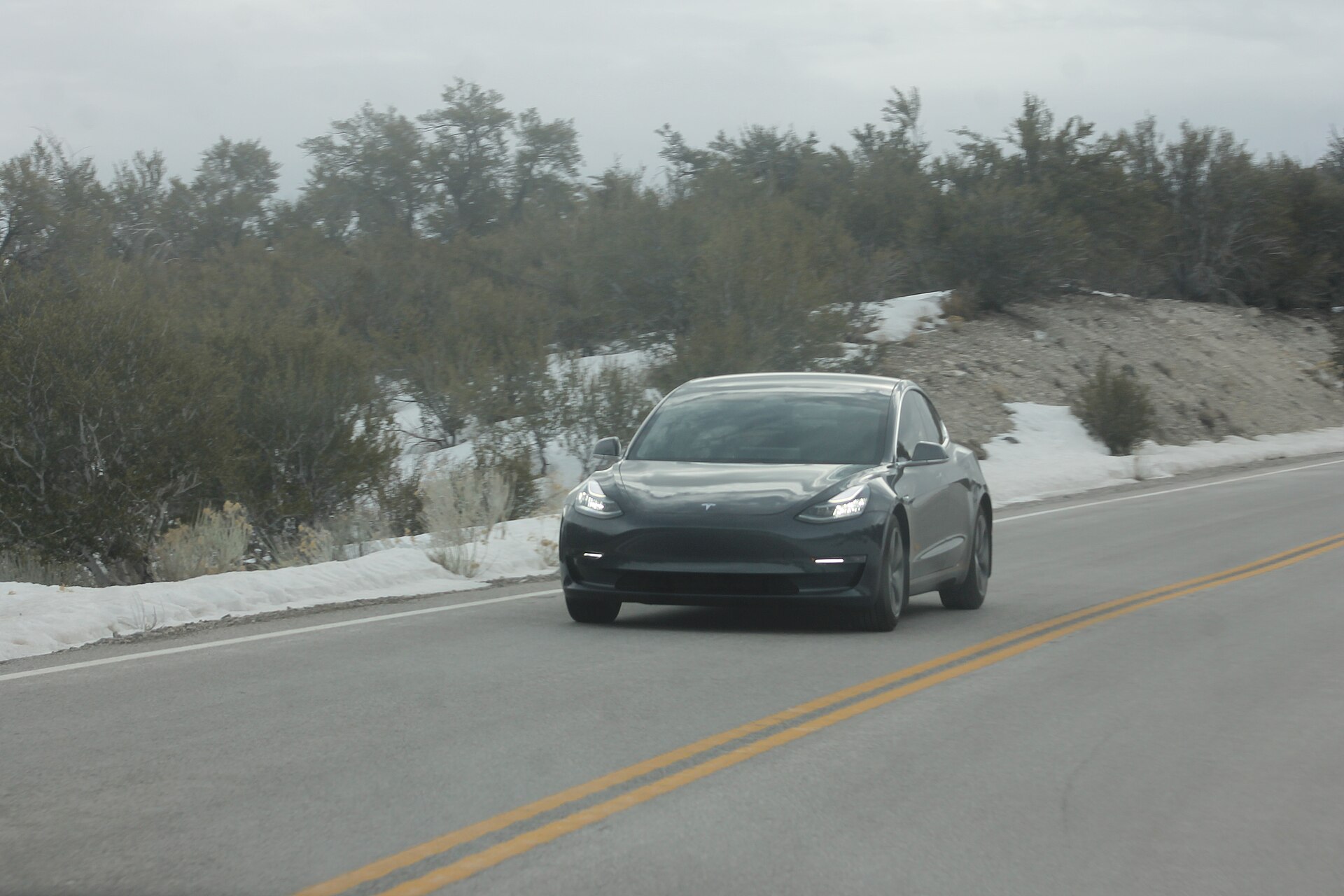
Information current as of 2026 and subject to change; prices, tax rates, surcharges, and rebate availability vary — always verify with Tesla, the Minnesota Department of Revenue, Minnesota Driver and Vehicle Services, and your utility before purchasing. This article is general information, not tax, financial, or legal advice. Some links are affiliate or referral links; see our disclosure page. Image credit: “Grey Tesla Model 3 on Mount Charleston” by Noah Wulf, licensed CC BY-SA 4.0, via Wikimedia Commons.

About the author: Lifei
Lifei is a Tesla owner based in Canada, writing practical, fact-checked Tesla guides for US and Canadian drivers — buying, ownership, insurance, charging, and TSLA investing, all from first-hand experience.
