
Tesla Holiday Road Trip Charging 2026: How to Avoid Supercharger Lines at Thanksgiving and Christmas
Tesla Holiday Road Trip Charging 2026: How to Avoid Supercharger Lines at Thanksgiving and Christmas

The Tesla Supercharger network handles holiday traffic better than most drivers expect: over the 2025 U.S. Thanksgiving weekend, Tesla says more than 2 million sessions ran and only 0.76% of drivers waited at all. The waits that do happen are concentrated at a few busy highway sites at predictable times, so a little planning (charging before 10 a.m., skipping the “obvious” stop, arriving with a warm battery) is usually enough to avoid them. Here is how to do that for Thanksgiving on November 26, 2026, and for the Christmas and New Year rush in the U.S. and Canada.
Disclosure: some links are affiliate/referral links, and we may earn a commission or referral credit at no extra cost to you. See our disclosure page.
Key facts (checked November 12, 2026)
- Thanksgiving 2025 (Wed to Sun): 2M+ U.S. Supercharger sessions, 70+ GWh delivered, 11.4 sessions per stall per day, 0.76% of drivers waited.
- Thanksgiving 2026 is Thursday, November 26. Christmas Day and New Year’s Day both fall on a Friday this year.
- Paren’s charging data: the worst window is roughly 10 a.m. to 2 p.m.; overnight (about midnight to 6 a.m.) is the quietest.
- Tesla’s live, utilization-based pricing covers about 550 U.S. sites, so the price shown before you plug in can be higher at busy times.
- No free holiday Supercharging has been announced for 2026 as of today. Check Tesla’s holiday page and the app before you leave.
📋 Contents
- How busy do Superchargers really get over the holidays?
- The 2026 holiday calendar: when the crunch hits
- Before you leave: a 10-minute charging plan
- On the road: how to dodge the line
- What live pricing means for your holiday charging bill
- Charging at your destination: the stop you don’t have to make
- Winter holiday trips in Canada and the northern U.S.
- Still shopping for a Tesla before the holidays?
- Frequently Asked Questions
- Summary
How busy do Superchargers really get over the holidays?
Less busy than the viral photos suggest. Tesla published its own numbers after Thanksgiving 2025: between Wednesday and Sunday, U.S. Superchargers handled more than 2 million sessions and delivered over 70 GWh, according to Tesla North’s summary of Tesla’s figures. The network averaged 11.4 sessions per stall per day, and only 0.76% of drivers had any wait. Drive Tesla Canada reported the same figures.
Two caveats. First, these are Tesla’s numbers, and an average hides the hot spots. A 12-stall site halfway between two big cities on Wednesday afternoon can have a line even when the national figure looks perfect. Second, Superchargers now serve plenty of non-Tesla EVs with NACS ports or adapters, which adds demand at exactly the sites where holiday drivers stop.
Sessions
Energy
Stall use
Any wait
Source: Tesla, as reported by Tesla North and Drive Tesla Canada (December 2025). Network averages; individual sites vary.
For Canadian drivers, the pattern is different. Canadian Thanksgiving was back in October, so the big Canadian crunch is Christmas and New Year, when cold weather also slows charging. I’ve driven my Model Y through four Toronto-area winters, and the honest lesson is that cold, not crowds, is what usually stretches a winter charging stop.
The 2026 holiday calendar: when the crunch hits
Holiday charging demand follows travel demand, and travel demand follows the calendar. Every year the busiest outbound day for Thanksgiving is the Wednesday before, and the busiest return day is the Sunday after. This year’s Christmas and New Year both land on a Friday, which creates two long weekends back to back.
- Wednesday, November 25U.S. Thanksgiving getaway day. Expect the heaviest afternoon demand of the season at highway sites.
- Thursday, November 26Thanksgiving Day. Paren’s data flags Thursday afternoon as one of the easier times to charge.
- Sunday, November 29Return day. Late morning to mid-afternoon is the riskiest window.
- Wednesday, December 23 to Thursday, December 24Christmas getaway in both countries. Cold weather adds charging time in Canada and the northern U.S.
- Saturday, December 26 to Sunday, December 27Boxing Day weekend returns and post-Christmas trips.
- Friday, January 1 to Sunday, January 3New Year return traffic, often in the coldest weather of the trip.
Dates are the 2026–27 calendar. Busy windows reflect typical travel patterns, not a forecast for any specific site.
Paren, which tracks public charging across networks, found that the worst time to charge over Thanksgiving is roughly 10 a.m. to 2 p.m., and that overnight, about midnight to 6 a.m., has the least competition (InsideEVs on Paren’s analysis). That lines up with what owners see every year: the line forms when everyone who left at 8 a.m. hits the same stop two or three hours later.
Before you leave: a 10-minute charging plan
The single most useful thing you can do happens in your driveway, not at the charger.
Starting at 100% is fine for a road trip. Tesla’s guidance against daily 100% charging is about leaving the battery full for long periods, and a holiday departure is the exception it’s meant for. Just leave soon after the charge finishes, especially in cold weather.
If you’re driving through Canadian or northern U.S. winter, read our guide on how to precondition a Tesla in winter before you go. A cold battery is the most common reason a “20-minute stop” turns into 40, and the fueleconomy.gov cold-weather page explains why EV range and charging both suffer below freezing.
On the road: how to dodge the line
Skip the obvious stop
The trip planner tends to send everyone to the same efficient stops, usually the site roughly 2 to 3 hours from the big city. If the screen shows that site is nearly full, stopping 20 minutes earlier at a less convenient location (a small town, a hotel, a site a few minutes off the highway) usually means no wait. You’ll add a short detour and save the queue.
Arrive low, leave at about 80%
A Tesla charges fastest at a low state of charge and slows down sharply above roughly 80%. On a busy day, two short stops from about 10% to 70% are faster overall than one long stop to 95%, and they free the stall for the next driver. Tesla can also cap the charge limit at very busy sites and add congestion fees when a site is crowded and your battery is nearly full. Our guide to Supercharger idle and congestion fees covers how those work.
Let the car warm the battery
When a Supercharger is set as a navigation destination, the car preconditions the battery on the way so it can take a higher charge rate on arrival. If you reroute to a backup site, set that site as the destination in the car so it keeps warming. In the cold, this matters more than anything else on this list.
Use the stall like a gas pump, not a parking spot
Watch the app and get back to the car when the session is close to your target. Idle fees apply when the charge is complete and you’re still plugged in, and they’re higher when the site is busy. On getaway day, other drivers are counting on that stall.
What live pricing means for your holiday charging bill
Supercharger prices aren’t fixed. Many sites have time-of-use rates, and since late 2025 Tesla has used live pricing based on actual site utilization at about 550 U.S. locations in California, New Jersey, New York, Florida and Illinois, according to Tesla North and Notebookcheck. The rate is shown before you start, and it doesn’t change mid-session if more cars arrive.
The practical takeaway: on peak holiday afternoons, you may pay a higher per-kWh rate at the busiest sites, and the same energy can cost less at a quieter site or a quieter hour. I’m not quoting a price range here because rates vary by site and change often; the number on your screen at that site is the one that counts. For Canadian drivers, Tesla adjusted Supercharger prices across much of the country in September 2026, so don’t plan your budget around last year’s receipts.
| Situation | What usually works | Why |
|---|---|---|
| Main stop shows few free stalls | Stop at the site before it, charge to about 70% | Short top-up at a quiet site beats a queue |
| Arriving 10 a.m. to 2 p.m. on a peak day | Shift the stop earlier or have lunch first | Busiest window in Paren’s data |
| Battery cold, charging slow | Set the Supercharger as the nav destination | Car preconditions the battery on the way |
| Live-pricing site at peak | Compare with a nearby site before plugging in | Rate is shown before the session starts |
| Staying 2+ nights with family | Charge on a regular outlet or 240V outlet there | Leave full without any Supercharger stop |
Charging at your destination: the stop you don’t have to make
The easiest holiday Supercharger stop is the one you skip. If you’re staying with family for two or three nights, even a regular 120V outlet adds meaningful range overnight, and a 240V dryer or range outlet (a NEMA 14-50 in many garages) can refill most batteries in a night. Ask before you plug in, use an outlet that isn’t shared with a space heater, and never run a charging cable through an extension cord.
If you don’t already carry one, a portable charger is the one piece of gear worth buying before a holiday trip. The Lectron 40A portable Level 2 charger plugs into a NEMA 14-50 outlet (check that the listing’s connector matches your car’s port); it’s worth it for owners who visit the same relatives or cottage often, since one night on 240V replaces a Supercharger stop each way. The budget alternative is Tesla’s own Mobile Connector, which handles a standard 120V outlet and, with the right adapter, a 240V outlet at a lower rate. Many newer cars don’t include one, so check the frunk before you count on it.
Good bets
- Home, to 100%, the night before you leave
- A quieter Supercharger one stop before the popular one
- Any site before 10 a.m. or overnight
- A 120V or 240V outlet at your destination
- Hotel destination chargers, if you booked one that has them
Usually a wait
- The halfway site between two big cities on getaway day
- Small 8 to 12 stall sites on main highways at midday
- Any site where the screen shows few or no free stalls
- Charging to 95%+ at a crowded site
Winter holiday trips in Canada and the northern U.S.
Christmas trips add cold to the crowds. A cold battery charges slowly until it warms, the cabin heater uses energy while you wait, and snow can slow the drive between stops. A few habits help:
- Keep a bigger buffer. Plan to arrive at each stop with 15 to 20% rather than 5%, in case a site is busy or the road is closed.
- Precondition before departure while still plugged in at home, so the battery and cabin warm on grid power.
- Know your backups. In Canada, networks such as FLO, Electrify Canada and Petro-Canada can fill gaps; our guide to non-Tesla chargers in Canada covers adapters and apps.
- Pack for a wait. A 12V heated blanket like the Sealy 12V heated blanket lets passengers stay warm with the climate set lower during a long stop or a highway closure.
For long highway drives, Autopilot or FSD (Supervised) can take some fatigue out of a holiday trip, but only if you stay attentive. In summer 2024, I drove from Oakville to Ottawa and Montreal and back on FSD, about 1,400 km round trip. Winter is a different job: snow can block cameras, and you should be ready to take over at any moment, especially on unplowed roads.
Heading somewhere warm instead? Our Toronto to Florida snowbird drive guide covers the full route, border crossing and charging stops.
Still shopping for a Tesla before the holidays?
If a Tesla is on your holiday list, configure it on Tesla’s site and check delivery estimates there, since they change by model and location. I ordered my Model Y straight from tesla.com without a test drive, and the process was entirely online. If you order through a referral link, new buyers get 3 months of FSD (Supervised); it generally can’t be combined with the new-car FSD trial or other offers, and Tesla confirms the final perk on your order. Current or past owners get a credit toward the vehicle instead (US$500 in the U.S., C$650 in Canada). Browse more U.S. buying guides in our US Tesla section.
Frequently Asked Questions
Is Tesla offering free Supercharging for Thanksgiving 2026?
Not as of November 12, 2026. Tesla has run free off-peak holiday charging on select routes in past years, but we found no announcement for 2026. Check Tesla’s holiday Supercharging page and the Tesla app before you leave.
What is the best time to Supercharge on a holiday weekend?
Early morning before 10 a.m., or overnight from about midnight to 6 a.m., based on Paren’s charging data. The worst window is roughly 10 a.m. to 2 p.m., especially on the Wednesday before Thanksgiving and the Sunday after.
How can I see if a Supercharger is busy before I get there?
Tap the Supercharger on the car’s map or in the Tesla app. It shows how many stalls are free right now. The trip planner also factors live availability into its route. You can browse locations on Tesla’s Supercharger page.
Should I charge to 100% before a holiday road trip?
Yes, at home, right before you leave. Charging to 100% occasionally for a trip is fine. Avoid charging to 100% at a busy Supercharger, because the last 20% is slow and holds up the stall.
Do non-Tesla EVs make Supercharger lines worse?
They add demand, since many EVs from other brands can now use Superchargers. Tesla’s 2025 Thanksgiving data still showed only 0.76% of drivers waited across the U.S. network, but a busy highway site can fill faster than it used to.
Do Superchargers charge slower in winter?
The charger doesn’t change, but a cold battery accepts power more slowly until it warms up. Setting the Supercharger as your navigation destination lets the car precondition the battery on the way, which shortens the stop.
Summary
- Holiday Supercharger waits are rare network-wide (0.76% of drivers at Thanksgiving 2025) but concentrated at busy highway sites at midday.
- Charge to 100% at home, plan in the car, and keep a backup site for every stop.
- Avoid 10 a.m. to 2 p.m. on peak days; early morning and overnight are quietest.
- Two short stops to about 70% beat one long stop to 95% on busy days.
- In winter, set the Supercharger as your destination so the battery preconditions.
- Charge at your destination when you can. A portable Level 2 charger on a 240V outlet can skip a Supercharger stop entirely.
Order a Tesla with 3 months of FSD (Supervised) →
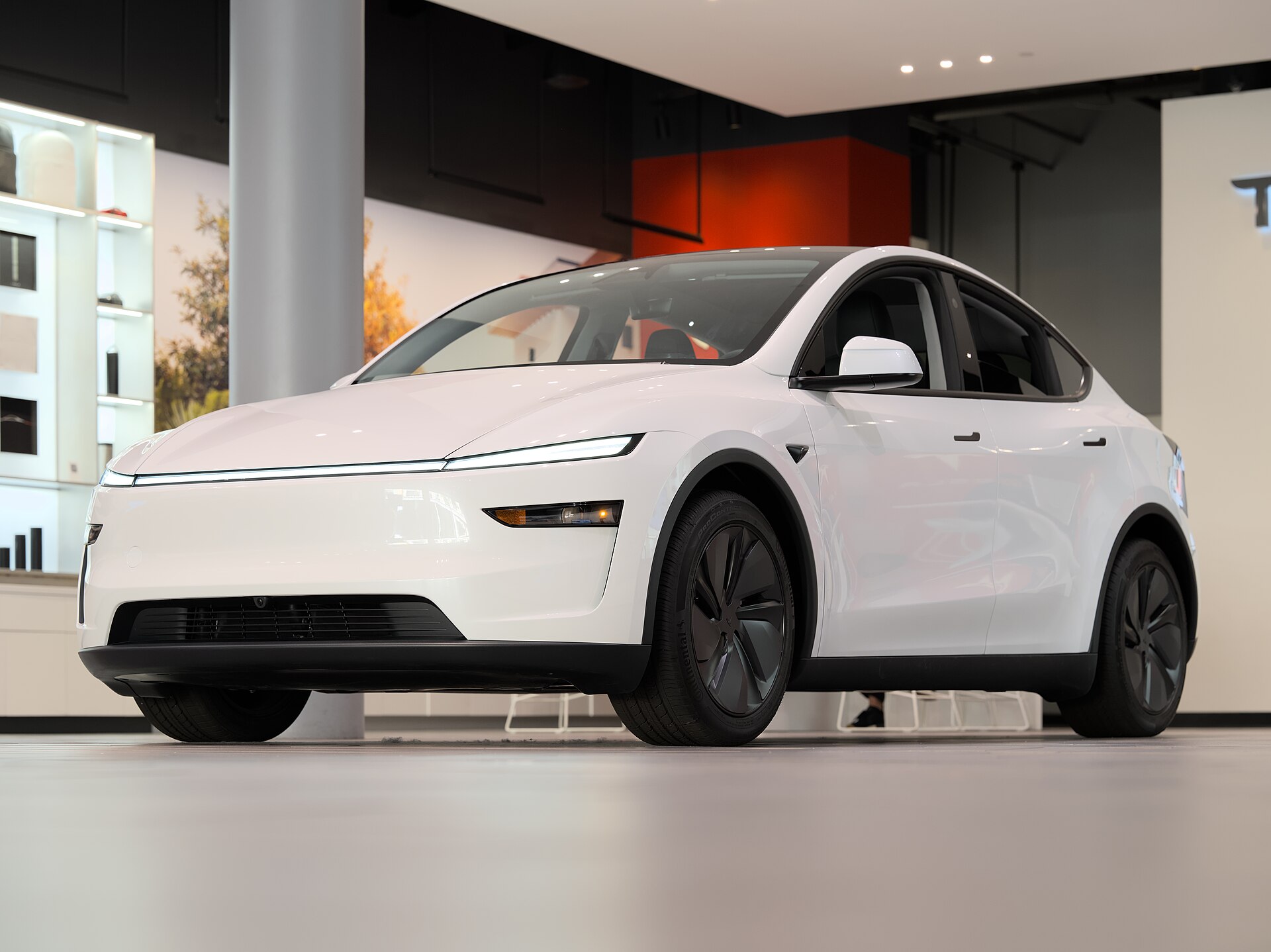
Image credit: “Tesla Model Y 2025 at Santana Row” by Dllu, licensed CC BY-SA 4.0, via Wikimedia Commons.

About the author: Lifei Zhou
Model Y owner since 2022Ontario STO registered apprentice · 310SWorks on Porsche, Mercedes, BMW, Audi weeklyHundreds of readers referred (est.)
Lifei is a Tesla owner based in Canada, writing practical, fact-checked Tesla guides for US and Canadian drivers — buying, ownership, insurance, charging, and TSLA investing, all from first-hand experience.