
Tesla Winter Tires Guide 2026: Best Tires, Sizes & Costs for Model 3 & Y
Tesla Winter Tires Guide 2026: Best Tires, Sizes & Costs for Model 3 & Y

If you drive a Tesla anywhere north of the snow line — think Toronto, Montreal, Calgary, Denver, Minneapolis, or the mountain passes of British Columbia and the Pacific Northwest — a dedicated set of winter tires is the single most impactful upgrade you can make. EVs are heavy, instantly torquey, and roll on low-rolling-resistance all-season rubber from the factory. That combination is fine in July and genuinely dangerous on an icy on-ramp in January. This guide breaks down which winter tires fit each Tesla, what a proper winter setup actually costs in 2026, and the rules you have to follow in Canada.
Disclosure: some links are affiliate/referral links, meaning we may earn a commission at no extra cost to you if you buy through them. See our disclosure page.
📋 Contents
- Do You Really Need Winter Tires on a Tesla?
- Tesla Tire Sizes by Model (2026)
- Best Winter Tires for Your Tesla in 2026
- Winter Tires vs. All-Weather Tires: Which Should You Buy?
- What a Winter Setup Actually Costs in 2026
- Canadian Winter Tire Laws You Can’t Ignore
- Setting Up Winter Tires on Your Tesla
- Frequently Asked Questions
- The Bottom Line
Do You Really Need Winter Tires on a Tesla?
Yes — and not just for deep snow. The rubber compound in an all-season tire hardens once the temperature falls below about 7 °C (45 °F), losing grip on cold, dry, and wet pavement alike. Winter tires use a softer compound that stays pliable in the cold, plus siping and tread patterns designed to bite into snow and ice. On a Tesla, three things make this matter even more:
- Weight. A Model Y weighs around 4,400 lb (2,000 kg). More mass means more momentum to stop, and stopping is exactly what all-seasons do worst in winter.
- Instant torque. Full torque from zero RPM will spin cold all-season tires on a slick surface far more easily than a gas car will.
- Regenerative braking. Aggressive regen on a low-grip surface can unsettle the car. Winter tires give the traction and stability control something to work with. (Tesla also temporarily reduces regen when it detects low grip, and restores it as the tires warm up.)
All-season tires are a compromise built for mild climates. If you see real winter, a second set of winter tires is not a luxury — in much of Canada it is the law, which we cover below.
Tesla Tire Sizes by Model (2026)
Before you shop, you need your exact tire size. It is printed on the driver’s door jamb and on the sidewall of your current tires. Here are the common factory fitments — note that Tesla often uses a staggered setup (different front and rear sizes) on Performance trims, which complicates tire rotation and winter shopping.
| Model & wheel | Tire size | Notes |
|---|---|---|
| Model 3 — 18″ Aero | 235/45R18 | Best value; taller sidewall is ideal for winter |
| Model 3 — 19″ Nova/Sport | 235/40R19 | Many owners downsize to 18″ for winter |
| Model 3 Performance — 20″ | 235/35R20 (F) / 275/30R20 (R) | Staggered; winter downsizing strongly recommended |
| Model Y — 19″ Gemini/Crossflow | 255/45R19 | Most common; widest winter tire selection |
| Model Y — 20″ Induction | 255/40R20 | Many owners fit a 19″ winter wheel instead |
| Model Y Performance — 21″ Übertürbine | 255/35R21 (F) / 275/35R21 (R) | Staggered; downsize to 19″ for winter |
| Model S — 19″ / 21″ | 255/45R19 / staggered 21″ | 19″ is the practical winter choice |
| Model X — 20″ / 22″ | 265/45R20 / staggered 22″ | 20″ for winter; 22″ winter tires are scarce and pricey |
The winter downsizing trick: if your Tesla came on 20-inch or 21-inch wheels, buy a dedicated winter set on smaller 18-inch (Model 3) or 19-inch (Model Y/S) wheels. Smaller wheels mean taller sidewalls (better ride and pothole protection), cheaper tires with more available choices, and often better deep-snow performance. Just confirm brake-caliper clearance — Tesla’s own winter wheel packages are guaranteed to clear.
Best Winter Tires for Your Tesla in 2026
Tesla-friendly winter tires need low rolling resistance (to protect range), a high load rating (these cars are heavy), and quiet manners (an EV cabin hides no road noise). These are the models EV owners consistently rank at the top in 2026:
| Winter tire | Best for | Approx. price (each, USD) |
|---|---|---|
| Michelin X-Ice Snow | All-round balance; ice braking; low noise & long life | $170–260 |
| Nokian Hakkapeliitta R5 / R5 SUV | EV-specific; extreme cold; efficiency | $180–270 |
| Bridgestone Blizzak WS90 / DM-V2 | Deep snow and ice grip (the classic benchmark) | $150–240 |
| Pirelli Winter Sottozero 3 / Ice Zero | Performance trims; dry/wet cold handling | $160–260 |
| Continental VikingContact 7 | Value pick with strong wet/ice numbers | $140–220 |
Whatever you choose, insist on the three-peak mountain snowflake (3PMSF) symbol on the sidewall — that is the mark of a true winter tire and, as we’ll see, a legal requirement in Quebec. You can compare current pricing and sizes for your car on Amazon US or, in Canada, on Amazon CA. For most owners, though, a local tire shop or Tesla’s own winter wheel-and-tire package (mounted, balanced, and TPMS-ready) is the simpler route.
Winter Tires vs. All-Weather Tires: Which Should You Buy?
Not everyone lives in Winnipeg. If your winters are mild — coastal BC, the Carolinas, the mid-Atlantic — you may be tempted by all-weather tires (not to be confused with all-season). All-weather tires carry the 3PMSF snowflake and are legal for winter in most Canadian provinces, but they trade some deep-cold ice grip for the convenience of running year-round.
| Tire type | 3PMSF rated? | Best climate |
|---|---|---|
| Dedicated winter | Yes | Real winters — snow, ice, sustained cold |
| All-weather | Yes | Mild winters; one-set convenience |
| All-season (factory) | No (M+S only) | Warm/temperate — not winter-legal in Quebec |
Rule of thumb: if you regularly see temperatures below −10 °C or drive on unplowed roads, buy dedicated winter tires and swap seasonally. If your cold season is short and rarely icy, a good all-weather tire is a reasonable single-set compromise. Running dedicated winters also spares your expensive summer/all-season rubber six months of wear, so the two-set approach costs less over the tire’s lifetime than it first appears.
What a Winter Setup Actually Costs in 2026
Budget for the whole system, not just four tires. Here is a realistic 2026 breakdown for a Model 3 or Model Y (US dollars; Canadian pricing runs roughly 25–35% higher before tax):
| Item | Approx. cost (USD) |
|---|---|
| 4 winter tires (Model 3/Y sizes) | $600–1,000 |
| 4 dedicated winter wheels (optional but recommended) | $500–900 |
| TPMS sensors (BLE, if using separate wheels) ×4 | $180–300 |
| Mount & balance (if not pre-mounted) | $80–160 |
| Seasonal swap (twice a year) | $40–100 |
| Total, tires on their own wheels | $1,300–2,400 |
Buying tires already mounted on a second set of wheels costs more up front but saves money over time: swapping wheel-and-tire sets is a 30-minute DIY job (or a cheap tire-shop visit), whereas remounting tires on the same wheels twice a year adds up and stresses the rubber. A few accessories make the twice-yearly swap painless — a set of tire storage totes, a decent AstroAI digital tire-pressure gauge, and Tesla jack pads to protect the battery when lifting. If you’d rather not think about any of it, Tesla sells complete winter wheel-and-tire packages for each model through its online shop and service centers.
Canadian Winter Tire Laws You Can’t Ignore
In Canada, winter tires can be a legal requirement, not just a good idea. The rules vary sharply by province:
- Quebec — Winter tires are mandatory from December 1 to March 15 on every passenger vehicle registered in the province. Tires must carry the 3PMSF snowflake symbol (M+S alone is not enough). Driving without them risks a fine of roughly $200–300 plus surcharges. This applies to rentals too. See the Gouvernement du Québec page for the official rule.
- British Columbia — On most designated highways (including mountain routes), winter tires or chains are required October 1 to April 30. BC accepts either the 3PMSF snowflake or M+S marking, with at least 3.5 mm of tread. Details are on the Province of British Columbia site.
- Ontario & the rest — No provincial mandate, but Ontario law requires insurers to offer a winter tire discount (typically about 5%). Most other provinces have no mandate but strongly recommend winters.
Even where they aren’t legally required, winter tires are the smart call anywhere you’d otherwise reach for the ice scraper — and speaking of which, keep an AstroAI extendable snow brush with ice scraper in the trunk; a Tesla’s glass roof and frameless windows collect a surprising amount of ice. If you’re new to Tesla ownership in the cold, our Tesla winter driving and range guide pairs perfectly with this one.
Setting Up Winter Tires on Your Tesla
A few Tesla-specific steps make the transition smooth:
- TPMS sensors. Teslas built from 2021 onward use Bluetooth Low Energy (BLE) TPMS sensors. If you buy a separate set of winter wheels, they’ll each need a compatible BLE sensor. After the swap, the car relearns sensor positions automatically after a short drive.
- Tell the car it’s on winter tires. Go to Controls > Service > Wheel & Tire and select winter tires. This helps the car recalibrate and restore regenerative braking faster after install.
- Reset tire pressures. Cold weather drops pressure roughly 1 PSI per 5 °C. Set to Tesla’s recommended cold pressure (on the door jamb) and recheck once temperatures settle. Correct pressure protects your winter range — see our guide to the real cost of charging a Tesla for how cold and rolling resistance eat into efficiency.
- Precondition and drive gently. Winter tires plus cabin/battery preconditioning is the winning combo for both grip and range.
Not sure your Model 3 versus Model Y needs different rubber? Our Model Y vs. Model 3 comparison covers the weight and traction differences, and the new-owner accessories guide rounds out the rest of your winter kit. Still shopping for the car itself? Ordering a new Tesla through a referral link currently includes 3 months of free Full Self-Driving (Supervised) — worth grabbing before you spec winter wheels.
Frequently Asked Questions
Do Teslas come with winter tires from the factory?
No. Every Tesla ships on all-season (or summer, on Performance trims) tires. Winter tires are a separate purchase, either from Tesla’s shop or any tire retailer.
Will winter tires reduce my Tesla’s range?
Slightly — expect a few percent from the softer compound and more aggressive tread, on top of the larger cold-weather range hit EVs already see. Low-rolling-resistance winter tires like the Nokian Hakkapeliitta R5 or Michelin X-Ice Snow minimize the penalty, and correct tire pressure matters more than the tire choice itself.
Can I put winter tires on just the front or rear?
No. Always install winter tires as a full set of four. Mixing winter and all-season tires creates dangerously unbalanced grip — a Tesla with winters only on the drive axle can spin or plow unpredictably.
Do I need separate wheels, or can I remount tires each season?
A second set of wheels is more convenient and easier on the tires. Remounting on the same wheels twice a year works but costs $80–160 each time and shortens tire life. Most owners find dedicated winter wheels pay for themselves within two or three winters.
Are all-weather tires enough for a Tesla in Canada?
In milder regions, yes — 3PMSF-rated all-weather tires are legal for winter (including in Quebec) and spare you the seasonal swap. In areas with regular ice and deep snow, dedicated winter tires still stop noticeably shorter.
Do winter tires affect Tesla’s Autopilot or FSD?
No. Winter tires don’t interfere with cameras or driver-assistance features. They actually improve the traction those systems rely on. Just remember Autopilot is less reliable on snow-covered lane markings regardless of tires.
The Bottom Line
- Winter tires transform a heavy, torquey EV’s cold-weather safety — they’re worth it anywhere you see sustained sub-7 °C temperatures.
- Find your exact size on the door jamb; consider downsizing 20″/21″ wheels to 18″/19″ for cheaper, better winter rubber.
- Top 2026 picks: Michelin X-Ice Snow, Nokian Hakkapeliitta R5, Bridgestone Blizzak WS90, Continental VikingContact 7 — all with the 3PMSF snowflake.
- Budget roughly $1,300–2,400 (USD) for a full set on dedicated wheels; a bit less if you remount seasonally.
- Quebec mandates winter tires Dec 1–Mar 15; BC requires them on designated highways Oct 1–Apr 30. Check your province.
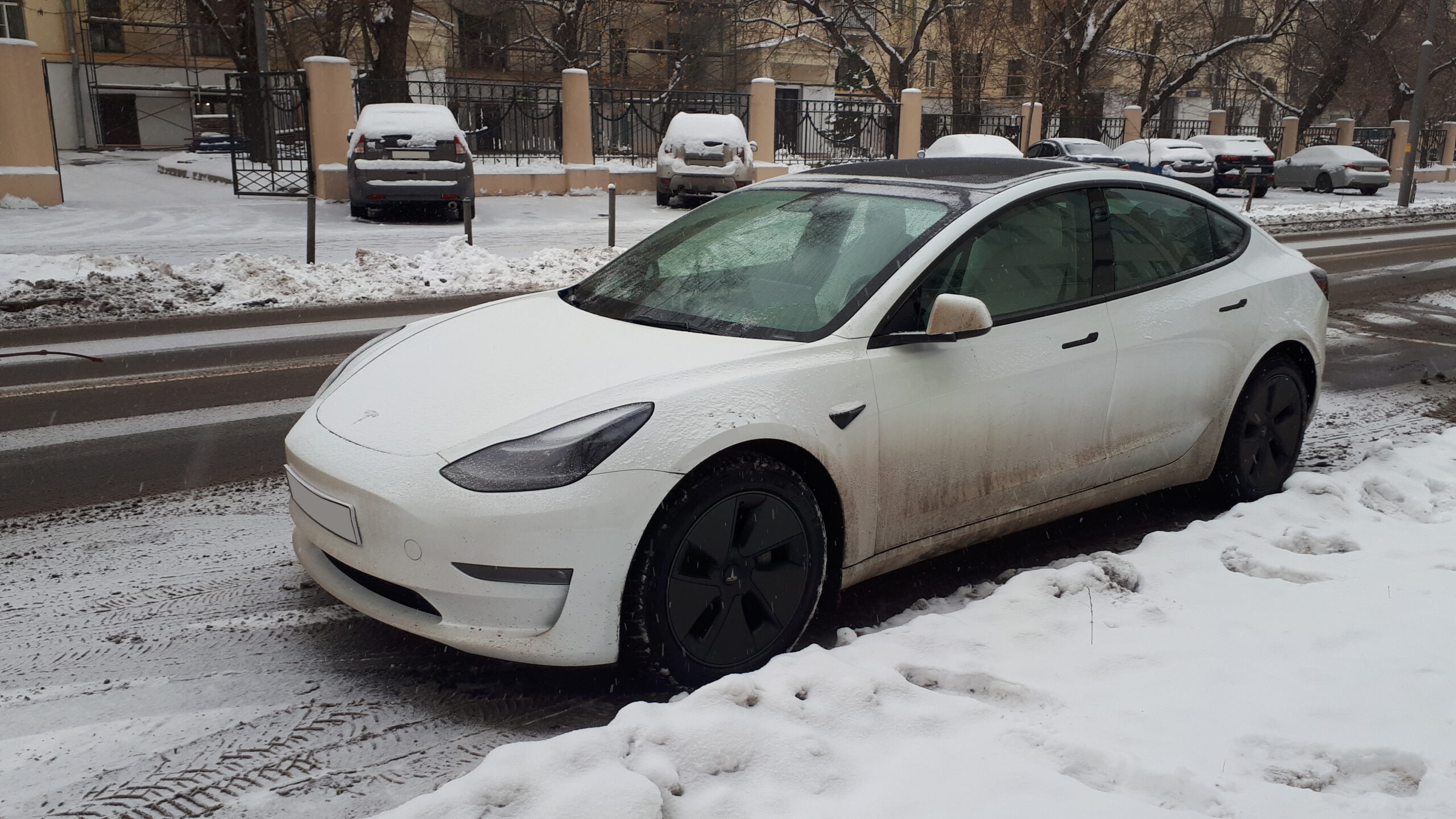
Information current as of late July 2026 and provided for general guidance only; tire prices, availability, and provincial regulations change — confirm sizes with your door-jamb label and verify current rules with your provincial transport authority before buying. This article is not legal or purchasing advice. Some links are affiliate/referral links; see our disclosure page. Image credit: “Tesla Model S in snow” by Kirill Borisenko, licensed under CC BY-SA 4.0, via Wikimedia Commons.

About the author: Lifei Zhou
Lifei is a Tesla owner based in Canada, writing practical, fact-checked Tesla guides for US and Canadian drivers — buying, ownership, insurance, charging, and TSLA investing, all from first-hand experience.
