
Tesla Model Y vs Chevy Equinox EV vs Honda Prologue: 2026 Buyer’s Comparison
Tesla Model Y vs Chevy Equinox EV vs Honda Prologue: 2026 Buyer’s Comparison

In one sentence
Now that the $7,500 federal EV credit is gone, how does the 2026 Tesla Model Y stack up against the Chevy Equinox EV and Honda Prologue on price, range, charging and tech?
For years, shopping for an affordable electric SUV in the United States meant one question dominated every conversation: which model qualified for the $7,500 federal tax credit? That question is now history. The credit expired on September 30, 2025, and the entire compact-EV segment has been repricing around it ever since. Three vehicles sit at the center of that reset: the Tesla Model Y, the Chevrolet Equinox EV, and the Honda Prologue. Each is aimed squarely at the same American family shopping for a roughly $40,000 electric crossover, and each has responded to the post-credit market in a very different way.
This is a practical, numbers-first comparison written for buyers in the U.S. and Canada who want a clear answer rather than a spec-sheet recital. We will walk through pricing, range, charging access, interior space, technology, and long-term ownership, then give you a straight recommendation by buyer type. All figures are current as of publication and cross-checked against manufacturer and independent sources.
Disclosure: some links are affiliate/referral links. If you buy or sign up through them we may earn a commission at no extra cost to you, and referral links may earn both sides a reward. See our disclosure page.
📋 Contents
- Why 2026 Changed the Math for These Three EVs
- Price: Where Each One Lands Now
- Range and Charging: The Supercharger Advantage
- Interior, Space and Everyday Tech
- Driving, Efficiency and Long-Term Ownership
- Which One Should You Buy?
- First Accessories If You Pick the Model Y
- Frequently Asked Questions
- The Bottom Line
Why 2026 Changed the Math for These Three EVs
Under the old rules, a buyer could knock $7,500 off a qualifying EV at the point of sale, which made a $42,000 Equinox EV feel like a mid-$30,000s car. When Congress let the consumer credit lapse at the end of September 2025, that discount vanished for new purchases and for leases alike. Suddenly every EV in this class had to compete on its real sticker price.
Automakers reacted in different ways. Honda took the most dramatic step, cutting the Prologue’s price by $7,500 across the board in spring 2026 to absorb the lost credit. Chevrolet nudged Equinox EV pricing and shifted more cost into destination charges. Tesla, which had already been running some of the most aggressive financing in the segment, largely held its published prices and leaned on 0%–0.99% APR offers instead. The result is that these three crossovers are now priced within a few thousand dollars of one another on their most popular configurations — which is exactly why this three-way comparison matters more in 2026 than it did a year ago. For the full picture on how the expired credit reshaped Tesla’s real cost, see our guide to buying a Tesla after the federal credit ended.
Price: Where Each One Lands Now
Sticker price is the honest starting point, because none of these vehicles carries a federal incentive anymore. Below is a snapshot of 2026 U.S. starting MSRPs (before destination) and the range each delivers at that trim. Prices move often in the EV world, so always confirm the current figure on the manufacturer’s configurator before you order.
| Model (2026) | Starting MSRP* | Popular “value” trim | Max EPA range | Drive |
|---|---|---|---|---|
| Tesla Model Y | ~$39,990 (Standard RWD) | Premium RWD ~$45,990 | Up to 357 mi | RWD / AWD |
| Chevrolet Equinox EV | ~$34,995–$36,495 (LT) | LT2 ~$43,295 | Up to 319 mi | FWD / AWD |
| Honda Prologue | ~$39,900 (EX) | Touring ~$44,200 | Up to 308 mi | FWD / AWD |
*Before destination charges. Tesla adds a $1,390 destination fee plus a $250 order fee; Chevrolet’s destination charge is roughly $1,800; Honda’s is about $1,495. Figures verified against manufacturer and independent listings as of publication.
A few takeaways jump out. The Equinox EV is the value leader on paper, with LT trims dipping into the mid-$30,000s — the cheapest way into a 300-plus-mile electric SUV in America right now. The Prologue’s post-cut $39,900 EX undercuts where it used to sit by $7,500 and now lines up almost exactly with the Model Y’s base price. And the Model Y starts a hair higher but rewards you at the “value” trim: its Premium RWD delivers a class-leading 357 miles for around $45,990, more range than any Equinox or Prologue you can buy. If you want to see how the base Model Y stacks up on its own merits, we broke it down in is the Standard Model Y worth buying in 2026.
Range and Charging: The Supercharger Advantage
On paper the three are close on range: the Equinox EV tops out at 319 miles (front-wheel drive), the Prologue at 308, and the Model Y at 357 in its longest-range trim. In real driving, EPA numbers compress in cold weather and at highway speed for all EVs — a reality we cover in depth in our piece on real-world Tesla range versus EPA estimates. Where these vehicles genuinely diverge is not how far they go, but how easily they refill.
The Model Y was built around the Tesla Supercharger network from day one, using the North American Charging Standard (NACS) connector natively. That means no adapter, seamless plug-and-charge, and access to the largest, most reliable fast-charging network on the continent. The Equinox EV and Prologue both ship with the older CCS port and now rely on a manufacturer-supplied NACS adapter to tap Superchargers — a workable solution, but one more piece of hardware to carry and one more point of friction at the plug.
| Charging factor | Tesla Model Y | Chevy Equinox EV | Honda Prologue |
|---|---|---|---|
| Native connector | NACS (Tesla) | CCS + NACS adapter | CCS + NACS adapter |
| Supercharger access | Direct, plug-and-charge | Via adapter | Via adapter |
| Peak DC fast charge | ~15 min for a big top-up | ~10 min adds up to 77 mi | 20–80% in ~35 min |
| Home Level 2 charging | Yes (Wall Connector) | Yes | Yes |
For a household that road-trips regularly, the Supercharger network is the single biggest reason many buyers still pick the Model Y even when a rival is cheaper. If you plan to use non-Tesla stations with any of these cars, our guide to third-party CCS charging explains the etiquette, apps, and adapters worth knowing about.
One nice equalizer: home charging is straightforward for all three. A 240-volt Level 2 setup overnight covers the vast majority of daily driving, and a hardwired unit like the Tesla Wall Connector works with a Tesla directly and with the Chevy or Honda through a standard J1772 handle, so your garage setup isn’t locked to one brand.
Interior, Space and Everyday Tech
All three are two-row, five-seat compact crossovers with similar cargo footprints, but the driving experience inside is where personalities separate.
The Model Y is minimalist to a fault: a single 15.4-inch center screen runs nearly everything, there is no instrument cluster in front of the driver, and physical buttons are almost nonexistent. Owners either love the clean, phone-like simplicity or find it a learning curve. It also has the largest total storage of the trio thanks to a deep front trunk (frunk) and a cavernous rear well.
The Equinox EV takes the opposite approach with a big 17.7-inch central display paired with a separate 11-inch driver cluster, plus retained physical controls for climate and volume. It leans on Google built-in for navigation and voice, and offers Chevy’s excellent Super Cruise hands-free highway assist on the highway network.
The Prologue lands in the middle: an 11.3-inch touchscreen, a conventional gauge cluster, and — critically for many shoppers — wireless Apple CarPlay and Android Auto, which neither the Tesla nor the current Equinox EV offers. If phone mirroring is a deal-breaker for you, the Prologue wins that battle outright.
A quick note on software philosophy: Tesla ships frequent over-the-air updates that add features and refine driving behavior over a car’s life, and its optional Full Self-Driving (Supervised) package is the most ambitious driver-assist system of the three. The Equinox’s Super Cruise is arguably more relaxing on mapped highways today, while Honda’s Sensing suite is competent but more conventional. Your priorities — hands-free highway cruising versus an evolving, all-in software platform — should steer the decision as much as horsepower does.
Driving, Efficiency and Long-Term Ownership
In everyday driving, the Model Y feels the quickest and most athletic, even in single-motor form, and its Performance trim is genuinely fast. The Equinox EV and Prologue — which share GM’s Ultium battery platform — are smooth, quiet, and comfortable, prioritizing an easygoing ride over outright sportiness. None of the three will disappoint a family; they simply flavor the drive differently.
Ownership costs are where the picture gets interesting now that upfront incentives are gone. Tesla’s charging costs tend to be predictable thanks to transparent Supercharger pricing, and its running costs versus a gas SUV remain compelling — we ran the full math in our Tesla cost of ownership versus gas analysis. Resale value has historically favored Tesla in this class, though the gap has narrowed as EV supply has grown. Chevrolet and Honda both bring long dealer-service networks, which matters to buyers who prefer a traditional service relationship over Tesla’s mobile-and-app model.
Financing is the quiet tiebreaker in 2026. With the tax credit gone, Tesla’s rotating low-APR offers (frequently 0%–0.99% on Model Y trims) can save more over a loan term than a modest difference in sticker price — so run the total-cost numbers, not just the MSRP, before you decide.
Which One Should You Buy?
Here is the straight recommendation, sorted by what you actually care about most.
Buy the Tesla Model Y if…
You road-trip often and want the Supercharger network’s reliability, you want the longest range for the money, you value quick software updates and the most capable driver-assist, or you plan to keep the car many years and care about resale. It is the most complete all-rounder in the segment. If you decide to order, doing so through a Tesla referral link currently adds three months of free Full Self-Driving (Supervised) to your new car — you can use ours here: Tesla referral link (3 months free FSD).
Buy the Chevrolet Equinox EV if…
Price is your top priority. It is the cheapest way into a 300-plus-mile electric SUV in 2026, it keeps physical buttons and a driver display that many people prefer, and Super Cruise is a superb highway feature. The trade-off is Supercharging via adapter and a badge with less EV resale history.
Buy the Honda Prologue if…
You want wireless CarPlay/Android Auto, Honda’s reputation for reliability and dealer service, and a comfortable, no-drama EV that just works. The $7,500 price cut makes it far more competitive than it was a year ago, though its 308-mile ceiling is the lowest of the three.
First Accessories If You Pick the Model Y
If the Model Y wins your driveway, a handful of inexpensive add-ons make the first month far smoother — and they cost a rounding error next to the car itself. These are the items new owners reach for most, and none of them requires professional installation.
- All-weather floor mats. The Tesla’s light interior and rear footwells punish salt, mud, and snow. A fitted set like these 3W all-weather floor mats for the Model Y (typically in the $80–$140 range) is the single best first purchase.
- A sunshade for the glass roof. The panoramic roof looks fantastic but bakes the cabin in summer. A foldable Model Y sunroof shade drops interior temps noticeably and stores flat in the frunk.
- A matte screen protector. Fingerprints and glare on that big center display get old fast; a matte tempered-glass screen protector cuts both.
- A fast USB drive for Sentry Mode and Dashcam. The Model Y records constantly, so you want sustained write speed. A Samsung T7 Shield 1TB SSD handles the load without dropouts.
For a deeper walkthrough of how the Model Y compares against other electric rivals, our three-way test of the Model Y vs Mach-E vs Ioniq 5 is a useful companion read, and you can browse everything in our US Tesla guides.
Road-trip tip for Canadian readers: if your Tesla adventures take you well off the highway grid, Starlink’s portable dishes keep you connected where cellular fades. Canadian buyers can use our Starlink referral link for a sign-up bonus (this offer is for Canada; U.S. customers order directly from Starlink).
Frequently Asked Questions
Is the Tesla Model Y still worth it now that the $7,500 credit is gone?
For many buyers, yes. The credit loss affects all three cars equally, so the Model Y’s advantages — the longest range for the money, native Supercharger access, strong resale, and frequent low-APR financing — remain intact. Compare total cost over your loan term rather than sticker alone; Tesla’s financing offers often close the gap.
Which of these three EVs is the cheapest?
The Chevrolet Equinox EV is the least expensive to start, with LT trims in the mid-$30,000s before destination, making it the most affordable way into a 300-plus-mile electric SUV in 2026. The Prologue and Model Y both start around $39,900–$39,990.
Can the Equinox EV and Prologue use Tesla Superchargers?
Yes, but through a manufacturer-supplied NACS adapter, since both use the CCS port. The Model Y uses the NACS connector natively for direct, adapter-free Supercharging — a real convenience advantage on road trips.
Do any of these EVs still qualify for a federal tax credit?
No. The federal EV tax credit for new and used clean vehicles expired on September 30, 2025, and there is no replacement for purchases made afterward. Some states still offer their own rebates, so check your state program before ordering.
Does the Prologue have Apple CarPlay and the Tesla doesn’t?
Correct. The Honda Prologue supports wireless Apple CarPlay and Android Auto. The Tesla Model Y and current Chevy Equinox EV do not offer phone mirroring; they use their own built-in navigation and apps instead.
Which has the best driver-assistance technology?
It depends on your use case. Chevy’s Super Cruise is excellent hands-free cruising on mapped highways today. Tesla’s optional Full Self-Driving (Supervised) is the most ambitious and improves via over-the-air updates, and ordering through a Tesla referral link currently includes a three-month FSD trial. Honda Sensing is capable but more conventional.
The Bottom Line
- Best all-rounder and road-trip car: Tesla Model Y — longest range, native Supercharging, strong resale, aggressive financing.
- Best value / lowest price: Chevrolet Equinox EV — mid-$30,000s entry and physical controls, with Super Cruise as a highlight.
- Best for CarPlay and dealer familiarity: Honda Prologue — wireless phone mirroring and a $7,500 price cut that made it competitive again.
- The big 2026 shift: with the federal credit gone, compare real out-the-door prices and financing, not incentives — and remember that charging convenience, not just range, often decides long-term satisfaction.
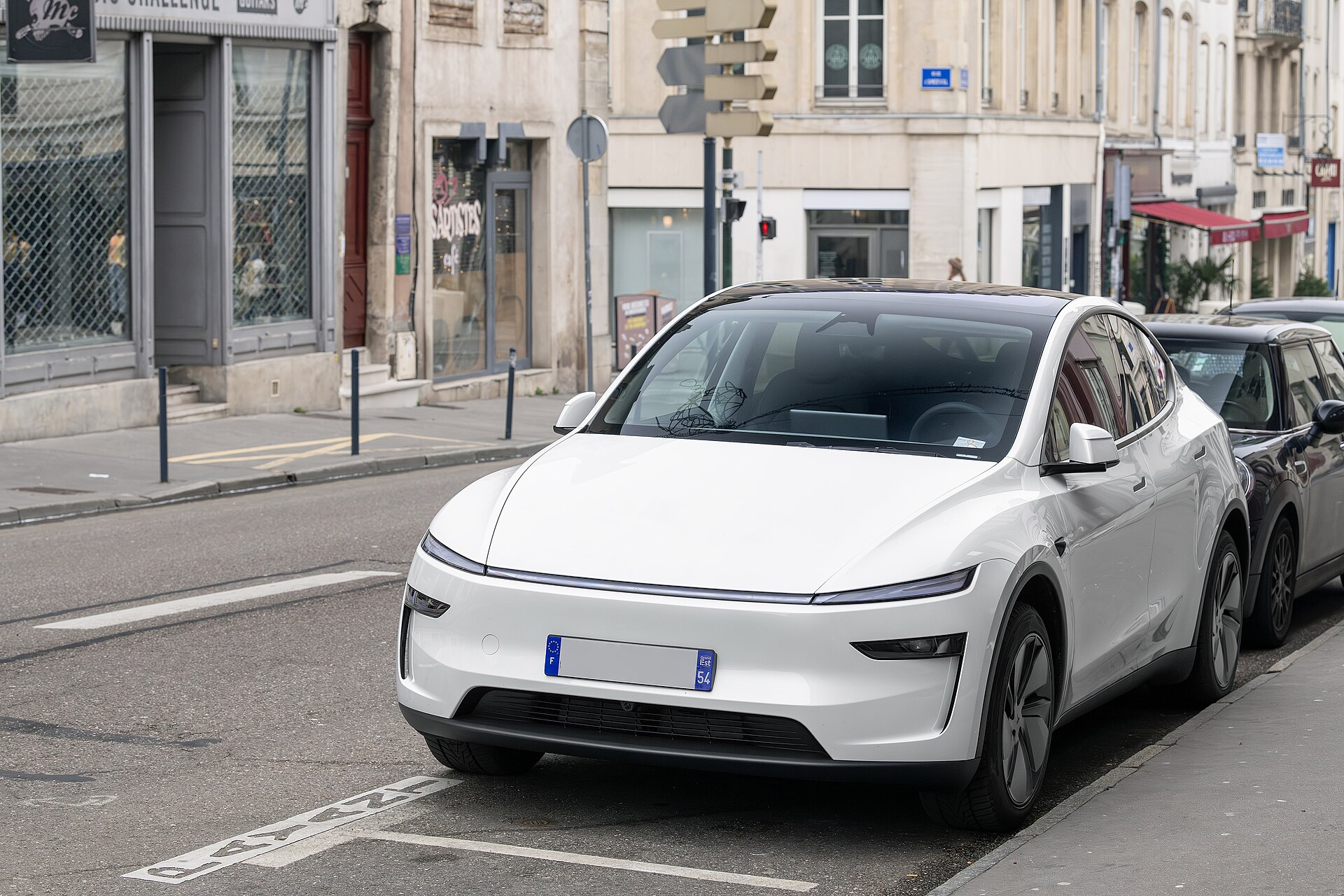
Information is current as of publication (September 2026) and was cross-checked against manufacturer and independent sources; EV pricing, range ratings, and incentives change frequently, so confirm current figures on the manufacturer’s configurator and your state program before ordering. This article is general information, not financial or purchasing advice. Some links are affiliate or referral links — see our disclosure page. Sources: fueleconomy.gov, Tesla, Chevrolet, Honda. Image credit: Alexandre Prevot, “Tesla Model Y Juniper,” CC BY-SA 4.0, via Wikimedia Commons.

About the author: Lifei Zhou
Model Y owner since 2022Ontario STO registered apprentice · 310SWorks on Porsche, Mercedes, BMW, Audi weeklyHundreds of readers referred (est.)
Lifei is a Tesla owner based in Canada, writing practical, fact-checked Tesla guides for US and Canadian drivers — buying, ownership, insurance, charging, and TSLA investing, all from first-hand experience.