
Tesla Trade-In Guide 2026: Value, Tax Savings & Tesla vs Carvana/CarMax (US & Canada)
Tesla Trade-In Guide 2026: Value, Tax Savings & Tesla vs Carvana/CarMax (US & Canada)

In one sentence
What your Tesla is worth in 2026, the trade-in sales-tax break that saves thousands in the US and Canada, and when Carvana, CarMax or a private sale beats Tesla's offer.
Trading in your old car — or your current Tesla — is one of the easiest ways to shrink the price of a new one. But in 2026, with the federal used-EV credit gone and used-Tesla prices still sliding, the difference between a smart trade-in and a lazy one can be several thousand dollars. Tesla makes the process almost frictionless: you get an instant estimate online, then hand over the keys on delivery day. The catch is that “easy” and “most money” aren’t always the same thing. This guide breaks down what your Tesla (or trade-in vehicle) is actually worth in 2026, the sales-tax break that makes trading in to a dealer surprisingly powerful in both the US and Canada, and exactly when Carvana, CarMax, or a private sale will beat Tesla’s offer.
Disclosure: some links are affiliate/referral links, and we may earn a commission at no extra cost to you. See our disclosure page.
📋 Contents
- How Tesla Trade-Ins Work in 2026
- What’s Your Tesla Worth? 2026 Trade-In Values
- The Trade-In Tax Break That Can Save You Thousands (US)
- Trade-In Tax Savings in Canada (Ontario, BC & Beyond)
- Tesla Trade-In vs Carvana, CarMax & Private Sale
- How to Get the Most for Your Trade-In
- Frequently Asked Questions
- The Bottom Line
How Tesla Trade-Ins Work in 2026
Tesla accepts almost any passenger vehicle toward the purchase of a new or used Tesla — gas or electric, cars, trucks, vans and SUVs. (Motorcycles, RVs and commercial vehicles are excluded.) The flow is entirely online until the very end:
- Get an estimate. Enter your VIN, current mileage, ZIP/postal code and any damage history through Tesla’s trade-in portal. You’ll get a preliminary offer in minutes, and Tesla may ask for photos.
- Place your order. The trade-in offer is attached to a specific new-vehicle order. If you order through a Tesla referral link, you also lock in 3 months of free Full Self-Driving (Supervised) on the new car — worth roughly $300 on its own.
- Final inspection. The estimate becomes a firm offer only after a physical inspection, which happens around delivery. Big surprises (undisclosed damage, worse-than-reported tires) can lower it.
- Hand it over on delivery day. You drop off the trade-in at your scheduled delivery appointment — Tesla can’t take it earlier or later. A handful of states (IA, MI, OK, TX) use a mail-in paperwork process that must be completed before delivery.
Financing a car you want to trade in? That’s fine. Tesla calculates your loan payoff and any equity — positive or negative — and folds it into your new purchase agreement. Tesla actually recommends not paying off the loan early yourself, because a title still in transit can delay your delivery.
What’s Your Tesla Worth? 2026 Trade-In Values
Used Tesla prices have kept drifting down through 2026 as more lease returns and trade-ins hit the market. The numbers below are ballpark dealer/trade-in ranges as of mid-2026 — your actual figure swings widely with model year, mileage, trim, battery health and condition.
| Model | Typical 2026 trade-in range (USD) | Biggest value drivers |
|---|---|---|
| Model 3 | ~$21,000–$25,000 | Year, mileage, LFP vs NCA battery, condition |
| Model Y | ~$24,000–$29,000 | Trim, seating config, mileage, condition |
| Model S | ~$28,000–$35,000+ | Plaid vs Long Range, low miles, battery health |
Two things move these numbers more than owners expect. First, battery health: a large share of a used EV’s value is really a bet on the pack, and online estimators are often blind to it. If your car still holds strong range, that’s a selling point worth documenting. (Our Tesla battery degradation guide shows how to read your real capacity.) Second, FSD: a paid Full Self-Driving license no longer transfers at all — Tesla’s FSD transfer program ended on March 31, 2026, and a buyer doesn’t inherit your license on a sale — so don’t expect it to add anything close to its sticker price to a trade-in offer. One more wrinkle worth knowing: Tesla discontinued the Model S and Model X in early 2026, so used examples are now the only way to get one, which has helped put a floor under their resale values.
The Trade-In Tax Break That Can Save You Thousands (US)
Here’s the part most people overlook. In most US states, your trade-in value is subtracted from the price of the new car before sales tax is calculated. Sell privately instead, and you pay tax on the full sticker. On a Tesla, that gap is real money.
Example: You buy a $50,000 Model Y and trade in a car worth $20,000 in a state with an 8% sales tax.
| Scenario | Taxable amount | Sales tax at 8% |
|---|---|---|
| Trade in to Tesla | $30,000 | $2,400 |
| Sell privately, no trade-in | $50,000 | $4,000 |
That’s a $1,600 tax saving just for trading in — before you even compare offers. States that give you this trade-in tax credit include AR, AZ, CO, CT, FL, ID, IN, KS, MA, MN, MO, NC, NJ, NM, NV, NY, OH, PA, TN, TX, UT, WA, WV and WY. A few states work differently: in California, Georgia, Hawaii, Maryland and South Carolina you pay tax on the full price up front and may reclaim the difference at tax time. So when you weigh a slightly higher Carvana offer against Tesla’s, do the math after tax — a private sale that nets $1,000 more can still lose once you add the extra sales tax back in.
One more 2026 reality check: the federal used-EV tax credit is gone. The up-to-$4,000 previously-owned clean vehicle credit expired on September 30, 2025, so buying a used Tesla no longer comes with that federal discount. Trading in is now the main lever left for cutting your out-the-door price.
Trade-In Tax Savings in Canada (Ontario, BC & Beyond)
Canadian buyers get a similar break, and it’s one of the strongest arguments for trading in to Tesla rather than selling to a stranger. In most provinces, when you trade a vehicle in to a dealer, the trade-in value reduces the amount your provincial tax is calculated on. Sell privately and you lose that benefit entirely.
| Province | How trade-in affects tax |
|---|---|
| Ontario (13% HST) | HST is charged only on price minus trade-in value |
| British Columbia (GST + tiered PST) | Trade-in reduces the PST base (not the 5% GST) |
| Alberta (5% GST only) | No provincial sales tax, so smaller trade-in tax effect |
Ontario example: buy a $60,000 Tesla, trade in a car worth $15,000, and HST applies to $45,000 — saving you about $1,950 versus paying 13% on the full price. In BC, the win is even bigger on pricier cars because the provincial tax rate climbs with price. Note the fine print: this only works on a dealer transaction, which a Tesla purchase is. For the official rules, see the Canada Revenue Agency’s GST/HST and motor vehicles page, and confirm your provincial treatment before you sign. Planning a full purchase? Our Model Y Canada guide walks through taxes and total cost by province.
Tesla Trade-In vs Carvana, CarMax & Private Sale
Tesla’s own offer is convenient, but it’s rarely the highest number. Here’s how the main options stack up in 2026:
| Option | Typical payout | Sales-tax break? | Speed / hassle |
|---|---|---|---|
| Trade in to Tesla | 2–5% above typical dealer offers; often $2k–$4k under CarMax | Yes (most states / provinces) | Easiest — done at delivery |
| Carvana / CarMax | 14–18% below private-party value; often higher than Tesla | No (separate sale) | Fast, online, few-day offer window |
| Private sale | Highest — 14–18% above dealer offers | No | Most work, most time, some risk |
The practical takeaway: get a same-day offer from both Carvana and CarMax (they trade blows — sometimes one leads by a few hundred dollars, sometimes a few thousand), then compare against Tesla’s number after adding the trade-in tax saving back to Tesla’s side. A private sale earns the most cash but costs you the tax break, plus the time and safety hassle of meeting buyers. For a full picture of what used Teslas fetch and how buyers evaluate them, see our used Tesla buying guide. Whichever route you pick, a fresh delivery-day inspection of your new car matters just as much as the trade.
How to Get the Most for Your Trade-In
A few low-effort moves reliably add hundreds of dollars — or protect you from a lowball:
- Detail the car before any appraisal. Clean interior, clear cameras and scratch-free paint read as “well cared for.” A basic car detailing kit (or in Canada) costs a fraction of what a shabby presentation can shave off. For the cabin, I keep a bottle of Meguiar’s interior detailer in the garage — ten minutes on the dash and door panels before the appraisal photos is time well spent (just don’t use it on the touchscreen).
- Collect multiple offers on the same day. EV values move fast; a Tuesday quote and a Friday quote aren’t comparable.
- Document battery health. Screenshot a recent full-charge range and any service records — it counters the “unknown battery” discount buyers price in.
- Do the after-tax math. In a trade-in-tax state or province, a lower Tesla offer can still win once the sales-tax saving is counted.
- Don’t disclose only the good stuff. Undisclosed damage found at inspection lowers Tesla’s firm offer — report it up front so the estimate holds.
- Buy smart on the new car, too. Ordering through a Tesla referral link adds 3 months of free FSD (Supervised), stacking on top of whatever your trade-in saves.
Frequently Asked Questions
Does trading in my car to Tesla lower my sales tax?
In most US states and Canadian provinces, yes. The trade-in value is subtracted from the new car’s price before tax is calculated, so you’re taxed on a smaller amount. Exceptions in the US include California, Georgia, Hawaii, Maryland and South Carolina, where you pay on the full price and may reclaim the difference at tax time.
Is Tesla’s trade-in offer competitive?
It’s convenient but usually not the highest. Tesla typically pays 2–5% above a standard dealer offer, yet often $2,000–$4,000 less than CarMax or Carvana. Once you add the sales-tax saving of trading in, though, Tesla’s number is frequently the best net deal.
Can I trade in a car that still has a loan on it?
Yes. Tesla calculates your payoff and any positive or negative equity and rolls it into the purchase. Tesla advises against paying the loan off yourself right before delivery, since a title in transit can delay handover.
Do I have to buy a Tesla to trade in my old car?
Through Tesla, yes — the trade-in is tied to a new or used Tesla purchase and dropped off at delivery. If you’re not buying a Tesla, use Carvana, CarMax or a private sale instead.
Is there still a federal tax credit for buying a used Tesla in 2026?
No. The federal previously-owned clean vehicle credit (up to $4,000) expired on September 30, 2025. Trading in is now the main way to reduce your out-the-door cost on a used or new Tesla.
Should I trade in or sell my Tesla privately?
A private sale nets the most cash — roughly 14–18% more than a dealer offer — but you lose the trade-in sales-tax break and take on the time and risk of selling yourself. Trade in for convenience and the tax saving; sell privately if squeezing out every dollar is worth the effort.
The Bottom Line
- Tesla trade-ins are quick and online: get an estimate, order, then drop off at delivery — financed cars welcome.
- Mid-2026 dealer/trade-in ballparks: Model 3 ~$21k–25k, Model Y ~$24k–29k, Model S ~$28k–35k+.
- In most US states and Canadian provinces, trading in lowers the sales tax you pay — often a $1,500–$2,000 swing that private sellers forfeit.
- Carvana and CarMax usually pay more up front than Tesla; a private sale pays most of all — but neither gets the tax break, so compare after tax.
- The federal used-EV credit ended Sept 30, 2025, making the trade-in tax saving the main discount left in 2026.
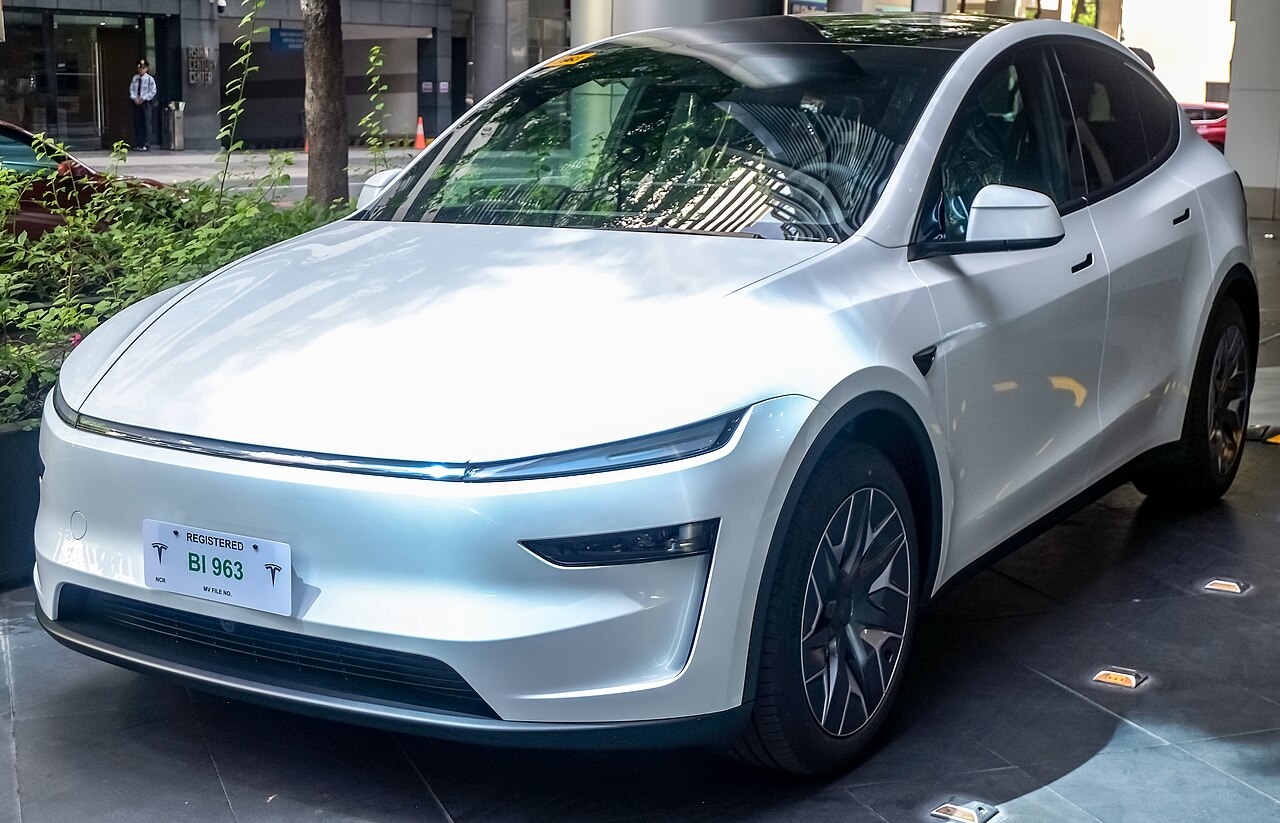
Information is current as of July 2026 and may change; trade-in values, tax rules and incentives vary by state, province and individual vehicle — always confirm with Tesla and your local tax authority (see the Tesla trade-in support page and IRS used clean vehicle credit page) before you decide. This article is general information, not financial or tax advice. Some links are affiliate/referral links — see our disclosure page. Image credit: Tesla Model Y by Ethan Llamas, licensed under CC BY-SA 4.0, via Wikimedia Commons.

About the author: Lifei Zhou
Model Y owner since 2022Ontario STO registered apprentice · 310SWorks on Porsche, Mercedes, BMW, Audi weeklyHundreds of readers referred (est.)
Lifei is a Tesla owner based in Canada, writing practical, fact-checked Tesla guides for US and Canadian drivers — buying, ownership, insurance, charging, and TSLA investing, all from first-hand experience.