
How to Add Washer Fluid to a Tesla (2026): Reservoir Location, Capacity and the Right Winter Fluid
How to Add Washer Fluid to a Tesla (2026): Reservoir Location, Capacity and the Right Winter Fluid

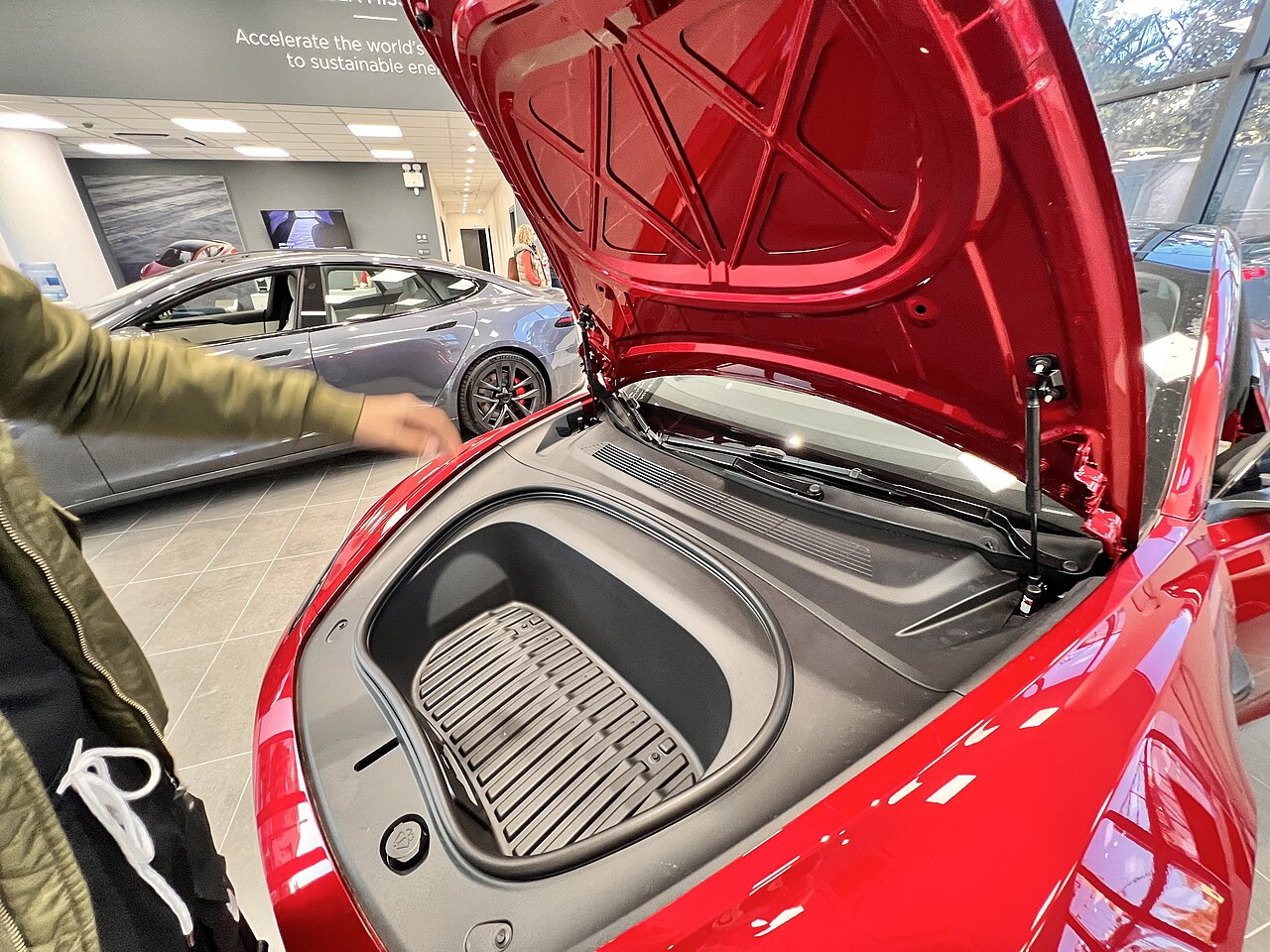
On a Tesla Model 3, Model Y or Cybertruck, the washer fluid reservoir sits behind the front trunk. Open the hood, find the cap with the windshield-washer symbol, and fill until the fluid is just below the filler neck. Tesla lists the capacity as 3.2 litres for Model 3, 4.5 litres for Model Y and 4.2 litres for Cybertruck. Once temperatures drop below 4°C (40°F), use a winter fluid with antifreeze, and skip any fluid with water repellent or bug wash.
Disclosure: some links are affiliate/referral links. If you buy through them, this site may earn a commission at no extra cost to you. See our disclosure page.
Key facts (checked November 3, 2026)
- Washer fluid is the only fluid Tesla expects owners to top up themselves. The reservoir is behind the front trunk.
- Reservoir capacity per Tesla’s service pages: Model 3 3.2 L, Model Y 4.5 L, Cybertruck 4.2 L.
- Tesla says to use washer fluid with antifreeze below 40°F (4°C) on Model 3 and Model Y.
- Do not use fluids with water repellent or bug wash. Tesla says they can cause streaking, smearing and squeaking.
- Tesla warns that untreated water can cause bacterial growth and odour, and that resulting damage is not covered by warranty.
📋 Contents
- Where Is the Washer Fluid Reservoir on a Tesla?
- How to Add Washer Fluid, Step by Step
- How Much Washer Fluid Does a Tesla Hold?
- Which Washer Fluid Should You Use in Winter?
- How to Spray Washer Fluid on Each Tesla
- Winter Problems: Frozen Wipers, Iced Glass and Jets That Won’t Spray
- Why the “Washer Fluid Low” Message Stays On
- New Owner Basics That Make Winter Easier
- Frequently Asked Questions
- Summary
Where Is the Washer Fluid Reservoir on a Tesla?
New owners often go looking for a dipstick and a row of fluid caps, the way a gas car has them. A Tesla has none of that. Tesla’s own Model Y DIY page for topping up washer fluid puts it simply: the only reservoir you can add fluid to is the windshield washer reservoir, and it is located behind the front trunk.
Brake fluid and battery coolant are sealed or service items. Leave them to Tesla Service. Washer fluid is the one job that is yours, and it takes about two minutes.
Where to look on each model:
- Model 3 and Model Y: open the hood (the frunk) and look around the trim at the edge of the frunk tub for a round cap with the windshield-washer symbol. On the 2023 Model 3 in the photo above, it sits beside the tub on the driver’s side, at the front corner.
- Cybertruck: open the powered frunk. Tesla’s Cybertruck washer fluid page says the reservoir is behind the powered frunk liner.
Cap designs changed over the years. Tesla’s Model 3 page shows one cap for cars built before about January 2024 and another for cars built after. The Model Y page shows different fill-level marks for cars built before and after about February 2025. The location and the steps are the same either way.
You don’t need to guess when it’s getting low. When the level drops, a message appears on the touchscreen.
How to Add Washer Fluid, Step by Step
The procedure is the same on Model 3 and Model Y, and nearly identical on Cybertruck. These steps follow Tesla’s service pages.
Source: Tesla service DIY pages for Model 3, Model Y and Cybertruck.
A few practical tips:
- Use a jug with a pour spout or a small funnel. The filler neck is narrow, and spilled fluid on painted panels should be rinsed off.
- Don’t overfill. Tesla’s instruction is to stop just below the filler neck, not at the brim.
- Close the hood fully before you use the wipers. Tesla’s manual warns to make sure the hood is completely closed before activating them.
How Much Washer Fluid Does a Tesla Hold?
Washer fluid in North America is usually sold in 1 US gallon jugs (3.785 litres) or 3.78 L jugs in Canada. Here is how that lines up with each reservoir.
| Model | Reservoir capacity | In US gallons (approx.) | Does one jug fill it from empty? |
|---|---|---|---|
| Model 3 | 3.2 L | 0.85 gal | Yes, with some left over |
| Model Y | 4.5 L | 1.19 gal | No, you’ll need a second jug |
| Cybertruck | 4.2 L | 1.11 gal | No, you’ll need a second jug |
Capacities from Tesla’s service DIY pages. Scale: 0 to 5 litres. Model S and Model X are discontinued and not shown.
In practice you are rarely filling from empty. Topping up when the touchscreen warning appears usually takes less than a full jug. Model Y owners who drive a lot in slushy weather may want to keep a second jug in the garage from November on.
Which Washer Fluid Should You Use in Winter?
This is where most owners go wrong. Tesla’s service pages set out a few clear rules, and they matter more in a Canadian or northern US winter than at any other time.
Use
- Washer fluid made for automotive use
- Fluid with antifreeze once it drops below 4°C (40°F)
- A freeze rating that covers the coldest place you drive
- A low-VOC fluid only if its freeze rating is still adequate
Avoid
- Plain or untreated water
- “With water repellent” or rain-repellent 2-in-1 fluids
- Bug wash formulas
- Summer fluid left in the tank into freezing weather
Based on Tesla’s service DIY pages for Model 3, Model Y and Cybertruck.
Why each rule exists:
- No water repellent or bug wash. Tesla says these formulated fluids can cause streaking, smearing, and squeaking or other noises. That rules out many popular 2-in-1 jugs sold as “rain repellent” or “bug remover”. Read the label before you buy.
- No plain water. Tesla says using untreated water can lead to bacterial growth, odour or damage that is not covered by warranty. Water also freezes, which can leave you with no washer at all on a salty highway.
- Antifreeze below 4°C (40°F). Tesla’s Model 3 page adds that using fluid without antifreeze in cold weather can impair visibility through the windshield. Fluid that freezes on contact with cold glass smears into a film you can’t see through.
- Low-VOC fluids. Some regions limit volatile organic compounds, which are the antifreeze in most washer fluid. Tesla says to use a low-VOC fluid only if it still gives adequate freeze protection for all the climates you drive in.
In Canada, winter fluid is commonly sold rated to -40, and that is the safe choice for the Prairies, northern Ontario and Quebec. In the northern US, the freeze rating is printed on the jug in Fahrenheit. Pick one that covers the coldest night you expect, not the average day.
Switching from summer to winter fluid is easy. Use the washers until the tank is low, then top up with winter fluid. Mixing a lot of summer fluid with winter fluid dilutes the freeze protection, so do the switch before the first hard frost, not after it.
How to Spray Washer Fluid on Each Tesla
Once the tank is full, it is worth knowing which button actually sprays it. The control depends on the model and year.
- Refreshed Model 3 without stalks (2024 and later): press the wiper button on the steering wheel for a single wipe. Press and hold it to spray washer fluid. According to Tesla’s Model 3 wipers and washers page, the wipers make two more passes after you release it, and sometimes a third a few seconds later. You can also reach wiper settings at Controls > Wipers.
- Model Y and earlier Model 3 with a left stalk: the wash button is on the end of the stalk. On the 2017–2023 Model 3, a partial press gives a single wipe and a full press sprays and wipes. Check your owner’s manual if your stalk looks different.
- Cybertruck: the controls differ from the cars, so check the wipers section of the Cybertruck owner’s manual on the touchscreen.
For blades, cabin filters and other simple jobs you can do at home, see our Tesla DIY guide to cabin filters and wiper blades.
Winter Problems: Frozen Wipers, Iced Glass and Jets That Won’t Spray
Most winter washer complaints are not about the fluid at all. They come from ice on the glass and blades. Tesla’s manual is direct about it: remove ice from the windshield before turning on the wipers, because ice can damage the blade edge, and in harsh climates make sure the blades are not frozen to the glass.
Habits that help:
- Precondition before you leave. Warming the cabin and turning on the windshield defrost helps loosen ice from the glass and blades. Our guide to preconditioning a Tesla in winter shows how to set it from the app or with Scheduled Departure.
- Clear the windshield by hand first. A long snow brush with an ice scraper does the heavy work so the blades don’t have to. The AstroAI extendable snow brush reaches across a Model Y windshield and roof, which a short scraper won’t do. It fits any Tesla and costs well under a set of replacement blades.
- Use Wiper Service Mode before lifting the wipers. If you want the blades off the glass before a storm, or to change them, put the wipers in service position first from Controls > Service > Wiper Service Mode (the exact menu name varies by software version). Tesla asks you to use this mode before lifting the arms off the glass.
- Don’t run the wipers on a frozen windshield. If the blades are stuck, wait for preconditioning to free them.
If the fluid comes out at first and then stops in a cold snap, the fluid in the lines may have frozen. That usually means summer fluid or water was still in the system. Park somewhere warm, let it thaw, run out the old fluid and refill with a winter-rated product.
If the jets spray weakly or to one side all year round, the nozzles may be blocked or out of position. That is a quick check for Tesla Service or mobile service. If your door handles and charge port are icing up too, see our frozen door handle and charge port fix.
Why the “Washer Fluid Low” Message Stays On
Sometimes the warning stays on after you fill up. Work through these checks before you book a service visit:
- Make sure the tank is actually full. If the reservoir was empty, it can take more than one jug, especially on Model Y.
- Check that the cap is fully seated and closed.
- Give it a short drive or restart the touchscreen. The message can take a moment to update after a refill.
- If it keeps coming back within days, the reservoir, a hose or the level sensor may have a problem. Book a visit through Service in the Tesla app and note when the message appeared.
A slow leak shows up as a wet patch under the front of the car, or a tank that empties without much washer use. Don’t keep topping it up all winter. Have it looked at.
New Owner Basics That Make Winter Easier
Topping up washer fluid is part of a short list of jobs worth doing before the first snow: winter tires, a winter-rated washer fluid, a proper snow brush and Scheduled Departure set in the app. I’ve driven my own Model Y through four Toronto-area winters since taking delivery in November 2022, and the cold-weather routine is far simpler than it looks at first.
If you are still shopping for a Tesla for a snowy climate, our Model Y RWD vs AWD winter comparison covers the drivetrain question. When you are ready to order, using a Tesla referral link gives new owners 3 months of FSD (Supervised). It generally can’t be combined with the new-car FSD trial or other offers, and Tesla confirms the final perk on your order.
Frequently Asked Questions
Where do you put washer fluid in a Tesla Model Y?
Open the hood (front trunk). The washer fluid reservoir is behind the frunk, and the filler cap has the windshield-washer symbol. Fill until the fluid is just below the filler neck.
How much washer fluid does a Tesla Model 3 hold?
Tesla lists the Model 3 reservoir at 3.2 litres, about 0.85 US gallons. One standard 1-gallon jug fills it from empty with some left over.
Can I use water instead of washer fluid in a Tesla?
Tesla says no. Untreated water can cause bacterial growth and odour, and resulting damage is not covered by warranty. In winter, water also freezes.
Can I use Rain-X or other water-repellent washer fluid in a Tesla?
Tesla’s service pages say not to use washer fluids that contain water repellent or bug wash, because they can cause streaking, smearing and squeaking. Choose a plain automotive washer fluid, winter-rated in cold months.
What temperature rating does my washer fluid need?
Tesla says to use fluid with antifreeze below 4°C (40°F). Choose a freeze rating that covers the coldest conditions you drive in. In much of Canada, -40-rated fluid is the common choice.
Does the washer fluid message mean something is wrong?
Usually it just means the level is low. If it stays on after a full top-up and a drive, or keeps coming back quickly, book a check through the Tesla app.
Is washer fluid the only fluid I need to check on a Tesla?
For owners, yes. Tesla describes the washer reservoir as the only one you can add fluid to. Brake fluid and coolant are handled by Tesla Service.
Summary
- The washer reservoir is behind the front trunk on Model 3, Model Y and Cybertruck. It is the only fluid owners top up.
- Capacity: Model 3 3.2 L, Model Y 4.5 L, Cybertruck 4.2 L. A Model Y needs more than one gallon jug from empty.
- Below 4°C (40°F), use fluid with antifreeze. Avoid water, water-repellent and bug-wash fluids.
- Switch to winter fluid before the first hard frost so the lines don’t freeze.
- Clear ice by hand, precondition, and use Wiper Service Mode before lifting the blades.
- A low-fluid message that won’t clear after a full tank is worth a Service booking in the app.
Order your Tesla with 3 months of FSD (Supervised) →
Browse more US Tesla guides and Canada Tesla guides.
Image credit: “Upgraded Tesla Model 3 – 2023 – Frunk” by Mpelas199, CC0 (public domain), via Wikimedia Commons.

About the author: Lifei Zhou
Model Y owner since 2022Ontario STO registered apprentice · 310SWorks on Porsche, Mercedes, BMW, Audi weeklyHundreds of readers referred (est.)
Lifei is a Tesla owner based in Canada, writing practical, fact-checked Tesla guides for US and Canadian drivers — buying, ownership, insurance, charging, and TSLA investing, all from first-hand experience.