
Model Y RWD vs AWD for Winter (2026): Do You Need All-Wheel Drive in Canada and the Snow Belt?
Model Y RWD vs AWD for Winter (2026): Do You Need All-Wheel Drive in Canada and the Snow Belt?

For most drivers in Toronto, Montreal, Vancouver or the US snow belt, a Model Y Rear-Wheel Drive on proper winter tires is enough for plowed city and highway driving. All-wheel drive earns its price if you face unplowed rural roads, steep driveways or mountain passes regularly. In Canada the decision is expensive: only the Rear-Wheel Drive qualifies for the $5,000 federal rebate, so the cheapest AWD Model Y costs about $20,000 more after incentives, while in the US the step to AWD is just $2,000.
Disclosure: some links are affiliate/referral links, and this site may earn a commission or referral credit at no extra cost to you. See our disclosure page.
Key facts (Tesla prices as of October 5, 2026)
- Canada: Model Y Rear-Wheel Drive $49,990 (463 km), Premium AWD $64,990 (542 km), Performance $74,990 (494 km).
- Only the Model Y Rear-Wheel Drive fits under the federal EVAP $50,000 transaction cap for the $5,000 rebate. Adding the $1,300 tow hitch pushes it over.
- US: Model Y RWD $39,990 and AWD $41,990, so all-wheel drive is a $2,000 step.
- Winter tires matter more than drivetrain for stopping and steering. Transport Canada’s tests found up to nine metres shorter braking distance with winter tires on all four wheels.
- Quebec requires winter tires from December 1 to March 15, whatever your drivetrain.
📋 Contents
- The short answer: tires first, then drivetrain
- What you actually pay for AWD in Canada vs the US
- How a Rear-Wheel Drive Model Y actually behaves in snow
- Winter tires: what they cost and why every Model Y needs them
- Range, the heat pump and winter charging
- How to decide in four steps
- Frequently Asked Questions
- Summary
The short answer: tires first, then drivetrain
All-wheel drive helps a car get moving and keep moving on slippery surfaces. It does not help the car stop, and it adds little when you turn into a corner too fast. Braking and cornering grip come from the tires. That is why a Rear-Wheel Drive Model Y on good winter tires usually feels more secure in a snowy parking lot or on an icy off-ramp than an AWD Model Y on the all-season tires it was delivered on.
Transport Canada has made this point for years. Its own testing found that a vehicle on four winter tires needed up to nine metres less braking distance to stop, and the department’s position is that winter tires belong on all four wheels during winter. No drivetrain gives you nine metres back.
So the honest way to frame the question is this: once you have winter tires, how often will you be in conditions where getting moving is the hard part? Think of deep unplowed snow, a steep driveway after a storm, or a long climb on a snowy mountain highway. If that is a few mornings a year, RWD is fine. If it is weekly, AWD starts to pay for itself in stress saved.
I drive a dual-motor Model Y Long Range, which I ordered straight from tesla.com in January 2022 without a test drive. It has now been through four winters in the Toronto area. I’m not going to tell you RWD is “just as good,” because I haven’t owned one. What I can tell you is that most of my winter driving is on plowed suburban roads and the 400-series highways, and that is the kind of driving where the drivetrain matters least.
What you actually pay for AWD in Canada vs the US
This is where the two countries split. In the US, Tesla sells a regular Model Y AWD only $2,000 above the RWD. In Canada, as of October 5, 2026, the lineup on Tesla’s Canadian Model Y configurator goes from Rear-Wheel Drive straight to Premium AWD. There is no basic AWD step in between.
Rear-Wheel Drive
- Range
- 463 km
- 0–100 km/h
- 7.2 s
Premium AWD
- Range
- 542 km
- 0–100 km/h
- 4.8 s
Performance
- Range
- 494 km
- 0–100 km/h
- 3.5 s
The federal Electric Vehicle Affordability Program (EVAP) gives up to $5,000 off a new battery-electric vehicle, but imported models must have a final transaction value of $50,000 or less. The Berlin-built Model Y Rear-Wheel Drive at $49,990 squeezes under that cap. The Premium AWD and Performance do not. Be careful with options: the $1,300 tow hitch takes the RWD past $50,000 and you lose the whole rebate, not just part of it.
Vehicle price only, before about $2,650 in freight, PDI and fees, the $250 order fee and sales tax. Scale: $0 to $80,000. Only the RWD gets the $5,000 EVAP rebate.
That makes the real Canadian gap about $20,000. Financed through Tesla’s default Canadian rate of 5.21% APR over 96 months, $20,000 works out to roughly $255 a month before taxes. You do get more for that money: a bigger battery with 79 km more range, much quicker acceleration, and a longer battery warranty. But if winter traction is the only reason you’re looking at AWD, $20,000 buys a lot of winter tires.
| Model Y (as of Oct 5, 2026) | Canada RWD | Canada Premium AWD | US RWD | US AWD |
|---|---|---|---|---|
| Price | C$49,990 | C$64,990 | US$39,990 | US$41,990 |
| Federal purchase incentive | $5,000 EVAP | None (over cap) | None (credit ended Sept 30, 2025) | None |
| Cost of the AWD step | — | About $20,000 after EVAP | — | $2,000 |
| Battery warranty (8 years) | 160,000 km | 192,000 km | 100,000 miles | 100,000 miles |
| Tesla financing | 5.21% APR, 96 months (default) | 5.21% APR, 96 months (default) | 1.99% APR, up to 72 months | 1.99% APR, up to 72 months |
For US buyers the math is easy. At $2,000, AWD is cheap insurance if you live anywhere with real snow, and at the current 1.99% APR offer (for orders from September 28, 2026) it adds only a small amount to the monthly payment. In the US the RWD makes the most sense in the Sun Belt, or for buyers who want the lowest price and already plan to run winter tires.
Quebec buyers have one more variable. The provincial Roulez vert program pays up to $2,000 in 2026 for a new electric vehicle with an MSRP under $65,000, registered by December 31, 2026, and it ends in 2027. Check the eligible-vehicle list for your exact trim and options before you count on it.
How a Rear-Wheel Drive Model Y actually behaves in snow
A modern RWD electric car is nothing like the rear-drive sedans many Canadians remember. Electric motors respond in milliseconds, and the traction control can cut torque to a slipping wheel far faster than an engine could. The battery also sits low in the floor, which keeps the weight down and spread out. Owner reports and media tests generally agree: on winter tires, a RWD Model Y handles plowed roads and light snow with little drama.
Where RWD struggles is when the rear tires simply can’t find grip: a few inches of unplowed snow on a hill, a slushy driveway ramp, or pulling away from a snowbank left by the plow. In those moments AWD lets the front wheels pull as well, and that is the real difference you will feel.
Tesla gives RWD owners a tool for those moments. In the Model Y owner’s manual, Slip Start relaxes traction control so the wheels can spin, which helps when you are stuck in snow, mud or ice. On newer software you’ll find it under Controls > Dynamics, while older software shows it under Controls > Pedals & Steering. Dual-motor cars also get an Off-Road Assist option. Turn Slip Start off again once you’re free. Traction control turns itself back on at your next drive anyway.
RWD on winter tires is usually enough
- City or suburban driving on plowed roads
- Mostly highway commuting (401, QEW, I-90)
- Flat driveway or underground parking
- You can work from home on the worst storm days
- In Canada, you want the $5,000 EVAP rebate
Pay for AWD
- Rural roads plowed late or not at all
- Steep driveway or a hilly neighbourhood
- Regular trips over mountain passes or to ski hills
- You won’t run winter tires
- You also want the extra range and speed
Winter tires: what they cost and why every Model Y needs them
Whichever drivetrain you choose, budget for a second set of wheels with winter tires. A Model Y on all-season tires is the weakest winter setup of all, AWD included, because all-season rubber hardens in the cold and loses grip on snow and ice. Look for the three-peak mountain snowflake symbol on the sidewall.
In Quebec this isn’t optional. Under the province’s winter tire rule, every passenger vehicle registered in Quebec needs winter tires from December 1 to March 15 inclusive. Elsewhere in Canada they are voluntary in most places, but many Ontario insurers offer a discount for running them. Ask yours when you renew.
Sizes, the brands owners like and how to store the off-season set are covered in our Tesla winter tires guide. A smaller wheel is usually the winter choice because the taller sidewall soaks up potholes and the tires cost less. Check that a smaller wheel clears the brakes on your exact Model Y before you buy.
If you’re in the Greater Toronto Area and need your winter set mounted or an alignment afterward, come to the shop where I work for Tesla alignment and tires. XIUCHE in Markham works by appointment only (437-214-5267), and on Teslas we do alignment and tires only, not battery, motor, high-voltage or software work. XIUCHE is the shop where I work, so I can stand behind the quality.
Two inexpensive things also make a Canadian winter easier in any Model Y. Snow and salt end up on the floor, and the factory carpet mats soak up meltwater. Deep-lipped all-weather mats keep that brine off the carpet. For a 2025 or newer Model Y (Juniper), the 3D MAXpider all-weather floor mats are a precise-fit, higher-end set. They cost more than generic mats, but they’re worth it if you plan to keep the car for years and drive through salty slush every winter. The 3W floor mats for the 2025+ Model Y are a lower-cost alternative. Check the model year before ordering, because Juniper mats don’t fit earlier Model Ys. Add a long-handled AstroAI extendable snow brush so you can reach the middle of the Model Y’s wide glass roof and windshield.
Range, the heat pump and winter charging
Some buyers pick AWD for winter range rather than traction, and that is a fair reason. In Canada the Premium AWD is rated at 542 km against 463 km for the Rear-Wheel Drive. Cold weather cuts every EV’s range, so the bigger starting number gives you more cushion on a long winter drive between Superchargers.
For a typical commute it matters much less. If you charge at home overnight, you leave every morning with a full daily charge, and 463 km of rated range is plenty even after a winter reduction. Where the RWD feels tighter is on long winter highway trips, like Toronto to Ottawa or Calgary to Banff, where you’ll stop to charge a little more often.
Both versions warm the cabin with a heat pump, and both can precondition the battery and cabin while plugged in so the car leaves home warm without using range. If you park outside, preconditioning matters more than the drivetrain for making the first kilometres comfortable. Our guide on how to precondition a Tesla in winter covers scheduled departure and warming the battery before a Supercharger stop.
How to decide in four steps
For a Canadian commuter in a big city, the numbers usually point to the Rear-Wheel Drive plus winter tires, with the rebate money left over. For a rural buyer, a ski-hill regular or someone with a steep driveway, the Premium AWD is the more relaxed winter car, and its range and longer battery warranty are real extras. In the US, unless you live where it never snows, the $2,000 AWD is hard to argue against.
When you’re ready to order, using a Tesla referral link gives new owners 3 months of FSD (Supervised). It generally can’t be combined with the new-car FSD trial or other offers, and Tesla confirms the final perk on your order. Our Model Y price in Canada guide breaks down the out-the-door cost with tax by province.
Frequently Asked Questions
Is the Tesla Model Y RWD good in snow?
Yes, on winter tires and plowed roads it is generally capable, thanks to fast traction control and a low centre of gravity. It is weakest when getting moving in deep unplowed snow or on steep icy hills, which is where AWD helps.
Is AWD worth it for a Model Y in Canada?
It depends on your roads. As of October 5, 2026, the cheapest AWD Model Y (Premium AWD, $64,990) costs about $20,000 more than the Rear-Wheel Drive after the $5,000 EVAP rebate, which only the RWD gets. City drivers on winter tires usually don’t need it. Rural, hilly or mountain drivers often find it worth the money.
Do I still need winter tires with AWD?
Yes. AWD helps you accelerate on slippery roads but does nothing for braking or steering grip. Transport Canada’s testing found up to nine metres shorter braking distance with four winter tires, and Quebec requires them from December 1 to March 15 on every passenger vehicle.
Which Model Y qualifies for the $5,000 EVAP rebate?
As of October 5, 2026, only the Model Y Rear-Wheel Drive at $49,990, because imported vehicles must have a final transaction value of $50,000 or less. Adding the $1,300 tow hitch takes it over the cap and cancels the rebate.
What is Slip Start on a Tesla?
Slip Start relaxes traction control so the wheels can spin, which helps free the car when it is stuck in snow, mud or ice. It’s in Controls > Dynamics on newer software, and traction control comes back on automatically at your next drive.
Does AWD give a Model Y more winter range?
In Canada the Premium AWD is rated at 542 km against 463 km for the RWD because it has a larger battery, so it starts winter trips with more cushion. For daily commuting with home charging, the RWD’s range is usually plenty.
Summary
- Winter tires come before drivetrain. They help braking and steering on any Model Y.
- Model Y RWD on winter tires handles plowed city and highway winter driving well. AWD matters most on unplowed, steep or mountain roads.
- Canada: only the $49,990 RWD gets the $5,000 EVAP rebate, so the Premium AWD costs about $20,000 more. Skip options that push the RWD over $50,000.
- US: AWD is a $2,000 step over the RWD and easy to justify anywhere with snow.
- The Premium AWD adds 79 km of rated range, much quicker acceleration and a longer battery warranty in Canada.
Order your Model Y with 3 months of FSD (Supervised) →
Browse more Canada Tesla guides.
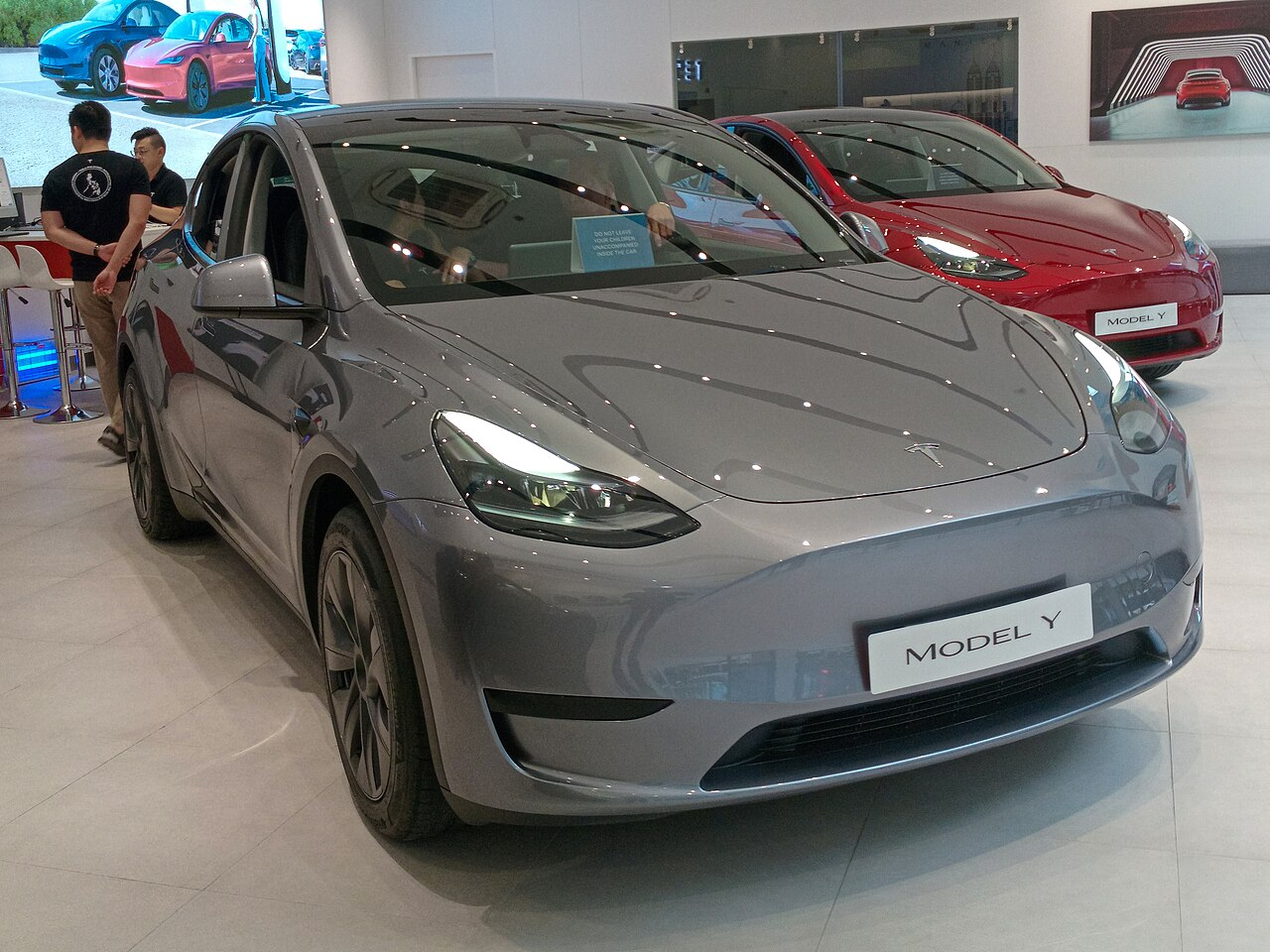
Image credit: 2025 Tesla Model Y RWD in Midnight Silver Metallic by Ethan Llamas, CC BY-SA 4.0, via Wikimedia Commons.

About the author: Lifei Zhou
Model Y owner since 2022Ontario STO registered apprentice · 310SWorks on Porsche, Mercedes, BMW, Audi weeklyHundreds of readers referred (est.)
Lifei is a Tesla owner based in Canada, writing practical, fact-checked Tesla guides for US and Canadian drivers — buying, ownership, insurance, charging, and TSLA investing, all from first-hand experience.