
Tesla Winter Accessories 2026: The Cold-Weather Kit That Actually Helps (US & Canada)
Tesla Winter Accessories 2026: The Cold-Weather Kit That Actually Helps (US & Canada)

In one sentence
Cold weather cuts your Tesla's range and strains the 12V battery. Here's the 2026 winter accessory kit that actually helps — plus the free habits that save the most.
Your Tesla does not stop working when the temperature drops — but it does behave differently. Range shrinks, the 12V battery gets cranky, the glass roof frosts over, and the flush door handles can freeze shut on the coldest mornings. The good news is that a handful of inexpensive, well-chosen accessories fix almost every winter headache before it starts. This guide is the cold-weather kit we would put in the frunk of any Model 3, Model Y, or older Model S/X owner heading into a North American winter, plus the free habits that matter more than any gadget.
We have kept it practical and current for the 2026 season: what actually helps, what to skip, and roughly what each item costs in the US and Canada. Whether you just took delivery or are about to order — a new Model 3, Model Y, or Cybertruck ordered through a Tesla referral link currently includes 3 months of free Full Self-Driving (Supervised) — a little winter prep pays off all season.
Disclosure: some links are affiliate/referral links. If you buy through them we may earn a small commission at no extra cost to you, and Tesla referral orders earn perks for both of us. See our disclosure page.
📋 Contents
- Why Winter Is Hard on a Tesla
- The Free Habit That Beats Any Accessory: Preconditioning
- Heat the Seats, Not the Whole Cabin
- Keep a Jump Starter in the Frunk
- Clear Snow and Ice Fast — Without Scratching Anything
- Protect the Interior From Slush Season
- The 2026 Tesla Winter Kit at a Glance
- Winter Habits That Save More Range Than Gear
- Frequently Asked Questions
- The Bottom Line
Why Winter Is Hard on a Tesla
Three things change when it gets cold, and understanding them tells you exactly what to buy.
First, range drops. Independent 2025–26 testing across tens of thousands of EVs found the average electric car loses roughly 20% of its range at freezing (32°F / 0°C), and Tesla’s heat-pump models sit near the front of the pack, typically holding around 85–87% of their warm-weather range at freezing. Drop into deep cold (0°F / -18°C) with short trips and full cabin heat and that loss can climb toward 30–40%. The US Department of Energy’s fueleconomy.gov cold-weather page explains the physics: cold batteries are less efficient, and cabin heating is the biggest single drain.
Second, the 12V battery struggles. Your Tesla’s low-voltage battery wakes the car, closes the high-voltage contactors, and powers the door handles and screens. Cold weather saps its capacity, and a parked car running Sentry Mode can drain it further. If that little battery dies, the car sits — you cannot even open a charge port or fast-charge until it is jumped. (For the full story on symptoms and replacement, see our Tesla winter driving guide.)
Third, grip and visibility suffer. All-season tires harden below about 45°F and lose bite on snow and ice, the glass roof and windows frost over, and slush turns your carpets into a swamp. None of this is dangerous if you plan for it — and most of the fixes cost less than a tank of gas used to.
The Free Habit That Beats Any Accessory: Preconditioning
Before you spend a dollar, use the feature you already own. Preconditioning — warming the cabin and battery while the car is still plugged in — is the single most effective winter countermeasure, worth an estimated 15–25% more real-world range because you leave with a warm battery instead of spending driving energy to heat it. Schedule it in the Tesla app about 30–45 minutes before departure, or set a daily “Departure” time so it happens automatically.
Two related habits: keep the car plugged in whenever you park in the cold (even a standard outlet keeps the battery warm), and don’t obsess over the range number when it’s frigid — it is a conservative estimate, not a broken battery. Preconditioning also thaws frozen door handles and de-ices the windshield before you walk out. Tesla’s own cold-weather best practices put it first for good reason. It is free, and nothing you buy replaces it.
Heat the Seats, Not the Whole Cabin
Here is the counterintuitive winter trick: cabin heat is expensive, but seat and steering-wheel heaters barely touch your range because they warm you directly instead of the whole air volume. On a Model 3 or Model Y with the heat pump, leaning on the seat heaters and dialing the cabin down a few degrees can noticeably stretch winter miles.
The catch: rear seats on some trims, and most older Model S/X, don’t have heated seats — or the driver simply wants more warmth than the factory element gives. A plug-in 12V heated seat cushion (roughly $30–$45) solves both. It runs off the accessory socket, adds instant warmth to any seat, and lets you keep the cabin thermostat lower — turning a comfort item into a genuine range-saver. It is the rare accessory that pays for itself in miles.
Keep a Jump Starter in the Frunk
If you buy one thing on this list, make it a portable lithium jump starter. A dead 12V battery is the most common way a Tesla strands its owner in winter, and because the car can’t wake itself, roadside assistance often means a tow. A compact unit like the NOCO Boost Plus GB40 (about $100–$130) lets you jump the low-voltage battery yourself in a few minutes, following Tesla’s documented procedure, and get the car awake enough to drive to service.
It lives in the frunk, doubles as a USB power bank and flashlight, and works on any 12V vehicle — so it covers your friends and family too. Pair it with knowing where your car’s 12V access points are before you need them. If you want the deeper diagnostics, our charging and running-cost guide covers how the low-voltage system ties into overall ownership costs. A good jump starter is cheap insurance against the worst winter surprise.
Clear Snow and Ice Fast — Without Scratching Anything
Teslas have soft, easily-marred paint and a big glass roof, so a proper tool matters. A telescoping snow brush and ice scraper (around $20–$30) reaches the middle of the roof and hood without you climbing on the car, and a soft bristle head sweeps snow off panels without swirl marks. Extendable models collapse to fit the frunk or door pocket.
Two supporting moves make icy mornings easier. First, treat the outside of your windshield and mirrors with a glass water repellent such as Rain-X (about $6–$10 a bottle) so ice and slush shed faster and wipers work less. Second, precondition (see above) to melt frost from the inside while you brush the outside — the two together turn a ten-minute chore into two. Skip metal scrapers and hot water on the glass roof; thermal shock and scratches are not worth the rush.
Protect the Interior From Slush Season
Salt, slush, and snow-caked boots destroy factory carpet. A set of laser-fit, raised-lip all-weather floor mats (roughly $130–$180 for a full set, model-specific) trap meltwater and road salt in a tray you can shake out and hose off, protecting resale value on the part of the car winter hits hardest. If you regularly haul wet gear, a matching trunk liner is a sensible add-on.
One more cold-weather gremlin: tire pressure. Every 10°F drop pulls roughly 1 psi out of your tires, so a cold snap will trigger the low-pressure warning and quietly cost you range and grip. A small 12V tire inflator in the frunk lets you top up to the door-jamb spec in your driveway instead of hunting for a working air pump in the cold. It pairs naturally with the fact that most Teslas ship without a spare.
The 2026 Tesla Winter Kit at a Glance
| Item | Why it earns a spot | Rough US price | Priority |
|---|---|---|---|
| Lithium jump starter (NOCO GB40) | Revives a dead 12V so you avoid a tow; doubles as a power bank | $100–$130 | Must-have |
| 12V heated seat cushion | Lets you run less cabin heat, saving real-world range | $30–$45 | High |
| Telescoping snow brush & scraper | Clears the roof and glass without scratching soft paint | $20–$30 | High |
| All-weather floor mats | Traps salt and slush; protects carpet and resale value | $130–$180 | Medium |
| Glass water repellent (Rain-X) | Sheds ice and slush; helps wipers and night visibility | $6–$10 | Nice-to-have |
Prices are typical US ranges and move with sales; check the current listing. Canadian shoppers will find equivalents on Amazon.ca, though model-specific mats are worth matching to your exact car and year.
Winter Habits That Save More Range Than Gear
Accessories help, but driving and charging habits do the heavy lifting:
- Precondition before every cold departure, and time it with the app so the battery is warm when you unplug.
- Charge to a higher daily limit in winter — cold cuts usable range, so a bit more buffer keeps you comfortable.
- Precondition on the way to a Supercharger; a cold pack charges slowly, and navigating to a charger warms it automatically. Our Supercharger cost guide breaks down winter charging speed and pricing.
- Fit proper winter tires if you see regular snow — the NHTSA’s winter driving tips rank tires as the top safety upgrade, and we cover Tesla-specific sizing in our Tesla winter tires guide.
- Keep the car plugged in overnight to protect both the main and 12V batteries in deep cold.
If you are still shopping for the car itself before the snow flies, ordering a new Model 3, Model Y, or Cybertruck through a Tesla referral link currently adds 3 months of free Full Self-Driving (Supervised) — a nice head start on your first winter, though it generally doesn’t stack with the standard 30-day trial. You can browse more North American ownership guides on our US Tesla hub.
Frequently Asked Questions
How much range does a Tesla really lose in winter?
Expect around 15–20% at freezing for a heat-pump Model 3 or Model Y, and up to 30–40% in deep cold with short trips and heavy cabin heating. Preconditioning while plugged in recovers a large chunk of that. The loss is normal and temporary — your range returns as it warms up.
Do I need winter tires on a Tesla?
If you regularly drive on snow or ice, yes — dedicated winter tires transform braking and traction far more than all-wheel drive alone. In many parts of Canada they are effectively required, and Quebec mandates them by law each winter; Canadian owners can check federal EV resources and rules via Transport Canada. If you only see occasional flurries, quality all-season tires may be enough.
Why does my Tesla’s 12V battery die in the cold?
Cold weather reduces any low-voltage battery’s capacity, and a parked Tesla running Sentry Mode keeps drawing power. If the 12V dies, the car can’t wake or charge until it’s jumped — which is exactly why a compact lithium jump starter belongs in the frunk all winter.
Should I heat the seats or the cabin to save range?
Seats. Seat and steering-wheel heaters warm you directly and use a fraction of the energy of heating the whole cabin. Set the cabin a few degrees cooler, lean on the seat heaters, and you’ll notice the difference on a cold commute.
Is it bad to leave my Tesla plugged in overnight in winter?
No — it’s recommended. Staying plugged in lets the car keep the battery in a healthy temperature range without draining your driving charge, and it means you leave in the morning with a full, warm pack. There’s no harm in leaving it connected at your daily charge limit.
Can I use hot water to melt ice off the windshield?
Avoid it. Sudden temperature swings can crack glass, and it refreezes fast. Precondition from inside the app while you brush the outside with a soft snow brush, and treat the glass with a water repellent so ice sheds more easily next time.
The Bottom Line
- Preconditioning while plugged in is your most powerful — and free — winter tool; use it before every cold drive.
- A lithium jump starter is the one must-have purchase: a dead 12V is the top winter stranding risk.
- Heat the seats, not the cabin — a 12V heated cushion turns comfort into extra range.
- Protect paint and glass with a soft snow brush and a water repellent; protect carpets with all-weather mats.
- Winter tires and a slightly higher charge limit do more for safety and range than any gadget.
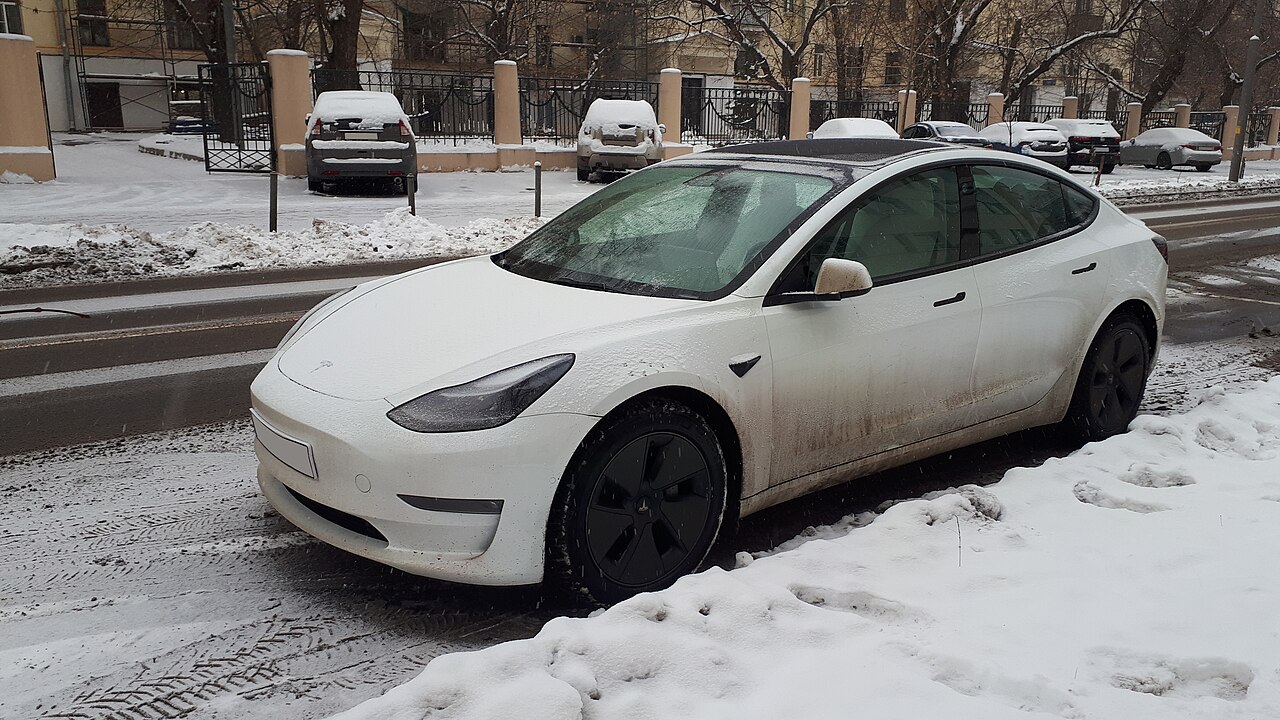
Information is current as of August 2026 and reflects publicly available data for the 2026 winter season; prices, range figures, and Tesla features change over time — verify current details before buying. This article is general information, not professional advice. Some links are affiliate or referral links; see our disclosure page. Image credit: “Tesla Model S in snow” by Kirill Borisenko, licensed under CC BY-SA 4.0, via Wikimedia Commons.

About the author: Lifei Zhou
Model Y owner since 2022Ontario STO registered apprentice · 310SWorks on Porsche, Mercedes, BMW, Audi weeklyHundreds of readers referred (est.)
Lifei is a Tesla owner based in Canada, writing practical, fact-checked Tesla guides for US and Canadian drivers — buying, ownership, insurance, charging, and TSLA investing, all from first-hand experience.