
How to Maximize Your Tesla’s Range: 14 Real-World Efficiency Tips (2026)
How to Maximize Your Tesla’s Range: 14 Real-World Efficiency Tips (2026)

In one sentence
Add real, usable miles to every charge. 14 practical, year-round ways to boost your Tesla’s range and lower Wh/mi — speed, tires, preconditioning, and more, for US and Canadian owners in 2026.
Every Tesla owner eventually asks the same question: why does the dashboard promise 320 miles when the car only seems to deliver 250 on a real highway drive? The answer is not a defective battery or a broken estimate — it is physics, habits, and a handful of settings that quietly drain range. The good news is that most of those losses are recoverable. Once you understand what actually moves the needle on efficiency (measured in watt-hours per mile, or Wh/mi), you can add real, usable miles to every charge without spending a dime — and know exactly which cheap accessories are worth it and which are marketing.
This guide breaks down 14 practical, year-round ways to squeeze more range out of any Tesla in the United States and Canada, from a Model 3 Standard to a Model Y Performance. No hypermiling gimmicks that make the car miserable to drive — just the changes that pay off.
Disclosure: some links are affiliate/referral links. If you buy or order through them we may earn a commission or credit at no extra cost to you. See our disclosure page.
📋 Contents
- Why Your Tesla Never Quite Hits Its EPA Range
- Slow Down: Speed Is the Single Biggest Range Killer
- Master Regenerative Braking and One-Pedal Driving
- Keep Your Tires Right — The Cheapest Free Miles
- Win the Climate Battle: Preconditioning and the Cold-Weather Tax
- Cut Weight, Drag, and Phantom Drain
- Efficiency by Model: Which Teslas Go Farthest per Kilowatt-Hour
- A 10-Minute Efficiency Checklist Before Any Road Trip
- Frequently Asked Questions
- The Bottom Line
Why Your Tesla Never Quite Hits Its EPA Range
The range number Tesla advertises comes from the EPA’s standardized test cycle, which blends city and highway driving at moderate speeds in mild temperatures. Real life rarely matches that. Interstate speeds, cold mornings, hills, headwinds, and a loaded trunk all pull the real figure below the sticker.
How far below? Independent testing gives a reliable rule of thumb. In Edmunds’ real-world range test, the 2026 Model 3 RWD actually beat its EPA estimate by about 30 miles in mixed driving, returning roughly 4.6 mi/kWh — but that same car on a steady 75 mph interstate run will land well under its rating. For planning a road trip, the safe move is to take the EPA number and subtract about 15%, then treat that as your usable highway range in mild weather. In winter, subtract more. The US Department of Energy’s fueleconomy.gov explains why speed, temperature, and accessory use move EV efficiency so much.
| Tesla (2026) | EPA range | Realistic 70 mph highway | Road-trip planning range |
|---|---|---|---|
| Model 3 Standard RWD | 321 mi | ~255 mi | ~270 mi |
| Model 3 Premium AWD | 363 mi | ~290 mi | ~310 mi |
| Model Y Premium RWD | 357 mi | ~285 mi | ~305 mi |
| Model Y Premium AWD | 327 mi | ~260 mi | ~280 mi |
| Model Y Performance | 306 mi | ~245 mi | ~260 mi |
Figures are rounded estimates for mild-weather planning; your results vary with speed, wheels, and temperature. The takeaway: none of these losses are a fault, and every tip below claws some of them back.
Slow Down: Speed Is the Single Biggest Range Killer
If you change only one thing, change your cruising speed. Aerodynamic drag rises with the square of speed, so the energy needed to push through the air climbs steeply as the numbers on the speedometer go up. Going from 80 mph to 70 mph is not a 12% saving — it is often closer to 20% in real terms.
Put concretely: dropping from 80 mph to 65–70 mph can add 30 to 50 miles of usable highway range to a Long Range Tesla, according to independent range testing. That is frequently the difference between one Supercharger stop and two on a long drive. Set Autosteer or cruise control to a steady 68–72 mph, stay out of the far-left lane, and let the efficiency come to you. Tesla’s own official range tips put speed at the top of the list too. Smooth is also free: hard launches and hard braking waste energy, while gentle inputs let the car recover more through regeneration.
Master Regenerative Braking and One-Pedal Driving
Regenerative braking is a Tesla’s efficiency superpower. When you lift off the accelerator, the motor becomes a generator and feeds energy back into the battery instead of throwing it away as brake heat. Learning to drive with one pedal — easing off early to slow down rather than coasting and then braking hard — can meaningfully lower your Wh/mi, especially in stop-and-go city traffic.
A few habits help you capture the most:
- Look far ahead and lift off early so the car scrubs speed with regen, not friction brakes.
- Keep the battery warm. Regen is limited when the pack is cold (you’ll see a dashed line on the power meter). Preconditioning fixes this — more below.
- Avoid over-charging on hilly routes. A battery at 100% can’t accept regen at the top of a descent, so you lose free miles rolling downhill. For daily use, 80% is plenty.
Keep Your Tires Right — The Cheapest Free Miles
Rolling resistance is the second-biggest efficiency lever after aerodynamics, and it is almost entirely in your control. Underinflated tires flex more, generate heat, and quietly bleed range. Tesla publishes a recommended cold-tire pressure on the driver’s door jamb (commonly around 42 psi for many Model 3 and Model Y trims) — check it against the label, not a guess.
Because tire pressure drops roughly 1 psi for every 10°F the temperature falls, a warm-weather setting can be several psi low by a cold morning. A cheap glovebox digital tire-pressure gauge lets you spot that in seconds, and a compact 12V tire inflator tops the tires back up in the driveway — worth keeping in the frunk anyway, since Teslas ship without a spare. Both cost far less than the range they protect over a year of driving.
Two more tire truths:
- Wheel size matters. The 18–19 inch wheels are more efficient than 20–21 inch wheels; the aero covers on smaller wheels are there for a reason. If range is your priority, resist the bigger rims.
- Tire type matters. Swapping the factory low-rolling-resistance tires for aggressive all-terrain or performance rubber can cost 5–10% of your range. If you’re shopping replacements, see our Tesla tire guide for North America before you buy.
Win the Climate Battle: Preconditioning and the Cold-Weather Tax
Cabin heating and cooling draw directly from the same battery that moves the car, and heat is the biggest offender. In deep cold you can lose 20–40% of your range, mostly to warming the cabin and keeping the battery in its happy zone. You can’t repeal winter, but you can stop paying its tax out of your driving range.
The single best move is preconditioning while plugged in. Warm (or cool) the cabin and battery using grid power before you unplug, and that energy never comes out of your range. Schedule departure in the Tesla app or set a departure time in the car, and the battery will also be warm enough for full regen and faster charging when you arrive at a Supercharger. Our charging speed and preconditioning guide walks through the exact steps.
Once you’re rolling, heat the person, not the cabin. Seat heaters and the heated steering wheel use a tiny fraction of the energy that blasting cabin heat does, so turning the air temperature down a couple of degrees and leaning on the seat heaters is nearly free range. In an older Tesla or a second car without great seat heat, a plug-in 12V heated seat cushion is a low-cost way to stay warm while sparing the battery. In summer, the enemy flips to solar load: parking in shade or under a foldable windshield sunshade keeps the cabin cooler, so the A/C has less work to do when you get in. For the full seasonal breakdown, see our Tesla winter range guide.
Cut Weight, Drag, and Phantom Drain
Small parasitic losses add up. Attack them:
- Roof racks and cargo boxes wreck aerodynamics — a loaded roof box can cost 10–15% of your highway range. Take it off when you’re not using it, and prefer a rear hitch carrier over a roof box for tall loads.
- Dead weight in the trunk and frunk hurts efficiency, especially in city driving. Clear out the stuff you’re not using.
- Sentry Mode and Cabin Overheat Protection keep the car awake and can draw a few percent of charge per day when parked. Leave Sentry on where you need security, but consider turning it off in your own garage. This “phantom drain” is normal, but it’s yours to manage.
- Software updates matter. Tesla regularly ships efficiency improvements over the air; keeping the car current occasionally unlocks small range gains for free.
Efficiency by Model: Which Teslas Go Farthest per Kilowatt-Hour
If you haven’t bought yet and range efficiency is your priority, trim choice matters more than most buyers realize. Lighter, single-motor, smaller-wheel configurations are the efficiency champions. The rear-wheel-drive Model 3 is consistently the most efficient car in Tesla’s lineup — and among the most efficient EVs on sale in North America, per Edmunds’ testing.
Dual-motor all-wheel-drive versions add traction and speed but carry more weight and a second motor, so they use a bit more energy per mile. The Model Y is taller and heavier than the Model 3, so a Model 3 will always sip less than the equivalent Model Y. And Performance trims, with their sticky tires and big wheels, trade efficiency for speed. If a low Wh/mi is your goal, a Model 3 or Model Y with the smallest available wheels is the sweet spot.
Thinking about a new one? If you order a Model 3, Model Y, or Cybertruck through a Tesla referral link, you currently get 3 months of free Full Self-Driving (Supervised) added to the car — worth roughly the price of a set of good tires, at no extra cost to you.
A 10-Minute Efficiency Checklist Before Any Road Trip
Run this quick list before a long drive and you’ll routinely beat the trip planner’s estimate:
- Set tire pressure to the door-jamb spec on cold tires the night before.
- Precondition while plugged in so you leave with a warm battery and full regen.
- Remove the roof box and clear unneeded cargo weight.
- Plan a cruising speed of 68–72 mph and set cruise there — don’t chase traffic to 80.
- Charge to what you need, not always 100%; the last 10% charges slowly and you’ll lose regen early in the drive.
- Trust the in-car trip planner for Supercharger stops, but pad your buffer for cold or wind.
Once you’re driving efficiently, it’s also worth knowing what a charge actually costs so you can plan spend as well as range — our US Tesla ownership hub collects the charging-cost and road-trip guides in one place.
Frequently Asked Questions
How much range can I realistically add by driving efficiently?
On the highway, slowing from 80 mph to 68–70 mph alone can add 30–50 miles to a Long Range Tesla. Stack proper tire pressure, preconditioning, removing a roof box, and smooth driving, and it’s realistic to recover 15–25% of the range you were losing to bad habits and settings — without changing anything about the car.
What is a good Wh/mi for a Tesla?
Lower is better. In mixed driving, a Model 3 RWD can average around 240–260 Wh/mi and a Model Y around 250–290 Wh/mi. On a fast interstate you’ll see higher numbers; in gentle city driving with lots of regen, lower. Watch the trend in your energy app rather than any single number.
Does charging to 100% give me more usable range?
It gives more range on paper, but you lose regenerative braking until the battery drops below roughly 90–95%, so early miles are less efficient and you skip free downhill regen. For daily driving, 80% is the sweet spot for battery health and efficiency; charge to 100% only right before a long trip.
Do aftermarket wheels really cut my range?
Yes. Larger-diameter wheels and non-aero designs increase weight and drag, and swapping factory low-rolling-resistance tires for performance or all-terrain rubber can cost 5–10% of range. If maximum range matters to you, keep the smallest factory wheels and aero covers.
Is phantom drain while parked something I should worry about?
A small overnight loss is normal — the car occasionally wakes to run systems and features like Sentry Mode. A few percent per day is expected; much more than that can point to Sentry Mode, Cabin Overheat Protection, or third-party apps polling the car. Turning Sentry off in secure locations is the easiest fix.
Does One-Pedal Driving wear out the battery?
No. Regenerative braking is gentle on the pack and actually saves your friction brakes from wear. It’s one of the few “free lunches” in an EV: better efficiency and less brake maintenance at the same time.
The Bottom Line
- Speed first: cruising at 68–72 mph instead of 80 is the biggest single range gain available to you.
- Tires and pressure are cheap, high-impact fixes — check them with a proper gauge and keep the smallest factory wheels.
- Precondition while plugged in and heat the person, not the cabin, to beat the cold-weather range tax.
- Kill the parasites: remove roof boxes, drop dead weight, and manage Sentry Mode to cut phantom drain.
- Plan with a 15% buffer under the EPA number and your road trips will stop surprising you.
And if the most efficient answer for you is a new car, ordering a Model 3, Model Y, or Cybertruck through a Tesla referral link currently adds 3 months of free Full Self-Driving (Supervised) at no extra cost — a small bonus on top of picking the RWD trim that already sips the least energy per mile.
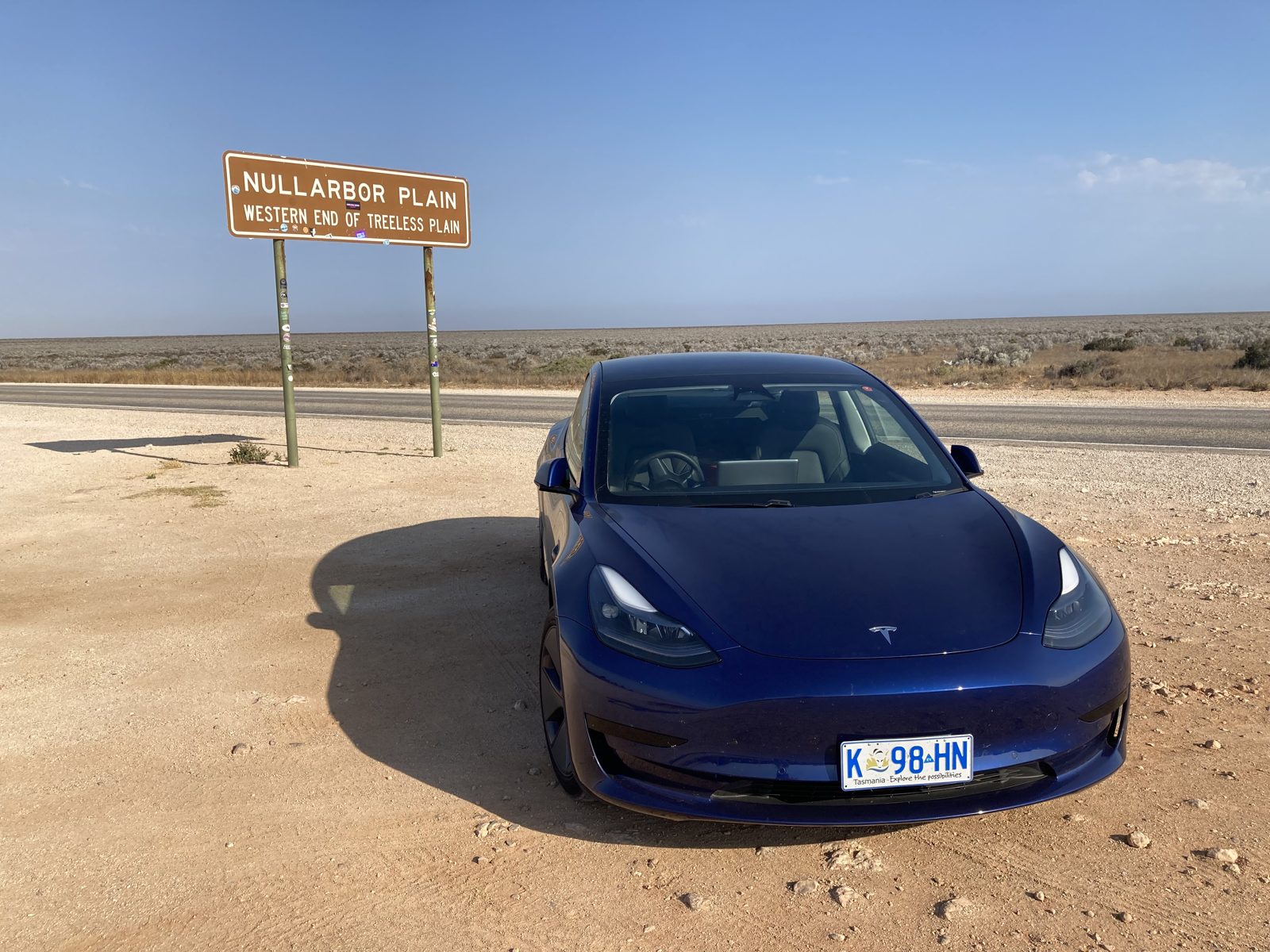
Information is current as of August 2026 and reflects 2026 model-year Teslas sold in the US and Canada; pricing, range ratings, and software features change over time — verify current specs on Tesla’s official site before purchasing. This article is for general information only and is not professional or financial advice. Some links are affiliate or referral links; see our disclosure page. Image credit: Tesla Model 3 photo by Chuq, licensed under CC BY-SA 4.0, via Wikimedia Commons.

About the author: Lifei Zhou
Model Y owner since 2022Ontario STO registered apprentice · 310SWorks on Porsche, Mercedes, BMW, Audi weeklyHundreds of readers referred (est.)
Lifei is a Tesla owner based in Canada, writing practical, fact-checked Tesla guides for US and Canadian drivers — buying, ownership, insurance, charging, and TSLA investing, all from first-hand experience.