
Tesla Fall Driving Guide: Deer Season, Wet Leaves & Getting Winter-Ready (2026)
Tesla Fall Driving Guide: Deer Season, Wet Leaves & Getting Winter-Ready (2026)

Autumn is the best and the most dangerous time of year to own a Tesla in North America. The crisp air is kind to your battery, road trips through the fall colors are stunning, and Supercharging is rarely crowded. But September through November is also when deer are most active, when wet leaves turn back roads slick, and when the clocks fall back and your evening commute suddenly happens in the dark. None of this is a reason to leave the car in the garage — it just means driving a little differently for a few weeks. This guide covers the specific fall hazards that catch Tesla owners off guard, what to do about each one, and how to lean on features your Model 3, Model Y, or Cybertruck already has.
Disclosure: some links are affiliate/referral links, which means we may earn a commission at no extra cost to you if you buy through them. See our disclosure page.
📋 Contents
- Why Fall Is Peak Season for Deer Collisions
- How to Avoid Hitting a Deer
- If You Do Hit a Deer: Cameras, Claims, and What to Save
- Wet Leaves, Rain, and Reduced Traction
- Shorter Days and the November Time Change
- Cold Mornings: Tire Pressure, Range, and Preconditioning
- Getting Ready for Winter Without Overreacting
- Frequently Asked Questions
- The Bottom Line
Why Fall Is Peak Season for Deer Collisions
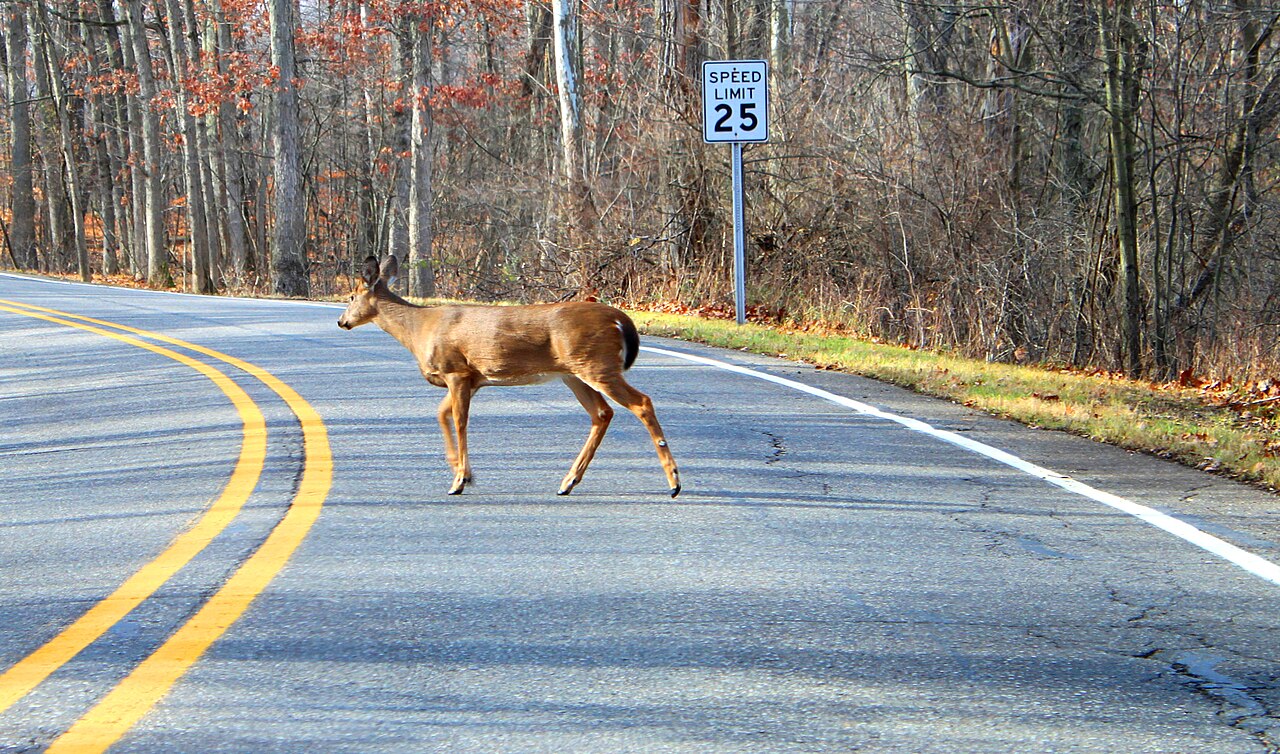
If there is one fall hazard every North American driver should take seriously, it is deer. State Farm’s most recent animal-collision study, covering July 2024 through June 2025, counted roughly 1.7 million animal-collision insurance claims in the U.S., and deer accounted for about 1.1 million of them. Independent estimates put the true number of deer-vehicle collisions north of two million a year once uninsured and unreported crashes are included. The average U.S. driver has about a 1-in-139 chance of an animal collision in a given year — but in the worst state, West Virginia, the odds jump to roughly 1 in 40.
The reason fall is so dangerous comes down to biology and the calendar. October through December is deer breeding season — the rut — when bucks roam far outside their normal range and pay far less attention to traffic. Collisions climb through October and peak in November, with December close behind; autumn alone accounts for close to half the year’s total. On top of that, the end of Daylight Saving Time on November 1, 2026 pushes evening rush hour into darkness right as deer become most active at dawn and dusk. It is a genuinely worse combination than most drivers realize.
Deer are not a niche worry, either. According to the Insurance Institute for Highway Safety, deer make up the large majority of animals struck in fatal animal crashes, and the most severe injuries usually come from the secondary impact — swerving into oncoming traffic or a tree — rather than the deer itself.
| Fall hazard | Peak window | What to do in your Tesla |
|---|---|---|
| Deer collisions | Oct–Dec, dawn and dusk | Slow down at first/last light, scan the shoulders, use Automatic High Beams, and brake hard rather than swerve. |
| Wet leaves and rain | Sept–Nov | Increase following distance, use gentle steering and throttle inputs, and keep the windshield treated for visibility. |
| Shorter days and low sun glare | After the Nov 1 time change | Clean the windshield inside and out, keep headlights on Auto, and expect blinding low-angle sun morning and evening. |
| Cold mornings and range dip | Late Oct onward | Precondition while plugged in, check tire pressure, and plan for shorter real-world range. |
| First frost and black ice | November | Use Scheduled Departure to defrost, and start thinking about winter tires before the first storm. |
How to Avoid Hitting a Deer
The advice that saves you is boring and it works. Between dusk and dawn from October through December, treat every rural or wooded road as active deer territory and back off your speed. Deer travel in groups, so if one crosses ahead of you, assume a second and a third are right behind it. Scan the shoulders and tree lines, not just the lane in front of you, and watch for the reflective shine of eyes in your headlights.
Your Tesla helps here more than you might think. Automatic High Beams are standard and switch to high beam whenever there is no oncoming traffic, which dramatically extends how far ahead you can spot an animal — leave the feature on for night driving instead of running low beams out of habit. If a deer does step out, the guidance from safety agencies is consistent: brake firmly, stay in your lane, and do not swerve. A controlled impact with the deer is almost always survivable; leaving your lane into a tree, a ditch, or oncoming traffic is what turns a fender-bender into a tragedy. Hold the wheel, brake, and let the car’s traction control and stability systems do their job.
One more practical note for two-Tesla households and new owners weighing a purchase: if you are ordering a new Model 3, Model Y, or Cybertruck this fall, placing the order through a Tesla referral link currently adds three months of free Full Self-Driving (Supervised) on top of the standard 30-day trial. FSD is not a deer-avoidance system and you should never rely on it to spot wildlife, but the extra trial time is a genuine perk while you learn the car’s driver-assist behavior.
If You Do Hit a Deer: Cameras, Claims, and What to Save
Even careful drivers hit deer — the animal simply appears too fast. What separates a smooth insurance claim from a frustrating one is evidence, and this is where Tesla owners have a real advantage. Your car’s built-in Dashcam and Sentry Mode record continuously while you drive and automatically save the moments around an impact, giving your insurer an objective record of exactly what happened — see Tesla’s official Dashcam and Sentry Mode support page for setup details. That footage settles disputed-liability and hit-and-run situations far faster than a verbal account ever could.
The catch is that Dashcam and Sentry only work if you have a properly formatted USB drive plugged into the correct port, and the footage overwrites itself on a loop. After any collision, once it is safe, save the relevant clip (tap the Dashcam icon on the screen) or remove the drive so the file is not overwritten. It is worth checking now, before you need it, that your drive is seated and recording — the small dashcam dot should be visible at the top of the screen.
If you have never set up a drive, the ideal choice is a small, fast, high-endurance USB stick that lives permanently in the car. A compact option like the SanDisk Ultra Fit 256GB USB 3.2 drive is popular with owners precisely because it is tiny enough to sit flush in the port and forget, with enough capacity to hold hours of loop footage before overwriting — exactly what you want heading into deer season. Format it to exFAT, add the required TeslaCam folder (or let the car create it), and you are covered. Expect to pay in the low-to-mid tens of dollars for a reputable drive; the cost is trivial next to a contested claim.
On the paperwork side, deer strikes are almost always handled under the comprehensive portion of your auto policy, not collision, and comprehensive claims typically do not raise your rates the way an at-fault collision does. Photograph the damage, file promptly, and keep the dashcam clip as backup. Our Tesla collision repair and insurance-claim guide walks through the full process if the damage is significant enough to need bodywork.
Wet Leaves, Rain, and Reduced Traction
Fall’s second hazard is quieter but far more common than a deer strike: traction. A layer of wet leaves on the pavement is genuinely slippery — closer to ice than to plain wet asphalt — and the first rain after a dry spell lifts oil off the road surface and makes everything greasy. Both arrive exactly when leaves are dropping in September and October.
A Tesla’s instant torque is wonderful in the dry and a liability on a slick surface if you are heavy-footed. The fix is simply to be smooth: gentle on the accelerator, gentle on the brake, and give yourself more following distance than the dry-road habit you have built all summer. One-pedal driving still works well in the wet — the car’s traction control will manage regenerative braking to avoid locking the rear wheels — but on a fresh mat of leaves or a sudden downpour, lift off earlier and let the car slow gradually rather than relying on a hard regen or brake at the last second. If you want a refresher on how regen behaves, our Tesla rain-driving and auto-wipers guide goes deeper.
Visibility is the other half of the equation. Tesla’s auto wipers have improved a lot but still occasionally miss a light drizzle — keep the wiper stalk or steering-wheel button handy for a manual swipe. A glass treatment like Rain-X water-repellent makes a real difference in fall rain: above about 30 mph, water beads and rolls off the windshield on its own, so you rely on the wipers less and see oncoming deer and cyclists sooner. It is a five-minute application that lasts weeks. Inside the cabin, a set of all-weather floor mats keeps the wet leaves, mud, and road grime that autumn tracks in from soaking into the carpet — a worthwhile bit of protection that pays off again all winter.
Shorter Days and the November Time Change
Daylight Saving Time ends across the U.S. and Canada on November 1, 2026, when clocks fall back one hour. Overnight, your evening commute moves into darkness. This is not a trivial change: more driving in the dark overlaps directly with peak deer movement and with tired end-of-day drivers, and studies have repeatedly tied the days around the time change to a spike in wildlife collisions.
Prepare for it by treating your glass as a safety system. Low-angle autumn sun, morning and evening, turns a dusty or smeared windshield into a glare panel you cannot see through — clean the inside of the glass, not just the outside, because interior haze is what scatters that low sun. Keep your headlights set to Auto so they come on the moment light drops, and remember that other drivers may not have theirs on, so watch for unlit cars at dusk. If you commute on unlit rural roads, this is the season to lean on those Automatic High Beams every time there is no oncoming traffic.
Cold Mornings: Tire Pressure, Range, and Preconditioning
The first cold snaps of fall quietly change how your Tesla behaves. Tire pressure drops about 1 PSI for every 10°F fall in temperature, so a car that was perfectly set in the summer heat can be noticeably underinflated by the first frosty morning — and low pressure hurts range, handling, and tire wear. Check your pressures on a cold morning and top them up to the door-jamb spec; a simple digital tire-pressure gauge in the frunk takes the guesswork out of it. Our Tesla tire-pressure and TPMS guide explains the target numbers by model.
Range is the other change you will feel. According to the U.S. Department of Energy’s fueleconomy.gov, EV driving range can fall by around 40% in genuinely cold conditions, with roughly two-thirds of the extra energy going to heat the cabin. Fall temperatures are milder than deep winter, so you will not see the full hit yet — but you will notice a Model Y that easily cleared 300 miles in August now falling short. The single best habit is to precondition while still plugged in: warm the cabin and battery on grid power before you unplug, and you keep those miles instead of spending them from the pack. Scheduled Departure in the Tesla app automates this — set your leave time and the car preheats to be ready. Using the heated seats and steering wheel instead of blasting the cabin heater stretches range further still.
Getting Ready for Winter Without Overreacting
Fall is the on-ramp to winter, not winter itself, so resist the urge to over-prepare in September. What genuinely matters now is timing your tire decision and your winter kit before the first storm creates a rush. If you live where roads see real snow and ice, all-season tires are a compromise that gets worse as temperatures drop below about 45°F, where their rubber stiffens — dedicated winter tires are the single biggest safety upgrade you can make, and ordering them in October beats scrambling in December. Our Tesla winter-driving guide covers tire choices, cold-weather charging, and range planning in full, and you can browse more seasonal ownership tips in our US Tesla guides.
Beyond tires, a light seasonal check-up is enough for fall: confirm your dashcam drive is recording, top up washer fluid with a winter-rated formula before the first freeze, give the cabin air filter a look if it has been a year, and make sure your charging setup at home is ready for the darker months when you will be plugging in after dark more often. That is genuinely the whole list — Teslas need far less seasonal fuss than a gas car. And if this fall is when you finally pull the trigger on a first EV, ordering a new Model 3, Model Y, or Cybertruck through a Tesla referral link currently includes three months of free Full Self-Driving (Supervised) — a useful window to get comfortable with the car’s driver-assist features before winter conditions arrive.
Frequently Asked Questions
When is deer season most dangerous for drivers?
Collisions climb through October and peak in November, with December close behind — the fall rut (breeding season) sends deer roaming well outside their usual range. The riskiest times of day are dawn and dusk, which is exactly when the end of Daylight Saving Time on November 1, 2026 pushes more commuters onto dark roads.
Should I swerve to avoid a deer?
No. Safety agencies are unanimous: brake firmly, hold the wheel, and stay in your lane. Most serious injuries in animal crashes come from the secondary impact — swerving into oncoming traffic, a tree, or a ditch — not from the deer itself. A controlled straight-line impact is far more survivable.
Does Tesla Sentry Mode record a deer strike?
Yes, provided you have a properly formatted USB drive plugged in and Dashcam active. The car saves footage around an impact automatically, but the loop overwrites older clips, so save or remove the drive after a collision. That video is valuable evidence for a comprehensive insurance claim.
Are deer strikes covered by insurance, and will my rates go up?
Deer collisions are almost always covered under the comprehensive portion of your policy (if you carry it), not collision. Comprehensive claims generally do not raise your rates the way an at-fault collision does, though your deductible still applies. Confirm the specifics with your insurer.
How much range will I lose in the fall?
In mild fall temperatures the hit is modest — often 10–20% below your summer numbers — but it grows as it gets colder, and can approach 40% in genuine winter cold. Preconditioning while plugged in and using the heated seats instead of cabin heat recovers a meaningful share of that range.
Do I need winter tires on my Tesla for fall driving?
Not yet, but fall is the time to plan. All-season tires are fine through most of autumn; once daytime highs sit below about 45°F and snow is in the forecast, dedicated winter tires are the biggest safety and traction upgrade available. Order in October to avoid the December rush.
The Bottom Line
- Fall is peak deer-collision season — roughly half the year’s animal crashes happen in autumn, peaking in November. Slow down at dawn and dusk, use Automatic High Beams, and brake rather than swerve.
- Confirm your Dashcam and Sentry Mode USB drive is recording now; that footage is your best evidence for a comprehensive claim after a deer strike.
- Wet leaves and the first rains are slippery — be smooth on the throttle and brake, add following distance, and keep the windshield treated for visibility.
- The clocks fall back on November 1, 2026; clean your glass inside and out and keep headlights on Auto for the darker commute.
- Cold mornings drop tire pressure and range — check pressures, precondition while plugged in, and start planning winter tires in October rather than December.
Information current as of September 2026; prices, incentives, and Tesla features change frequently — verify current details with official sources before making decisions. This article is general information, not driving, legal, financial, or insurance advice. Some links are affiliate or referral links; see our disclosure page. Image credit: white-tailed deer crossing a road, by Dwight Burdette, licensed CC BY 3.0, via Wikimedia Commons.

About the author: Lifei
Lifei is a Tesla owner based in Canada, writing practical, fact-checked Tesla guides for US and Canadian drivers — buying, ownership, insurance, charging, and TSLA investing, all from first-hand experience.
