
Tesla Charging in a Condo in Canada: Ontario and BC Rules (2026)
Tesla Charging in a Condo in Canada: Ontario and BC Rules (2026)

Yes, you can charge a Tesla at home in a Canadian condo, and in Ontario and British Columbia the law now makes it hard for a board to say no without a good reason. In Ontario, the condo corporation has 60 days to answer a proper written application and can only refuse based on a professional’s report. In BC, the strata council has 3 months to decide and cannot unreasonably refuse. In both provinces you usually pay for the installation yourself.
Disclosure: some links are affiliate/referral links. If you buy through them, this site may earn a commission or referral credit at no extra cost to you. See our disclosure page.
Key facts (checked October 27, 2026)
- Ontario: the condo corporation must respond to a complete EV charger application within 60 days, unless you both agree to extend.
- Ontario: a board can refuse only if a qualified professional’s report shows the install breaks the law, harms the structure or creates a health and safety risk.
- Ontario: once approved, you and the corporation sign an agreement within 90 days, and it is registered on your unit’s title.
- BC: the strata council must decide on an owner’s charging request within 3 months and cannot unreasonably refuse.
- BC: stratas with 5 or more lots need an electrical planning report by December 31, 2026 (Metro Vancouver, Fraser Valley, Capital Region) or December 31, 2028 (rest of BC).
- In Ontario, the wiring must be done by a licensed electrical contractor who files the work with the Electrical Safety Authority.
Condo charging is the single biggest worry people raise before they buy their first EV in Toronto or Vancouver. The rules have changed a lot since 2018, and many owners still assume the board can block them forever. This guide walks through what the law in each province actually says, what a realistic setup looks like for a Tesla, and what to do while you wait for approval.
📋 Contents
- The short answer: what each province requires
- Ontario: how to get a condo charger approved, step by step
- British Columbia: strata charging rules after the 2023 changes
- What setup actually makes sense for a Tesla in a condo
- How to win over your board (and what slows people down)
- Charging while you wait for approval
- Frequently Asked Questions
- Summary
The short answer: what each province requires
Ontario and BC are the two provinces with a clear, written process for an individual owner who wants a charger at their own parking spot. Here is how they compare.
| Question | Ontario (condo) | British Columbia (strata) |
|---|---|---|
| Who decides | Condo corporation (board) | Strata council |
| Deadline to answer | 60 days after a complete application (can be extended by agreement) | 3 months after the request |
| Can they say no? | Only with a qualified professional’s report on legal, structural or safety grounds | Cannot unreasonably refuse; lack of electrical capacity can be a reason |
| Who pays | Usually the owner, per the written agreement | Council can require the owner to pay, even in advance |
| Paperwork after approval | Agreement within 90 days, registered on title | Written conditions (contractor, materials, payment) |
| If you disagree | Private mediation and arbitration within 6 months | Usual strata dispute routes |
Sources: the Condominium Authority of Ontario EV charging guide and the BC government page on EV charging in strata corporations, both checked October 27, 2026.
In other provinces we did not find a comparable condo-specific EV charging process in provincial law. There, your declaration, bylaws and the general rules for changing common property decide it, which often means a vote of owners. Ask your property manager early.
Ontario: how to get a condo charger approved, step by step
Ontario changed its condo rules in 2018 so that an owner can apply to install an electric vehicle charging system, and the corporation has to follow a set process. The Condominium Authority of Ontario (CAO) publishes the steps and sample letters for boards. In plain terms, it works like this.
Source: Condominium Authority of Ontario, checked October 27, 2026.
1. Prepare a complete application
The application has to identify you and your address for service, and include drawings, specifications and details of the installation. In practice, that means you hire an electrician or EV charging company first, have them look at the electrical room and your parking spot, and get a written plan. If something is missing, the corporation has to tell you in writing and help you complete it. The 60-day clock is tied to a complete application, so spending money on a proper quote up front saves weeks.
2. The board has 60 days
The corporation can approve your plan as is, or propose a different way or location, as long as the alternative does not cause you unreasonable cost. It can refuse only if a qualified professional’s opinion or report shows the installation would break the Condominium Act or other law, hurt the building’s structural integrity, or create a health and safety risk. If it refuses, it has to give you a copy of that report. “We are studying a building-wide solution” is not, on its own, one of those reasons.
3. Sign the agreement and register it
Within 90 days of approval, you and the corporation sign a written agreement that sets out who pays for installation, maintenance and electricity. The corporation registers it on your unit’s title, and it does not take effect until that happens. This matters when you sell: the agreement travels with the unit, so the next owner knows who owns the charger and who pays for what.
4. Use a licensed contractor
Ontario’s Electrical Safety Authority says EV charger work should be done by a licensed electrical contractor, who files a notification with ESA before starting. When the work passes inspection, ESA issues a Certificate of Acceptance. Keep a copy. Your board and your insurer may ask for it. The charger itself also needs a recognized certification mark.
If you and the board cannot agree, the CAO says the dispute must go to private mediation and arbitration within six months, or your application is treated as abandoned. Put that date in your calendar the day you get a refusal.
British Columbia: strata charging rules after the 2023 changes
BC amended the Strata Property Act in 2023 and followed with regulations that took effect on December 6, 2023. Two things changed for Tesla owners: the votes needed for EV projects went down, and individual owners got a formal right to ask for a charger.
Majority votes instead of three-quarters
A strata can now approve a significant change to common property for EV charging, spend contingency reserve money on EV charging infrastructure or reports, and buy EV charging equipment with a simple majority vote. Before, these needed a three-quarters vote. One exception: a special levy, even for EV charging, still needs three-quarters.
Making your own request
Your written request should include your contact details and strata lot number, a description and location of the charging equipment, the name of a qualified contractor, and the contractor’s description of the work with a cost and time estimate. The council must decide within 3 months and cannot unreasonably refuse a properly made request. It can attach written conditions, such as approving the contractor and materials, or asking you to pay the cost in advance. The province notes that a lack of electrical capacity in the building can still be a valid reason to deny.
Two details are worth knowing. If you paid for the installation, the strata can give you exclusive use of a common parking stall for up to 5 years. And the strata can charge you for the electricity your car uses, as long as the rate is reasonable and set out in a bylaw or rule approved by majority vote.
Electrical planning reports are coming due
Stratas with five or more lots have to get an electrical planning report that measures how much spare capacity the building has for EV charging and heat pumps. If your building is in the 2026 group and does not have one yet, it may be on the agenda at your next annual general meeting. That report is often what decides whether every owner can get a charger, or whether the building needs a shared, load-managed system.
- December 6, 2023New strata EV charging rules take effect: majority votes for EV projects and a formal owner request process.
- December 31, 2026Electrical planning report deadline for stratas with 5+ lots in Metro Vancouver, Fraser Valley and Capital regional districts. Stratas with fewer than 5 lots follow the owner request process from this date.
- December 31, 2028Electrical planning report deadline for stratas with 5+ lots in the rest of BC.
Source: Government of British Columbia, checked October 27, 2026. Island areas reachable only by air or boat follow the later deadline.
What setup actually makes sense for a Tesla in a condo
Most condo owners do not need the fastest possible charger. A Model 3 or Model Y parked overnight for 10 hours on a modest 240V circuit will usually recover far more than a normal day of commuting. What matters more is that the circuit fits the building’s spare capacity, and that the board is comfortable with the equipment.
Wall Connector, hardwired
- Best for
- Approved owner install
Mobile Connector on 240V
- Best for
- Outlet-based EV-ready stalls
Standard 120V outlet
- Best for
- Stopgap while you wait
Amperage figures are the maximum rating of each Tesla unit, per the product listings. Your actual speed depends on the circuit the building approves.
If you get approval for your own hardwired charger, the Tesla Wall Connector is the obvious choice for most Tesla owners. It works with every current Tesla, the 24-foot cable reaches awkward parking stalls, and an electrician can set it to a lower amperage if the building only allows a smaller breaker. Several Wall Connectors can also share one circuit, which is useful if a few neighbours want chargers on the same feed. It is the more expensive route, but it is the setup boards and electricians see most often.
If your building already put a 240V outlet at each stall, you do not need a hardwired unit. Tesla’s Mobile Connector (up to 32A, 20-foot cable) is the budget option and also lives in the frunk for road trips. For a NEMA 14-50 outlet, a third-party unit such as the Lectron 40A portable Level 2 charger is another choice. Check that the outlet type and breaker match before buying anything, and ask the board whether it requires a specific brand for its load management system.
For a broader look at hardware, permits and installer quotes in a house, see our Tesla home charger installation guide.
How to win over your board (and what slows people down)
The law sets deadlines, but a friendly yes is still faster than an arbitration. Owners who get quick approvals tend to do the same few things.
- Talk to the property manager before you apply. Ask whether the building has a load study, an EV policy or a preferred contractor. If there is a preferred vendor, a quote from them often goes through fastest.
- Bring a complete package. A drawing of the cable route, the panel it connects to, the breaker size and the equipment model answer most of the board’s questions on the first read.
- Offer to pay for your own electricity. A separate meter, or a charger that reports usage, removes the “who pays for the power” objection.
- Ask for load management. A charger that shares or throttles power is easier for a building with limited spare capacity to approve.
- Think about resale. In Ontario, the agreement registered on title spells out who owns the charger. In BC, ask what happens to the charger and any exclusive-use stall if you sell.
What slows people down is usually not a flat no. It is an incomplete application, a board that waits for a building-wide plan, or an electrical room that is already near its limit. If your building has no spare capacity, a shared system paid for through the reserve fund or a special levy may be the only route, and that takes a vote.
Charging while you wait for approval
Approvals can take months, and a building-wide project can take longer. Plenty of condo owners drive a Tesla for a year or more without a charger at their spot. The trick is to make charging part of an errand you already do.
- Superchargers: in Canada, prices run roughly $0.25 to $0.60 per kWh depending on the site and time. Off-peak hours at busy city sites are usually cheaper. Charging at the grocery store once a week is enough for many commuters.
- Destination and workplace chargers: many malls, gyms and offices have Level 2 chargers. Tesla’s app and map show Tesla destination chargers; apps such as FLO and ChargePoint show the rest.
- Third-party fast chargers: with a Tesla, you can also use many non-Tesla networks. Our guide to using FLO, Electrify Canada and Petro-Canada with a Tesla covers adapters and pricing.
We cover these routines in more detail in how to own a Tesla without a home charger. If you are in Ontario and do get a charger, look at the time-of-use options too. Our breakdown of the Ontario Ultra-Low Overnight rate explains when it pays off, though in a condo it only applies if your unit’s meter is billed by the utility on that plan.
If you are still deciding whether a Tesla makes sense for condo life, ordering online is simple. I ordered my Model Y straight from tesla.com in January 2022 without a test drive. Ordering through a Tesla referral link gives new owners 3 months of FSD (Supervised). It generally can’t be combined with the new-car FSD trial or other offers; Tesla confirms the final perk on your order.
Frequently Asked Questions
Can my condo board refuse to let me install an EV charger in Ontario?
Only in narrow cases. After a complete application, the corporation can refuse only if a qualified professional’s report shows the installation would break the law, harm the building’s structure or create a health and safety risk, and it must give you a copy of the report.
How long does a BC strata have to approve a charger request?
The strata council must decide within 3 months of receiving a properly made request, and it cannot unreasonably refuse. It can attach conditions, such as approving your contractor or asking you to pay in advance.
Who pays for a condo EV charger?
Usually the owner who wants it. In Ontario, the written agreement sets out who pays for installation and electricity. In BC, the council can require the owner to pay the installation cost, and the strata can charge a reasonable fee for electricity under a bylaw or rule.
Can I just plug my Tesla into a regular outlet in my parking spot?
Only if your building allows it. Outlets in condo garages are usually on common electricity, so plugging in without permission can break your condo rules. Ask the manager first. Some buildings allow it for a flat monthly fee.
Do I need a Tesla Wall Connector, or will any Level 2 charger work?
Any certified Level 2 charger with a Tesla (NACS) plug or a suitable adapter will charge a Tesla. Some buildings require a specific brand that works with their billing or load management system, so check before you buy.
Does a condo charger stay with the unit when I sell?
In Ontario, the charger agreement is registered on your unit’s title, so it passes to the buyer. In BC, check your approval conditions and any exclusive-use arrangement for the stall, which can last up to 5 years.
Order a Tesla with 3 months of FSD (Supervised) →
Summary
- Ontario condo boards must answer a complete EV charger application within 60 days and can refuse only with a professional’s report.
- Ontario approvals end with a written agreement within 90 days, registered on the unit’s title.
- BC strata councils must decide within 3 months and cannot unreasonably refuse; EV projects now need only a majority vote, except special levies.
- BC stratas with 5 or more lots need an electrical planning report by December 31, 2026 or 2028, depending on the region.
- The owner usually pays. A Wall Connector set to the approved amperage is the cleanest setup; a Mobile Connector works if the building supplies a 240V outlet.
- While you wait, Superchargers, destination chargers and third-party networks can cover most city driving.
This article is general information, not legal advice. Condo and strata rules depend on your declaration, bylaws and the current law, so check with your property manager or a lawyer before you rely on it.
More Canadian ownership guides: Canada Tesla.
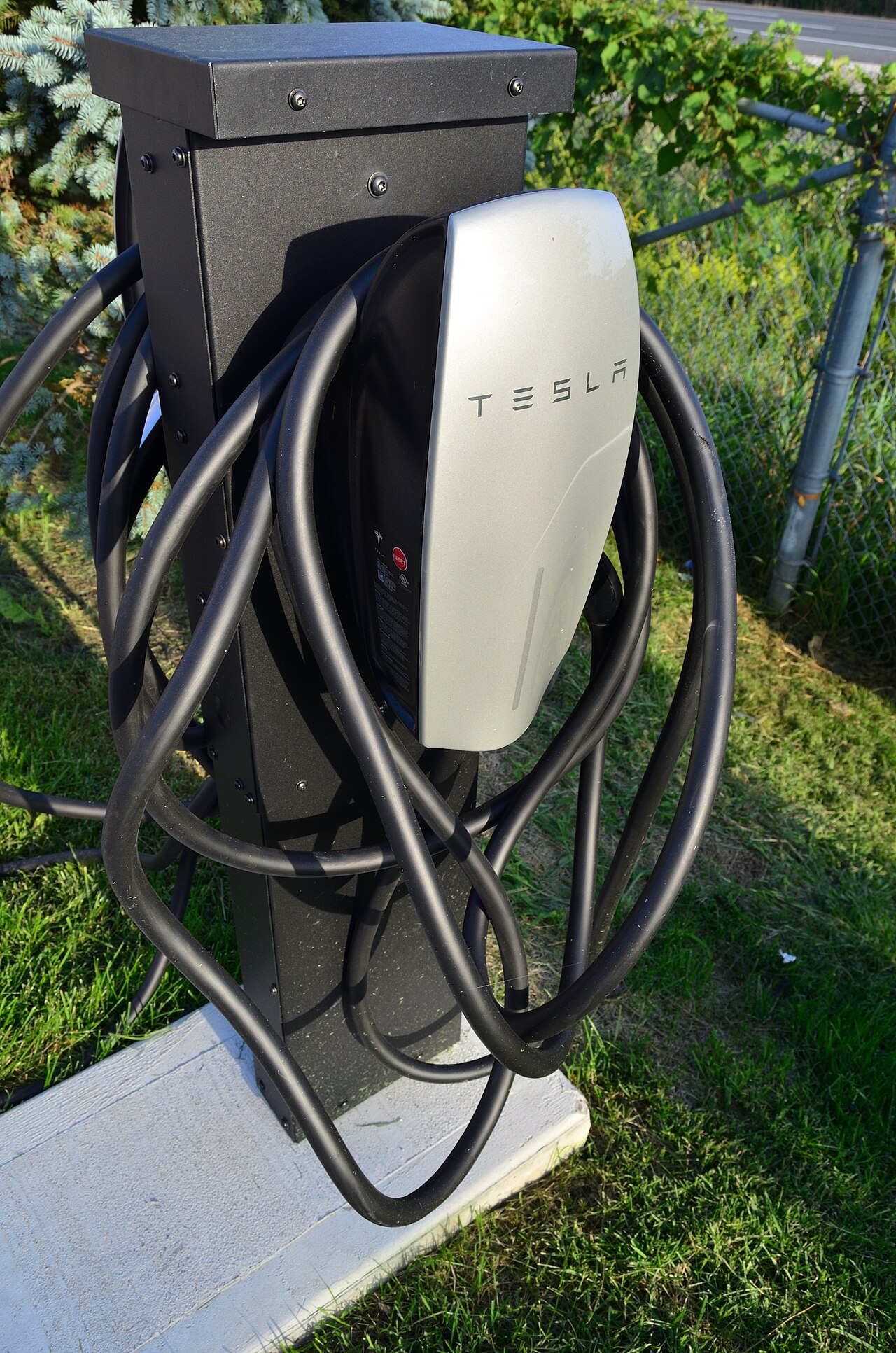
Image credit: Tesla destination charger by Raysonho @ Open Grid Scheduler / Grid Engine, CC0 1.0 (public domain), via Wikimedia Commons.

About the author: Lifei Zhou
Model Y owner since 2022Ontario STO registered apprentice · 310SWorks on Porsche, Mercedes, BMW, Audi weeklyHundreds of readers referred (est.)
Lifei is a Tesla owner based in Canada, writing practical, fact-checked Tesla guides for US and Canadian drivers — buying, ownership, insurance, charging, and TSLA investing, all from first-hand experience.