
BC Hydro Time-of-Day Rate for Tesla Charging (2026): 5¢ Off Overnight, Real Costs and Setup
BC Hydro Time-of-Day Rate for Tesla Charging (2026): 5¢ Off Overnight, Real Costs and Setup

Yes, BC Hydro’s optional time-of-day pricing is worth it for most Tesla owners who charge at home. It takes 5 cents off every kWh you use from 11 p.m. to 7 a.m., which cuts the electricity cost of charging by roughly 40% on the flat rate: about $1.39 per 100 km instead of $2.29. The trade-off is a 5-cent surcharge from 4 to 9 p.m., so it only pays if the car charges overnight and your household isn’t heavy on electricity in the evening.
Disclosure: some links are affiliate/referral links, and this site may earn a commission at no extra cost to you. See our disclosure page.
Key facts (checked November 5, 2026)
- Time-of-day pricing: 5¢/kWh off from 11 p.m. to 7 a.m., 5¢/kWh extra from 4 to 9 p.m., no change at other hours. Same hours every day.
- It’s an add-on to either the tiered rate (11.87¢ Tier 1, 14.08¢ Tier 2) or the flat rate (12.70¢).
- Rough cost for a Tesla charging overnight on flat plus time-of-day: about $1.39 per 100 km, before the basic charge and GST.
- Driving 15,000 km a year, the overnight discount alone is worth about $135 a year.
- You need a connected smart meter. You switch online and can switch back.
- A separate EV-only meter can go on time-of-day while the house stays on its current plan.
The rates above come straight from BC Hydro’s time-of-day pricing page and its tiered and flat rate pages, as listed on November 5, 2026. The time-of-day structure hasn’t changed since it launched in 2024 after BC Utilities Commission approval. Below I’ve worked out what that means in dollars for a Model 3 or Model Y, which base plan to pair it with, and how to set the car up so it only charges in the cheap window.
📋 Contents
- How BC Hydro time-of-day pricing works
- What it costs to charge a Tesla in BC, plan by plan
- Tiered or flat: which base plan to pair with time-of-day
- Who can sign up, and how to switch
- The separate EV meter option
- How to set your Tesla to charge only from 11 p.m. to 7 a.m.
- Is eight hours enough? Charging speed by charger
- Common mistakes that cancel out the savings
- Frequently Asked Questions
- Summary
How BC Hydro time-of-day pricing works
Time-of-day isn’t a separate rate plan with its own prices. It’s a layer on top of the plan you already have. BC Hydro keeps billing you on the tiered or flat rate, then adjusts each kWh depending on when you used it:
- Overnight, 11 p.m. to 7 a.m.: minus 5 cents per kWh.
- On-peak, 4 to 9 p.m.: plus 5 cents per kWh.
- Off-peak, 7 a.m. to 4 p.m. and 9 to 11 p.m.: no discount and no surcharge.
The hours are the same seven days a week. Ontario’s Ultra-Low Overnight plan treats weekends differently, but BC’s doesn’t, so the 4 to 9 p.m. surcharge also applies on Saturdays and Sundays. All times are local time.
| Base plan | Regular price | Overnight (11 p.m.–7 a.m.) | On-peak (4–9 p.m.) | Basic charge |
|---|---|---|---|---|
| Tiered, Tier 1 | 11.87¢ | 6.87¢ | 16.87¢ | 23.44¢ per day |
| Tiered, Tier 2 | 14.08¢ | 9.08¢ | 19.08¢ | |
| Flat | 12.70¢ | 7.70¢ | 17.70¢ | 25.00¢ per day |
On the tiered rate, Tier 1 covers the first 1,350 kWh in an average 60-day billing period, or 675 kWh in a 30-day period. Everything above that is Tier 2. All prices are per kWh, before GST. The tiered rate page and flat rate page have the current numbers and sample bills.
Tiered, Tier 1
- Without time-of-day
- 11.87¢
Flat
- Without time-of-day
- 12.70¢
Tiered, Tier 2
- Without time-of-day
- 14.08¢
Source: BC Hydro residential rate pages, checked November 5, 2026. Energy charge only, before the basic charge and GST.
What it costs to charge a Tesla in BC, plan by plan
To turn cents per kWh into a budget, I’m using one assumption: 18 kWh per 100 km measured at the wall. That includes charging losses and some cold-weather driving, and it’s a fair middle figure for a Model 3 or Model Y. Your own number is in the car’s Energy app, so swap it in if yours is different. At 18 kWh per 100 km, the electricity per 100 km works out like this:
- Tier 1 with overnight discount (6.87¢): about $1.24.
- Flat with overnight discount (7.70¢): about $1.39.
- Tier 2 with overnight discount (9.08¢): about $1.63.
- Flat, no time-of-day (12.70¢): about $2.29.
- Tier 2, no time-of-day (14.08¢): about $2.53.
- Flat plus on-peak surcharge, if the car charges at 6 p.m. (17.70¢): about $3.19.
Over a 15,000 km year that’s 2,700 kWh of charging, or about 225 kWh a month. Every one of those kWh that lands between 11 p.m. and 7 a.m. saves 5 cents, which is $135 a year. Every one that lands between 4 and 9 p.m. costs 5 cents more. So the gap between a well-scheduled car and a careless one is about $270 a year, before you even look at the base plan.
Estimate: 18 kWh per 100 km at the wall, BC Hydro prices checked November 5, 2026. Energy charge only, before the basic charge and GST. Scale: $0 to $500.
For context, Supercharger prices in Canada run roughly $0.25 to $0.60 per kWh depending on the site and time of day, after two rounds of price changes in September 2026. The same 2,700 kWh would cost somewhere between $675 and $1,620 at Superchargers. That’s why most BC owners with a driveway or garage plug in at home and save Superchargers for road trips. Our guide to the cost of charging a Tesla goes deeper on Supercharger pricing.
BC Hydro itself estimates that switching to time-of-day could save a household anywhere from $25 to $300 a year, and says EV charging at home is one of the biggest opportunities to save. That range matches the math above: an EV that charges overnight is what pushes a household toward the top end. You can read BC Hydro’s take in its March 2026 explainer on time-of-day pricing.
Tiered or flat: which base plan to pair with time-of-day
This is the decision most EV owners get wrong. Time-of-day gives the same 5-cent discount on either plan, so the question is which base price your charging lands on.
On the tiered rate, the first 675 kWh in a 30-day period are cheap at 11.87 cents. A Tesla adds roughly 225 kWh a month on top of whatever the house already uses. If your home already sits near or above the threshold, nearly all of the car’s electricity is billed at Tier 2, 14.08 cents. That’s more than the flat rate’s 12.70 cents.
Running the numbers on the energy charge plus the basic charge, the two plans cost the same at roughly 2,230 kWh per 60-day billing period, or about 37 kWh a day. Below that, tiered is cheaper. Above it, flat wins. A smaller home with gas heat plus one Tesla often stays under that line. A detached house with electric baseboard heat or a heat pump plus a Tesla often goes over it, especially from November to February.
The easy way to settle it is BC Hydro’s rate estimator. Log in to your account and it compares tiered, flat and time-of-day using your own past hourly usage. Run it once in summer and once after a winter bill, because the answer can change with the heating season. Since the meter already records when you use power, the estimate is based on real data, not a guess.
Usually a good fit
- You charge an EV at home and can let it run after 11 p.m.
- Your evening household use from 4 to 9 p.m. is modest
- You can delay the dishwasher, laundry or a hot tub heater
- You have a separate EV meter and can put only the car on it
Often a poor fit
- No EV, or you mostly charge at work or at Superchargers
- Electric heat and cooking run hard every evening
- You live in an apartment or condo with no home charging
- You don’t have a connected smart meter
Who can sign up, and how to switch
BC Hydro says time-of-day pricing is available to almost all residential customers. Two groups can’t use it: common areas of multi-residential buildings, and customers without a connected smart meter that communicates remotely with BC Hydro. If you opted out of a smart meter years ago, you’ll need to sort that out first.
Switching is done online. Sign in to your BC Hydro account, open the change-your-rate page, and add time-of-day pricing to your current plan. BC Hydro’s own wording is that if it doesn’t work for you, you can switch back just as quickly. The HydroHome app may also show an Advisor Card suggesting time-of-day if your usage pattern looks like a good match.
If you live in a condo or apartment, BC Hydro generally doesn’t recommend time-of-day pricing unless your usage includes EV charging. Smaller homes have less to shift, and building quiet hours may rule out late-night laundry. If you do charge at a condo stall that’s on your own suite meter, the overnight discount can still make sense. Our article on getting a condo EV charger approved in Ontario and BC explains the strata side.
One more detail: this guide is for BC Hydro customers. Parts of the southern Interior get power from FortisBC or a municipal utility, which set their own rates. Check who bills you before switching anything.
The separate EV meter option
BC Hydro lets you install a second meter used only for EV charging and put just that meter on time-of-day. Your main household meter stays on its current plan, so the 4 to 9 p.m. surcharge never touches your cooking, heating or evening TV. The car’s meter only ever sees overnight power if the schedule is set right.
There are two catches. You need to hire a contractor and go through BC Hydro’s express connection process, which costs money and takes time. And the two meters have to be on matching base plans: if the house is on tiered, the EV meter can’t be on flat, and vice versa. For most single-car households, simply adding time-of-day to the main meter and scheduling the car is enough. A separate meter makes more sense for homes with high evening loads, two EVs, or a new build where the electrician is already on site.
How to set your Tesla to charge only from 11 p.m. to 7 a.m.
The discount only counts if the car actually charges in the window, and a Tesla starts charging the moment you plug in unless you tell it otherwise. Since software update 2024.26, Teslas support charge schedules with a start time, an end time, chosen days and a saved location, as Not a Tesla App documented at the time. You can create them on the touchscreen or in the Tesla app.
A few practical tips:
- Tie the schedule to Home. Schedules are location-based, so a Home schedule won’t stop you from charging right away at a friend’s place or a hotel.
- Pick all seven days. BC’s overnight window applies on weekends too.
- Leave a few minutes of margin. Starting at 11:05 p.m. and ending at 6:55 a.m. keeps the session clear of the edges if the car’s clock and the meter disagree slightly.
- Watch the preconditioning. On a cold morning, a scheduled departure warms the cabin and battery using wall power. If that runs between 7 a.m. and 4 p.m., it’s billed at the normal rate, which is fine. Just don’t schedule it during 4 to 9 p.m.
- Don’t fight the schedule when you need range. If you get home at 5 p.m. with a low battery and need to go out again, charge. The surcharge on a short top-up is a few cents per kWh, not a disaster.
I own a Model Y in the Toronto area, so I deal with Ontario’s version of this rather than BC Hydro’s, and the habit that matters is the same in both provinces: set the schedule once and stop thinking about it. If you’re in Ontario, our guide to Ontario’s Ultra-Low Overnight rate covers that plan.
Is eight hours enough? Charging speed by charger
The overnight window is eight hours long. Whether that’s enough depends on your charger and how far you drive. At 15,000 km a year, the average day is about 41 km, which at 18 kWh per 100 km needs about 7.4 kWh. Here’s what eight hours of each kind of home charging can add:
| Home charging setup | Approx. power | Energy in 8 hours | Range added (18 kWh/100 km) |
|---|---|---|---|
| Regular 120V outlet, 12 amps | 1.4 kW | about 11.5 kWh | about 64 km |
| 240V portable charger, 40 amps | 9.6 kW | about 77 kWh | about 425 km |
| Wall Connector, 48 amps | 11.5 kW | about 92 kWh | about 510 km |
These are rough figures. Not every Tesla accepts 48 amps, and a cold battery charges more slowly at first. Still, the takeaway is clear. A plain 120V outlet covers an average commute overnight but leaves no room for a long day or winter losses. Any Level 2 setup refills a big day’s driving well before 7 a.m.
If you’re adding Level 2 at home, the Tesla Wall Connector is the one I’d look at first. It’s hardwired, delivers up to 48 amps with a 24-foot cable, works with every current Tesla, and can share power if you add a second car later. It’s worth the higher price if you plan to keep an EV in the house for years. The budget alternative is the Lectron 40A portable Level 2 charger, which plugs into a NEMA 14-50 outlet and has a native Tesla plug. It has recently listed on Amazon.ca at roughly C$270 to C$370. Either one needs a properly rated 240V circuit installed by a licensed electrician, with a permit where required. Our home charger installation guide covers costs and choices.
If you’re still shopping for the car itself, I ordered my own Model Y straight from tesla.com without a test drive. Ordering through a Tesla referral link gives new buyers 3 months of FSD (Supervised). It generally can’t be combined with the new-car FSD trial or other offers, and Tesla confirms the final perk on your order. For BC prices, taxes and rebates, see our Vancouver and BC Tesla buying guide.
Common mistakes that cancel out the savings
- Switching but never setting a schedule. The car charges whenever you plug in, often right at 5 or 6 p.m. That’s the most expensive hour of the day on this plan.
- Staying on tiered with a big electric house. If the car’s power all lands in Tier 2, you may be better off on flat plus time-of-day.
- Forgetting the weekend. The 4 to 9 p.m. surcharge applies every day in BC.
- Running Sentry Mode or Camp Mode from the wall in the evening. Small loads like these draw some power while plugged in, and any of it during 4 to 9 p.m. is billed at the higher price.
- Never checking the bill. Your first time-of-day bill shows how much you used in each period. If the on-peak line is large, shift household loads or switch back.
For more on driving electric in this province and across the country, browse our Canada Tesla guides.
Frequently Asked Questions
What is BC Hydro’s time-of-day rate?
It’s an optional add-on to the tiered or flat residential plan. BC Hydro takes 5 cents per kWh off electricity used from 11 p.m. to 7 a.m., adds 5 cents per kWh from 4 to 9 p.m., and leaves the rest of the day unchanged. The hours are the same every day of the week.
How much does it cost to charge a Tesla in BC overnight?
On the flat rate with time-of-day, overnight power is 7.70 cents per kWh, so a 50 kWh charge costs about $3.85 in energy before the basic charge and GST. At 18 kWh per 100 km, that’s about $1.39 per 100 km.
Is time-of-day pricing worth it for EV owners in BC?
For most owners who charge at home overnight, yes. Driving 15,000 km a year, the overnight discount is worth about $135 a year on the car’s charging alone. It’s not worth it if your household uses a lot of power from 4 to 9 p.m. and can’t shift it. BC Hydro’s rate estimator will tell you using your own data.
Should I choose the tiered or flat rate with an EV?
It depends on total household use. By our estimate, the two plans cost the same at about 2,230 kWh per 60-day billing period. Below that, tiered is cheaper. Above it, flat is cheaper, because extra usage on tiered is billed at 14.08 cents versus 12.70 cents on flat.
Can I put only my EV charger on time-of-day pricing?
Yes, if the charger is on its own separate meter. BC Hydro allows the EV meter alone to be on time-of-day while the house stays on its existing plan. Adding a meter requires a contractor and BC Hydro’s express connection process, and both meters must use the same base plan (tiered or flat).
Do I need a Wall Connector to use the overnight window?
No. A regular 120V outlet adds roughly 60 km of range in eight hours, which covers an average commute. A Level 2 charger gives you room for long days, cold weather and road-trip prep.
Summary
- BC Hydro time-of-day pricing gives 5¢/kWh off from 11 p.m. to 7 a.m. and adds 5¢/kWh from 4 to 9 p.m., every day.
- Paired with the flat rate, overnight Tesla charging costs about $1.39 per 100 km, versus $2.29 without it.
- At 15,000 km a year, the overnight discount is worth about $135, and careless 4 to 9 p.m. charging costs the same amount extra.
- Pick the base plan carefully: above about 2,230 kWh per 60 days, flat beats tiered.
- Switch online, then set a Home charge schedule from 11 p.m. to 7 a.m. for all seven days.
- Any Level 2 charger refills a long day’s driving inside the eight-hour window.
Order a Tesla with 3 months of FSD (Supervised) →
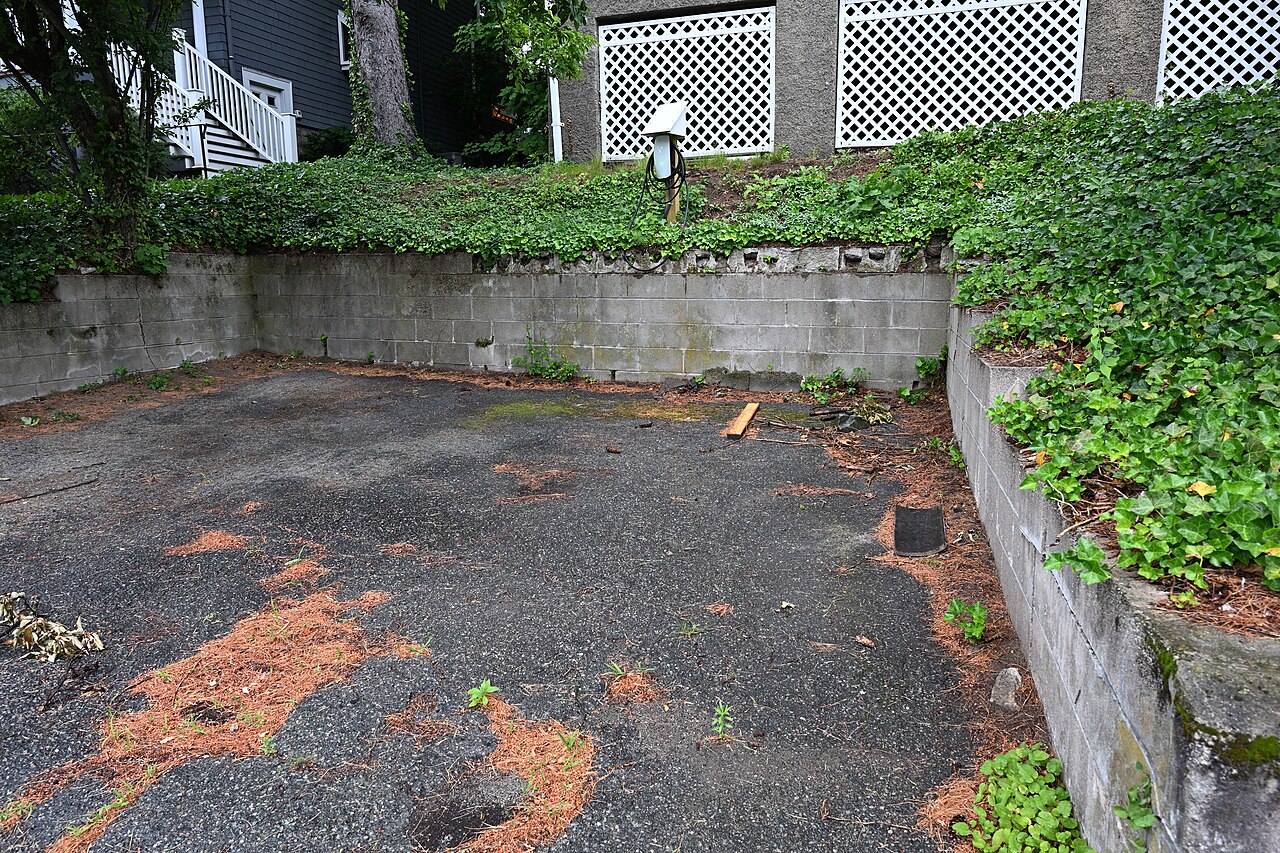
Image credit: 4300streetcar, CC BY 4.0, via Wikimedia Commons.

About the author: Lifei Zhou
Model Y owner since 2022Ontario STO registered apprentice · 310SWorks on Porsche, Mercedes, BMW, Audi weeklyHundreds of readers referred (est.)
Lifei is a Tesla owner based in Canada, writing practical, fact-checked Tesla guides for US and Canadian drivers — buying, ownership, insurance, charging, and TSLA investing, all from first-hand experience.