
Tesla Charging Best Practices (2026): Charge Limits, Battery Health, and Habits That Matter
Tesla Charging Best Practices (2026): Charge Limits, Battery Health, and Habits That Matter

Ask ten Tesla owners how they charge their car and you’ll get ten slightly different answers — and at least three of them will be worried they’re “doing it wrong.” Should you plug in every night or only when you’re low? Is charging to 100% going to wreck your battery? Does a Supercharger stop take years off the pack? After a decade of EV ownership across the US and Canada, I can tell you the truth is both simpler and more forgiving than the forum arguments suggest. Modern Tesla batteries are engineered to outlast the rest of the car, and the handful of habits that actually matter take almost no effort once you understand them.
This 2026 guide cuts through the noise. We’ll cover the single most important setting on your screen (the daily charge limit), how to tell whether your car has an LFP or nickel-based battery, what the latest research really says about Supercharging, the smart way to charge at home, the free preconditioning trick that speeds up road-trip stops, and the “second battery” almost everyone forgets about. By the end you’ll have a charging routine you can set once and stop stressing over.
Disclosure: some links in this article are affiliate/referral links. If you buy or place an order through them, we may earn a small commission at no extra cost to you, and it doesn’t affect our pricing or our independence. This is general ownership information, not professional advice. See our disclosure page.
📋 Contents
- The One Setting That Matters Most: Your Daily Charge Limit
- How to Tell If Your Tesla Has an LFP Battery
- Home AC vs. Supercharging: What Actually Ages the Pack
- Set Up Home Charging the Smart Way
- Preconditioning: The Free Trick for Faster Road-Trip Charging
- Don’t Forget the Other Battery: Your 12V / Low-Voltage System
- Habits That Quietly Wear a Battery Down
- Charging on a Road Trip Without Losing Range or Money
- Frequently Asked Questions
- The Bottom Line
The One Setting That Matters Most: Your Daily Charge Limit
If you only remember one thing from this article, make it this: the charge-limit slider in the Tesla app (or on the car’s Charging screen) is the closest thing to a battery-longevity dial you have. Everything else is a rounding error by comparison.
For the nickel-based batteries in Long Range and Performance Teslas, the long-standing guidance is to keep your everyday limit around 80% and only push to 100% right before a longer drive. Lithium-ion cells are happiest spending their lives in the middle of their range rather than sitting full. Tesla’s own onboard guidance now lets some newer nickel packs sit a touch higher for daily use, but 80–90% remains the sweet spot for most owners, and there’s no penalty for being conservative.
Cars with an LFP (lithium iron phosphate) battery are the exception, and they flip the rule: Tesla recommends keeping LFP cars set to 100% for daily use and fully charging at least once a week. That’s not a typo — LFP chemistry tolerates a full charge far better, and topping to 100% lets the battery-management system recalibrate so your range estimate stays accurate. If you own an LFP Tesla and never charge to full, you’ll actually see the range readout drift and get flaky.
| Situation | Nickel battery (LR / Performance) | LFP battery (many Standard / RWD) |
|---|---|---|
| Everyday driving | ~80% (up to 90% is fine) | 100% |
| Before a road trip | 100% (charge the night before) | 100% |
| Weekly full charge for calibration | Not required | Yes — at least once a week |
| Parking for weeks | Leave around 50% | Leave around 50% |
How do you know which camp you’re in? Easy — the car tells you. Open the Charging screen: if it labels 100% as the recommended daily setting, you have LFP. If it nudges you toward a lower daily limit, you have a nickel pack. When in doubt, follow whatever the screen suggests; Tesla configures that recommendation to match your exact battery.
How to Tell If Your Tesla Has an LFP Battery
Battery chemistry isn’t printed on the window sticker, which trips up a lot of new owners. As a rough guide for the 2026 lineup: the more affordable rear-wheel-drive and Standard trims (for example, Model 3 RWD and various Model Y RWD builds) frequently use LFP cells, while Long Range and Performance dual-motor cars use higher-energy nickel chemistry. But sourcing changes over time and by region, so don’t rely on the trim name alone.
The definitive check takes ten seconds: set your charge limit to 100% and see whether the car flags it as fine for daily use, or drive to a Supercharger and glance at whether the car recommends charging to 100%. You can also find the battery type in the car’s software under the charging or vehicle-information menus on newer builds. If you want the deeper story on how these packs hold up over years and miles, we broke down the real-world numbers in our Tesla battery degradation guide.
Home AC vs. Supercharging: What Actually Ages the Pack
Here’s the question that launches a thousand forum threads: does Supercharging kill your battery? The reassuring, data-backed answer is no — not in the way people fear. A widely cited analysis by Recurrent looked at thousands of Teslas and found no statistically meaningful difference in range degradation between cars that fast-charge constantly and cars that almost never do. Superchargers were engineered to be used, and the battery-management system actively protects the pack during a session.
That said, “won’t ruin it” isn’t the same as “identical.” Broader industry data — including large multi-vehicle studies — suggests that a heavy diet of high-power DC fast charging can nudge the average degradation rate up modestly compared with cars that mostly charge on slower AC power at home. The gentlest, cheapest, and most convenient default is still Level 2 AC charging in your driveway overnight, with Superchargers reserved for road trips and the occasional top-up. Do that, and you get the best of both worlds: minimal wear and the freedom to fast-charge whenever a long drive calls for it.
| Charging type | Typical power | Best used for | Battery impact |
|---|---|---|---|
| Level 1 (120V wall outlet) | ~1–2 kW (2–5 mi/hr) | Emergency / very low mileage | Gentlest, but slow |
| Level 2 (240V home) | 7–11.5 kW (30–44 mi/hr) | Everyday charging | Ideal daily choice |
| DC Supercharger | Up to 250 kW+ | Road trips, quick top-ups | Fine occasionally; avoid as sole method |
For a full breakdown of what each charge really costs at home and on the road, see our guides to the cost to charge a Tesla and Supercharger pricing.
Set Up Home Charging the Smart Way
If the takeaway is “charge slowly at home most of the time,” then getting your home setup right is the single best thing you can do for both battery longevity and daily convenience. Waking up to a full battery every morning turns range anxiety into a non-issue and means you rarely need a Supercharger at all.
The gold standard is a hardwired Level 2 wall unit. Tesla’s own Wall Connector delivers up to 11.5 kW, adds dozens of miles of range per hour, and handles the overnight 80% routine without you thinking about it. If you rent, move often, or just want a plug-in option, the portable Tesla Mobile Connector paired with a 240V outlet is a flexible middle ground that still charges far faster than a standard wall socket. Whichever route you choose, have the circuit installed by a licensed electrician — the wiring, not the charger, is where corners get dangerous. We walk through the whole process, permits included, in our home charger installation guide. (If you haven’t taken delivery yet and are still setting all this up, ordering your new Model 3 or Model Y through a Tesla referral link currently throws in three months of free Full Self-Driving (Supervised) — worth grabbing before you place the order.)
One more tip: use scheduled charging. Set the car to start charging during off-peak overnight hours, when electricity is cheapest and the grid is calm. You save money, and finishing the charge closer to your departure time means the battery spends fewer hours sitting at a high state of charge — a small but genuine longevity win.
Preconditioning: The Free Trick for Faster Road-Trip Charging
Cold batteries charge slowly. If you roll up to a Supercharger with a chilly pack, you might see charging speeds two to three times lower than the car is capable of — and you’ll stand around wondering why the numbers are crawling. The fix costs nothing and is built right in.
Whenever you navigate to a Supercharger using the car’s own navigation, your Tesla automatically preconditions the battery — gently warming it to the ideal temperature so it’s ready to gulp electrons the moment you plug in. On a cold morning the car may start warming the pack 20–40 minutes out; after an hour of highway driving it might barely need to. The rule is simple: always set the Supercharger as your navigation destination, even if you know exactly where it is. Skipping that step is the most common reason owners complain about “slow” Superchargers in winter. Preconditioning also matters for battery health, because warming the pack first means it isn’t forced to accept high power while cold — a gentler experience all around. For more cold-weather strategy, our Tesla winter driving guide goes deeper.
Don’t Forget the Other Battery: Your 12V / Low-Voltage System
Almost every “my Tesla won’t wake up” or “the doors won’t unlock” panic traces back not to the big drive battery but to the small low-voltage battery — the one that runs the electronics, lights, and door handles. Older Teslas used a traditional 12V lead-acid battery; cars from roughly 2022 onward switched to a longer-lasting 16V lithium-ion unit, and the newest Model 3 and Model Y builds use an LFP low-voltage battery. Whatever’s under your frunk liner, this battery eventually wears out — often with little warning.
The good news is you’ll usually get an alert on the screen days or weeks before it dies, and replacement is inexpensive. The bad news is that if it fails completely, you can get locked out or stranded. Two habits help: don’t ignore that “12V battery needs service” message, and keep a compact jump pack in the frunk for peace of mind. A unit like the NOCO Boost Plus GB40 can get you back into a sleeping car in minutes (there are manual access points and a small jump terminal for exactly this situation). It lives in my frunk next to the tire kit and has bailed out more than one friend in a parking garage.
Habits That Quietly Wear a Battery Down
Most battery damage isn’t dramatic — it’s slow, and it comes from a few avoidable patterns. Keep these in mind and your pack will thank you at trade-in time:
- Living at 100%. A nickel battery sitting full for days, especially in heat, is the classic mistake. Charge to full only when you’ll drive soon after.
- Regularly running to near-empty. Deep discharges are stressful. Try to plug in before you drop into the single digits rather than routinely draining to 2–3%.
- Fast-charging a hot or freezing pack. Let preconditioning do its job; avoid back-to-back Supercharges in extreme heat when you can.
- Long-term storage while full or empty. Leaving the car for weeks? Aim for roughly 50% and plug in if possible so it can maintain itself.
- Chasing the “buffer.” Tesla already hides a protective buffer below 0% and above your usable 100%. You don’t need third-party tricks to “unlock” it.
Do the opposite of that list — mostly slow home charging, sensible limits, preconditioning before fast charges — and you’ve covered 95% of what matters. The remaining 5% is genuinely not worth losing sleep over.
Charging on a Road Trip Without Losing Range or Money
Long drives are where charging strategy pays off. A few field-tested pointers: charge to 100% at home the night before you leave (yes, even nickel cars — that’s what the exception is for). On the road, the Supercharger network and the built-in trip planner make routing painless, and because DC fast charging slows dramatically above 80%, the fastest overall trips come from short, frequent stops in the 10–60% band rather than waiting for a full charge each time. Let the car’s planner set your stops; it’s optimizing for total time, not just the next leg.
If your route strays off the Supercharger network — common in rural stretches of the US and Canada — a third-party CCS or J1772 adapter such as the Lectron J1772-to-Tesla adapter lets you top up on Level 2 stations at hotels and campgrounds. And if you’re still shopping for the car itself, ordering a new Model 3, Model Y, or Cybertruck through a Tesla referral link currently adds three months of free Full Self-Driving (Supervised) on top of the standard trial — a nice bonus for a purchase you’re making anyway. New to the ecosystem? Browse more ownership tips on our US Tesla guides.
For the record on the science here, Tesla’s own charging support pages, the U.S. Department of Energy’s EV battery overview at fueleconomy.gov, and independent research from Recurrent and Geotab all point the same direction: modern EV batteries are durable, and sensible habits keep them that way.
Frequently Asked Questions
Should I charge my Tesla every night?
For most owners, yes — plugging in nightly is the easiest way to keep the battery in a healthy range and start each day topped up to your chosen limit. Charging little and often is gentler than running the pack way down and then filling it back up. Just set a sensible daily limit (around 80% for nickel batteries, 100% for LFP) and let scheduled charging handle the rest.
Is it bad to charge my Tesla to 100%?
It depends on your battery. LFP cars are designed to be charged to 100% daily. Nickel-based Long Range and Performance cars are happier at ~80% for everyday use, with 100% saved for the day of a longer trip. The thing to avoid is leaving a nickel pack sitting at 100% for days on end, particularly in hot weather.
Does Supercharging damage the battery?
Not meaningfully. Large real-world studies show little to no measurable degradation difference between Teslas that fast-charge often and those that rarely do. A heavy, exclusive diet of high-power fast charging may add a small amount of wear over many years, so using slower home AC charging as your default is the gentlest approach — but occasional and road-trip Supercharging is completely fine.
Why is my Tesla charging so slowly at a Supercharger?
The most common cause is a cold battery. Always navigate to the Supercharger using the car’s built-in navigation so it can precondition (warm) the pack on the way. Other factors include a high state of charge (speeds taper sharply above ~80%), a busy station splitting power between stalls, and older or lower-power Supercharger hardware.
How long do Tesla batteries last?
Typically well beyond the life of the average car. Real-world data shows most Teslas retaining around 85–90% of their original capacity after 150,000–200,000 miles, and Tesla’s battery warranty runs 8 years and 100,000–150,000 miles depending on the model, guaranteeing at least 70% capacity retention. See our battery degradation guide for the full picture.
The Bottom Line
- Set your daily charge limit correctly: about 80% for nickel batteries, 100% for LFP — and follow whatever your car’s screen recommends.
- Charge mostly at home on Level 2 power; reserve Superchargers for road trips and quick top-ups.
- Always navigate to a Supercharger so the battery preconditions and charges faster.
- Mind the low-voltage battery — don’t ignore its warnings, and keep a jump pack handy.
- Avoid the quiet battery-killers: sitting at 100%, deep discharges, and fast-charging an extreme-temperature pack.
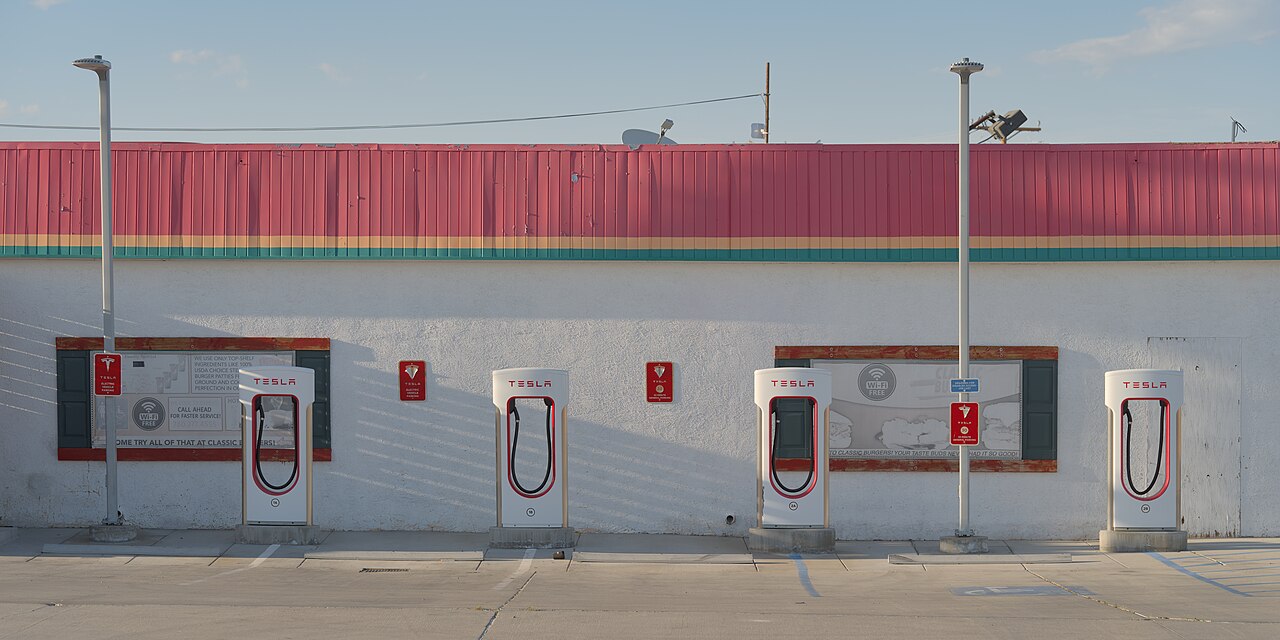
Information current as of 2026 and based on publicly available Tesla guidance and independent research; battery recommendations can vary by model, model year, and region, so always defer to your car’s on-screen guidance. This article is general ownership information, not professional or financial advice. Some links are affiliate/referral links — see our disclosure page. Image credit: “Tesla Supercharger Inyokern California 2026” by Daniel Lu (User:dllu), licensed under CC BY-SA 4.0, via Wikimedia Commons.

About the author: Lifei
Lifei is a Tesla owner based in Canada, writing practical, fact-checked Tesla guides for US and Canadian drivers — buying, ownership, insurance, charging, and TSLA investing, all from first-hand experience.
