
Does a Tesla Need Rustproofing in Canada? Undercoating, Road Salt and the Warranty Catch (2026)
Does a Tesla Need Rustproofing in Canada? Undercoating, Road Salt and the Warranty Catch (2026)

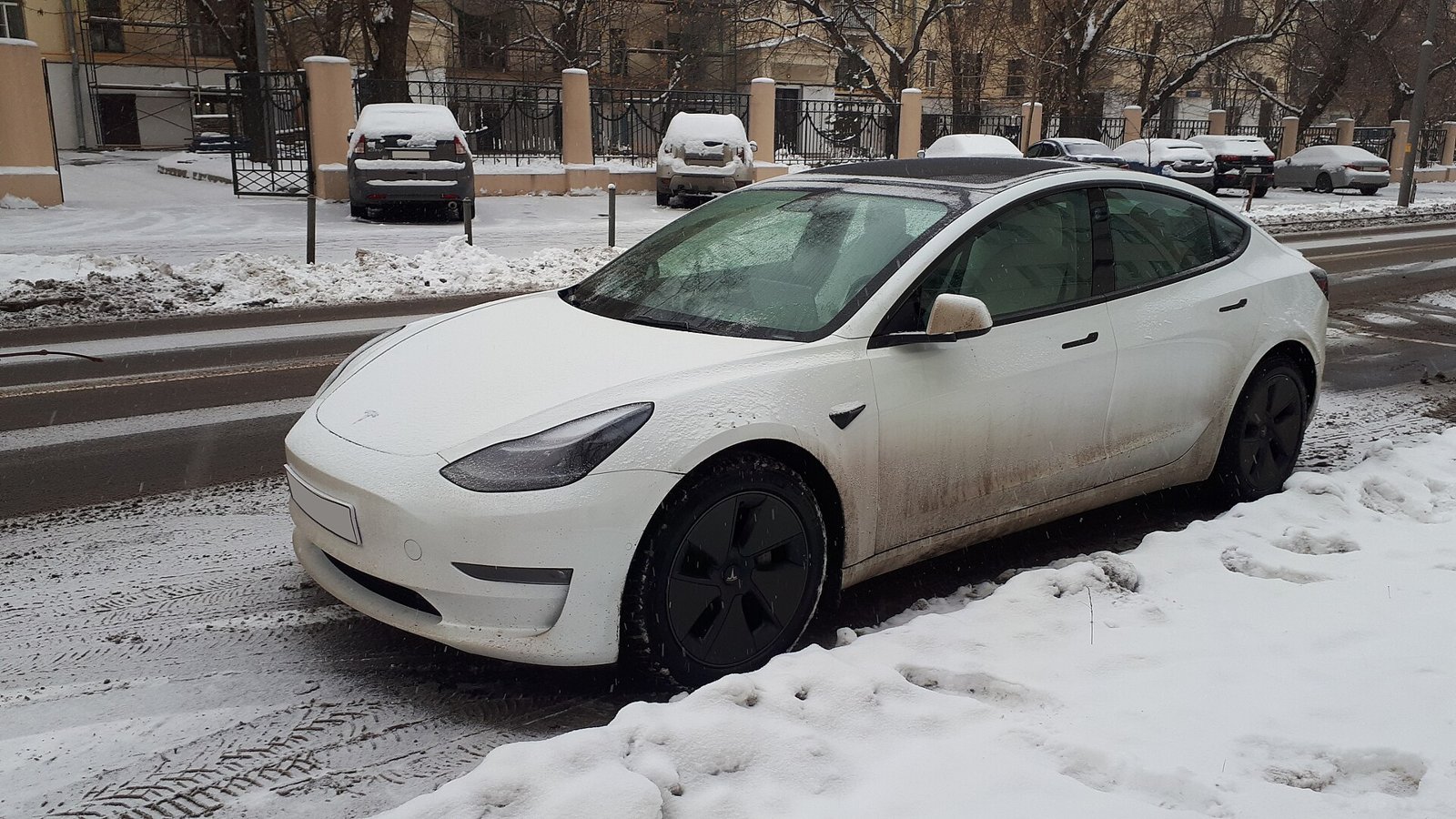
Every October the same question shows up in Canadian Tesla groups, usually from someone who just took delivery of a Model Y in Ontario or Quebec: “Should I get it Krowned?” The dealership add-on that Canadians have argued about for decades collides with two things that are specific to a Tesla. First, the car has a sealed high-voltage battery, orange cables and a lot of electronics under it that a spray gun should never touch. Second, Tesla’s own warranty booklet quietly lists rustproofing and undercoating as something that removes the 12-year body rust coverage. So the honest answer is not a simple yes or no. This guide lays out what actually corrodes on a Model 3, Model Y or Cybertruck after a few salt seasons, what the warranty really says, what Krown, Rust Check and the tar-style undercoatings cost in 2026, how to have an EV sprayed safely if you decide to, and the no-spray routine that protects most of the car for the price of a few car washes. It applies just as well to Michigan, Minnesota, upstate New York and New England, where the roads get the same brine.
Disclosure: some links are affiliate/referral links, which means we may earn a small commission at no extra cost to you. It never changes the price you pay or our recommendations. See our disclosure page.
📋 Contents
- Why Road Salt Is a Bigger Deal Than Most New Tesla Owners Think
- Do Teslas Actually Rust? What Corrodes and What Doesn’t
- What Tesla’s Warranty Actually Says About Rust and Undercoating
- Your Options Compared: Oil Spray, Undercoating, Modules or Nothing
- If You Decide to Rustproof a Tesla, Do It This Way
- The No-Spray Routine That Protects Most of the Car
- Regional Notes: Where the Answer Changes
- Our Recommendation
- Frequently Asked Questions
- The Bottom Line
Why Road Salt Is a Bigger Deal Than Most New Tesla Owners Think
Environment and Climate Change Canada estimates that roughly five million tonnes of road salt are spread on Canadian roads every winter, most of it in Ontario, Quebec and the Maritimes. Cities have also shifted from rock salt to pre-wetted salt and liquid brine, which is sprayed before a storm and sticks to everything it touches. Brine gets into seams, behind wheel-well liners and onto every bolt under the car, and it does not rinse off in the next rain the way loose salt did.
Two things make this worse for a typical Tesla owner. The first is the heated garage. Corrosion is a chemical reaction that slows to a crawl below freezing and speeds up as it warms; a slush-coated car parked in a 15°C garage every night is corroding all winter, while the same car parked outside at -15°C mostly is not. The second is that a Tesla is often the family’s “nice car” that gets driven daily and washed rarely, because there is no oil change visit to remind anyone.
The good news is that the body itself is well protected. Modern Teslas leave the factory with galvanized and e-coated steel, aluminum closures, structural adhesives between dissimilar metals and full seam sealing. Rust through a Tesla body panel is genuinely rare. The problem areas are the bits underneath.
Do Teslas Actually Rust? What Corrodes and What Doesn’t
Ask a Tesla technician in Montreal what they see on four-year-old cars and the list is consistent:
- Brake rotors and calipers. Regenerative braking does most of the stopping, so the friction brakes are used far less than on a gas car and never scrub themselves clean. Tesla builds in brake disc wiping, which applies an imperceptible amount of brake pressure in cold or wet weather to clear the discs, but the owner’s manual itself notes that rust and corrosion can still accumulate “especially in regions where roads are salted during winter”. Seized calipers and grooved rotors are the most common winter-related repair on Canadian Teslas.
- Fasteners, brackets and subframe hardware. Bare or plated bolts on the suspension, subframe mounts, seat-belt anchors under the car and the lower control-arm hardware develop surface rust first. It is ugly rather than structural, but it makes future service harder.
- Suspension components. Control arms, sway-bar links and tie-rod ends are steel and see constant spray.
- Seams and pinch welds. The rocker-panel pinch welds where jacks go, wheel-well seams and the rear lower panel behind the wheels collect brine and mud.
- Hinges, latches and the charge-port door. Exposed steel hinges on the liftgate and frunk, plus the small screws around the charge port, can show surface corrosion within a couple of winters.
What almost never rusts through: the doors, hood, fenders, roof and quarter panels. Stone chips on the front bumper and hood will rust if the chip reaches bare steel and is left alone, which is the case for any car, but that is outside-in damage and is not what the factory warranty covers anyway. The battery pack is a sealed aluminum structure with its own underbody shielding, and corrosion of the pack itself is not a real-world problem in Canada.
So the realistic goal of “rustproofing a Tesla” is not to save the body. It is to keep the underside hardware, brakes and seams from turning brown, which matters most if you plan to keep the car past eight years or want a clean underside at trade-in time. Our resale-value guide explains why a clean underbody is one of the first things a used-EV buyer in Quebec looks at.
What Tesla’s Warranty Actually Says About Rust and Undercoating
Tesla’s New Vehicle Limited Warranty for Canada includes a Body Rust Limited Warranty of 12 years with unlimited kilometres. Read the fine print carefully, because three things surprise people:
- It covers perforation only. A hole that rusts through a body panel from the inside out, caused by a defect in materials or workmanship, is covered. Surface rust, cosmetic staining, rusty bolts, brake corrosion and holes that start from the outside (stone chips, scratches, collision damage) are not.
- It lists rustproofed vehicles as an exclusion. The warranty booklet states that vehicles treated against rust, meaning the procedures commonly referred to as rustproofing or undercoating, are not covered by the Body Rust Limited Warranty. In plain terms: if you have the car sprayed and a panel later rusts through, Tesla can decline the claim.
- It expects you to wash the underside. The Model Y owner’s manual says that when salt has been used on the highways you should “thoroughly rinse all traces of road salt from the underside of the vehicle, wheel wells, and brakes”, and that corrosion damage from not doing so may not be covered.
Put those three together and the picture is clearer than the forum arguments suggest. The only coverage an aftermarket spray puts at risk is the perforation warranty on body panels, which is the one kind of rust a Tesla almost never gets. Your 4-year basic warranty and 8-year battery and drive-unit warranty are not affected by a Krown treatment, unless the shop physically damages something, which is why the choice of shop matters so much (more on that below). The full Tesla warranty guide covers the other coverages and how claims work in Canada.
One more practical note: Tesla’s owner’s manual gives no instruction to rustproof and Tesla service centres do not offer or recommend it. If you value the ability to walk into a service centre with a clean, factory-original underside and no arguments about who touched what, that is a legitimate reason to skip spraying and lean on washing instead.
Your Options Compared: Oil Spray, Undercoating, Modules or Nothing
Here is what the Canadian market actually offers in 2026 and what it costs for a Model 3 or Model Y. Prices are typical Canadian dollar quotes for a crossover-sized vehicle; individual shops vary, and EV-specialist shops in the Montreal and Toronto areas charge more for a first application because it takes longer.
| Option | Typical cost (CAD) | How often | Tesla-specific verdict |
|---|---|---|---|
| Wash-only routine (underbody rinse every 1–2 weeks in salt season) | $100–$250 per winter in car washes | Ongoing | What Tesla’s manual asks for; zero warranty risk; protects brakes and seams if you actually do it |
| Annual oil-based spray (Krown, Rust Check, Corrosion Free, independent EV shops) | $150–$200 at franchise shops; $300–$700 for a first EV-specialist application | Every 12–18 months | The only aftermarket method CAA and the APA endorse; safe on EVs when the product is dielectric and the shop knows where not to spray; technically voids body-perforation coverage |
| Dripless wax or “permanent” rubberized/tar undercoating | $600–$1,000, often sold by dealers with a 10-year guarantee | Once, with annual inspections to keep the guarantee | Avoid on a Tesla: hard coatings crack, trap brine, block drain holes and are nearly impossible to remove from battery shielding and connectors |
| Electronic rust module | $300–$1,000 | Once | Skip: independent testing by the APA found no measurable benefit on road vehicles, and it involves wiring into a 12 V/16 V system Tesla did not design for it |
| DIY lanolin spray (Fluid Film or similar) on hardware only | $40–$80 in cans per year | Every fall | Good middle ground for hands-on owners: treat bolts, brackets and control arms, stay away from the pack and brakes |
For reference, Rust Check’s published 2026 pricing runs from about $150 for a small car to about $190 for a full-size SUV or pickup, and Krown franchise pricing lands in the same band; both note that prices vary by location. The higher first-visit numbers for EVs come from reporting in The Globe and Mail, which found EV-specialist shops spending three to seven hours on a first application because of the extra masking and the need to avoid the battery and high-voltage components.
If You Decide to Rustproof a Tesla, Do It This Way
Plenty of Canadian owners spray their Teslas every fall and have no regrets. The difference between a good outcome and an expensive one is almost entirely in the product and the shop.
- Insist on a solvent-free, dielectric oil product. Krown states that its product contains no solvents and has high dielectric strength, which is what you want near connectors and wiring; Rust Check and Corrosion Free make similar claims. Tar, asphalt and rubberized coatings do not belong on an EV.
- Choose a shop that treats EVs every week, not one that “can probably do it”. Ask specifically how they handle the battery pack, the orange high-voltage cables, the drive units and the charge port. If the answer is vague, leave.
- No-spray zones: the underside of the battery pack and its seams and shielding, any orange cable or connector, the drive-unit housings and coolant fittings, brake rotors and pads, the parking-brake mechanism, rubber suspension bushings (oil swells some rubber compounds), the cameras and ultrasonic-sensor areas on the bumpers, the tire-pressure sensors, and every factory drain hole in the doors, rockers and liftgate.
- Do it in the fall on a clean, bone-dry car. October or early November, after the last wash of the season but before the first brine, is ideal. Oil applied over wet salt seals the salt in.
- Expect drips and smell. Standard oil treatments drip for a few days and smell for a week or two; the driveway will show it. Dripless formulas exist but coat less thoroughly inside cavities.
- Keep the receipt and the shop’s own warranty. If a claim is ever disputed, you want documentation showing a professional EV-experienced installer did the work.
- Ask about the drilling. Some shops drill small holes into rockers and doors to reach cavities. On a Tesla, ask them to use existing openings instead; drilled holes are one of the reasons the perforation warranty is voided.
For hands-on owners, the DIY version is a can of lanolin-based spray such as Fluid Film aerosol with the extension wand, applied only to exposed hardware: control arms, sway-bar links, subframe bolts, the rocker pinch welds and the exposed hinges. It takes an hour with the car on ramps or jack stands, and it is easy to reapply each fall. Read our guide to Tesla jack points and lift pads first so you do not put a jack on the battery pack.
The No-Spray Routine That Protects Most of the Car
If you would rather not spray at all, or you want to keep the factory-original underside while the car is new, this is the routine that Tesla’s manual is effectively describing. It costs less than one rustproofing visit and does more for the brakes than any coating can.
- Rinse the underside every one to two weeks in salt season, and always within a day or two of a thaw. A touchless bay with an undercarriage spray option is the easiest way; the point is volume of water, not soap. Turn on Car Wash Mode (Controls, then Service) so the wipers, charge port and mirrors behave, and keep pressure-washer wands a metre or more away from cameras, the charge-port door and the ultrasonic sensors.
- Get in the habit of a few firm stops each week. Braking hard enough to feel the friction brakes engage scrubs surface rust off the rotors before it pits. On a Tesla you can also reduce regenerative braking strength temporarily to force more pad use after a long salty stretch.
- Clear the drain holes in the doors, rockers and liftgate each spring with a plastic pick so cavities do not hold water.
- Deal with stone chips before summer. A touch-up pen on any chip that shows bare metal stops the only kind of body rust a Tesla realistically gets.
- Protect the cabin from the same salt. Slush that comes in on boots dries into white salt stains that eat through carpet and the underlying sound-deadening. A set of full-coverage all-weather liners is the single most useful winter accessory in Canada; JOWUA’s laser-fitted Model Y (2025+) floor-liner combo and the matching Model 3 (2024+) set have raised edges that hold melted slush until you dump it out (use code TSLNA for 5% off; free DHL shipping over US$130 with duties included, which works for Canadian addresses). Our floor-liner guide compares the fit options for older Model 3 and Model Y.
- Give it one thorough spring clean. A full underbody wash, wheel-well flush and a look at the brakes in April ends the salt season properly. Our Tesla cleaning and detailing guide walks through the products that are safe on the paint and the glass roof.
Regional Notes: Where the Answer Changes
Quebec and Ontario are the heart of the salt belt and the places where an annual oil spray has the strongest case, especially for cars that sleep in heated underground parking in Montreal or Toronto. Nova Scotia, New Brunswick and Newfoundland add sea air, which corrodes bare hardware even in summer. Manitoba and Saskatchewan use plenty of salt but the deep, dry cold slows corrosion for months at a time. Alberta cities lean more on gravel and calcium chloride brine, which is still corrosive but generally leaves cars cleaner than the Highway 401 corridor. Coastal British Columbia rarely salts at all, and a Vancouver Tesla owner can skip this entire debate unless they commute over the Coquihalla. For province-by-province pricing, rebates and winter-range planning, start with our Canada Tesla guides and the winter driving guide.
American readers in Michigan, Ohio, Minnesota, Wisconsin, upstate New York and New England face exactly the same trade-off, and the same warranty language applies to US-delivered cars. Krown and NH Oil Undercoating shops are common across the northern states; the pricing is similar in US dollars.
Our Recommendation
For a brand-new Model 3 or Model Y that you plan to keep four to six years: skip the spray for now, follow the wash routine seriously, and treat exposed hardware yourself with a lanolin spray each fall if you like tinkering. You keep every line of the factory warranty intact and the car will trade in with a clean underside.
For a Tesla you intend to keep eight to twelve years in Quebec, Ontario or the Maritimes, or one that lives in a heated garage: an annual dielectric oil treatment from an EV-experienced shop is worth the $150–$300 a year. Accept that the body-perforation coverage is technically forfeited, understand that it almost never pays out anyway, and be strict about the no-spray zones.
For a used Tesla out of its basic warranty: rustproof it. There is no longer a coverage trade-off, and the underside hardware is exactly where a five-year-old Canadian EV starts to look tired. Our used Tesla buying guide includes an underbody checklist for inspecting a salt-belt car before you buy.
Never, on any Tesla, accept the dealer-style tar undercoating or an electronic module, whatever guarantee comes with it. And if you are still shopping, the winter-ready configuration for most of Canada is the Model Y with all-season or dedicated winter tires (see our winter tire guide); ordering through a Tesla referral link currently adds three months of free FSD (Supervised) to a new Model 3, Model Y or Cybertruck order.
Frequently Asked Questions
Does rustproofing void the Tesla warranty?
It voids only the Body Rust Limited Warranty, which covers rust perforation of body panels from the inside out for 12 years. Tesla’s warranty booklet lists vehicles that have been rustproofed or undercoated as an exclusion from that coverage. The 4-year basic warranty and the 8-year battery and drive-unit warranty are not affected by an oil spray, although damage a shop causes to wiring, sensors or the battery shielding would not be covered by Tesla either.
Is Krown or Rust Check safe on an electric vehicle?
Both companies say their oil-based products are solvent-free and non-conductive, and both treat EVs routinely across Canada. Safety comes down to the technician avoiding the battery pack seams, high-voltage cables, drive units, brakes, sensors and drain holes. Ask how many Teslas the location has done before you book.
How much does it cost to rustproof a Tesla Model Y in Canada?
Franchise oil-spray shops typically charge $150–$200 for a crossover in 2026. EV-specialist shops in Montreal and Toronto often quote $300–$700 for a first application because of the extra time to mask components, then less for annual touch-ups. Tar-style undercoatings run $600–$1,000 and are not recommended for a Tesla.
Do Tesla brakes rust because of regenerative braking?
Yes, surface rust on the rotors is the most common winter complaint on Teslas. Regen means the pads rarely scrub the discs. Tesla’s brake disc wiping feature helps in wet weather, but the manual notes that corrosion can still build up where roads are salted. A few firm stops each week and a spring inspection prevent most seized-caliper repairs.
Should I rustproof a Tesla parked in a heated garage?
A heated garage is the strongest argument for either an annual oil spray or a very disciplined wash routine. Salt brine stays chemically active above freezing, so a slush-covered car in a warm garage corrodes faster than one left outside in the cold. At minimum, rinse the underside weekly if the car sleeps indoors.
Can I rustproof a Tesla myself?
You can treat exposed hardware with a lanolin-based aerosol such as Fluid Film in about an hour, working only on control arms, subframe bolts, pinch welds and hinges. Do not spray the battery pack, orange cables, brakes, sensors or drain holes, and use the correct lift points so you never put a jack on the battery.
What about the Cybertruck’s stainless steel?
The stainless exterior panels can show surface spotting from road salt and iron contamination but do not rust through; regular washing and a stainless-safe cleaner handle it. The underside of the Cybertruck uses ordinary coated steel and aluminum components, so the same brake, hardware and no-spray-zone advice in this guide applies.
The Bottom Line
- Tesla bodies almost never rust through; the real winter casualties are brake rotors, underside fasteners, suspension hardware and seams.
- Tesla’s 12-year Body Rust Limited Warranty covers inside-out perforation only and excludes vehicles that have been rustproofed or undercoated; other warranties are unaffected by a proper oil spray.
- The owner’s manual asks you to rinse road salt from the underside, wheel wells and brakes; that routine alone protects most of the car.
- If you spray, use a dielectric oil product at an EV-experienced shop, in the fall, on a dry car, and never let tar undercoating or an electronic module near a Tesla.
- Keep it under six years in a normal driveway: wash and skip the spray. Keep it a decade in Quebec, Ontario or the Maritimes, or park in a heated garage: an annual $150–$300 oil treatment is money well spent.
- All-weather floor liners keep the same salt from destroying the cabin; JOWUA’s Model 3 and Model Y sets are 5% off with code TSLNA.
- Ordering a new Tesla through a referral link currently includes three months of free FSD (Supervised).
Information current as of September 2026. Warranty terms, rustproofing prices and provincial road-salt practices change; confirm coverage in the warranty booklet for your vehicle’s model year and get written quotes from installers before booking. This article is general information, not legal or mechanical advice. Some links are affiliate or referral links; see our disclosure page. Image credit: “Tesla Model S in snow (front view)” by Kirill Borisenko, CC BY-SA 4.0, via Wikimedia Commons.

About the author: Lifei Zhou
Lifei is a Tesla owner based in Canada, writing practical, fact-checked Tesla guides for US and Canadian drivers — buying, ownership, insurance, charging, and TSLA investing, all from first-hand experience.
