
Ontario Ultra-Low Overnight Rate for Tesla Charging (Nov 2026): 3.7¢/kWh, Real Costs and Is It Worth It
Ontario Ultra-Low Overnight Rate for Tesla Charging (Nov 2026): 3.7¢/kWh, Real Costs and Is It Worth It

From November 1, 2026, Ontario’s Ultra-Low Overnight (ULO) price drops to 3.7 cents per kWh, every night from 11 p.m. to 7 a.m. That makes it the cheapest regulated way to charge a Tesla in the province: about 67 cents per 100 km, versus $1.64 on regular Time-of-Use off-peak. The catch is a 37.7-cent weekday peak from 4 to 9 p.m., so ULO pays off only if the rest of your household can stay light in the evening.
Disclosure: some links are affiliate/referral links, and this site may earn a commission at no extra cost to you. See our disclosure page.
Key facts (checked October 24, 2026)
- ULO overnight price from Nov 1, 2026: 3.7¢/kWh (was 3.9¢), every day 11 p.m. to 7 a.m.
- ULO weekday on-peak, 4 to 9 p.m.: 37.7¢/kWh (was 39.1¢).
- Regular TOU off-peak falls to 9.1¢/kWh; Tiered Tier 1 falls to 11.2¢/kWh.
- The Ontario Electricity Rebate drops from 23.5% to 15.7% on the same date.
- Rough cost to drive 15,000 km a year on ULO overnight: about $100 in electricity, before delivery charges and tax.
- Switching plans takes an election form to your local utility and starts at your next billing period.
The prices above come from the Ontario Energy Board’s electricity rates page and its October 16, 2026 price announcement, and they match an independent breakdown published on October 21. Below is what the change means in dollars for a Tesla, how to tell whether ULO fits your home, and how to set up the car so it only charges in the cheap window.
📋 Contents
- Ontario electricity prices from November 1, 2026
- What it costs to charge a Tesla on each plan
- Is ULO actually worth it for your household?
- How to switch to Ultra-Low Overnight in Ontario
- Set your Tesla to charge only between 11 p.m. and 7 a.m.
- Can you fill up in eight hours? Charger speed matters
- Common mistakes that wipe out ULO savings
- What about the smaller Ontario Electricity Rebate?
- Frequently Asked Questions
- Summary
Ontario electricity prices from November 1, 2026
The OEB resets regulated prices once a year on November 1. This year every price went down a little, but the provincial rebate on your bill shrank more, so many households will pay slightly more overall. For EV owners, the number that matters most is the overnight price, and that fell from 3.9 to 3.7 cents.
| Plan and period | Hours | Until Oct 31, 2026 | From Nov 1, 2026 |
|---|---|---|---|
| ULO ultra-low overnight | Every day, 11 p.m. to 7 a.m. | 3.9¢ | 3.7¢ |
| ULO weekend off-peak | Weekends and holidays, 7 a.m. to 11 p.m. | 9.8¢ | 9.1¢ |
| ULO mid-peak | Weekdays, 7 a.m. to 4 p.m. and 9 to 11 p.m. | 15.7¢ | 14.6¢ |
| ULO on-peak | Weekdays, 4 to 9 p.m. | 39.1¢ | 37.7¢ |
| TOU off-peak | Weekdays 7 p.m. to 7 a.m., weekends and holidays all day | 9.8¢ | 9.1¢ |
| TOU mid-peak (winter) | Weekdays, 11 a.m. to 5 p.m. | 15.7¢ | 14.6¢ |
| TOU on-peak (winter) | Weekdays, 7 to 11 a.m. and 5 to 7 p.m. | 20.3¢ | 18.9¢ |
| Tiered, Tier 1 / Tier 2 | Winter threshold: first 1,000 kWh a month | 12.0¢ / 14.2¢ | 11.2¢ / 13.2¢ |
All prices are per kWh for the electricity itself. Your bill also has delivery and regulatory charges set by your local utility, then the Ontario Electricity Rebate, then 13% HST. ULO hours are the same all year. Regular TOU swaps its mid-peak and on-peak hours between summer and winter.
Ultra-Low Overnight
- Weekday 4 to 9 p.m.
- 37.7¢
Time-of-Use
- Winter on-peak
- 18.9¢
Tiered
- Above 1,000 kWh/month
- 13.2¢
Source: Ontario Energy Board prices effective November 1, 2026. Electricity charge only.
What it costs to charge a Tesla on each plan
To turn cents per kWh into something you can budget, I’m using one simple assumption: 18 kWh per 100 km measured at the wall. That includes charging losses and some winter driving, and it’s a fair middle figure for a Model Y or Model 3. Your own number is in the car’s Energy app, so swap it in if it’s different.
- ULO overnight at 3.7¢: about $0.67 per 100 km.
- TOU off-peak at 9.1¢: about $1.64 per 100 km.
- Tiered Tier 1 at 11.2¢: about $2.02 per 100 km.
- ULO on-peak at 37.7¢, if you plug in at 5 p.m. by mistake: about $6.79 per 100 km.
Over a typical 15,000 km year, that’s 2,700 kWh of charging. The gap between the cheapest and the most careless option is roughly ten times.
Estimate: 18 kWh per 100 km at the wall, OEB prices from Nov 1, 2026. Electricity charge only, before delivery, the rebate and HST. Scale: $0 to $1,050.
For comparison, Supercharger prices in Canada run roughly $0.25 to $0.60 per kWh depending on the site and time of day, after two rounds of price changes in September 2026. The same 2,700 kWh would cost somewhere between $675 and $1,620 at Superchargers. Home charging on ULO is the reason most Ontario owners rarely supercharge outside road trips. Our full guide to the cost of charging a Tesla covers Supercharger pricing in more detail.
The 0.2-cent drop on November 1 is small in dollar terms. On 2,700 kWh it saves about $5.40 a year. The bigger story is the structure: overnight power is now less than half the TOU off-peak price.
Is ULO actually worth it for your household?
ULO is a trade. You get very cheap nights and pay a steep premium on weekday evenings. Whether you come out ahead depends far more on your home than on your car.
Here’s a rough way to think about it for winter. Moving 2,700 kWh of charging from TOU off-peak (9.1¢) to ULO overnight (3.7¢) saves about 5.4¢ per kWh, or $145.80 a year. That works out to about 56 cents per weekday. On the other side, every kWh your home uses on weekdays from 4 to 9 p.m. costs 37.7¢ on ULO. On winter TOU, those five hours average about 14.1¢ (one hour of mid-peak, two of on-peak, two of off-peak). The difference is roughly 23.6¢ per kWh.
Divide one by the other and the break-even is about 2.4 kWh per weekday in that 4 to 9 p.m. window. If your home uses less than that in the evening, the EV savings alone should carry ULO. If you cook on an electric range, run the dryer and have electric baseboard heat after work, you can easily pass that line. This is a simplified estimate. It ignores the extra savings on your fridge, furnace fan and other overnight loads, and it ignores the 9 to 11 p.m. window, where ULO mid-peak (14.6¢) costs more than TOU off-peak (9.1¢). The OEB’s bill calculator lets you compare the plans with your own usage, which beats any rule of thumb.
Usually a good fit
- You charge at home most nights and can wait until 11 p.m.
- Gas furnace and gas or induction cooking that you can shift a bit
- Nobody home on weekday afternoons
- You can run the dishwasher, laundry and dryer late or on weekends
- You drive enough that charging is a big share of your bill
Often a poor fit
- Electric baseboard or heat pump running hard on winter evenings
- Someone works from home and runs heat or AC all afternoon
- Big evening cooking and laundry routine you can’t move
- You drive very little, so EV savings are small
- You live in a building with a unit sub-meter provider and can’t choose a plan
General guidance only. Use the OEB bill calculator with your own usage before switching.
One more thing to know: weekends and holidays have no on-peak period on ULO. From 7 a.m. to 11 p.m. on those days you pay 9.1¢, the same as TOU off-peak, so Saturday laundry is not a problem.
How to switch to Ultra-Low Overnight in Ontario
You don’t switch through the OEB. You ask your local utility, such as Toronto Hydro, Alectra, Hydro Ottawa or Hydro One, using its election form. According to the OEB’s guide to choosing a price plan, a few rules apply:
- You need a smart meter and must be on the Regulated Price Plan. If you signed a retail energy contract, you choose a plan only after leaving it.
- The utility has 10 business days to confirm the switch or tell you why it can’t process it.
- A switch only takes effect at the start of a billing period. Send the form at least 10 business days before that, or it may slip one more cycle.
- You can switch back at any time. You are not locked in.
- If your condo or apartment is billed by a unit sub-meter provider, you can’t switch on your own.
Process as described by the Ontario Energy Board. Forms and timing vary by utility.
Mark the start date on your calendar. The most expensive mistake new ULO customers make is plugging in after work on a weekday while the car’s old settings still let it charge right away.
Set your Tesla to charge only between 11 p.m. and 7 a.m.
The plan only saves money if the car waits. Tesla gives you two ways to do that, and both can be set from the touchscreen or the Tesla app.
- Charging schedule: on recent software, go to Charging, then Schedule, and add a charging schedule that starts at 11:00 p.m. and ends at 7:00 a.m. Save it for your home location so it doesn’t delay charging elsewhere.
- Scheduled departure with off-peak charging: set the time you leave in the morning and turn on off-peak charging with an end time of 7:00 a.m. The car works out when to start so it finishes in the cheap window, and it can precondition the battery and cabin before you leave.
Use one method, not both, so they don’t fight each other. Tesla’s charging support page explains the options. In winter, preconditioning while still plugged in uses wall power for warm-up instead of your battery, which matters on a cold Ontario morning. Our guide on how to precondition a Tesla in winter walks through the settings.
I ordered my Model Y straight from tesla.com in January 2022, without a test drive, and I’ve driven it through four Toronto-area winters since. Scheduled charging is one of the first settings worth getting right on a new car. If you’re still shopping, ordering through a Tesla referral link gives new owners 3 months of FSD (Supervised). It generally can’t be combined with the new-car FSD trial or other offers, and Tesla confirms the final perk on your order.
Can you fill up in eight hours? Charger speed matters
ULO gives you eight cheap hours a night. How much range you can add in that window depends on your charging equipment. These figures are simple volts times amps, at 18 kWh per 100 km.
| Setup | Power | Energy in 8 hours | Approx. range added |
|---|---|---|---|
| Regular 120 V outlet, 12 A | 1.44 kW | 11.5 kWh | About 64 km |
| 240 V at 32 A | 7.68 kW | 61.4 kWh | About 340 km |
| 240 V at 40 A | 9.6 kW | 76.8 kWh | About 425 km |
| 240 V at 48 A (Wall Connector, if car and circuit allow) | 11.52 kW | 92.2 kWh | Limited by battery size |
A 120 V outlet can cover a short commute, but on a long winter drive day it may not catch up overnight, and you’ll be tempted to top up in the evening at 37.7¢. Any Level 2 setup removes that problem, since one ULO night refills most daily driving several times over.
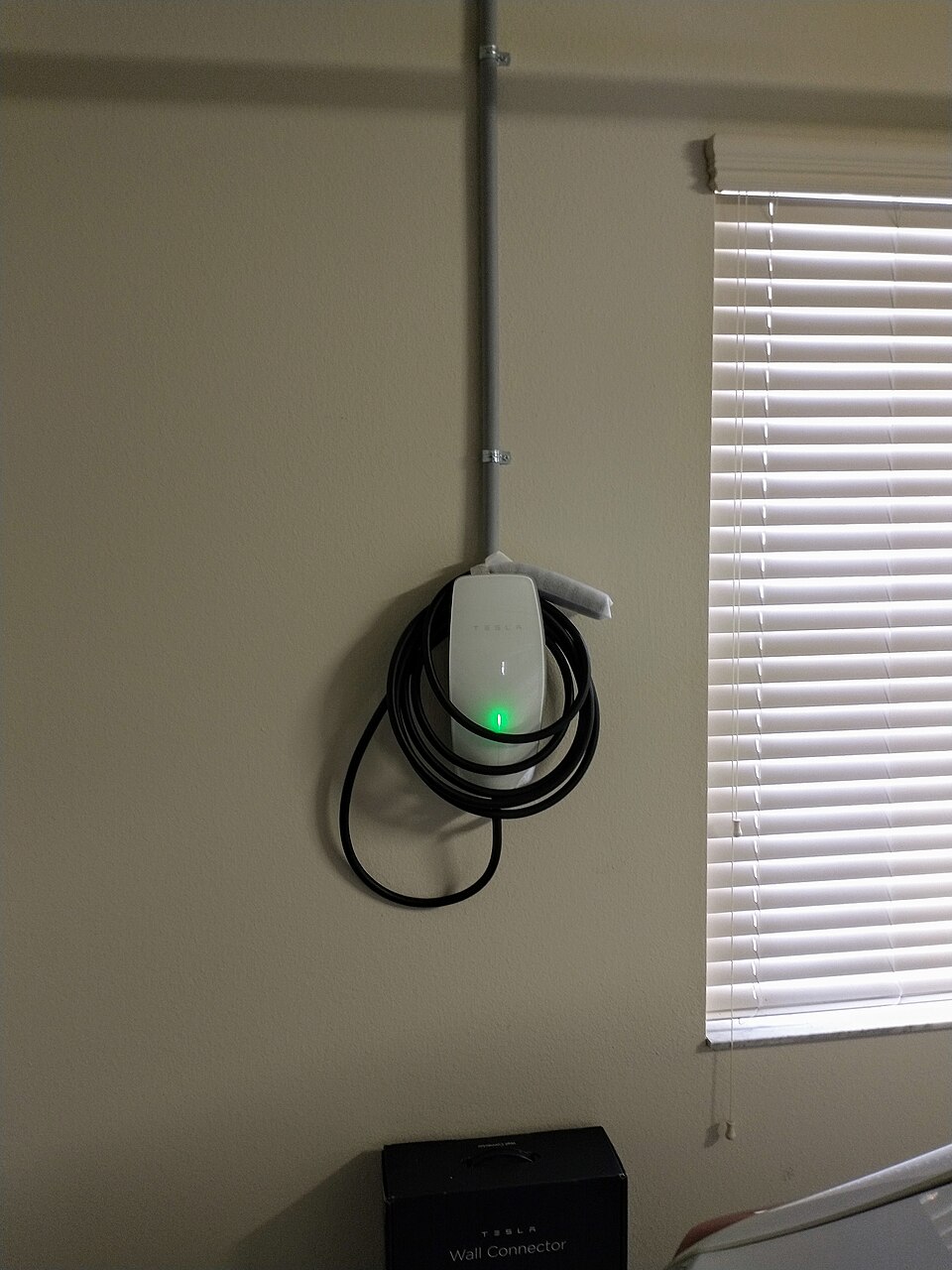
If you don’t have Level 2 yet, the Tesla Wall Connector on Amazon.ca (24 ft cable, up to 48 A) is the cleanest option for a garage or driveway. It’s hardwired, so you need an electrician, an ESA permit and usually a 60 A circuit, and it has Wi-Fi for updates. It typically lists around C$550 to C$650 before installation. It’s worth it if you plan to keep the house and the car for years. Check the listing’s connector type before you buy, and our home charger installation guide covers costs and permits.
The budget alternative is the Lectron 40 A portable Level 2 charger with a native Tesla (NACS) plug, about C$350 to C$400. It plugs into a NEMA 14-50 outlet, so if you already have one, or an electrician can add one cheaply, you skip hardwiring. At 40 A it still adds roughly 425 km in a ULO night.
Common mistakes that wipe out ULO savings
- Plugging in after work without a schedule. Two hours of charging at 7.68 kW during on-peak costs about $5.79. Do that a few times a month and your savings are gone.
- Forgetting the 9 to 11 p.m. window. On weekdays it’s mid-peak at 14.6¢, more than TOU off-peak. Start charging at 11, not 9.
- Ending the schedule after 7 a.m. Anything the car still draws at 7:30 on a weekday is billed at mid-peak.
- Cabin preheating during on-peak. Remote climate at 5 p.m. on a cold weekday draws power at 37.7¢ if the car is plugged in. It’s small, but it adds up.
- Never checking the bill. Your first ULO bill is the real test. If the on-peak line is large, move household loads or switch back.
What about the smaller Ontario Electricity Rebate?
The Ontario Electricity Rebate is a percentage taken off your bill before HST. It drops from 23.5% to 15.7% on November 1, 2026. The OEB says a typical home using 700 kWh a month will see the rebate fall to about $23 a month, from about $36. One independent estimate puts the net effect at roughly $6 more per month for that typical TOU household, because the lower prices don’t fully offset the smaller rebate.
For a Tesla owner, the rebate change applies whichever plan you pick, so it doesn’t change the ULO versus TOU decision. It just means your total bill may not fall even though every price went down. If you also want local context on buying and owning a Tesla here, see our Toronto and Ontario Tesla buying guide and the rest of our Canada Tesla guides.
Frequently Asked Questions
What is the Ultra-Low Overnight rate in Ontario from November 2026?
From November 1, 2026, the ULO overnight price is 3.7 cents per kWh, every day from 11 p.m. to 7 a.m. It was 3.9 cents until October 31. The ULO weekday on-peak price from 4 to 9 p.m. is 37.7 cents.
How much does it cost to fully charge a Tesla on ULO?
Electricity for a 50 kWh top-up costs about $1.85 at 3.7 cents, compared with about $4.55 on TOU off-peak. Delivery charges, the rebate and HST change the final bill, but the ratio between plans stays similar.
Is ULO better than Time-of-Use for EV owners?
Often, but not always. A rough winter estimate says ULO comes out ahead if your home uses less than about 2.4 kWh per weekday between 4 and 9 p.m., based on 15,000 km a year of overnight charging. Homes with heavy evening electric heating or cooking may do better on TOU. Use the OEB bill calculator to check.
Do weekends have an on-peak period on ULO?
No. On weekends and holidays, ULO charges 9.1 cents from 7 a.m. to 11 p.m. and 3.7 cents overnight. The 37.7-cent on-peak price applies only on weekdays from 4 to 9 p.m.
How long does it take to switch to ULO?
Your utility must respond within 10 business days, and the change starts at the beginning of a billing period. In practice, expect your next or second billing cycle. You can switch back whenever you want.
Can I get ULO in a condo?
If you’re billed directly by your local utility with a smart meter, yes. If a unit sub-meter provider bills your building, you can’t choose the plan yourself. Our guide to owning a Tesla without a home charger covers condo charging options.
Summary
- Ontario’s ULO overnight price is 3.7¢/kWh from November 1, 2026, the cheapest regulated way to charge a Tesla.
- That’s about $0.67 per 100 km, or roughly $100 a year for 15,000 km, before delivery and tax.
- The weekday 4 to 9 p.m. price of 37.7¢ is the risk. Low evening household use is what makes ULO pay.
- Switch through your local utility’s election form; it starts at a new billing period and you can switch back.
- Set a charging schedule from 11 p.m. to 7 a.m. before your first ULO billing period starts.
- Level 2 charging makes the eight-hour window more than enough for most drivers.
Order a Tesla with 3 months of FSD (Supervised) →
Image credit: Whoisjohngalt, CC BY-SA 4.0, via Wikimedia Commons.

About the author: Lifei Zhou
Model Y owner since 2022Ontario STO registered apprentice · 310SWorks on Porsche, Mercedes, BMW, Audi weeklyHundreds of readers referred (est.)
Lifei is a Tesla owner based in Canada, writing practical, fact-checked Tesla guides for US and Canadian drivers — buying, ownership, insurance, charging, and TSLA investing, all from first-hand experience.