
Hydro-Québec Rate for Tesla Charging (2026): No Overnight Discount, Real Cost per 100 km and Rate Flex D
Hydro-Québec Rate for Tesla Charging (2026): No Overnight Discount, Real Cost per 100 km and Rate Flex D

Charging a Tesla at home in Quebec costs about $1.27 to $2.01 per 100 km in electricity on Hydro-Québec’s Rate D, before GST and QST. Unlike Ontario or BC, there is no overnight discount: a kWh costs the same at 2 a.m. as at 2 p.m. What matters is whether your home is above or below 40 kWh a day, and, if you choose Rate Flex D, keeping the car from charging during winter peak events.
Disclosure: some links are affiliate/referral links, and this site may earn a commission at no extra cost to you. See our disclosure page.
Key facts (checked November 7, 2026)
- Rate D since April 1, 2026: 7.065¢/kWh for the first 40 kWh per day, 11.142¢/kWh after that, plus a 46.154¢ daily access charge.
- Rate D has no time-of-use pricing, so the hour you charge doesn’t change the price.
- Rate Flex D (winter only, December 1 to March 31): 4.886¢ and 9.103¢ outside peak events, but 46.463¢/kWh during them.
- Peak events fall between 6 and 10 a.m. or 4 and 8 p.m., with a cap of 120 hours per winter.
- A Tesla using 18 kWh per 100 km costs about $2.01 per 100 km at the upper Rate D price, before taxes.
- Québec’s Écorecharge program lists a $600 rebate toward a home charger.
All rates in this guide come from Hydro-Québec’s official 2026 Electricity Rates document, effective April 1, 2026, which I read on November 7, 2026. Below I turn those cents into dollars for a Model 3 or Model Y, explain when Rate Flex D makes sense for an EV household, and show how to set up the car so it never charges at the expensive price.
📋 Contents
- How Hydro-Québec Rate D works for EV charging
- What it actually costs to charge a Tesla in Quebec
- Rate Flex D: when it pays for an EV household
- How to set up your Tesla for Hydro-Québec rates
- Do you need a Level 2 charger in Quebec?
- Rebates for a home charger and a new Tesla in Quebec
- Frequently Asked Questions
- Summary
How Hydro-Québec Rate D works for EV charging
Rate D is the default residential rate in Quebec. Almost every house, condo and apartment with its own meter is on it unless the owner signed up for something else. It has three parts:
- A system access charge of 46.154¢ for each day in the billing period. You pay it whether or not you own an EV.
- 7.065¢ per kWh for energy up to 40 kWh times the number of days in the period.
- 11.142¢ per kWh for everything above that.
The 40 kWh threshold is calculated over the whole billing period, not day by day. Hydro-Québec’s Rate D page gives the example of a 62-day period: the first 2,480 kWh (40 × 62) are billed at the lower price. So a big charging session on Saturday doesn’t push you into the upper price by itself. What counts is your total for the period.
There are no time periods. Ontario’s Ultra-Low Overnight plan and BC Hydro’s time-of-day option reward overnight charging, but Rate D treats every hour the same. That makes life simple: plug in when you get home and let the car charge. You don’t need a schedule to save money on Rate D.
| Rate (effective April 1, 2026) | First 40 kWh/day | Above 40 kWh/day | Peak events |
|---|---|---|---|
| Rate D (all year) | 7.065¢ | 11.142¢ | None |
| Rate Flex D, winter (Dec 1 to Mar 31) | 4.886¢ | 9.103¢ | 46.463¢ |
| Rate Flex D, rest of year | 7.065¢ | 11.142¢ | None |
Both rates also charge the same 46.154¢ per day for system access. GST and QST are added on top of the whole bill.
Scale: 0 to 50¢. Source: Hydro-Québec 2026 Electricity Rates, effective April 1, 2026.
What it actually costs to charge a Tesla in Quebec
To turn rates into dollars, I’m using 18 kWh per 100 km measured at the wall. That’s a reasonable mixed-season estimate for a Model 3 or Model Y once charging losses are included. Your number will be lower in summer and noticeably higher in January, so treat these as estimates.
The key question is which price your car’s charging lands on. Hydro-Québec bills the household total, so the EV’s kWh are effectively added on top of everything else:
- If your home uses well under 40 kWh a day without the car (gas or oil heat, a small condo, or summer months), much of the car’s charging falls into the 7.065¢ tier.
- If your home already goes past 40 kWh a day, typically an all-electric house in winter with baseboard heaters, every kWh the car takes is billed at 11.142¢.
For most Quebec owners in a house, the honest planning number for winter is the upper price. Here’s what that means per 100 km:
Rate D, lower tier
- Price
- 7.065¢/kWh
Rate D, upper tier
- Price
- 11.142¢/kWh
Flex D, winter off-event
- Price
- 9.103¢/kWh
Supercharger
- Price
- $0.25–0.60/kWh
Estimates. Home rates from Hydro-Québec (April 1, 2026); Supercharger range is the approximate Canadian range as of October 2026 and varies by site and time.
Over a year of 20,000 km, the car uses about 3,600 kWh. At 11.142¢ that’s about $401 before taxes, or roughly $461 with GST and QST. Even in the worst case, that’s under $40 a month. If a lot of your charging lands in the lower tier, the yearly total drops toward $254 before taxes.
For comparison, a gas SUV using 8 L per 100 km would need gasoline under about 29 cents a litre to match $2.31 per 100 km, which is the upper-tier home cost with taxes. That’s why owners in Quebec talk about home charging as the biggest running-cost advantage of an EV. Our cost to charge a Tesla guide compares this with other provinces and US states.
Supercharging is the expensive way to fill up. The roughly $0.25 to $0.60 per kWh Canadian range works out to two to five times the home cost. It’s great on a trip to Quebec City or Mont-Tremblant, but if you can charge at home, Superchargers shouldn’t be your daily routine.
Rate Flex D: when it pays for an EV household
Rate Flex D is Hydro-Québec’s dynamic winter rate. From December 1 to March 31, you get cheaper electricity most of the time (4.886¢ and 9.103¢ instead of 7.065¢ and 11.142¢). In exchange, energy used during peak demand events costs 46.463¢ per kWh, more than four times the normal upper price.
The rules, from the 2026 rate document:
- Events can only happen between 6 and 10 a.m. and between 4 and 8 p.m. in winter.
- Each event lasts four hours, with at most two per day and at least six hours between them.
- There’s a cap of 120 event hours per winter, the equivalent of 30 events.
- Certain holidays are excluded: December 24, 25, 26 and 31, January 1 and 2, plus Good Friday and Easter Monday when they fall in winter.
- Hydro-Québec sends notice by email or push notification before 3 p.m. the day before.
- Outside winter, Flex D uses the regular Rate D prices.
For the car, this is easy to work with. A Tesla can charge from late evening until early morning and finish before 6 a.m. That’s outside every possible event window. On the upper tier, that saves 2.039¢ per kWh, about 37 cents per 100 km, compared with Rate D.
The risk is forgetting. A car on a Wall Connector can pull around 11 kWh every hour. If it charges through a full four-hour event, that’s about 44 kWh at 46.463¢, or roughly $20.44, versus about $4.01 at the normal off-event price. A couple of those mistakes erase a winter’s worth of EV savings.
Good fit
- The car is home most nights and can finish charging before 6 a.m.
- You can lower the heat or skip the dryer for four hours on event days.
- You’re comfortable using a charging schedule and checking event notices.
- You use Hilo or smart thermostats that react to events automatically.
Not a good fit
- You work night shifts and need to charge after you get home at 7 a.m.
- Someone at home needs steady heat all day and can’t cut back.
- You’d rather plug in and forget about it.
- The house has a lot of heating load you can’t shift.
Flex D isn’t just about the car. The event price applies to the whole house, so the real question is whether your household can reduce heating and other loads during events. The car is the easiest part. If you’re unsure, Hydro-Québec also offers a Winter Credit Option on Rate D. It pays a credit of 58.490¢ per kWh you cut during events and doesn’t charge a higher price if you don’t. You can’t have both at once.
How to set up your Tesla for Hydro-Québec rates
On Rate D, you don’t need to do anything special. Plug in, set a charge limit (80% is a common daily choice for most packs, while LFP packs are usually set to 100% once a week; follow what the car recommends), and let it charge.
On Rate Flex D, set a schedule once and leave it:
Two winter tips. First, preconditioning on a cold morning draws power from the wall while the car is plugged in. If it falls inside a 6 to 10 a.m. event, that energy is billed at the peak price. On event mornings, schedule departure before 6 a.m. or let the car warm up from the battery. Our preconditioning guide explains the settings. Second, be careful with the “plug in after work” habit. Arriving home at 5 p.m. and plugging in means charging during the evening window. With a schedule, the car waits until 10 p.m.
Do you need a Level 2 charger in Quebec?
Not always. A regular 120V outlet adds only a few kilometres of range per hour, which is fine for short commutes in mild weather but often not enough in a Quebec winter, when the heater and the cold battery eat into what you add overnight. Most owners who drive daily end up with Level 2.
On Rate D, faster charging doesn’t change the price per kWh. Its value is convenience and winter margin. On Flex D, it matters more, because a Level 2 charger can refill a long day’s driving inside the 10 p.m. to 6 a.m. window.
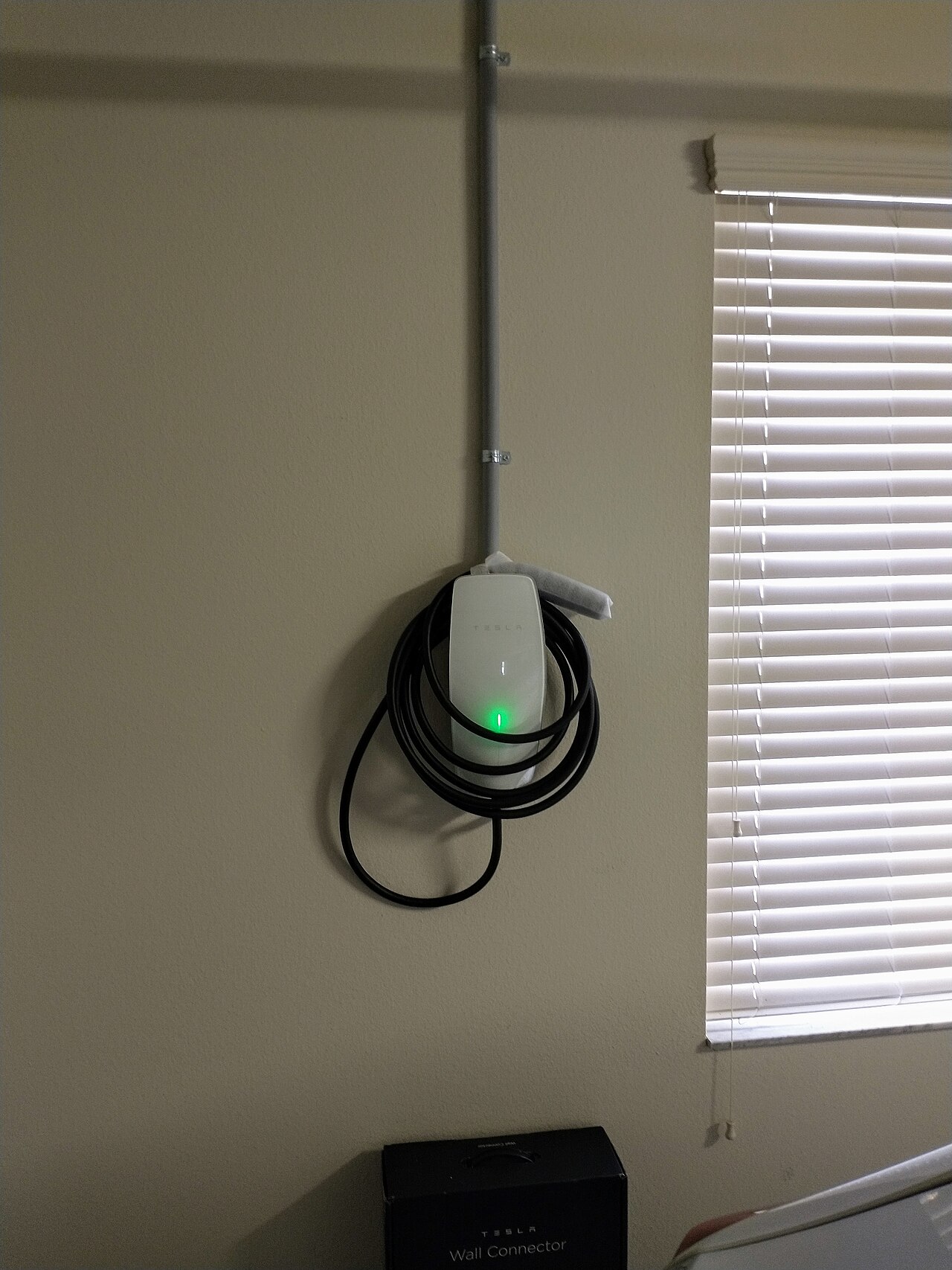
The Tesla Wall Connector is the obvious main choice for a garage or driveway. It charges at up to 48 A on the right circuit, works with every current Tesla, and supports power sharing for two-car homes. It’s worth it if you plan to stay in the house for years. It needs a 240V circuit installed by a licensed electrician, so budget for installation on top of the unit.
If you rent or want something you can take with you, a portable Level 2 unit that plugs into a NEMA 14-50 outlet is the budget alternative. The Lectron 40A portable charger fits Model 3 and Model Y and costs less than a Wall Connector. Tesla’s own Mobile Connector is a lighter 32 A option. Either way, an electrician still needs to install the 240V outlet. Our home charger installation guide covers costs and circuit sizes.
Speaking of the chalet: if your weekend place is far from cell coverage, a Starlink dish lets you get Hydro-Québec event notices and control the car from the Tesla app. That referral link is for Canadian addresses only.
Rebates for a home charger and a new Tesla in Quebec
As of November 7, 2026, the Québec government’s Écorecharge home charging station page lists a $600 rebate toward a home charger. Charger rebates moved from Roulez vert to the new Écorecharge program in 2026. The main conditions on the official page:
- You must own an electric vehicle when you apply.
- The charger must cost more than $600 before taxes and be on the program’s eligible list.
- You need proof that the charger was installed, and the government recommends using an electrician.
Check the eligible list before you buy, not after. Not every charger qualifies. Rules can change, so read the official page on the day you order.
For the car itself, Quebec’s Roulez vert program gives $2,000 for a new battery-electric vehicle in 2026 if the MSRP is under $65,000, as long as it’s registered by December 31, 2026. The program ends in 2027. At the federal level, only the Model Y Rear-Wheel Drive ($49,990) qualifies for the $5,000 EVAP incentive, because the price cap is $50,000 and adding the $1,300 tow hitch puts it over. These figures come from our October 5, 2026 check of Tesla’s Canadian configurator. Our Montreal and Quebec buying guide walks through the full price with QST.
I ordered my own Model Y straight from tesla.com without a test drive, and the process was simple. If you’re about to order, using a Tesla referral link gets new owners 3 months of FSD (Supervised). It generally can’t be combined with the new-car FSD trial or other offers; Tesla confirms the final perk on your order. More Quebec and Canada guides are in our Canada Tesla section.
Frequently Asked Questions
Does Hydro-Québec have a cheaper overnight rate for EV charging?
No. Rate D has no time-of-use pricing, so overnight electricity costs the same as daytime electricity. The only way to get a lower winter price is Rate Flex D, which is cheaper outside peak events but charges 46.463¢ per kWh during them.
How much does it cost to charge a Tesla at home in Quebec?
About $1.27 to $2.01 per 100 km before taxes, assuming 18 kWh per 100 km. A full 60 kWh charge costs about $4.24 at the lower Rate D price or $6.69 at the upper price, before GST and QST.
Is Rate Flex D worth it if I have a Tesla?
It can be, if the car charges overnight and finishes before 6 a.m., and if your household can cut heating and other loads during events. If you can’t reliably avoid 6 to 10 a.m. and 4 to 8 p.m. on event days, stay on Rate D or try the Winter Credit Option.
Does EV charging push me into Hydro-Québec’s higher price?
It can. The lower price covers 40 kWh times the number of days in your billing period. If your home already uses more than that, as many electrically heated homes do in winter, every kWh the car uses is billed at 11.142¢.
Can I get a rebate for a home charger in Quebec?
Yes. As of November 7, 2026, the Écorecharge program lists $600 toward a home charger that costs more than $600 before taxes and is on the eligible list. You need to own an EV and show proof of installation.
Is Supercharging cheaper than home charging in Quebec?
No. Canadian Supercharger prices run roughly $0.25 to $0.60 per kWh, while Hydro-Québec’s highest regular residential price is 11.142¢. Home charging is usually two to five times cheaper.
Summary
- Hydro-Québec Rate D charges 7.065¢ for the first 40 kWh per day and 11.142¢ after that, with no overnight discount.
- At 18 kWh per 100 km, home charging costs about $1.27 to $2.01 per 100 km before taxes, or roughly $401 a year at the upper price for 20,000 km.
- Rate Flex D lowers winter prices to 4.886¢ and 9.103¢, but charges 46.463¢ during peak events between 6 and 10 a.m. and 4 and 8 p.m.
- On Flex D, schedule charging from about 10 p.m. to 6 a.m. and watch preconditioning on event mornings.
- A Level 2 charger is about convenience and winter margin, and Écorecharge lists a $600 rebate for eligible units.
Order a Tesla with 3 months of FSD (Supervised) →
Image credit: Whoisjohngalt, CC BY-SA 4.0, via Wikimedia Commons.

About the author: Lifei Zhou
Model Y owner since 2022Ontario STO registered apprentice · 310SWorks on Porsche, Mercedes, BMW, Audi weeklyHundreds of readers referred (est.)
Lifei is a Tesla owner based in Canada, writing practical, fact-checked Tesla guides for US and Canadian drivers — buying, ownership, insurance, charging, and TSLA investing, all from first-hand experience.