
Tesla PPF vs Ceramic Coating (2026): Cost, Options & What’s Worth It (US & Canada)
Tesla PPF vs Ceramic Coating (2026): Cost, Options & What’s Worth It (US & Canada)

In one sentence
Tesla PPF vs ceramic coating in 2026: real US and Canada pricing, what each protects against, DIY vs pro, and the smart hybrid package most Model 3 and Model Y owners actually need.
You just took delivery of a shiny new Tesla, and within a week you notice the first tiny rock chip on the hood — or a hairline swirl on the trunk where a well-meaning cousin wiped it down with a dry rag. Welcome to Tesla paint ownership. The bad news is that Tesla’s water-based clear coat is genuinely softer than what you find on a comparably priced BMW or Lexus. The good news is that a bit of upfront planning can keep your car looking factory-fresh for years, and protect its resale value at trade-in time.
This 2026 guide walks through the two main options — Paint Protection Film (PPF) and ceramic coating — with real US and Canadian pricing, what they actually protect against, and where each one is worth the money. We’ll also cover a hybrid approach most daily-driven Model 3 and Model Y owners land on, plus the wash routine that lets any coating do its job. If you’re deciding what to book before your delivery date or trying to fix a car that already has some battle scars, this is the playbook.
Disclosure: some links are affiliate/referral links — we may earn a small commission at no cost to you if you buy through them. See our disclosure page.
📋 Contents
- Why Tesla Paint Needs Extra Protection
- PPF vs Ceramic Coating: The Core Difference
- PPF Package Options and 2026 Pricing
- Ceramic Coating Package Options and 2026 Pricing
- The DIY Route: Wash, Decon, Coat, Maintain
- What About Vinyl Wraps and Color Change PPF?
- Wash and Maintenance Kit: What Actually Keeps a Coating Alive
- Best Timing: Book Before Delivery, Not After
- Cybertruck, Model S/X, and Older Cars: Special Notes
- What About Interior Protection?
- The Value Math: Is It Worth It?
- Choosing a Good Installer: Red Flags and Green Flags
- US and Canada Regional Notes
- Frequently Asked Questions
- Summary
Why Tesla Paint Needs Extra Protection
Tesla’s Fremont and Austin paint shops use water-based paints with lower VOCs (volatile organic compounds) than traditional solvent-based systems. That’s an environmental win, but there’s a trade-off: water-based clear coats are typically thinner and slightly softer than what legacy luxury brands use, and Tesla’s automated line runs faster than most, which leaves less margin for touch-up. Owners routinely report that the same rock chip that would leave a barely visible mark on a Lexus will punch straight through to primer on a Tesla.
Two things follow from that. First, wash-induced swirls appear faster on Tesla paint than on comparable German or Japanese cars, so a poor wash technique will show up as a spider web in direct sunlight within months. Second, front-end stone chips are a near-universal complaint after the first year of highway driving — especially on white, gray, and Pearl White cars, where the exposed primer looks glaringly obvious.
The upside: this is a well-understood problem with two mature solutions. You can add a physical film that takes the hits (PPF), or a chemical layer that adds gloss and makes the car easier to keep clean (ceramic coating). Most owners we talk to end up with some combination of both, plus a solid at-home wash kit.
PPF vs Ceramic Coating: The Core Difference
These two products get lumped together because they’re both called “paint protection,” but they solve completely different problems. Confusing them is the single most expensive mistake new owners make.
Paint Protection Film is a clear urethane film — typically 6 to 8 mil thick — that installers stretch and heat-shrink onto each painted panel. It’s a physical barrier. A stone that would have chipped your paint hits the film instead, and the film either absorbs the impact or self-heals with heat if the mark is superficial. Modern TPU films from XPEL (Ultimate Plus), 3M (Pro Series), and SunTek (Ultra Defense) come with 10-year manufacturer warranties in North America.
Ceramic coating is a liquid Si-O based nano-coating that bonds to the clear coat and cures into a glass-like layer roughly 2 to 3 microns thick. It doesn’t stop rocks — anything hard enough to chip your paint will chip your ceramic coating too. What it does do: repel water and grime, resist chemical etching from bird droppings and bug guts, protect against UV fade, and make the car dramatically easier to wash. Professional ceramic coatings last 2 to 5 years; DIY spray coatings last months.
| What it protects against | PPF | Ceramic Coating |
|---|---|---|
| Rock chips & road debris | Yes (primary reason to buy) | No |
| Deeper scratches from keys, cart hits | Yes, up to a point | No |
| Wash swirls & light marring | Yes (self-heals with heat) | Reduced but not eliminated |
| Bird droppings, tree sap, bug guts | Yes, if cleaned promptly | Yes (main strength) |
| UV fade & oxidation | Yes (top-tier films) | Yes |
| Water spots & hydrophobic behavior | Moderate | Excellent |
| Gloss enhancement | Slight, sometimes visible seam lines | Significant (deeper, wetter look) |
| Typical lifespan | 7–10 years | 2–5 years professional, 3–12 mo. DIY spray |
Read the table this way: PPF is armor, ceramic is easier upkeep. A car with just ceramic still gets rock chips. A car with just PPF still gets water spots. Now you can see why so many detailers recommend layering them — PPF on the impact zone, ceramic on everything else, and both work in the same wash routine.
PPF Package Options and 2026 Pricing
PPF is quoted by coverage area, and packages vary wildly by shop. Here’s what the North American market looked like as of mid-2026 for a Model 3 or Model Y at a reputable installer using XPEL, SunTek, or 3M film. Canadian prices in CAD run roughly 25–35% higher than USD in most metro areas.
| Package | Typical coverage | US price | Canada price (CAD) | Best for |
|---|---|---|---|---|
| Partial front (a.k.a. “clip”) | Front bumper, 18–24″ of hood, mirrors, headlights | $700–$1,500 | $1,000–$2,000 | City-only, low miles, budget-conscious |
| Full front | Full hood, full front bumper, both fenders, mirrors, headlights, A-pillars | $2,500–$5,000 | $3,500–$6,500 | Daily driver, mostly commuting, some highway |
| Full front + high-impact accents | Full front, door cups, rocker panels, rear wheel arches | $3,500–$6,500 | $4,500–$8,000 | Most highway commuters — best value |
| Full body (“Track pack”) | Every painted panel | $6,500–$10,000 | $8,500–$13,000 | Performance trims, PPF-obsessed, resale-focused |
Two nuances worth knowing. First, on newer Model Y Juniper and Model 3 Highland, some installers add $200–$400 for extra bumper trim strips and the flush-headlight relief cuts — the sensor pods and camera housings need custom pattern updates from XPEL and SunTek that hit the market throughout 2025. Ask up front whether the shop has the current DAP (Design Access Program) pattern for your VIN.
Second, “full front” from one shop is not always the same as “full front” at another. A quality installer will wrap around the leading edge of the hood by at least 4 inches and cover both fenders in full — not just to the door line. Ask to see photos of the last three Model Ys they did, and confirm whether the A-pillars are included. On black or Ultra Red Teslas, an A-pillar without film shows chips within 20,000 miles.
If you’re deciding what to skip: the rear bumper, trunk lid, and roof rarely see rock chips. Full-body PPF is genuine paint protection insurance for a Performance Model 3 or a resale-focused garaged Cybertruck, but for a daily-driven Standard Model Y, most of the value is in front-of-car coverage plus door cups.
Ceramic Coating Package Options and 2026 Pricing
Ceramic coatings are cheaper because installation is faster — no cutting, no stretching, no bubbles to chase — but 70 to 80 percent of what you’re paying a good shop for is the paint correction that happens before the coating goes on. A coating locked over swirls preserves those swirls for years. Prep is the coating.
| Tier | What you get | US price | Warranty |
|---|---|---|---|
| Entry pro (1–2 year) | Single-stage polish, one layer of a mid-grade coating | $500–$900 | 1–2 yr shop warranty |
| Mid-tier (3–5 year) | Two-stage polish, two layers of a 9H professional coating (CQuartz, Gtechniq Crystal Serum Light, Ceramic Pro Sport) | $1,000–$1,800 | 3–5 yr, sometimes transferable |
| Premium multi-layer (5–9 year) | Multi-stage correction, base + topper coating (Gtechniq CSU, Modesta, Ceramic Pro Gold) | $2,000–$3,500 | 7–9 yr manufacturer-backed |
| DIY spray or 9H kit | Wash, decontaminate, apply yourself in a garage | $40–$300 | 3 months–2 years depending on product |
A red flag to watch for: any shop quoting a “5-year coating” for $400 without a polishing stage. They’re sealing dirt and light scratches onto your paint. Either the coating is a diluted knock-off, or the labor to actually correct the paint is not in the price. Walk away.
For a new car under 500 miles, paint is usually clean enough that a single-stage polish is all you need. On a 2- or 3-year-old car, expect the shop to want a two-stage correction, adding a few hundred to the quote — worth it because it’s your one chance to reset the paint before the coating locks in.
The DIY Route: Wash, Decon, Coat, Maintain
If you’re mechanically inclined, willing to spend a weekend in the garage, and starting with a car whose paint is already in good shape, DIY ceramic gets you 80 percent of the professional result at 10 to 20 percent of the cost. It will not out-last a Gtechniq Crystal Serum job, but a well-applied CarPro CQuartz UK or Gyeon Q² Mohs kit will genuinely last 1 to 3 years on a garaged Tesla.
Here’s the sequence — this is the same order a professional shop uses, just slower and without the $300/hr rotary polisher.
- Foam wash and rinse. A pH-neutral, wax-safe soap, applied with a foam cannon and a plush wash mitt in straight lines. Two-bucket method: one for soapy water, one for rinsing the mitt. The Chemical Guys microfiber wash mitt is the widely recommended budget option — the microfiber flags trap grit rather than dragging it across your clear coat.
- Iron and tar decontamination. Spray an iron remover on wet paint, watch it turn purple as it dissolves brake dust particles, and rinse. This is the step most driveway detailers skip, and it’s the one that makes the coating actually bond.
- Clay bar. Lubricate the panel with a quick detailer and glide a clay bar (or clay mitt) across it. You’ll feel the roughness turn to glass — that’s contaminant coming off the paint. A Chemical Guys clay bar kit covers a full Model Y about twice.
- Light polish (optional but recommended). Even on a new car, a finishing polish with a soft foam pad removes microscopic swirls from transport wrap and dealer prep. Skip only if the paint is truly flawless under sun inspection.
- IPA wipe-down. A 15 percent isopropyl alcohol solution strips polish oils so the coating bonds to bare clear coat.
- Coat. Apply the coating in a shaded, dust-free area, one panel at a time, following the wipe-off timing on the bottle exactly. Rushing this step is how streaks and high spots happen.
- Maintain. Every three months, refresh with a spray topper like CarPro Reload — this is the single best-value bottle in a Tesla owner’s cabinet. It extends any coating’s life by months and restores the hydrophobic beading if it starts to fade.
The whole process takes a first-time DIYer 6 to 10 hours. Set aside a full Saturday, work when the temperature is between 60°F and 75°F, and don’t drive the car for 12 hours after the final coating step. If it rains within 48 hours, you’re fine, but a downpour on wet coating is not ideal.
What About Vinyl Wraps and Color Change PPF?
Two adjacent options worth mentioning briefly. Vinyl wraps are a full-body cast vinyl film that changes your car’s color — usually installed in a matte, satin, or gloss finish for $2,500–$5,500. They’re primarily cosmetic. Some offer light chip protection, but the film is thinner (typically 2–4 mil) than PPF and doesn’t self-heal. If you want your Standard Model Y to be matte gray or gloss forest green, a wrap is the way. If you want protection, buy PPF.
Color-change PPF is the newer hybrid — XPEL Stealth, SunTek Matte, and similar products give you a satin or matte finish plus the full 8-mil TPU chip protection. Pricing lands around $7,000–$10,000 for a full body on a Model Y, roughly $2,000 more than clear PPF. If you’re already spending on full-body clear PPF and want a matte look, this is the smart upgrade. If you’d otherwise pay for a wrap and skip PPF, this is a big value-add on the resale side because your factory paint underneath stays untouched.
Skip color-change PPF if you’re only interested in protection — plain clear XPEL Ultimate Plus is the same film without the color layer, at meaningful savings.
Wash and Maintenance Kit: What Actually Keeps a Coating Alive
Any protection you install is only as good as the wash routine you use afterward. Automatic brush car washes (the ones with big rotating cloth pads) are the fastest way to trash a coating and put swirls back into the paint underneath. Touchless washes are fine occasionally, but the harsh alkaline detergents they use accelerate coating wear. Hand-wash or foam-cannon-wash at home is the answer.
Here’s the short list of what an owner actually needs — every one of these has been on our Tesla owner accessories shortlist for years, and they work together:
- Plush wash mitt — the Chemical Guys microfiber mitt is the classic. Buy two so you have a rear-half-of-car mitt and a wheel mitt that never touches paint.
- Drying towel — Chemical Guys Woolly Mammoth is the big-plush drying towel most detailers swear by. Blot, don’t drag.
- Ceramic spray sealant / booster — CarPro Reload after every second wash keeps water beading and gives PPF a little extra slickness so bugs slide off.
- Glass-only hydrophobic treatment — Rain-X original glass treatment on the windshield turns wet-road driving into a different experience, especially since Tesla auto wipers still miss light rain. Reapply every 6 to 8 weeks.
- Clay bar kit — the Chemical Guys clay kit comes back into rotation once or twice a year to reset the paint.
Total cost of the DIY kit above is well under $150, and it will keep a coated Model 3 or Model Y looking like the day it was picked up for years. Skip nothing on this list — a $2,500 ceramic coating with a raggedy old bath towel used as a drying rag is a $2,500 coating that lasts 8 months and then needs recoating.
Best Timing: Book Before Delivery, Not After
The single most-common regret we hear from Tesla owners is not booking PPF and ceramic before delivery. Every mile you drive uncoated is a mile of micro-marring, road tar embedding, and potential rock chips that a good installer then has to correct out before applying anything. That correction is billable labor.
Timeline that works well:
- As soon as you have a confirmed VIN and delivery date, call two or three local installers and ask about their post-delivery availability. The good ones book 2 to 6 weeks out.
- Pick up the car, drive it home, and rinse it gently with plain water and a soft mitt if it’s dusty from the delivery lot. Do not go through a car wash.
- Deliver the car to the installer within the first 100 miles if at all possible. Fresh clear coat is not fully cured for about 30 days, but that doesn’t stop coating adhesion — modern coatings account for it. What matters is that the paint is still uncorrected and unmarred.
- Plan for 1–3 days without the car (partial front + ceramic), or up to 5–7 days for full-body PPF plus multi-layer ceramic.
Regenerative braking dust is a specific Tesla issue on the rear wheel arches — brake pads see less use, but the drums still generate some particulates, and the aerodynamic body carries them onto the rear panels. If you can add rear wheel arch PPF in the same visit, it’s usually only $200–$400 extra and it stops a subtle staining problem before it starts.
Cybertruck, Model S/X, and Older Cars: Special Notes
A few notes for owners whose cars don’t fit the Model 3/Y default.
Cybertruck. The stainless steel exoskeleton is not painted — no clear coat, no film needed against UV. But the stainless does show fingerprints, water spots, and any acidic contact (bird droppings, sap). A ceramic coating designed for stainless — or the Ceramic Pro Metal-specific product — is a very reasonable investment ($800–$1,500). PPF is unusual on Cybertruck because the panels are so thick they resist chips, though some owners install matte PPF over the door panels for a satin look. If you added the wrapped color options (Cybertruck comes in several factory-applied vinyl wraps in 2026), talk to XPEL about their over-wrap PPF compatibility before installing anything on top.
Model S and Model X. With both models discontinued and the last new cars all but sold out, the population of “just-delivered” Model S/X is tiny. If you’re buying a nearly-new used one, book PPF and ceramic immediately — resale value on the last-of-line 2024–2025 cars will be strongly protected by pristine paint. If you have an older Model S with hundreds of thousands of miles, a full paint correction plus ceramic (roughly $2,000–$3,000) can genuinely bring back the original showroom look. Skip PPF on high-mileage cars — the paint underneath the film needs to be perfect to bond, and a 200k-mile car probably needs paint work first.
Older Model 3 and Model Y with dealer-brushed swirls. If your car already has visible swirl marks in sunlight, either from an automatic wash or a bad hand-wash, you need paint correction before either PPF or ceramic. Skipping the correction traps the swirls under whatever you install. A one-time correction at a specialist runs $600–$1,200 for a Model 3/Y, and it’s the best-spent money on an older Tesla’s paint.
What About Interior Protection?
Paint protection is the outside story. Inside, Tesla’s white or cream vegan-leather seats and pale door panels stain quickly — jeans transfer dye within weeks, and kids’ shoes leave scuffs on the seat backs. A few cheap moves prevent that:
- Interior ceramic coating for leather and vinyl. Products like Gtechniq I1 Smart Fabric or CarPro Cquartz Leather add a hydrophobic layer that keeps stains lifting cleanly. DIY, applies with a microfiber, lasts 1–2 years. Under $60 for a full car.
- All-weather floor mats. If you don’t already have them, all-weather mats like the 3W all-weather mats save the carpet from salt in winter and dog paws year-round.
- Back seat kick guards. If you have a Ultra White interior and small kids, a Lusso Gear back-of-seat kick mat for $20 saves a $200 professional interior detail down the line.
None of this is glamorous, but the same logic applies inside as out: an ounce of prevention beats trying to un-stain a cream seat later. See our Tesla new owner accessories shortlist for the full breakdown of what to buy in the first 30 days.
The Value Math: Is It Worth It?
Numbers help. Let’s compare the two extremes for a typical Model Y kept for 8 years.
No protection. By year 3 the front bumper has 15–30 visible rock chips and swirl marks in the trunk lid. At trade-in in year 8, most private buyers deduct $1,500–$3,000 from asking price. Tesla trade-in adjusters knock $2,000–$4,000 for “paint condition below average” on a white or gray car. Plus a repaint of the front bumper before sale, if you want top dollar, is $800–$1,400.
Full-front PPF + ceramic coating. Say a $4,500 full-front install plus a $1,500 mid-tier ceramic — $6,000 all-in at delivery. At year 8, the front looks new. Ceramic has been refreshed once, another $1,500 in year 4 for a $7,500 lifetime total. Trade-in appraises at “excellent paint” and adds back at least $2,500–$4,000 versus the neglected version. Private sale premium is often $3,000–$5,000. Net cost after resale premium is $2,500–$4,000 over 8 years, or roughly $350–$500 per year. That’s less than one Supercharger road-trip refill per month.
The value gets even better on a Performance trim or Cybertruck where resale premiums for pristine cars are steeper. On a $40,000 Standard Model Y in a rust-belt city with limited garage access, the math is closer, and full-body PPF probably doesn’t pay for itself — full-front and ceramic likely do.
One more comparison worth making: if you were planning to lease a Tesla instead of buying, the calculation flips. Lease returns are inspected for “chargeable damage” but not for excellence, so a PPF investment isn’t recovered at turn-in. Ceramic coating still makes sense for easier washing over 3 years. See our Tesla lease vs buy guide for how that decision itself changes what you should protect.
Choosing a Good Installer: Red Flags and Green Flags
PPF quality depends more on the installer than on the film brand. XPEL Ultimate Plus installed badly will bubble, lift, and leave visible seams within a year. SunTek Ultra Defense installed by an experienced tech will disappear into the paint.
Green flags to look for:
- Certified as an XPEL, SunTek, or 3M installer — not just “we sell it.” Certification requires training and product accountability.
- Uses the latest DAP or ProLine pattern files updated within the last 90 days for your specific model year.
- Enclosed, dust-controlled bay — not the parking lot.
- Wraps edges around and inside the panel wherever possible, minimizing visible film lines.
- Willing to show you the last three Model Ys they did — including a close-up of the front bumper corners and A-pillars.
- Written warranty covering yellowing, delamination, and lifting for 10 years (XPEL and SunTek both back this).
Red flags:
- Quotes wildly under market — a $2,000 full-front on a Model Y in a major US metro is almost certainly diluted film, poor coverage, or an inexperienced installer working out of a garage.
- Refuses to specify the brand or film part number in writing.
- Combines PPF and ceramic into one lump quote without breaking out what you’re getting for each.
- Suggests skipping paint correction on a car that’s already had a few thousand miles.
- No online reviews specifically mentioning Teslas.
Two or three quotes is the right number. If two shops are in the same range and one is dramatically cheaper, the cheap one is almost never the deal it looks like.
US and Canada Regional Notes
A few place-specific things worth knowing:
Sun Belt (Arizona, Texas, Florida, Southern California). UV and heat are your main threats. Ceramic coating adds meaningful UV protection and reduces oxidation. Prioritize ceramic over PPF if forced to choose. See our Arizona Tesla guide and Tesla hot weather guide for heat management context.
Rust Belt and Canadian winter regions. Road salt is the enemy of paint and undercarriage. PPF on the front and rocker panels prevents salt-slush spray from etching the clear coat. Wash weekly in winter, not just occasionally. See the Tesla winter driving guide for the broader cold-weather playbook.
Canada tax notes. Provincial sales tax applies to PPF/ceramic installs. In Ontario 13% HST, in BC 12% (7% PST + 5% GST). Full-body PPF at $8,000 CAD lands at around $9,000 after tax. Book at a shop that itemizes tax separately so you know your true out-the-door.
Insurance implications. PPF is not typically covered on comprehensive claims unless you added an “aftermarket parts” endorsement to your policy. Ceramic coating is generally not insurable. Talk to your insurer before you spend $8,000 on full-body PPF if that matters to you. See our Tesla insurance USA cost guide or the Canada version for what most Tesla policies actually include.
Frequently Asked Questions
Do I need both PPF and ceramic coating?
Not strictly — but the vast majority of daily-driven Model 3 and Model Y owners are happiest with front-only PPF plus a full-car ceramic coating. That combo protects the impact zone (chips) and makes the entire car easier to keep looking new (wash swirls, water spots). If you can only pick one, pick PPF on the front for a highway commuter; pick ceramic if you’re a low-mileage city driver worried mainly about gloss and easier washing.
Will PPF or ceramic void my Tesla warranty?
No, neither product affects Tesla’s factory warranty on the vehicle. What can happen is that a badly installed PPF that lifts at a seam allows moisture underneath, which can accelerate paint issues. Tesla’s paint warranty is 12 months / 12,500 miles — very short — so most paint concerns after year one become your problem regardless. A well-installed film is neutral or positive here.
Can I go through a car wash with PPF or ceramic?
Touchless washes with soft-water rinse are okay occasionally but the harsh chemicals accelerate wear on both products. Automatic brush washes are the fastest way to swirl the paint under a coating and to catch and lift a PPF edge. Hand-wash or foam-wash at home is what keeps either product looking factory-fresh. Two-bucket method, plush mitt, drying blot, done.
How long does professional PPF actually last on a Tesla?
Top-tier films from XPEL, SunTek, and 3M carry 10-year warranties against yellowing and delamination, and the real-world life on a garaged car is usually 8–12 years. In sun-belt climates without garage parking, count on 7–9 years. The self-healing property lasts about as long as the film itself — heat activation still works throughout. You’ll usually replace a bumper wrap once during ownership if you drive high miles.
Does ceramic coating protect against bird droppings and tree sap?
Yes, this is its main strength. The sealed surface prevents acidic contaminants from etching into the clear coat, provided you rinse the mess off within a few days. On uncoated paint, bird droppings in the sun can etch a permanent mark in an afternoon — on a coated car, you can usually wash it clean months later. Just don’t leave it forever; nothing is a permanent shield.
Is DIY ceramic coating actually worth it?
For a mechanically inclined owner with a garage, yes. A weekend of prep plus a good 9H kit gets you a genuine 1–3 year coating with 80% of a pro’s gloss and hydrophobic behavior, at 10–15% of the cost. Where DIY falls short is paint correction — if your paint already has visible swirls, the DIY route locks them in. New cars are the best candidates for DIY ceramic. For an older, marred Tesla, spend the money on a pro who can polish first.
What about PPF on the front windshield?
Windshield PPF (usually 8-mil TPU or a specialty stone-chip-focused film) is a niche add-on that runs $600–$1,000 in North America. It’s genuinely effective against chips from highway debris, but visibility can be slightly affected in wet conditions and it complicates auto-wiper calibration on some cars. Reasonable for a highway commuter who’s already replaced a chipped windshield once. Not necessary for most owners.
Can I remove PPF later without damaging the paint?
Yes, quality PPF removes cleanly if it’s less than 10 years old and hasn’t been in extreme sun exposure. Older or cheap films can leave adhesive residue that requires solvent and a heat gun to clean. This is another reason to pay for a top-tier brand — removal 8 years from now stays uncomplicated.
Should I get PPF on a leased Tesla?
For a 3-year lease, full-body PPF rarely makes financial sense — you don’t recover the cost at turn-in. A partial-front package to prevent chargeable damage claims is defensible ($1,500–$2,000). Ceramic coating for easier washing over 3 years, absolutely reasonable. If you’re seriously considering the lease vs buy decision, check the Tesla lease vs buy guide before committing to protection either way.
How do I order a new Tesla with the referral discount before spending on paint protection?
Ordering through a referral link at checkout gets you 3 months of free FSD (Supervised) — worth about $297 — and shows up on your Tesla account as soon as your VIN is assigned. Use this referral link before you place the order, since Tesla does not allow adding a referral after purchase. The saved money can fund the ceramic coating side of your protection plan.
Summary
- Tesla’s water-based clear coat is softer than industry average — protection is not optional if you care about resale.
- PPF stops rock chips; ceramic coating makes the car easier to keep clean. They solve different problems, and both belong in the toolkit.
- Full-front PPF ($2,500–$5,000 US) plus a mid-tier ceramic ($1,000–$1,800 US) is the sweet spot for most daily-driven Model 3 and Model Y owners.
- DIY ceramic on a new car is genuinely viable — a 9H kit and a weekend gets 80% of a pro job at a fraction of the cost.
- Book installations before or immediately after delivery, not after 5,000 miles of embedded contaminants.
- Wash routine matters more than the coating brand: two-bucket, plush mitt, drying towel, and a spray topper every few months.
- Order your Tesla through a referral link and put the 3 months of free FSD savings toward protection.
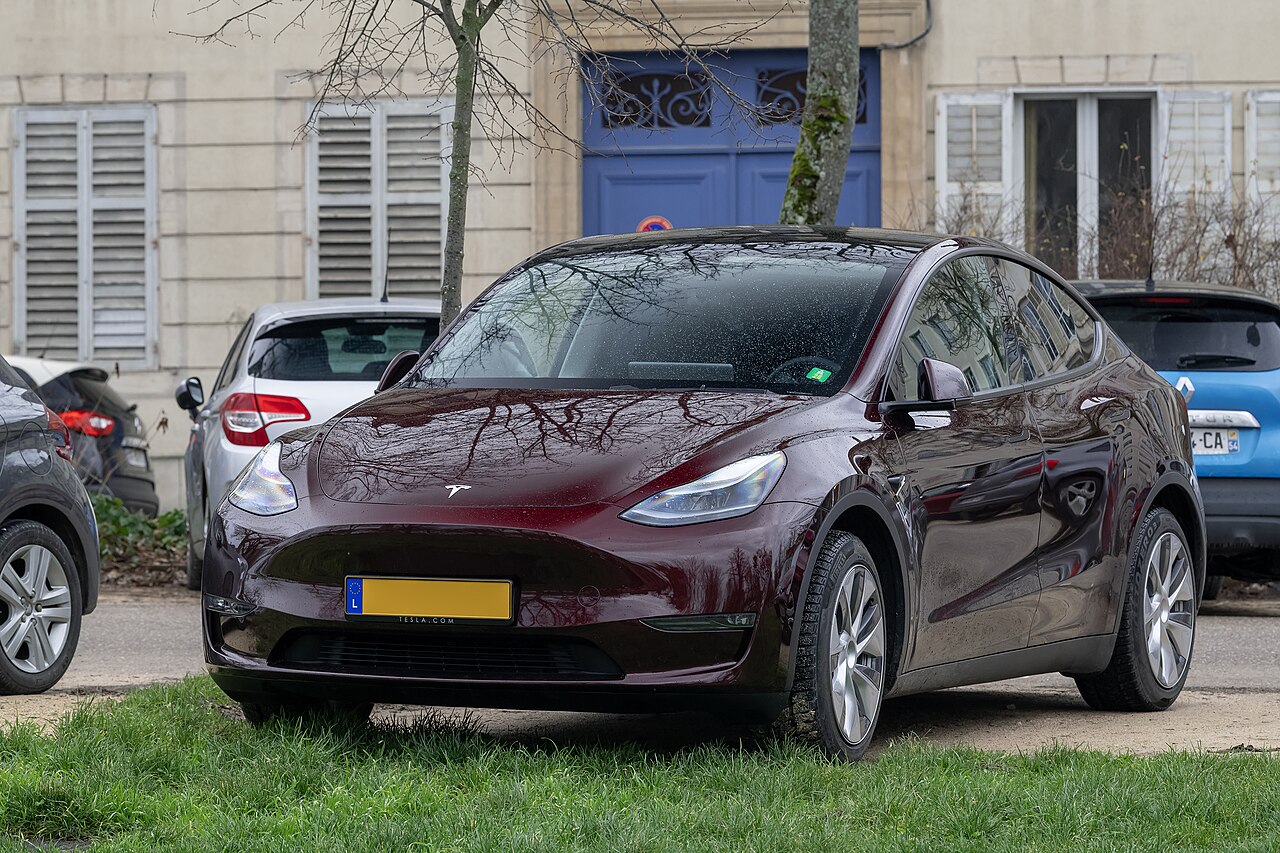
Prices and program details reflect North American installer quotes and manufacturer pricing as of August 2026 and change frequently — always confirm final quotes with the shop and current pricing on Tesla.com before ordering. This article contains referral and affiliate links; see our disclosure page. Nothing here is legal, financial, or professional detailing advice. Image credit: Alexandre Prévot, CC BY-SA 2.0, via Wikimedia Commons.
About the author: Lifei Zhou
Model Y owner since 2022Ontario STO registered apprentice · 310SWorks on Porsche, Mercedes, BMW, Audi weeklyHundreds of readers referred (est.)
Lifei is a Tesla owner based in Canada, writing practical, fact-checked Tesla guides for US and Canadian drivers — buying, ownership, insurance, charging, and TSLA investing, all from first-hand experience.