
Does a Tesla Have a Spare Tire? What to Do About a Flat (2026)
Does a Tesla Have a Spare Tire? What to Do About a Flat (2026)

In one sentence
No Tesla comes with a spare tire. Here are your real options for a flat in 2026 — repair kits, roadside loaner wheels, costs, and the frunk kit every owner should carry.
Sooner or later, most Tesla owners ask the same question after running over a nail on the highway: where is the spare tire? The short answer is that there isn’t one. Like most modern EVs, Tesla ships every Model 3, Model Y, Model S, Model X and Cybertruck without a spare, a jack or a lug wrench. That’s a deliberate choice to save weight and free up cargo space, but it leaves a lot of new owners feeling stranded the first time a low-pressure warning pops up on the screen. This guide walks through exactly what your options are, what to keep in the frunk, and how to avoid a $300 tow — with facts verified for 2026.
Disclosure: some links are affiliate/referral links, and we may earn a commission at no extra cost to you. See our disclosure page.
📋 Contents
- Does a Tesla come with a spare tire? (No — and here’s why)
- Your four real options when you get a flat
- The Tesla tire repair kit: what it does and what it can’t
- Roadside assistance: free under warranty, pricey after
- What to actually keep in your frunk
- Preventing flats: pressure, tires and habits
- Still shopping for the Tesla itself?
- Frequently Asked Questions
- The bottom line
Does a Tesla come with a spare tire? (No — and here’s why)
No current Tesla comes with a spare tire, a temporary “donut,” or the tools to change a wheel. Tesla removed the spare across its lineup years ago to cut roughly 40–50 lb of dead weight, recover trunk depth, and squeeze out a little extra range. It’s not unique to Tesla — the majority of new cars and nearly every EV sold in the U.S. and Canada now skip the spare — but it does change how you plan for a flat.
Instead of a spare, Tesla points owners to three things: a temporary tire repair kit (sealant plus a small compressor), 24/7 roadside assistance, and its mobile or in-shop tire service. Each has real limits, so it pays to understand all three before you’re sitting on the shoulder of the 401 or I-95 in the dark.
Your four real options when you get a flat
When the “Tire Pressure Low” alert appears, pull over somewhere safe as soon as you can, and open the vehicle’s touchscreen tire-pressure page (Controls) to see which corner is losing air and how fast. From there you have four practical paths:
- Reinflate and monitor — if it’s a slow leak from a small nail, a portable 12V compressor can top the tire back up enough to reach a nearby tire shop.
- Plug or seal the puncture — a tread puncture (not the sidewall) up to about 6 mm can be temporarily sealed with a repair kit so you can drive a short distance.
- Call Tesla Roadside Assistance — they can bring a loaner wheel or tow you, free while you’re under the basic warranty.
- Call your own coverage — CAA, AAA, or your insurer’s roadside plan can tow you if Tesla’s wait time is long.
The right choice depends on where the damage is. A clean puncture in the middle of the tread is often a quick fix; a slashed sidewall, a blowout, or a chunk of missing rubber means the tire is done and you need a tow or a loaner wheel, full stop.
The Tesla tire repair kit: what it does and what it can’t
Tesla sells (and has bundled with some deliveries) a Temporary Tire Repair Kit containing an air compressor, a sealant canister, an inflation needle and a storage bag. Per Tesla’s own tire care documentation, the kit can only handle punctures in the tread up to roughly 6 mm in diameter — it cannot repair a sidewall, a large gash, or a tire that’s already shredded.
Two important caveats that Tesla spells out and most owners miss:
- It’s temporary. After a sealant repair you should drive no more than about 100 km (62 miles) and no faster than the kit instructions allow, then get the tire professionally inspected or replaced right away.
- Sealant can wreck your TPMS sensor. Tesla warns that tire sealant injected into a tire with a Tire Pressure Monitoring System can block the sensor’s pressure port. If a shop finds sealant when dismounting the tire, they’ll often recommend replacing the TPMS sensor — and that isn’t covered under warranty.
That’s why many experienced owners treat sealant as a genuine last resort and lean on a compressor plus a plug for tread punctures, or simply call for a tow. If you do keep a repair product in the car, a compact kit like the Slime emergency flat-tire kit (sealant plus its own inflator, typically in the $20–35 range) is a reasonable break-glass option for getting off a dangerous shoulder — just plan to have the tire and sensor checked afterward.
Roadside assistance: free under warranty, pricey after
Tesla Roadside Assistance runs 24 hours a day, 365 days a year, and is free for the duration of your New Vehicle Limited Warranty (basic coverage is 4 years or 50,000 miles / 80,000 km). Here’s how it actually handles a flat:
| Situation | What Tesla Roadside does | Cost (2026) |
|---|---|---|
| Repairable flat, loaner available | Brings and fits a loaner wheel; you return it within 3 days | Free under warranty |
| No loaner wheel available | Tows to nearest Tesla service or tire shop (up to ~50 mi / 80 km) | Free under warranty |
| Out of warranty | Same services, billed to you | Roughly $125–$300+ depending on dispatch and tow distance |
You request it right from the Tesla app or by phone. The loaner-wheel program is genuinely useful — it gets you moving again without committing to a same-day tire purchase — but availability varies by region, and in rural parts of Canada or the U.S. Midwest you may be looking at a tow instead. Confirm the details for your country on Tesla’s Roadside Assistance page, since coverage distances differ slightly between the U.S. and Canada.
What to actually keep in your frunk
Because you can’t swap a wheel yourself, “being prepared” in a Tesla means carrying tools that buy you time and mobility rather than a full spare. A sensible, no-spare kit looks like this:
- A portable 12V air compressor. The single most useful item. A slow leak often just needs air to limp to a shop, and a compact inflator like the AstroAI portable tire inflator (around $30–45) plugs into the 12V outlet and reads pressure as it fills. Keep it charged and know where the accessory outlet is on your model.
- A digital tire-pressure gauge. Tesla’s onboard readout is fine, but a pocket AstroAI digital tire gauge ($10–15) lets you confirm each corner quickly at the roadside and check your cold pressures at home — cold weather alone can drop pressure enough to trigger a warning.
- An emergency repair or plug kit for tread punctures, used with the caveats above.
- A jump pack. Not for the tires — for the 12V battery. If your low-voltage battery dies you can’t open the charge port or, on some models, the frunk. A pocket lithium starter such as the NOCO Boost Plus GB40 ($90–110) doubles as a phone power bank and is cheap insurance on long trips.
- A reflective triangle or flare and a flashlight, plus gloves — the basics that keep you visible on a shoulder at night.
All of these fit in the frunk with room to spare. If you’d rather have true redundancy, third-party companies like Modern Spare and EZ Spare Wheel sell compact spare-tire kits sized for the Model 3 and Model Y — but they’re bulky, they eat your trunk well, and most owners find a compressor plus roadside coverage is enough.
Preventing flats: pressure, tires and habits
The best flat is the one you never get. A few habits go a long way on cars that ride on low-profile performance rubber:
- Check pressures monthly and before road trips. Underinflated tires flex, overheat and pick up damage more easily — a leading cause of blowouts, per NHTSA. Set them to the placard value on the driver’s door jamb, measured cold.
- Watch curbs and potholes. Big aero wheels with thin sidewalls are easy to pinch-flat or crack on a hard pothole hit — the number-one cause of Tesla wheel and tire damage in cities.
- Rotate on schedule. Even wear means fewer surprises; heavy EVs with instant torque chew through tires faster than a comparable gas car, so staying on top of rotation and alignment matters.
- Run the right tires for the season. If you drive through a Canadian or northern-U.S. winter, dedicated winter tires do more for safety than any repair kit ever will.
For the full picture on sizing, brands and replacement costs, see our companion pieces on choosing tires for your Tesla and whether you need winter tires. If you’re building out a broader go-bag, our Tesla emergency roadside kit checklist and 12V battery guide cover the rest, and you’ll find more owner how-tos in our Tesla accessories hub.
Still shopping for the Tesla itself?
If you haven’t taken delivery yet, the no-spare reality is just one small item on a long new-owner checklist — and it’s easy to plan around. One thing worth doing before you order: Tesla’s referral program currently gives new buyers of a Model 3, Model Y (including the new Model Y L) or Cybertruck three months of free Full Self-Driving (Supervised) when you order through a referral link; it generally can’t be combined with the standard 30-day trial. If that’s useful to you, you can order through our Tesla referral link to lock in the FSD (Supervised) months at no extra cost. Offers change, so confirm the current terms on Tesla’s order page before you place a deposit.
Frequently Asked Questions
Does the Tesla Model Y or Model 3 come with a spare tire?
No. Neither the Model Y nor the Model 3 (nor the Model S, Model X or Cybertruck) ships with a spare tire, jack or lug wrench. Tesla provides a temporary repair kit and roadside assistance instead. You can buy a third-party compact spare kit separately if you want one.
Can I use any tire sealant in my Tesla?
Be careful. Tesla warns that tire sealant can block or damage the TPMS pressure sensor, and a sensor found contaminated with sealant may need replacing at your own cost. Use sealant only as an emergency measure, drive no more than about 100 km (62 miles) afterward, and have the tire and sensor inspected promptly.
Is Tesla Roadside Assistance free for a flat tire?
Yes, while your vehicle is within the basic New Vehicle Limited Warranty (4 years / 50,000 miles). Tesla will bring a loaner wheel if one is available, or tow the car to the nearest service center or tire shop. Once you’re out of warranty, expect to pay roughly $125–$300 or more depending on distance.
How far can I drive on a Tesla with a flat or after a repair?
Don’t drive on a fully flat tire — you’ll destroy the tire and can damage the wheel. After a temporary sealant repair, Tesla says to drive no more than about 100 km (62 miles) and then have it fixed properly. A slow leak that you keep topped up with a compressor can usually make it to a nearby shop.
Should I buy an aftermarket spare tire kit for my Tesla?
Only if you frequently drive in remote areas with long distances between service. For most city and suburban owners, a portable compressor, a repair kit and Tesla or CAA/AAA roadside coverage handle the vast majority of flats without giving up trunk space.
The bottom line
- No Tesla comes with a spare tire, jack or tools — by design.
- Your options for a flat are: reinflate with a compressor, temporarily seal a tread puncture, or call roadside for a loaner wheel or tow.
- The onboard/aftermarket repair kit only fixes small tread punctures (≤6 mm), never sidewalls, and sealant can damage your TPMS sensor.
- Tesla Roadside is free under the 4-year/50,000-mile warranty; out of warranty, budget $125–$300+.
- Keep a 12V inflator, a pressure gauge, a repair kit and a jump pack in the frunk, and check your pressures monthly.
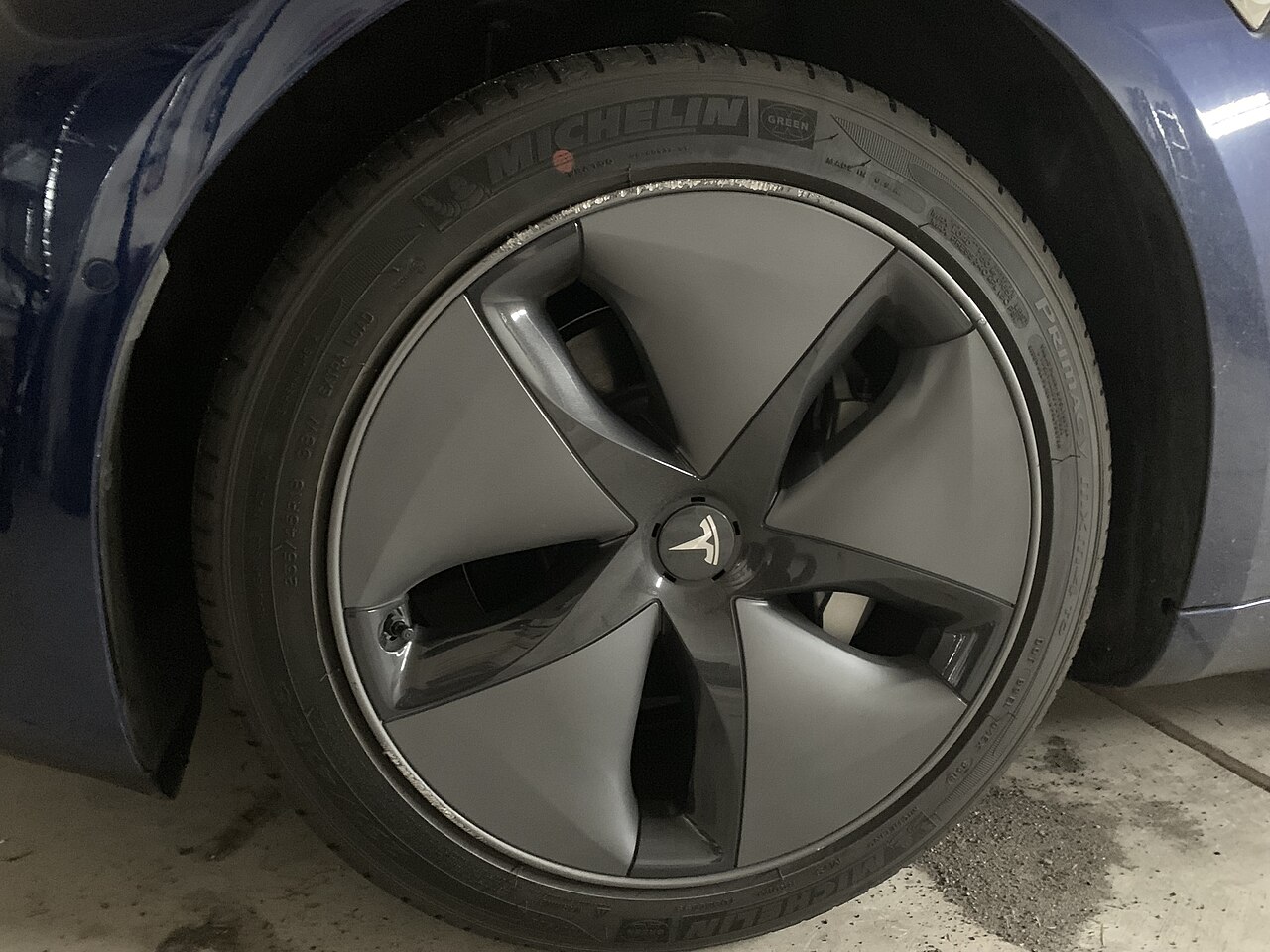
Information current as of August 2026 and based on Tesla’s published documentation and multiple independent sources; product prices, warranty terms and roadside coverage vary by region and change over time — verify current details with Tesla and on the manufacturer’s page before you rely on them. This article is general information, not professional advice. Some links are affiliate/referral links; see our disclosure page. Image credit: “Tesla Model 3 aero wheels” by Saucy, licensed under CC BY 4.0, via Wikimedia Commons.
About the author: Lifei Zhou
Model Y owner since 2022Ontario STO registered apprentice · 310SWorks on Porsche, Mercedes, BMW, Audi weeklyHundreds of readers referred (est.)
Lifei is a Tesla owner based in Canada, writing practical, fact-checked Tesla guides for US and Canadian drivers — buying, ownership, insurance, charging, and TSLA investing, all from first-hand experience.