
Tesla HW3 vs HW4 (2026): Differences, How to Tell Which You Have, FSD v14 Lite and the Upgrade Path
Tesla HW3 vs HW4 (2026): Differences, How to Tell Which You Have, FSD v14 Lite and the Upgrade Path

HW3 and HW4 are two generations of the computer that runs Tesla’s driver assistance. HW3 is in most Teslas built from 2019 to 2023 and now runs a slimmed-down version of Full Self-Driving. HW4, also called AI4, is in every new Tesla, runs the full version, and is the only one Tesla says will ever drive unsupervised.
HW3 vs HW4 in six lines (checked October 4, 2026)
- HW3 cars run FSD v14.2 Lite. HW4 cars run FSD v14.3.10.
- HW3 stays supervised for good: Tesla has said it will not get unsupervised FSD or join Robotaxi.
- HW4 has roughly 3 to 5 times the computing power and 5-megapixel cameras instead of 1.2.
- To check your car: Controls, then Software, then Additional Vehicle Information.
- Owners who bought FSD outright are promised a free hardware upgrade, but the new board is not expected before mid-2027.
- Every new Tesla ships with HW4, and a referral order adds 3 months of FSD (Supervised) for new owners.
If you bought a Tesla between 2019 and 2023, there’s a good chance the self-driving computer behind your touchscreen is the chip Tesla calls HW3 (also written AI3). For more than a year, owners of those cars watched newer Teslas pull ahead, version after version of Full Self-Driving, smarter Summon, “drive itself out of the parking spot,” even Robotaxi, while their own software sat frozen. In the summer of 2026 that finally changed. But the change comes with a hard line that every HW3 owner needs to understand before deciding what to do next.
Disclosure: this article contains Tesla owner referral links. Ordering through them costs you nothing extra but may earn the site a small amount of support. Prices are approximate ranges only; the official Tesla page always governs. Tesla’s Full Self-Driving is a Supervised, Level 2 system, and legal responsibility stays with the driver at all times. See our disclosure page.
This guide answers the question on every older owner’s mind: can my HW3 car actually get Full FSD, and is it worth upgrading to HW4? We’ll cover what separates the two chips, how to tell which one your car has, exactly what HW3 gets with the FSD v14 “Lite” builds, what Tesla has officially said about hardware upgrades, how to check the hardware when buying used, and what all of this means if you paid to buy FSD outright years ago. Everything below reflects the situation as of October 4, 2026, including the FSD v14.2 Lite release that reached HW3 cars on September 9.
📋 Contents
- HW3 vs HW4 at a glance
- HW3 vs HW4: what actually separates the two chips
- Which Teslas have HW3, and which have HW4
- How far HW3 can go: what FSD v14 Lite delivers
- HW3 to HW4 upgrade: the line HW3 cannot cross, and what Tesla officially says
- Buying used: how to read the hardware before you pay
- What this means if you bought FSD outright
- Frequently Asked Questions
- Summary
HW3 vs HW4 at a glance
Before the detail, here is the side-by-side most people are looking for. Figures are Tesla’s published or widely reported specifications; software status is as of October 4, 2026.
| Item | HW3 (AI3) | HW4 (AI4) |
|---|---|---|
| In production | April 2019 to 2023 | Early 2023 onward (all current new cars) |
| Neural-net compute | About 72 TOPS per chip, two chips | Roughly 3 to 5 times HW3 (Tesla has not published a single figure) |
| Memory | 8 GB LPDDR4, about 68 GB/s | 16 GB GDDR6, about 224 GB/s (Musk: HW3 has about one-eighth the bandwidth of HW4) |
| Cameras | 1.2 MP, 1280 by 960 | 5 MP, about 2896 by 1876, wider field of view, red-tinted lenses |
| Current FSD build | v14.2 Lite (wide release September 9, 2026; current firmware 2026.27.10) | v14.3.10 (firmware 2026.27.10, released September 19, 2026; includes Automatic Collision Evasion) |
| FSD v15 | Not planned (no v15 Lite announced) | Yes, expected late 2026 to early 2027 |
| Unsupervised FSD / Robotaxi | Never, per Tesla | Planned |
| Missing features today | Mad Max profile, new Actually Smart Summon, FSD stats screen, Automatic Collision Evasion | None |
| Upgrade path | Free next-generation board (AI4.5 or AI5) promised to owners who bought FSD outright; hardware not before mid-2027 | AI5 retrofit not announced |
| How to check | Controls, Software, Additional Vehicle Information: “Full Self-Driving Computer” or “Hardware 3” | Same screen: “AI4” or “Hardware 4” |
HW3 vs HW4: what actually separates the two chips
“HW” stands for Hardware, and Tesla uses it to label the generations of the self-driving computer inside the car. HW3 went into vehicles starting in April 2019 and was Tesla’s first in-house FSD chip, the one Elon Musk famously said had everything needed for full autonomy. HW4 (Tesla now calls it AI4) began shipping in early 2023 with several times the compute and much higher-resolution cameras: the AI4 front cameras capture roughly 2896 by 1876 pixels, versus 1280 by 960 on HW3.
Each box is one camera frame. An HW4 camera captures a little over four times as many pixels as an HW3 camera, which is why distant signs and small objects are easier for it to read.
The single most important difference isn’t a spec-sheet bragging point. It’s memory bandwidth. By Musk’s own account on the Q1 2026 earnings call, HW3 has about one-eighth the memory bandwidth of HW4. That gap is the entire reason this story exists, because Tesla’s modern FSD models (v13 and v14) are end-to-end neural networks: one enormous AI model that turns camera images directly into steering and pedal inputs. Those models are extremely hungry for bandwidth and compute. They run comfortably on HW4 and simply do not fit on HW3 without being shrunk first.
Which Teslas have HW3, and which have HW4
As a rough guide by build date. Boundary months overlap, and cars built in different factories switched at different times, so always verify against your specific car:
| Model | Approx. HW3 window | Approx. HW4 / AI4 start |
|---|---|---|
| Model 3 | Apr 2019 through the end of the pre-refresh (“legacy”) body, 2023 | Refreshed “Highland” Model 3 (2024 model year onward) |
| Model Y | Early 2020 through roughly mid-2023 | Fremont-built cars from late May 2023; Austin-built cars followed later in 2023 |
| Model S / X | 2019 through early 2023 | Roughly February to March 2023 onward |
Approximate. Factories switched in different months, so cars built near a boundary can be either. Model S and Model X production ended in early 2026. Always confirm on the car’s own screen.
The reliable way to know isn’t the year. It’s to check the car directly. On the center touchscreen, open Controls, tap Software, then tap Additional Vehicle Information. Look for the “Autopilot computer” line: an HW3 car shows “Full Self-Driving Computer” or “Hardware 3,” and an HW4 car shows “AI4” or “Hardware 4.” There’s also a low-tech tell from outside the car: HW4’s front-facing camera lenses behind the windshield have a distinct red tint, while HW3 lenses are plain black. If you’re buying used, confirm this before you take delivery, because it directly determines how much self-driving capability the car will ever have. Our used Tesla buying guide walks through the rest of the inspection.
How far HW3 can go: what FSD v14 Lite delivers
Here is the good news older owners had been waiting for. After Musk and AI chief Ashok Elluswamy confirmed it on Tesla’s Q1 2026 earnings call in April, FSD v14 Lite reached early-access HW3 cars on June 29, 2026 (software 2026.20.5.1) and then went to wide release for HW3 vehicles in the US and Canada on July 21, 2026 (software 2026.20.6.11). It was the first FSD update HW3 had received in roughly 14 months, after the software stalled at v12.6.4 in the spring of 2025. If your HW3 car is online, the update has almost certainly arrived by now.
Importantly, “Lite” refers to the model, not to a crippled feature menu. Tesla’s release notes describe the approach as having “distilled the intelligence from HW4 V14 into HW3”: engineers compressed the v14 neural network so it could physically run on the older chip. Elluswamy told investors it would carry “all the V14 features that are on AI4.” In practice HW3 got most of them:
- Start from Park: one of v14’s signature features. Previously HW3 owners had to pull onto the road and shift into Drive before FSD took over; now it can launch from a parked state, back out of the spot, shift, and merge into traffic on its own.
- Reverse and automatic shifting: the system can switch between forward and reverse itself, smoothing out parking-lot maneuvers and turnarounds.
- Arrival options: as you near the destination, you can choose where FSD should end the trip: in a parking lot, on the street, in a driveway, or at the curb, instead of stopping awkwardly wherever the pin lands.
- Speed profiles, including Sloth: the gentle, conservative “Sloth” profile arrived with v14 Lite. The aggressive “Mad Max” profile did not; that one remains an HW4-only option for now.
- Stronger city-street logic: the release notes call out improved responsiveness in navigation, merges, forks, pedestrian interactions and traffic-light handling, plus fewer false slowdowns and steadier lane centering.
What HW3 did not get is worth knowing too. The newer, faster Actually Smart Summon, the standalone self-driving app screen with FSD mileage and streak statistics, and the Mad Max profile all stayed on HW4. So “parity” is close on the road, but not complete around the edges.
On HW3 with v14 Lite
- Start from Park
- Reverse and automatic shifting
- Arrival options at the destination
- Speed profiles, including Sloth
- Improved city-street driving
HW4 only
- Mad Max speed profile
- The newer Actually Smart Summon
- FSD statistics screen
- Automatic Collision Evasion
- FSD v15, unsupervised FSD and Robotaxi
The first Lite build was not trouble-free. Within weeks, some HW3 cars threw an “Autopilot board temperature out of range” warning that shut off Autopilot features while the computer cooled down, with a handful of reports of harder failures. Tesla answered with FSD v14.1 Lite (software 2026.21.6), which began reaching early-access HW3 cars around August 8 to 9, 2026 and was expanding in waves through mid-August. Its notes repeat the distillation language and promise smoother steering and fewer false slowdowns, though some owners still report occasional phantom slowdowns on the highway. Then on September 9, 2026, Tesla pushed FSD v14.2 Lite (software 2026.27.6) to HW3 cars, going wide within days; the release notes repeat the v14.1 Lite text with no new features listed, and it is a tuning release rather than a step change. If your car is on 2026.27.6 or later, you have the current HW3 build.
- Spring 2025HW3 software stalls at FSD v12.6.4.
- April 2026Tesla confirms a v14 Lite build for HW3 on its Q1 earnings call.
- June 29, 2026FSD v14 Lite reaches early-access HW3 cars.
- July 21, 2026Wide release for HW3 cars in the US and Canada.
- August 2026v14.1 Lite follows, after overheating warnings on the first build.
- September 9, 2026v14.2 Lite, a tuning release, goes wide within days.
- September 19, 2026Software 2026.27.10: HW3 stays on v14.2 Lite, HW4 moves to v14.3.10.
For context on how the two fleets are now tracking: as of early October 2026, HW4 cars are on FSD v14.3.10 and HW3 cars are on v14.2 Lite, both delivered in software 2026.27.10, which Tesla released on September 19. The v14.3 line added Automatic Collision Evasion. Tesla shipped the two builds together but the collision-evasion feature is HW4-only. In other words, the Lite line now lags the main line by a few point releases and does not get every safety or convenience feature at the same time. Looking ahead, Tesla’s Robotaxi fleet is already running FSD v15, and reporting so far indicates v15 is being built for HW4 and the coming AI5 chip, with no v15 Lite planned. For the broader real-world picture, see our Tesla Full Self-Driving guide.
So what’s the catch on the road? With limited compute, HW3 reacts a touch slower to sudden situations and makes somewhat more conservative decisions in genuinely complex scenes. Interestingly, early reports suggest the distilled HW3 build is smooth on acceleration and braking, not obviously worse than HW4 there. Think of HW4 as a quick, detail-oriented driver and HW3 Lite as a steady but cautious one: on an everyday commute most people won’t notice the difference; in dense, chaotic city traffic it shows. That is a physical limit no software tuning can fully close, which leads to the line HW3 cannot cross.
HW3 to HW4 upgrade: the line HW3 cannot cross, and what Tesla officially says
This is the part every HW3 owner needs to internalize. On the Q1 2026 earnings call, Tesla stated plainly that HW3 vehicles will not be capable of Unsupervised FSD and will not join the Robotaxi fleet. Musk’s words were that HW3 “simply does not have the capability.” The reason is hardware: HW3’s memory bandwidth, compute and camera resolution can’t deliver the redundancy and precision required to drive safely with no one behind the wheel. The original promise that every car built after 2019 had the hardware for full self-driving has, in effect, been walked back. (That reversal is now the basis of a collective claim by several thousand Dutch owners, and similar complaints are brewing elsewhere.)
That means two things. First, v14 Lite is, and always will be, Supervised FSD. No matter how capable it feels, your hands must be ready and your eyes on the road; legally and practically, you are the driver. It is a Level 2 driver-assistance system, not a robotaxi you can nap in the back of. Second, if you originally bought FSD expecting it to one day earn money as a robotaxi or drive itself unattended, an HW3 car will not deliver that, short of a hardware upgrade or trading up.
On the upgrade itself, Tesla’s message has shifted between the two most recent earnings calls, so it pays to keep the two versions separate.
April 2026 (Q1 call): Tesla committed to a hardware upgrade path for HW3 owners who purchased FSD outright, at no charge, plus an alternative “special discount” on trading the car in toward a new AI4 vehicle. The retrofit as described involves:
- New cameras: upgraded to HW4-standard high-resolution units.
- New computer: a next-generation compute unit, described at the time as an “AI4+” board with roughly double the memory.
- Rewiring: the in-car harness needs substantial changes to carry the bandwidth the new hardware demands, requiring partial disassembly.
Because the work is heavy, Tesla said it would set up dedicated retrofit facilities (described as “micro factories”) in some large cities rather than burden ordinary service centers, and that the new compute unit wouldn’t enter production until around mid-2027.
July 2026 (Q2 call, July 22): asked whether HW3 cars would still be upgraded to HW4, Musk said it would make more sense to skip HW4 and move older cars, “almost any cars that have cameras,” to a next-generation board with an upgraded chip, “whether it be AI4.5 or AI5.” He put the intermediate AI4.5 board at around mid-2027 and AI5 volume production “hopefully” later in 2027, adding that early AI5 chips would go to the Optimus robot first. He did not give a start date for retrofits, a price, or a trade-in figure.
Read together, the commitment stands (free hardware for FSD purchasers, a discount for those who’d rather trade in), but the details are less settled than they sounded in April. On pricing, Tesla has published no figures at all. The table below is a mix of what Tesla has said and industry estimates, and the official numbers will govern:
| Your situation | Likely upgrade route | Approx. cost |
|---|---|---|
| Owners who bought FSD outright | Free hardware upgrade, first in line (Tesla’s stated commitment) | $0; timing not yet announced, hardware not before 2027 |
| HW3 owners who never bought FSD | Paid upgrade, after the first wave (Tesla has hinted, not confirmed) | ~$3,000–$5,000 (industry estimate only) |
| FSD purchasers who’d rather not retrofit | Special trade-in discount toward a new AI4 car (Tesla’s stated option) | Amount not announced; commentators guess ~$4,000–$6,000 |
Two practical caveats. The hardware that supports this retrofit, whatever Tesla finally calls it, isn’t expected to reach production until mid-2027 at the earliest, so even if you qualify, expect a long wait and possibly a queue behind millions of other HW3 cars. And the free upgrade is aimed squarely at people who paid real money to buy FSD outright; subscription-only and no-FSD owners should assume the paid route, if and when it opens.
Buying used: how to read the hardware before you pay
This news matters a lot for the used market. v14 Lite gives HW3 cars a second wind: daily FSD is no longer frozen in 2025, which is a modest plus for resale. But now that “HW3 will never do unsupervised driving” is official, the market is increasingly splitting HW3 and HW4 cars into two price tiers, and over the next year or two HW4 cars will likely hold their value better.
If you’re shopping used, the advice is blunt: buy HW4/AI4 if you can, even at a premium. Don’t judge by year; confirm “Hardware 4” or “AI4” under Additional Vehicle Information on the car’s own screen. A Model Y built from mid-2023 onward or a refreshed Model 3, verified as HW4, is the safer long-term bet on both capability and resale. If you’re weighing a US-market Model 3 specifically, our US Model 3 guide covers trims and pricing, and the rest of our US Tesla coverage tracks the latest.
If you were already torn between retrofitting an HW3 car and buying new, a fresh AI4 vehicle is the clean option: the hardware is right from day one, with no disassembly and no waiting on a 2027 chip. There’s a small bonus at order time too. Buying a Model 3, Model Y, or Cybertruck through an owner referral link gets you 3 months of free FSD (Supervised), worth about $297 at the $99-a-month subscription price. You can use the site owner’s Tesla referral link at no extra cost to you, which lets you experience the full v14 on a new car before committing to a long-term subscription.
What this means if you bought FSD outright
You bought FSD outrightWait for the free upgrade
You subscribe, or only want daily assistanceUse v14 Lite as it is
You want unsupervised FSD or RobotaxiMove to an HW4 car
Ordering a new Tesla? Use our referral link for 3 months of FSD →
For the early adopters who paid to buy FSD, often $8,000 to $15,000 back in the day, this is the group Tesla’s free-upgrade pledge is really aimed at. If that’s you, watch the official channels closely and register through Tesla’s own process when retrofits open; don’t get talked into a third-party “we’ll upgrade it for a fee” scheme. The free path is your reward for that early purchase, even if the wait stretches into 2027 or beyond.
If you never bought FSD, the math is different: paying an estimated $3,000 to $5,000 to retrofit an aging car versus simply buying a new AI4 vehicle is a genuine calculator-out decision. And if you’re an outright buyer who mainly wants daily assistance rather than future robotaxi dreams, v14.1 Lite may already be all you need. It’s on your car now, so try it for a few weeks and decide from there.
Whatever your situation, one rule holds: all prices, timelines, and upgrade policies are governed by Tesla’s official pages and your local service center’s formal notices. This is still in motion, and details can change. You can review Tesla’s own description of the technology on the Tesla Autopilot and Full Self-Driving page, and the regulatory framing on the NHTSA driver-assistance page.
Frequently Asked Questions
Can my HW3 car drive itself fully once it updates to v14 Lite?
No. Tesla has confirmed HW3 will not achieve Unsupervised FSD and will not join the Robotaxi fleet. v14 Lite, v14.1 Lite and v14.2 Lite remain Supervised FSD, a Level 2 system where you must keep your hands ready and your eyes on the road, and you remain the legally responsible driver. True driverless capability requires a hardware upgrade or an AI4 car.
How do I tell whether my Tesla is HW3 or HW4?
Check the car: go to Controls, then Software, then Additional Vehicle Information, and read the “Autopilot computer” line. “Full Self-Driving Computer” or “Hardware 3” means HW3; “AI4” or “Hardware 4” means HW4. Don’t rely on the model year alone, because cars built around 2023 overlap; the on-screen value is what counts.
How much does upgrading HW3 hardware cost?
It depends, and nothing is official yet. Owners who bought FSD outright have been promised a free hardware upgrade; owners who never bought FSD should expect a paid upgrade that commentators estimate at roughly $3,000 to $5,000. Tesla hasn’t published pricing, and the next-generation chip meant for the retrofit (AI4.5 or AI5) isn’t expected in production until mid-2027, so expect a queue.
Did v14 Lite arrive, and do I need to do anything?
Yes. The wide release to HW3 vehicles in the US and Canada began on July 21, 2026, the follow-up v14.1 Lite (software 2026.21.6) rolled out in August, and v14.2 Lite (software 2026.27.6) went wide on September 9, 2026. You don’t need to do anything special: like any over-the-air update, it arrives once the car is online; install it when prompted. If yours hasn’t shown up yet, make sure the car is connected to Wi-Fi and give it a few days.
Is an HW3 Tesla still worth buying?
If your budget is tight and you mainly want everyday driver assistance, an HW3 car running v14 Lite still works and costs less. But if you care about long-term resale or want higher-level autonomy down the road, lean toward a verified HW4/AI4 car. Either way, confirm the hardware version on the car’s screen before you buy used.
Summary
FSD v14 Lite is a late but real win for HW3 owners: a car that had been frozen for over a year finally catches up on day-to-day self-driving, and v14.1 Lite has already smoothed some early rough edges. But the line is drawn. HW3 cannot do unsupervised driving, it will not get v15, and the original “full self-driving” promise won’t be realized on that chip. Your next move depends on who you are: if daily assistance is enough, v14.1 Lite is already on your car, so drive it and judge for yourself; if you need full AI4 capability, watch for the official upgrade notice or step into a native AI4 car and be done with it. Whatever you choose, confirm your hardware version on the screen first, and make decisions against official information rather than rumor.
Information currency: this article was updated on October 4, 2026, drawing on Tesla’s Q1 and Q2 2026 earnings calls, the June 29 early-access and July 21 wide release of FSD v14 Lite, the August rollout of v14.1 Lite, the September 9 release of v14.2 Lite, and subsequent reporting by Not a Tesla App, Electrek, Tesla Oracle, Drive Tesla Canada and Teslarati, with key facts cross-checked. FSD Lite builds, the hardware-upgrade policy, and pricing are still developing and may change. All prices, dates, and policies are governed by Tesla’s official pages and your local service center. This is general information, not purchase, investment, or legal advice; Tesla’s Full Self-Driving is a Supervised, Level 2 system and the driver bears full responsibility. Some links are affiliate/referral links; see our disclosure page. If this article helped you decide your HW3 car’s future, using the site owner’s Tesla referral link when you order a new car, which gets you 3 months of free FSD, is a small way to support the site, at no cost to you.
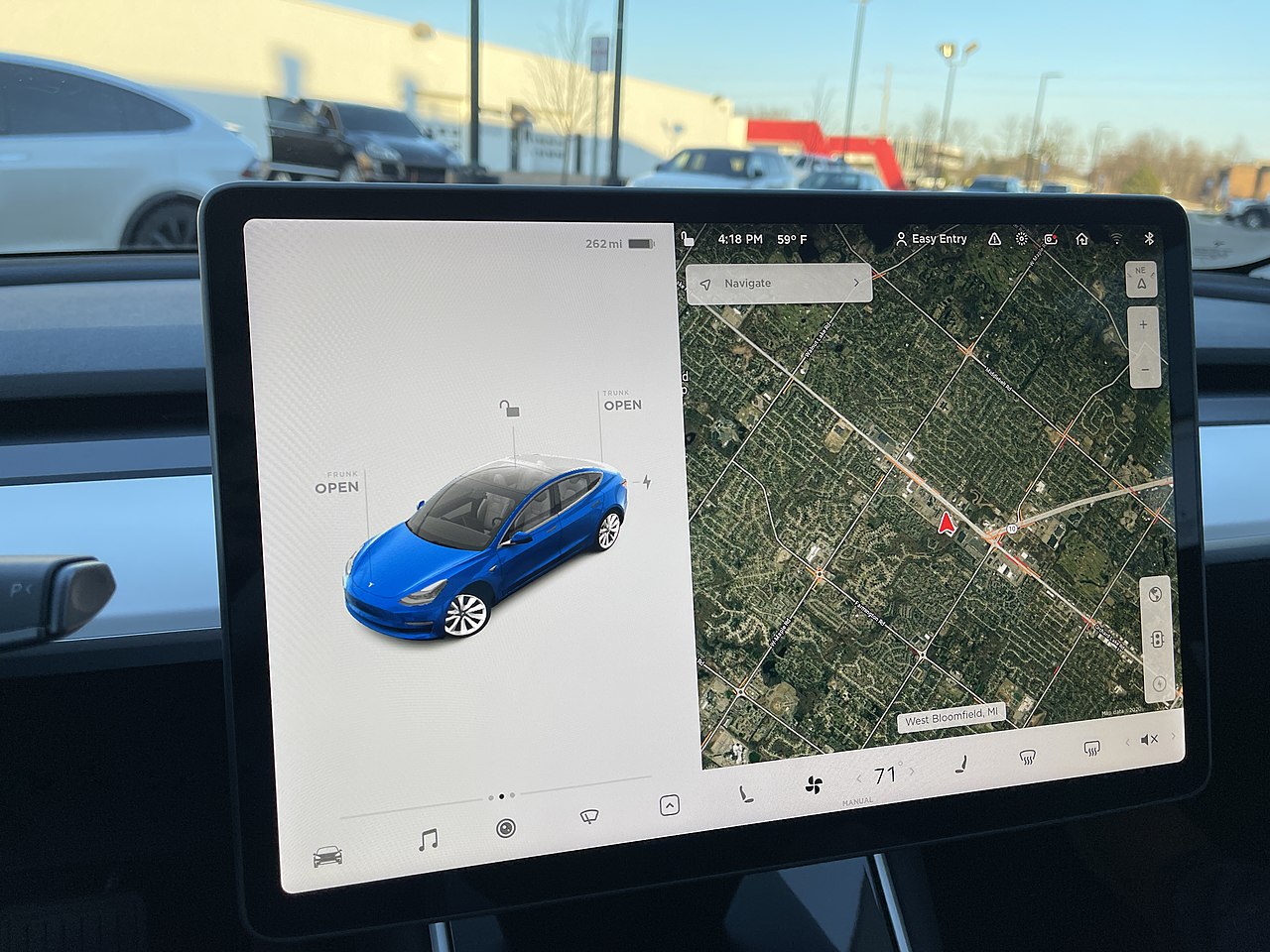
Image credit: in-article image “Tesla Model 3 Screen Dec 2020” by SirAsdof, via Wikimedia Commons, licensed CC BY-SA 4.0.
About the author: Lifei Zhou
Model Y owner since 2022Ontario STO registered apprentice · 310SWorks on Porsche, Mercedes, BMW, Audi weeklyHundreds of readers referred (est.)
Lifei is a Tesla owner based in Canada, writing practical, fact-checked Tesla guides for US and Canadian drivers — buying, ownership, insurance, charging, and TSLA investing, all from first-hand experience.